I’ve said so in the past: I’m the wrong person to talk to about romantic comedies. I don’t dismiss the genre altogether, but I find too many of them twee, manipulative and rather toxic, and that has coloured my perception of the genre as a whole. All too often, these films embrace iffy ideas of what relationships are and what they’re supposed to be, and even when they try to be hip and with it, they tend to espouse notions of gender that aren’t just heteronormative but downright reactionary.
But: I love it when a romantic comedy really hits. And Norman Jewison’s 1987 hit Moonstruck – which went on to win multiple Academy Awards – is certainly a prime example of this.
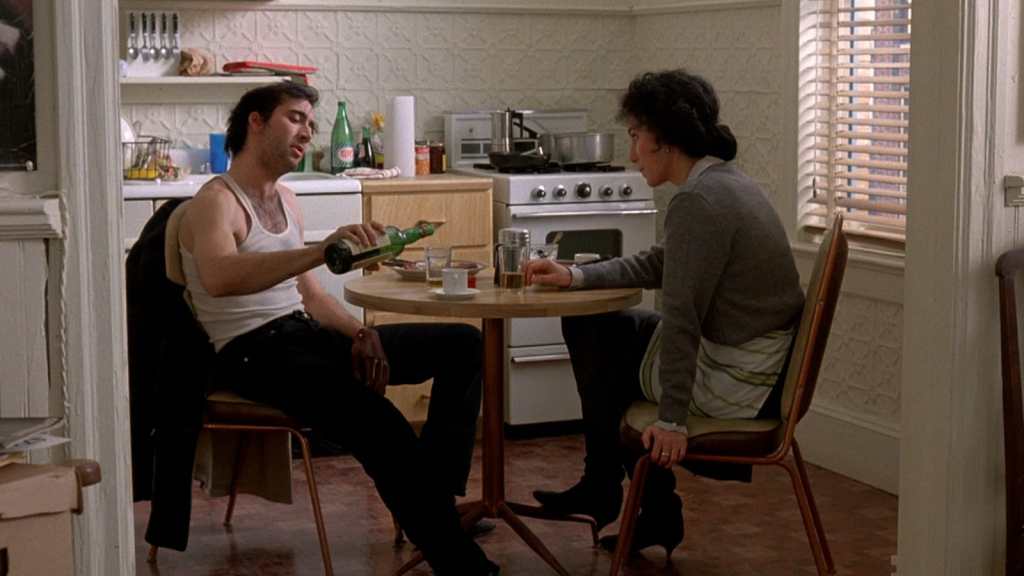
In other, lesser hands, Moonstruck and its story of an Italian-American woman in her late thirties falling for the estranged younger brother of her fiancé – the latter being a safe bet of a man that she likes but doesn’t love – could have been trite. But what we got isn’t the lesser version that no one would have talked about a few months after release: it would be difficult to find a romantic comedy with a more impressive cast and crew. Cher as the film’s lead Loretta finds the perfect balance between naturalistic groundedness and giddy exuberance, an improbably young Nicolas Cage imbues Ronny, a character that on the page is little more than a joke, with an operatic earnestness, and the supporting cast, including Danny Aiello (as Johnny, Loretta’s unlucky fiancé), Olympia Dukakis (as Rose, Loretta’s mother) and John Mahoney (as an impromptu dinner date of hers), are strong enough to carry a movie of their own. And then there’s the director, Norman Jewison, who received an Oscar nomination for Moonstruck (as he did before with In the Heat of the Night and Fiddler on the Roof, though he didn’t win the award for either of those), and the writer, John Patrick Shanley (also known for his play Doubt: A Parable and for its film adaptation, which he directed himself). If you want to hit a romantic comedy out of the park, you could certainly do much, much worse than hiring these people.
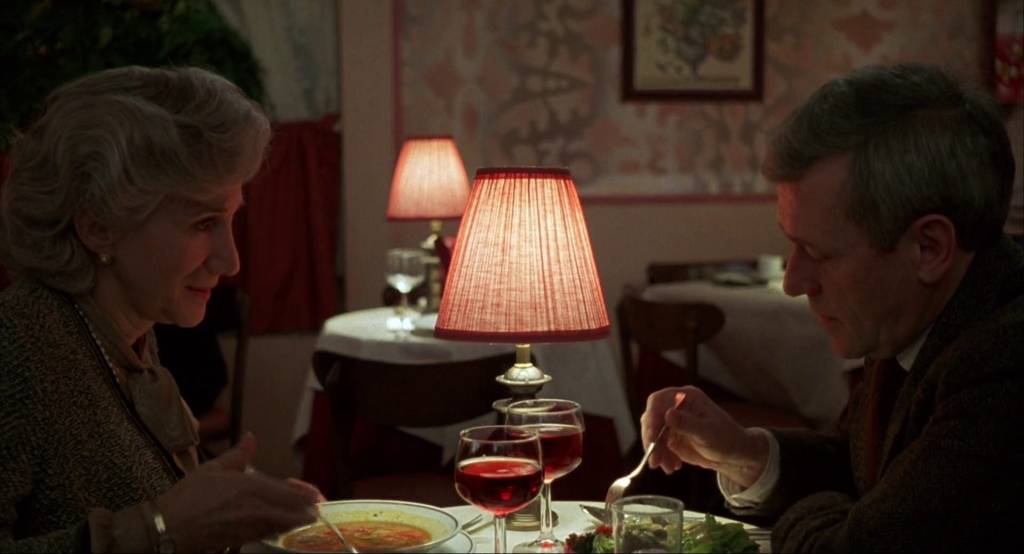
And it shows in the film we got, especially in terms of how Moonstruck handles its many characters. Most romantic comedies are focused so much on the couple that needs to get together in order for there to be a happy end that the supporting characters never get to be more than that, support for the two leads. And that’s at best: at worst they’re all a bunch of walking clichés. Moonstruck certainly flirts with stereotypes, in particular ones about Italian Americans – their emotionality, the way grown men can’t keep themselves from philandering, the way that conversations turn into loud, operatic arguments more often than not -, but it doesn’t forget to make its characters believable. They’re given stories of their own that, while they intersect with Loretta’s romance, nonetheless have room to breathe. The scenes we get with the supposedly supporting characters treat them like, for the duration of those scenes, they’re the leads. This is especially true for the story strand in which Rose, having found out about her husband’s infidelity, meets up with John Mahoney’s Perry, a womanising college professor who, in a different film, would certainly not have the underlying self-awareness and sadness that the character is given in Moonstruck.

Certainly, Shanley’s script is full of charm and wit even if you just look at the individual lines of dialogue: it is warm but avoids cheap sentimentality by having its characters be as capable of jadedness as they are of romance. But what makes Moonstruck stand out most for me is how the script, Jewison’s direction and the performances by the ensemble make these characters feel like a real family and community, much as Jewison did 16 years earlier, in Fiddler on the Roof, with his shtetl of Anatevka. There is a sense that these characters existed before the film, and that they’ll continue to exist – and love and stumble and squabble and make up – after the credits have rolled. Not a mean feat in a genre where the characters often lack a sense of life even during the two hours that we’re watching them.
Verdict: On the surface, it’s easy to fault Moonstruck for some of the tropes of the genre, but such an overly mechanistic view wouldn’t do the film justice. It’s all in the execution, and that’s where Moonstruck excels. It is earnest, goofy, smart, silly, witty, cynical and romantic, and all of these qualities are anchored in a memorable cast of characters. I admit I was doubtful at first when I saw the list of Academy Awards for which the film was nominated: Best Picture, Best Director, Best Screenplay, and several acting awards. I had the immediate reaction of a snob, that a romantic comedy, even a good one, is unlikely to be that good. And even after having rewatched the film (I’d first seen it in my late teens, perhaps the worst time to watch a rom-com if you’re hoping to give it a fair chance), it still doesn’t make me want to mend my ways and seek out all the romantic comedies I’ve avoided – but its nominations, and the awards it did win, were deserved. Not every rom-com can be a Moonstruck, but anyone making a romantic comedy should watch this one and learn a few key lessons on how to do the genre justice – as should film snobs like me.

P.S.: Though I admit that it is disconcerting to find that Loretta’s grandfather is played by the same actor that turns out to be behind the murderous plot in The Name of the Rose: Feodor Chaliapin Jr. By all means, let him walk your dogs, but beware if he gives you a book as a gift!
 A Damn Fine Cup of Culture
One thought on “Criterion Corner: Moonstruck (#1056)”