It was bound to happen sooner or later. I was somewhat lukewarm on Variety Lights and The White Sheik; both films had things to like about them, but neither made me look forward to watching the remaining dozen films in Criterion’s collection dedicated to Federico Fellini. The third film in the collection, I Vitelloni, didn’t immediately seem like a big step up. As in the previous two films, we get men behaving badly (towards women, but not only), feeling entitled to all the best life has to offer and feeling sorry for themselves when they don’t get it. They’re more grating because of how the film plays a lilting Nino Rota score that suggests we’re to consider all of this as a lark: boys being boys, that sort of thing. But then, around the halfway point of I Vitelloni, something changes: a note of desolate sadness creeps in, a despair underlying the laddish performativity of it all, slowly but surely becoming the film’s dominant tone.
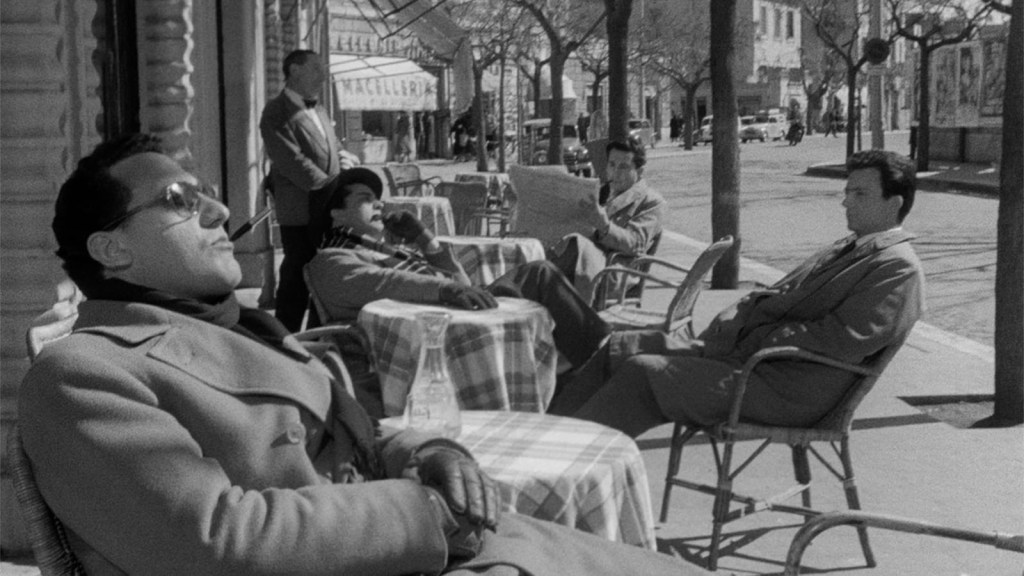
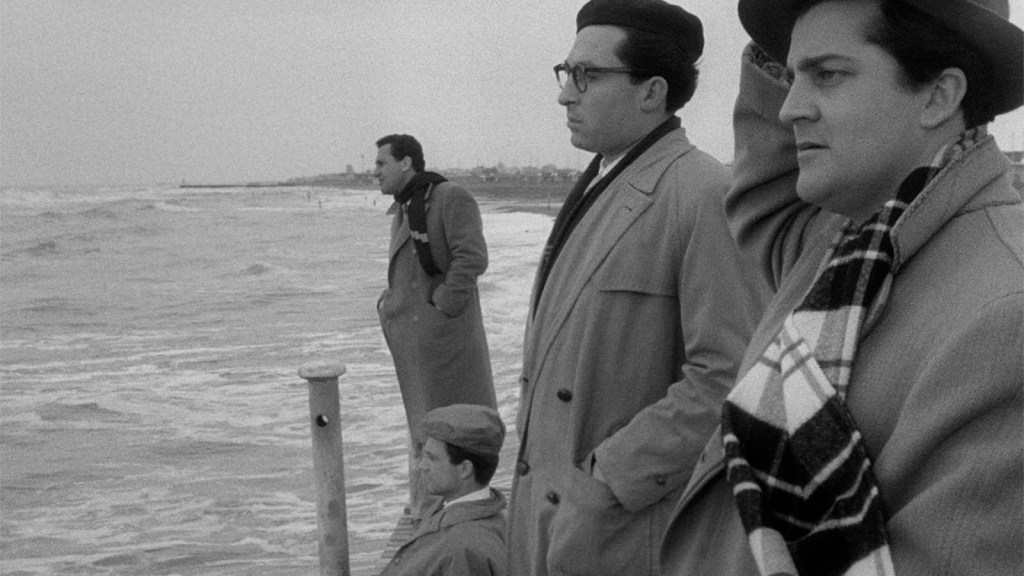
It’s definitely true that Fellini, or at least his film, has more sympathy for the titular ‘bullocks’ – the slackers behaving like teenagers even though they’re entering their thirties – than I did. Alberto (Alberto Sordi, the White Sheik of the previous film) is a smug, glib joker; Fausto (Franco Fabrizi) has never met a woman below the age of 50 that he didn’t want and wouldn’t try to cajole into bed; Leopoldo (Leopoldo Trieste, the provincial husband of The White Sheik), the group’s needy would-be intellectual, thinks he’s the next great Italian dramatist; and Riccardo (Riccardo Fellini, the director’s brother) is a non-entity who’s mostly fixated with his growing waistline. Moraldo (Franco Interlenghi) is the one of the four who seems to have potential, and he’s definitely got most of a moral compass of the five, but he’s a follower with little drive of his own. And so the quintet spends their days and nights (mostly the latter) getting up to no good: they play billiards, chase skirt, get drunk, goof off – and more and more the impression we get is that they don’t even particularly like doing these things any more. They live in a provincial seaside town that puts up a show of being alive and fun and exciting, but the young men have little to look forward to: no future, no ambitions, no dreams. They’re bored with their lives and with themselves, but they’re too lazy and too afraid to do anything about it, so they keep up the pretense that they’re young and invincible and irresistible.
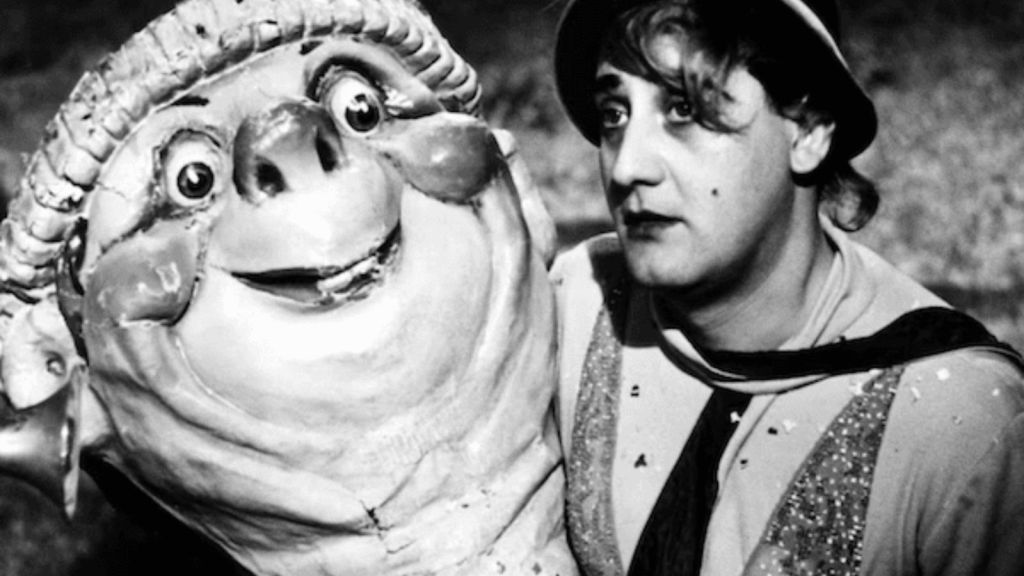
Such stories, and such men, are not exactly a rarity in cinema – but in I Vitelloni Fellini depicts them with a nuance and a control of tone that makes the film stand out from the earlier two. It is the first in this series that I came away from understanding why this particular director and his films stood the test of time. His characters, the situations in which they find themselves and the world they inhabit have a specificity that rings true while also feeling universal, where the earlier films had remained more firmly in the realm of types and clichés. And by the time I Vitelloni finds its perfect ending for a story about aimless losers with a sense of their own shortcomings but without the ability or strength to escape their environment or, more importantly, themselves and told by the one that got away, it has found an image of startling, evocative beauty that stays with the viewer. Both Variety Lights and The White Sheik had their moments, and they’re by no means bad, but they’re not classics, and they suffer somewhat from the expectation going in that they are Fellini films. I Vitelloni gives its audience an inkling, beyond the motifs and tropes, the womanising losers and the carnivalesque scenes, what a Fellini film is.
 A Damn Fine Cup of Culture
4 thoughts on “Forever Fellini: I Vitelloni (1953)”