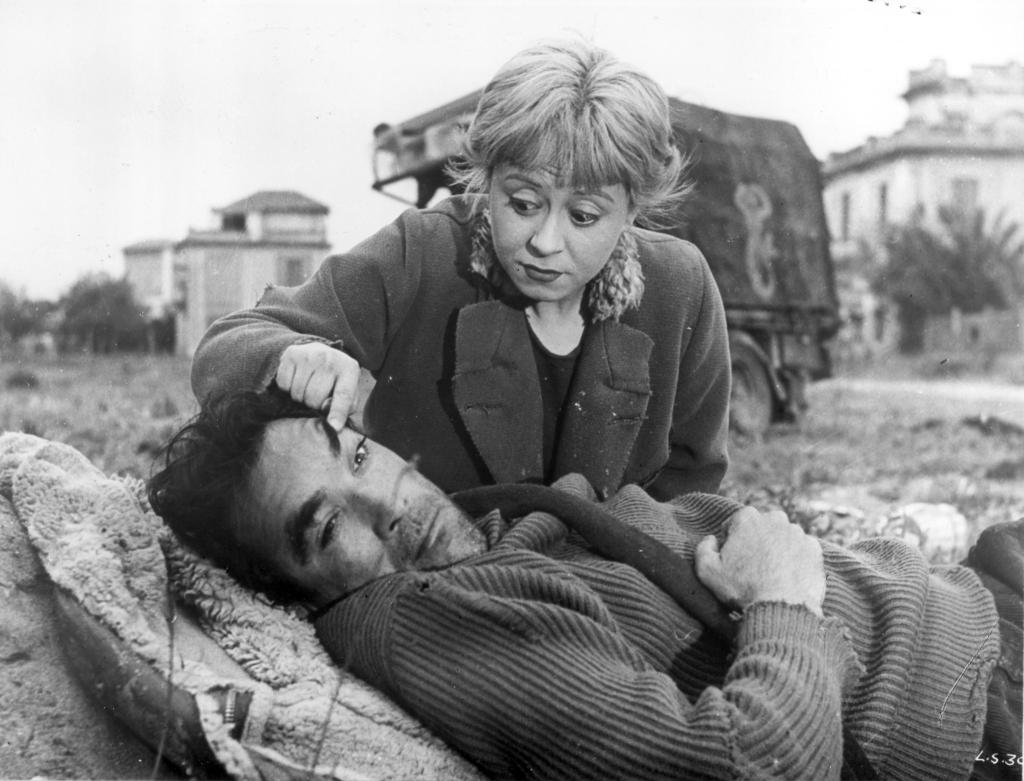
If I Vitelloni was the first of the films in Criterion’s Essential Fellini box set that justified the director’s reputation, La Strada more than confirms it. This is a beautifully made, heartrending film that deftly balances its tendencies towards the sentimental with a nuanced characterisation and an empathy that extends to those who may seem least deserving of it. And Giulietta Masina as Gelsomina steals the film, even though the main roles are all excellently played. Her performance is rightly remembered as iconic.
Warning: spoilers for La Strada, including the ending.
Watching La Strada (for the second time, but the first time was a long time ago and I have to admit that I had forgotten some of it and misremembered much of the rest – which certainly isn’t due to the film), I found myself oddly reminded of Robert Bresson’s Au Hasard Balthazar. Both films follow someone who is in their essence an innocent as they are mistreated by those who consider themselves their owners. Both the donkey Balthazar and Gelsomina, who seems simple-minded and doesn’t always understand what is going on around her, come up against a world that is mostly unkind towards those who are gentle and vulnerable – and in the end, neither the donkey nor the young woman survive this harsh, uncaring world.
Tonally, though, Bresson and Fellini couldn’t be more different. The French director is austere and directs his characters to be flat in affect; his aim is empathy, but it is an oddly distancing intellectual, philosophical empathy. We are supposed to feel for Balthazar not because we see the animal express its suffering in human ways that trigger an emotional reaction in us: the donkey (and other characters ground under by an uncaring world) deserves empathy because we all do. Bresson is radically ethical in his call for empathy in a world he depicts as amoral.
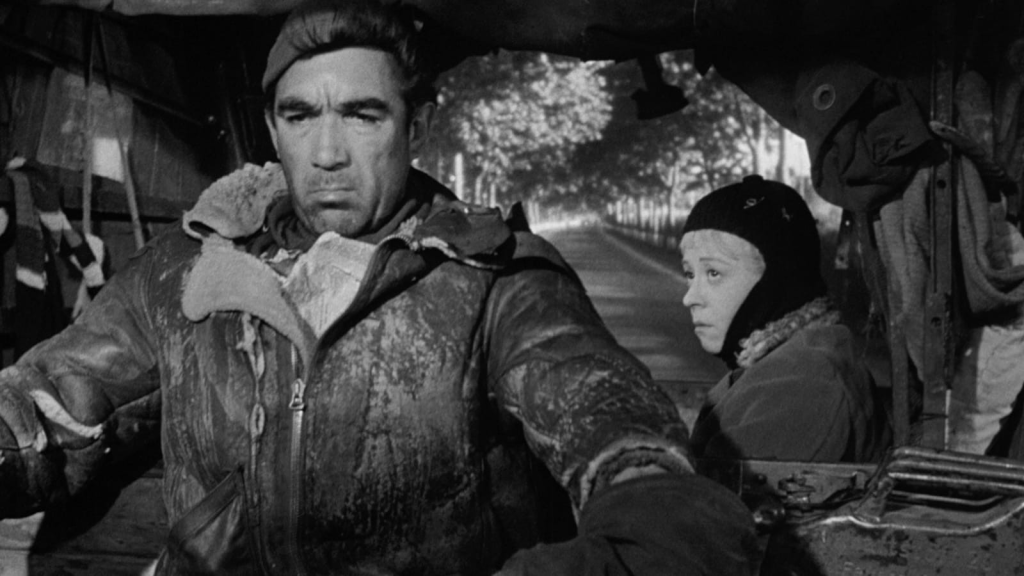
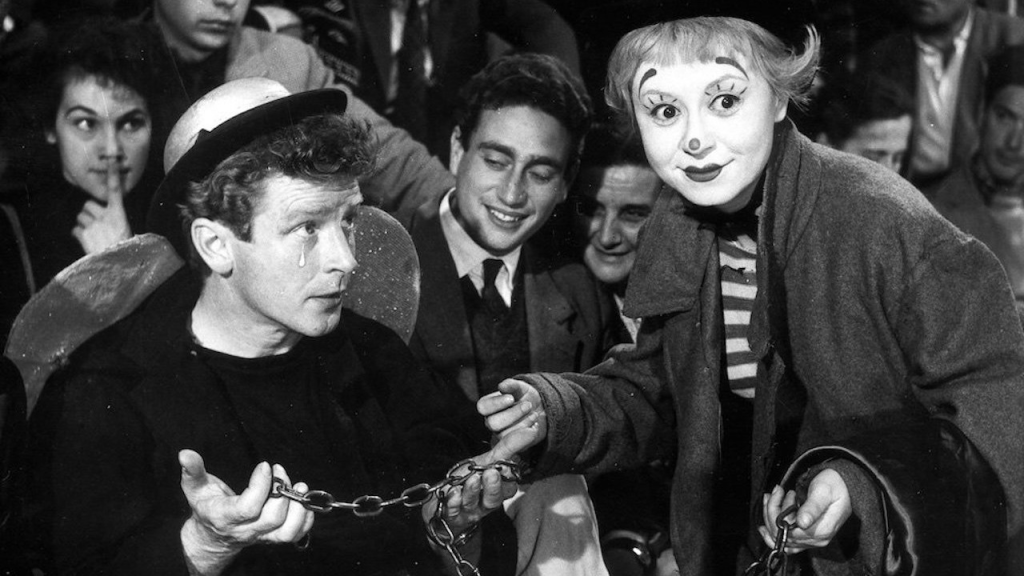
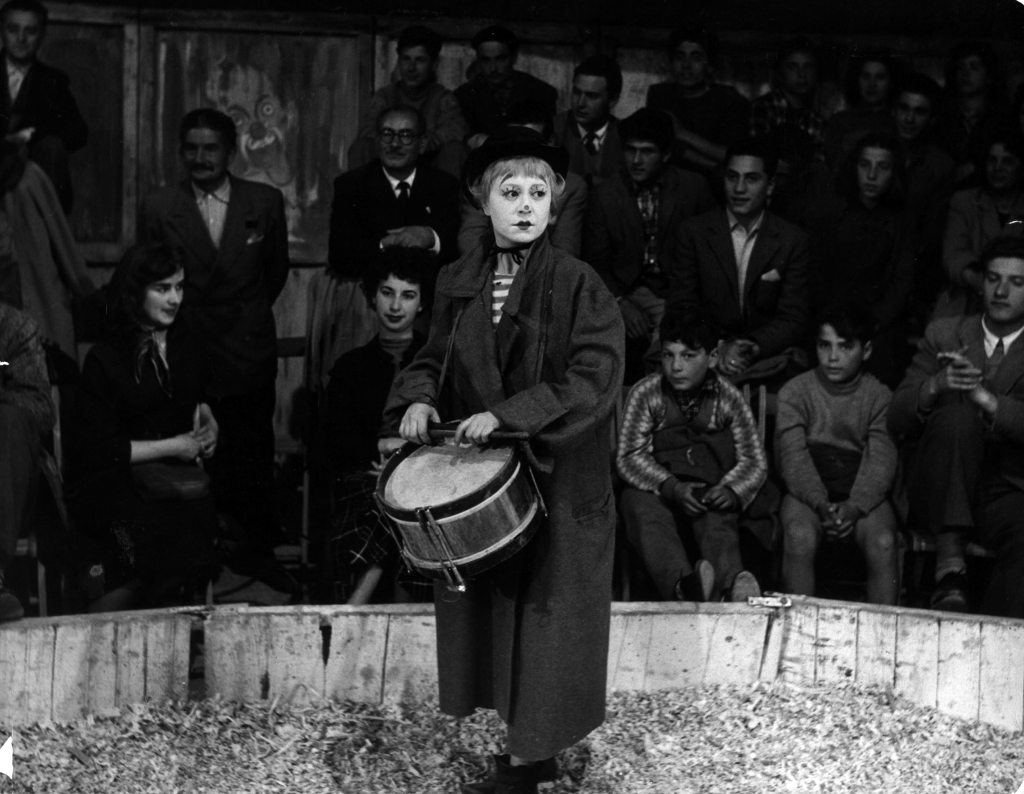
Fellini, though, sees pathos not as things to be avoided but to be embraced and explored in all its facets. He reaches us first and foremost via emotion. And does he ever do so by the most potent means: Gelsomina as performed by Masina is one of the most emotive characters in all of cinema, and credibly so. What is amazing about the character, and the performance, is that these don’t feel blatantly manipulative in a way that might make us turn against Fellini, his film and his protagonist. There is a simple earnestness to the way Gelsomina is depicted that is highly effective, making it pretty much impossible to watch La Strada through jaded eyes. This is not Spielberg with his slow camera move towards characters lost in awe, we don’t get Williamsesque strings telling us how to feel – which is not to say that the music is subtle, but Nino Rota’s score has a simple, earthy quality somewhere between fairy tale and circus that perfectly complements Fellini’s folksy tendencies.
Yet the filmmaker’s use of simplicity isn’t simple-minded, and though his pathos may play with the tropes of melodrama, La Dolce Vita isn’t melodramatic – and that is where Anthony Quinn comes in. While I would maintain that it is Masina that makes the film as effective and memorable as it is, it is Quinn who makes it surprising. His Zampanò is undoubtedly a brute, and the film is clear on this from early on: the first night that Gelsomina spends with him after having been sold by her mother (and she’s the second daughter to meet this exact fate, after her sister Rosa has died – and the mother asks no questions about this), the strongman rapes the young woman who he sees as his property. But for all his brutishness and lack of consideration towards others, Fellini and Quinn don’t let the character become one-dimensional.
Not too dissimilarly to another great brute of Western cinema, Raging Bull‘s Jake LaMotta, Zampanò never becomes less than human, and he is not entirely unaware of who he is and what he is doing to Gelsomina and the others he leaves hurt and broken in his wake. It would have been easy for Fellini to make Zampanò little more than a monster, the trollish villain of the piece who deserves nothing but our scorn, or to let Gelsomina become a Christ-like figure entirely, but this is not the path the film takes. Where Gelsomina wins our heart minutes into the film thanks to Masina’s performance, Zampanò isn’t softened to make for a palatable redemption arc. He is selfish, he is brutish, and he’s too savvy to be let off the hook as the product of a society and time and brutalises some and victimises others. And yet, Fellini doesn’t just give us permission to hate him the way we love Gelsomina. If there is an almost fairy tale-like quality to Fellini’s storytelling, it is overlaid with a naturalism that doesn’t allow for black-and-white simplicity. While the director does make use of pathos and sentiment, he upholds a certain ambivalence. This is never quite resolved in La Strada – and where Gelsomina makes the film loveable, it is the ambivalence that makes it haunting.
 A Damn Fine Cup of Culture
3 thoughts on “Forever Fellini: La Strada (1954)”