In films, we’re used to con artists being the heroes. Not always, obviously, but more often than not, cinema presents swindlers as appealing trickster figures, with charm and charisma up the wazoo. At first, Il Bidone, the Fellini film that followed La Strada, looks like it might be one of those movies. Carlo (Richard Basehart) has a face that radiates a childlike innocence (as it did when Baseheart played the Fool in La Strada) and Augusto (Broderick Crawford) is the experienced, paternal figure of the gang, with only Roberto (Franco Fabrizi, whose character feels like he could have walked out of I Vitelloni, in which Fabrizi played one member of the central group of friends) being presented as something of a rotter. Il Bidone also sounds like one of those films, with Nino Rota’s score, a lilting tune, reinforcesing our first impression: these characters are fun con men, tricking rubes with a twinkle in their eyes, and all of this is supposed to be a lark.
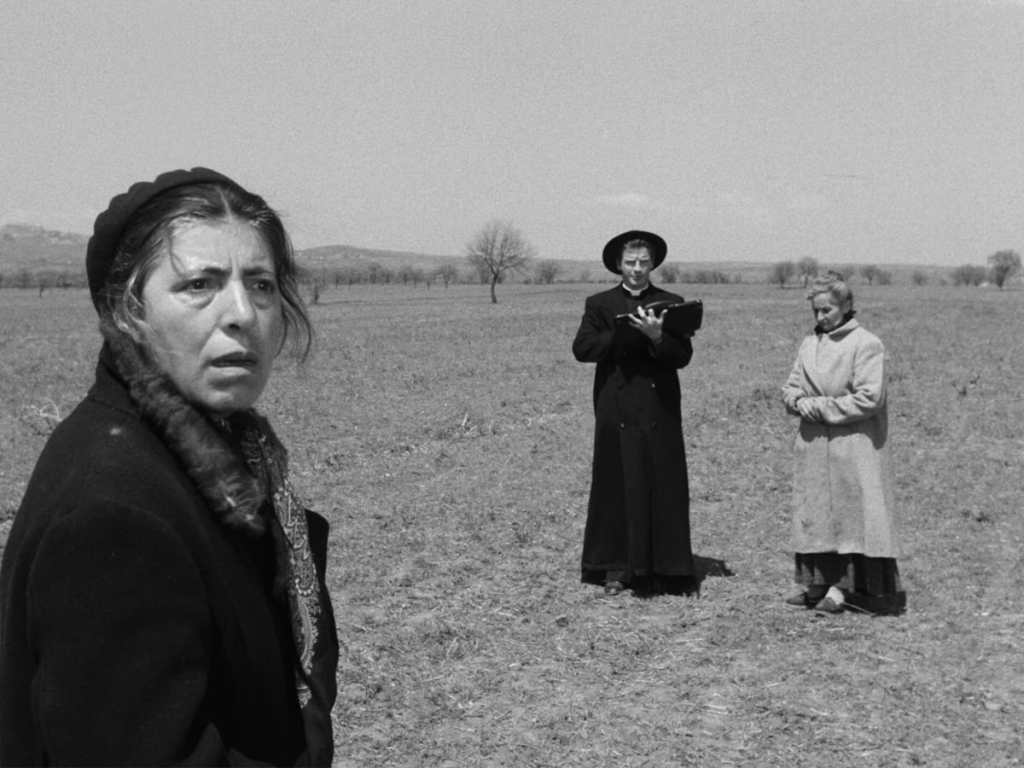
Which makes it all the more jarring when the film uses scene after scene to show that the rubes being tricked are desperately poor and living off scraps. They are not greedy: if they are eager to make a quick buck, it’s because they don’t have much to begin with and need money fast. When the con men promise them wealth, they bite because they work day after day just to break even. The swindlers sell them hope at extortionist rates. And we watch our protagonists ply their trade, swindling Italy’s post-war poor out of what little they have, while Rota’s jaunty music plays.
It took me a while to become attuned to what Fellini is doing in this film. We’re used to stories whose protagonists are charming swindlers, and we’re usually supposed to be on their side. But the director leaves no doubt: our supposed ‘heroes’ aren’t heroic and we’re not supposed to approve of their actions or live the trickster life vicariously through them – though, at the same time and much as with the sad group of losers we follow in I Vitelloni, or like Zampanò in La Strada, we’re not supposed to be seeing Augusto, Carlo or even Roberto as irredeemable villains. We’re not looking forward to their downfall. We’re rooting for them (okay, less so for Roberto), not to succeed in their cons, but to stop doing what they’re doing. Their lives could be different, and their chosen vocation hurts them as much as it benefits them. Augusto is feeling his age catching up with him: he says more than once that he’s 48, which is even a year or two older than Crawford was when the film was made, but he looks closer to retirement age, if there is such a thing for con men. He also hopes to reawake his relationship with his teenage daughter Patrizia (Lorella De Luca), whose life he’s barely been a part of – but being a con man is hardly compatible with being a family man. The same is true with Carlo, who is torn between his obvious enjoyment of the con and his family, as his wife Iris (Giulietta Masina) is no longer willing to turn a blind eye to what is going on and threatens to leave her husband, taking their child with her. Fellini allows these men to have pathos, even when he doesn’t let them off the hook for their actions.

It’s not only because of Franco Fabrizi starring in both films that Il Bidone feels like a follow-up to I Vitelloni at times. Much like that film’s young men entering their thirties and finding it more and more difficult to pretend they’re still young and carefree, the swindlers of Il Bidone are torn between hanging on to a life that in practice isn’t nearly as fun and glamorous as they pretend and the fear of having to make a fundamental change. Their fantasy of the glorious trickster life is looking more and more threadbare, and when they find themselves at another crook’s New Year’s Eve party, especially Augusto and Carlo look increasingly desperate trying to make themselves and others believe that this is the life they still want for themselves. In that sense, Nino Rota’s music isn’t there to show us how to feel about what’s happening on the screen so much as it seems to reflect how the protagonists wish to see themselves – and the more difficult it becomes for them to keep up this lie, the more the music fades into nothing, leaving behind sparse diegetic sounds evoking loneliness and desolation.
Il Bidone also presents the sexism of the swindlers’ world as not just crude but downright abusive. For every Carlo, who dotes on Iris even though he lies to her, there are others that are only in it for themselves, men who foreshadow the kind of crooks that would later take their cons onto the political stage in Italy. Though while the film suggests that there are always women who are drawn to the material wealth of the most successful swindlers, the appeal of fancy cars and swanky apartments quickly pales when your con-man husband is something of a rapey dickhead who treats women as the objects of yet another con.
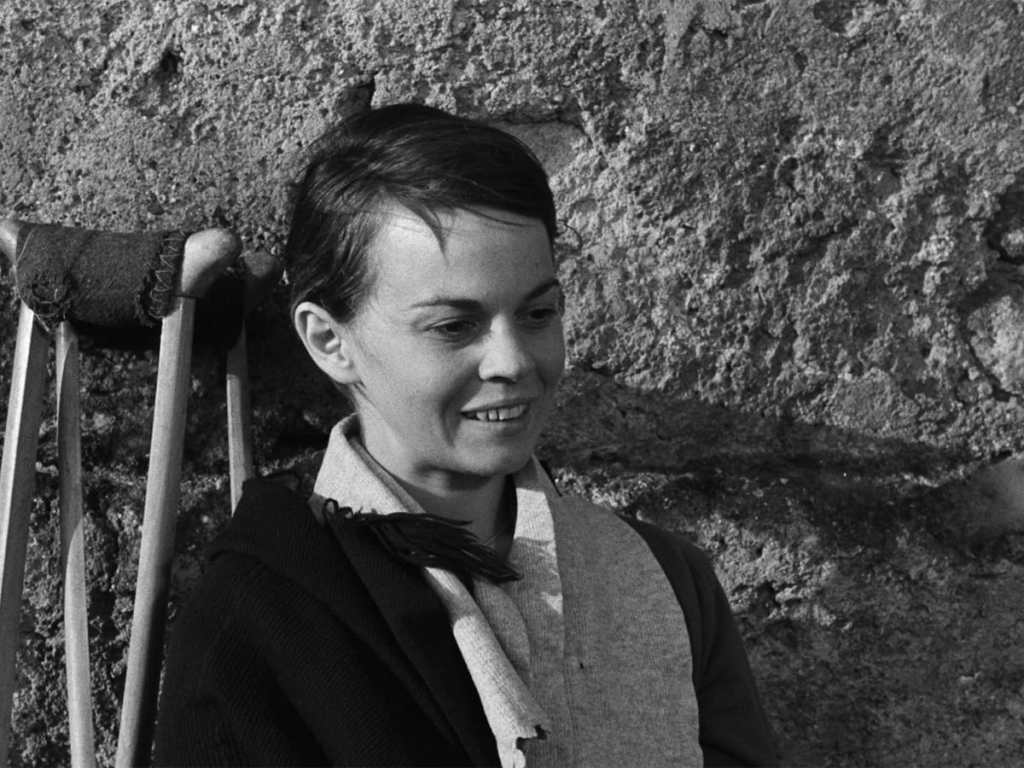
In spite of all this, I can understand why Il Bidone isn’t remembered as one of Fellini’s greats to the extent that La Strada is, and its blend of neorealism and melodrama lacks the idiosyncratic poetry that elevated I Vitelloni. Its scenes seem to be more overtly designed to tell us what to think and how to feel about these characters. While this works in the film’s strongest scenes, it also veers into the obvious and even the didactic, especially towards the end, as we watch Augusto restage the same con the film began with, but this time with less amiable, less trusting collaborators. A young woman suffering from the effects of polio is among the victims of their con, and the encounter with her seems to stir Augusto’s conscience. The staging, the absence of Rota’s score and the unadorned performance by the young actress save what could be a mawkish scene, but there’s still a sense here that Fellini is bringing in the heavy artillery: if a poor crippled girl can’t the old con man to rethink his ways, surely no one can, right?
In addition, if I am slowly getting a sense of Fellini as a filmmaker, Il Bidone seems to have less of that Fellini feel to it. The swindlers may be a variation on the various troupes of performers in the earlier films, but this aspect isn’t as developed here, nor does it feel as tonally specific. If it wasn’t for the returning performers – Masina, Fabrizi, Basehart – this could almost feel like a film by a different director. Which makes me wonder: what would a more Felliniesque version of Il Bidone look like?

 A Damn Fine Cup of Culture
2 thoughts on “Forever Fellini: Il Bidone (1955)”