Somehow, losing David Lynch hits harder, not only because of his art, which is often beautiful and disturbing in equal measure, but also because of who Lynch seems to have been: a kind, strange, generous soul, as an artist and as a human being. As anyone looking at our front page and at the name of our site will be able to tell: Lynch had an impact on us, and his absence will be felt.
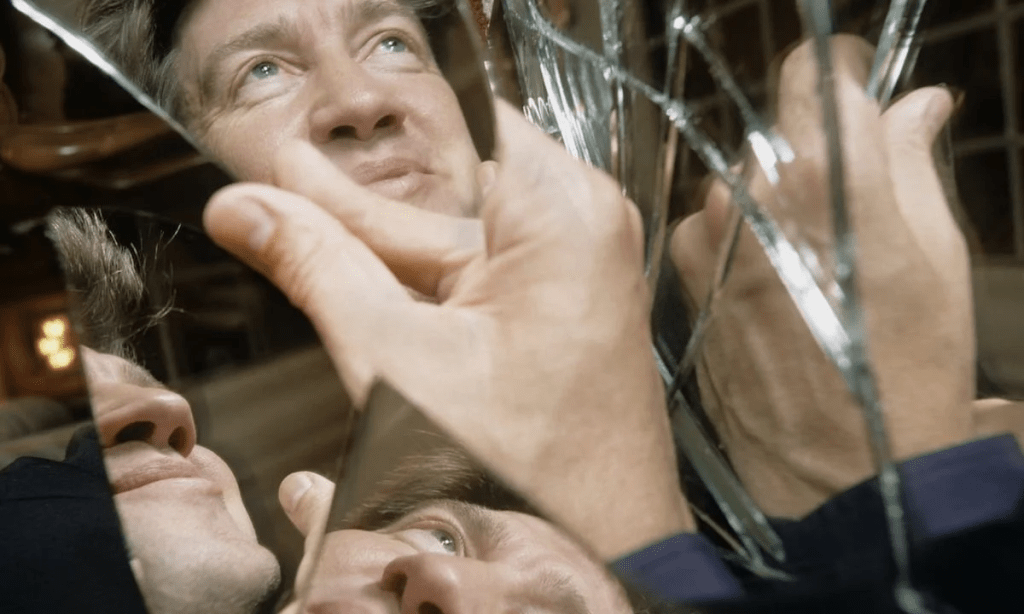
We’ll dedicate most of this week’s trailer post to the weird, frightening, wonderful worlds of David Lynch, but first, let’s have a look at what we did this week.
In this week’s Six Damn Fine Degrees, Julie took a walk down a particularly dark (or shall we say noir?) part of Memory Lane, reminiscing about Curtis Hanson’s adaptation of James Ellroy’s novel L.A. Confidential.
Then, on Saturday, we released this month’s espresso podcast, in which Alan and Matt sank their teeth into Robert Eggers’ Nosferatu.
But enough of that now. Let’s return to the heart of this week’s post.
Mege: The name-giving all-father of this blog has gone. Who was he? David Lynch was an artist who, better than anyone else I can think of, produced deeply memorable works of art in almost any medium available to him. He painted, he made movies and television series, shorts, ads, he sometimes acted, he did a weather forecast. Whatever he did, he generously gave us access to his world. That, of course, was a double-edged sword: you knew you would be confused, mesmerised, and scared witless at some point. But it was fascinating to be in his world – there may be terror in the dark, but he found solace in a cup of coffee or in the Douglas firs swaying in the wind. I don’t know anyone else who has the knack to mess with my mind in that way. There was love, humour and kindness side by side with unflinching violence. I wanted both, because it was Lynch flipping the coin.
Sam: Losing David Lynch immediately triggered a flood of 1990s memories of my sister and me watching her favourites among his filmography (Wild at Heart, Blue Velvet and Lost Highway especially), and how Lynch’s films seemed to capture something of her own very particular ways of looking at the world. Upon his passing, however, I finally got to watch a film I had somehow avoided for its, well, straightness. Oh, what I had missed! Lynch’s autumnal, slow road movie is a beautiful reflection on ageing and human connection, and Richard Farnsworth is phenomenal in it. What struck me is the way the camera looks at his interactions with people on the road, how it hovers and moves close. It still had that very Lynchian peculiarity to it, but there was no red back room and not much darkness beyond. Unlike most of his other films, this was straightforward humaneness – and a lovely film to watch and remember his gentle genius and unique sensibilities.
Matt: This will sound odd and arrogant and like me missing the point – probably because that’s exactly what it is. While I watched Mulholland Drive twice at the cinema when it came out, after the second time I decided that I wasn’t all too keen on it… because I felt that, compared to many of Lynch’s other works, it could be figured out. I looked at the film as a puzzle that could be solved, and me thinking I’d solved it meant that I could put that particular puzzle back in its box and put it away. How silly of me, how reductive: even if I might have an interpretation of Mulholland Drive, Lynch’s films were so much more than puzzles, in fact, they weren’t puzzles at all, even when they were puzzling. Whether it’s the stories or the characters or the images, they leave us bewildered and lost in the dark, but with glimpses of light and beauty and solace (and underlaid by an Angelo Badalamenti score, most likely), that make the dark all that much frightening but also somehow bearable. No hay banda, there is no orchestra – but seen through Lynch’s eyes and heard through his ears, there was not only dread but also always music in the air, the music of a terrible, wondrous universe.
Goodbye, David Lynch. You will be missed, but you’ve left your dreams and nightmares with us (it’s not always easy to tell the difference), and we will continue dreaming them.
 A Damn Fine Cup of Culture