Over the last two years, I’ve been making my way through Criterion’s Essential Fellini box set. Starting with Variety Lights (1950 or 1951, depending on where you check) and ending with Intervista (1987), this beautiful set included most of Fellini’s films – though not all, skipping for instance the acerbic English-language Fellini’s Casanova (1976), in which a bewigged, increasingly ridiculous Donald Sutherland fornicates his way across Europe, getting further and further away from anything approaching happiness, or even pleasure, in the process.

At first, I assumed that the reason for these omissions were simple rights issues – but then, it’s not like Fellini’s lesser-known films are widely available on physical media or streaming, and I doubt that someone is actively sitting on the rights of the remaining Fellini films. I’m sure Criterion could have got the rights to City of Women (1980) or The Voice of the Moon (1990) – but, from what I’ve read about these, the question is whether it would have been worth it for the sake of completeness. As much as Casanova finally grew on me, I understand why a box set with the word “essential” in its title would include Fellini’s formative films and his most iconic works, but not this oddity. (Which didn’t stop me from getting a copy released by another company nonetheless.)
Still, as I mentioned in my post on Intervista, I was sad that Criterion had not included Ginger and Fred, the film he made in between And the Ship Sails On and Intervista – and the reason for this was that it was the last film the director made with his wife, Giulietta Masina. She was indeed essential to much of Fellini’s oeuvre, and her absence in the films after Juliet of the Spirits made itself felt, not least because from La Strada onwards, she tended to play a character type that is otherwise lacking from most of the films: the innocent. Over time, Fellini leant more and more into the vulgarity and grotesqueness of the world he was depicting, whether that was ancient Rome, fascist Italy or the present day. Likewise, especially from La Dolce Vita onwards, Fellini’s existentialist leanings started to veer more and more towards the cynical. Masina’s characters provided a foil to this tendency, and if arguably her characters leaned towards the saintly, her performances nonetheless made them feel real and believable. After Juliet of the Spirits, Masina mostly worked in television, and she stopped working with her husband – until roughly twenty years later, when they reunited for Ginger and Fred. Incidentally, the film also stars Marcello Mastroianni, who’d memorably played various variations on Fellini himself earlier in his career. These two actors, so central to the director’s work, had not worked together previously, but it is tempting to see them as representing Fellini’s career, and for their own part in it.

So I went looking for Ginger and Fred and found a DVD release that fits the film quite nicely. Where the likes of La Dolce Vita and Amarcord got the deluxe treatment courtesy of Criterion, this DVD was barebones, featuring little in the way of extras. It had none of the glamour of the big releases of La Dolce Vita or Amarcord – a parallel to the aging ‘Ginger’ (Masina) and ‘Fred’ (Mastroianni), a pair of dancers who, thirty years ago, had made an act of imitating the iconic dance routines of Fred Astaire and Ginger Rogers. Time hasn’t been kind to either of them, so they jump at the chance of appearing in a tacky Christmas special for Italian television.
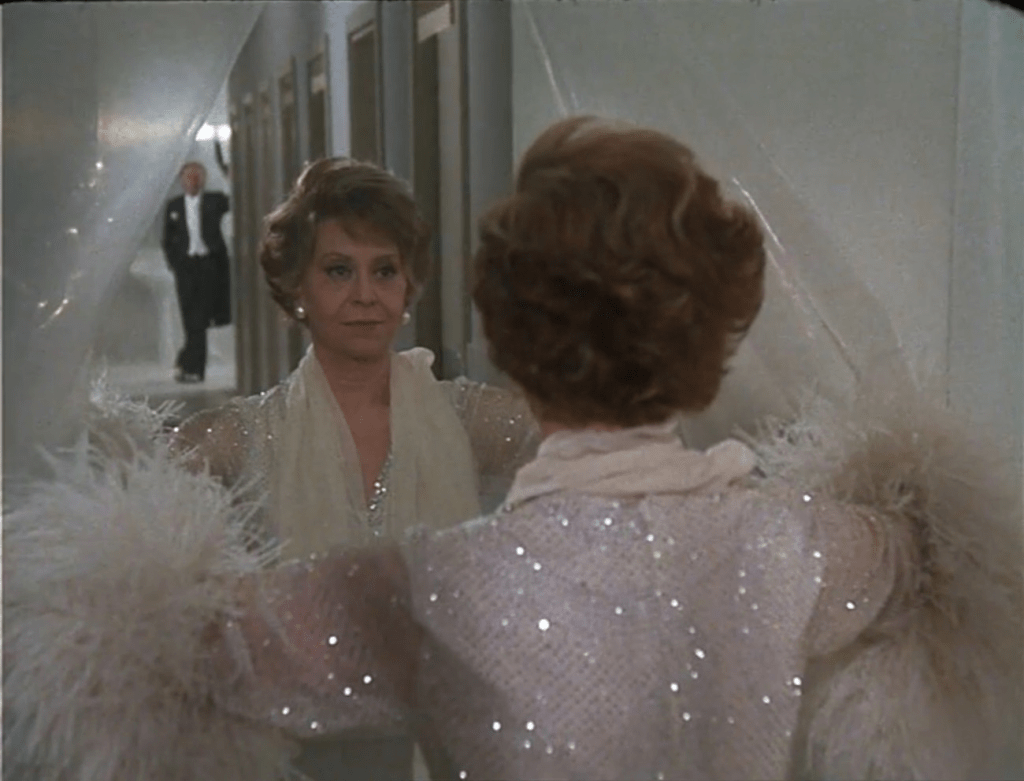
While it is good to see Masina two decades after her last appearance in a Fellini feature, it doesn’t necessarily help to think of her most memorable performances as Gelsomina or Cabiria. As Amelia “Ginger” Bonetti, she does not pack the emotional punch that these characters had. Instead, Amelia feels exactly like what she is: a widowed grandmother, a woman whose happiest years were a long time ago. The same is true for Pippo “Fred” Botticella, who makes his appearance only half an hour into the film: like Amelia, Pippo has grown old. There is a sadness to their need to relive their past – which, most likely, seems glorious only in comparison to their threadbare present.

For much of its first half, Ginger and Fred feels both tired (which works well) and tiresome (which I could have done without). Fellini indulges the commodified vulgarity of the TV variety show his protagonists are to appear in, but his satire of Italian television quickly wears thin, especially since there is a similarly TV-sized feel to the film. More than that, the film fails to make the familiar tension of latter-day Fellini work: is he fascinated with the vulgarity or repulsed by it, or both? Shrunk down to the size of a TV screen, this vulgar carnival lacks the crass grandeur of his later films, while the satire also feels fairly tame, so for its first third the film left me eyeing the clock frequently and wondering if I should just give this one a miss after all.
Reader, I persisted: and while this is partly due to a mix of stubbornness, Stockholm Syndrome and the Sunk Cost Fallacy, I would genuinely say that Ginger and Fred improves, finally becoming quietly moving in its last third. I still see why Criterion wouldn’t have put too much effort into obtaining the rights to this one, and the film can hardly be called “essential Fellini” – but as its focus gradually moves away from the loud satire and its troupe of cut-rate celebrities, impersonators who look and sound nothing like the stars they’re supposed to impersonate, and focuses on the sad, sweet duo of Ginger and Fred, things fall into place. Masina never becomes the big-eyed innocent of the earlier films, which makes sense: this is a story about how the past is gone for good. What is perhaps more surprising is how much it hits to see Mastroianni, the suave, sexy, self-serving cynic of La Dolce Vita and 8 1/2, grown old and not a little pathetic. Fellini doesn’t sentimentalise this – he is still Fellini, after all -, but even in the midst of the tacky, tasteless Christmas special he gives his two leads the space they need to, if not shine then sparkle. Ginger and Fred may not be essential, and going in expecting Masina to pick up where her most iconic characters left off is bound to lead to disappointment – but accepting the film for what it is, Fellini’s musings about having grown old and struggling to reclaim some semblance of an idealised past, there is something to be got from Ginger and Fred. Even if it means having to track down a DVD release made and released on the cheap. Aged and threadbare, this duo deserves a crack at a fleeting echo of their best days.
 A Damn Fine Cup of Culture