Welcome to Six Damn Fine Degrees. These instalments will be inspired by the idea of six degrees of separation in the loosest sense. The only rule: it connects – in some way – to the previous instalment. So come join us on our weekly foray into interconnectedness!
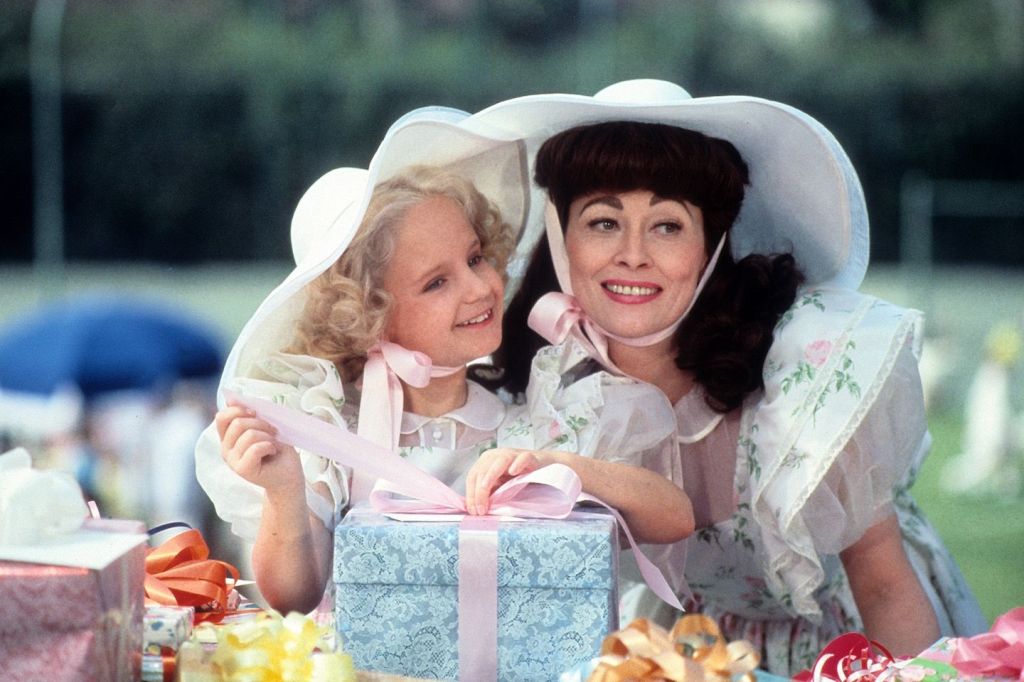
There is no other single film that has as consistently shown up in clips and reels in my social media feed as Mommie Dearest (1981), the now legendary adaptation of the tell-all book by Christina Crawford about her mother Joan, infamously starring Faye Dunaway in a practically career-(b)ending turn. The sensationalist account of an abusive Hollywood icon and the deep psychological scars it left on her daughter must have been immediately earmarked for a movie adaptation – and what an adaptation it became! Melanie’s piece about abusive mothers, fathers and their vindictive daughters in Chinese drama series The Glory last week finally gave me a shameless chance to expose myself to Mommie Dearest in full for the very first time!
Just as context, for anyone who doesn’t fall into my world of algorithms surrounding cinema, movie stars, queerness, cocktails and comedy: Mommie Dearest links the tempestuous career and adopted motherhood of classic Hollywood star Joan Crawford with the over-the-top performance of arguably the biggest star of the 1970s, Dunaway. By becoming Crawford, Dunaway and the filmmakers must have been hoping for Oscar rewards and devastatingly effective drama. What they received was one of the worst receptions and reviews in cinema history and, for better or worse, a film that forever changed Crawford and Dunaway’s public images. Even more, snippets from the film have spread far and wide across the internet, and these days especially social media. Lines from the film have been taken out of context and eternalised by the best drag queens of several generations.
Just to name a few, there is Crawford’s feverish obsession with cleanliness (“Helga, I’m not mad at you, I’m mad at the dirt!”); her badass confidence at Pepsi Cola executives (“Don’t f*** with me fellas. This isn’t my first time at the rodeo!”), her fits of despair at her daughter (“Why can’t you give me the respect that I’m entitled to? Why can’t you treat me like I would be treated by any stranger on the street?”); her disdain for her daughter’s blossoming (“I should’ve know you’d know where to find the boys and the booze!”); her dismissal of help after slapping her daughter repeatedly (“Barbara, PLEASE. PLEASE, Barbara. Leave us alone, Barbara”) and probably oddest of all, her destructive rage in her own garden (“Tina! Bringe me the axe!”), as well as her daughter’s closet (“No wire hangers! Ever!”).
Every one of these lines can be quoted endlessly among the astonishingly many fans the film has gained over the years. Even at the time of its terrible test screenings and reviews, therefore, Paramount Pictures was hoping to promote the film as intentional satire, but only recently has the attention towards these cult moments reached a true fever pitch, as ridicule, analysis and admiration found a potent cocktail in podcasts and dedicated video analyses. Faye Dunaway, whose career was massively sidetracked (if not all but ended) by the film, after a string of massively prolific films ranging from Bonnie and Clyde in the late ’60s to her Oscar-winning performance in Network (1976). We have even seen a reappreciation of her work, also thanks to a documentary (Faye, 2024) about her cultural impact and fall from grace. Nevertheless, she was never able to shake the impression that her mind-boggling portrayal of Crawford was somehow channeling her inner demons and own divaesque excesses caught on camera and shamelessly exposed so often ever since.
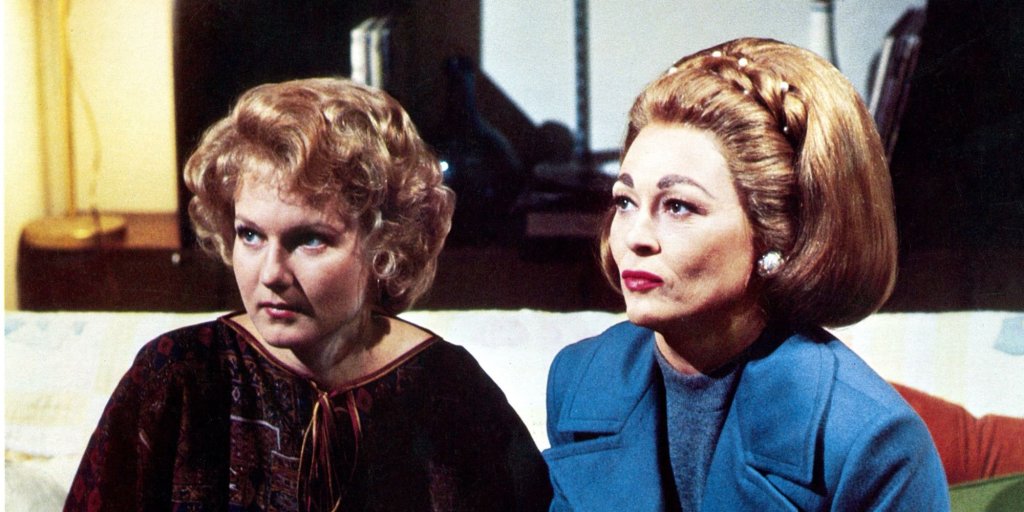
So, as the Paramount logo flashed across the screen, I was filled with anticipation, but I also felt the baggage of all that contextual knowledge about the film. The first few scenes are a clever slow reveal of Dunaway as Crawford, from her compulsive bathroom routine to her arrival at the studio. The filmmaking certainly seems accomplished to begin with, the period details, costumes and hair design stand out and a serviceable score by maestro Henry Mancini evokes a regal Hollywood mood. The editing promises a careful reconstruction of the process that led Crawford to adopt two children and bring them up partly as a single Hollywood star mother.
The mediocre supporting cast (some are literally taken from soap opera of the time, most noticeably Dallas‘ Priscilla Pointer as a headmistress) does little to detract from the main attraction: Dunaway is enormously intense from the start, chewing every scene and milking it for maximum effect, laying out all the tools in her acting toolbox… and then some: the dramatic voice modulations somewhat reminiscent of Crawford (but mostly of Dunaway herself), the vaudevillian eyebrow-raising and mouth bending invoking the movie star’s looks in caricaturish fashion, and a dedication to the physicality of the role that goes off the rails more than once in some of the most iconic scenes. One thing is clear: Dunaway gave this role her all, and she was clearly aiming high!
What struck me most is how quickly the veneer of Hollywood personal drama descends into absolute madness. As soon as Crawford fulfils her dream of adoption and the menace of her motherhood start shining through, the film literally invokes horror cinema. Dunaway’s outbursts come out of nowhere at first and lend her a truly monstrous quality. Rather than, let’s say, the hagsploitation films of the ’60s and ’70s (most famously Crawford’s own role in Whatever Happened to Baby Jane in 1962), this pretends to be serious family drama. And the effects, at first, are devastating and truly scary. Poor Christina (first a young and quite impressive Mara Hobel, then a pouty Diana Scarwid) is out of her depth trying to understand the rage and torturous disciplinary measures her mother throws at her. Among the most shocking scenes are Crawford’s rage at Christina’s impressions of her, followed by her savagely chopping off her daughter’s hair, the crazy rampages in the garden with the infamous axe, as well as the equally iconic wirehanger moment.
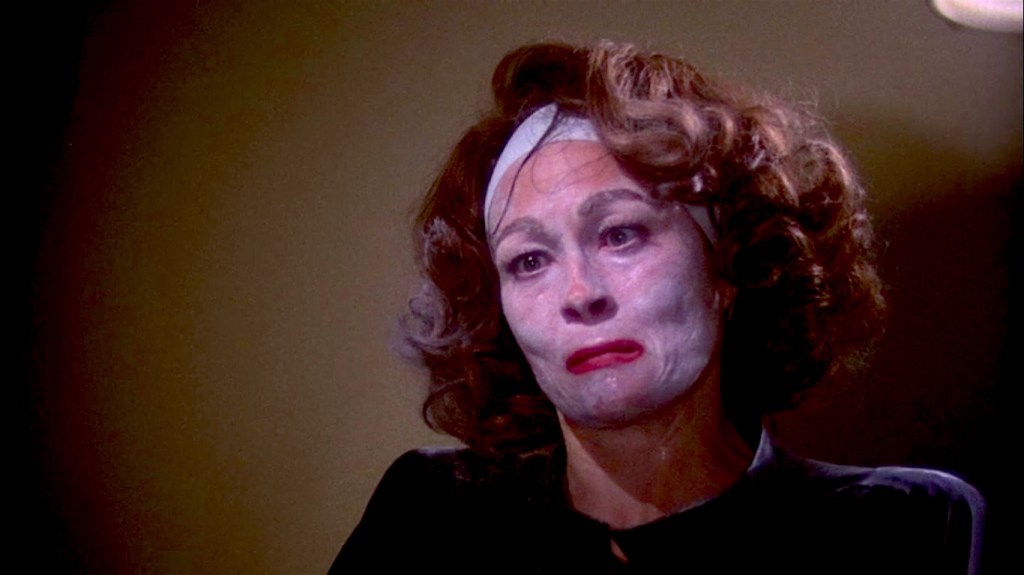
Least bearable of all, however, is the scene when a teenage Christina (now Scarwid) is viciously hounded down, and then attacked and choked by her mother for what feels like minutes on end. Dunaway went fully ‘psycho biddy’ for this scene that seems to include several stunt doubles to avoid serious injury. What surprised me was that these scenes that I had been amazed at in isolation became truly shocking in the overall progression of Crawford’s descent. At the same time, the film peppers the vicious moments in between scenes of family drama, career despair and for-the-press harmony. Altogether, Dunaway’s character arch is thrown in disarray and her character comes across as erratic, unpredictable and – in the end – unrelatable.
By the final third of the film, these are clear signs that its makers were in trouble. What started out as period Hollywood drama and then quickly descended into shock and awe, finally labours on into a trivial and underaccomplished finale of Christina’s somewhat-redemption at the hand of strict nuns and her final peace with her mother in her older age and at her deathbed. This seems particularly tacked on and laboured, considering how long we were led to believe that ‘Mommie Dearest’ is truly berserk. By the time the film ended, I had lost all interest in the distinction between truth and fiction or the perspective Christina was really having on her childhood.
In its stronger moments, the film could be seen as a fever dream of Christina’s own making, complete with the dollhouse-then-haunted-mansion atmosphere of the set design and the almost too meticulous recreation of Crawford’s looks. What emerges is something quite far off the mark from what Crawford and her time were really like. Some of it is taken straight out of horror and hagsploitation cinema, some of it, at least in snippets, plays rather well as extreme camp comedy, but overall, this is actually extremely unfunny on so many levels: the actual impact such treatment would actually have on children and the lack of empathy the film really has for any of its characters. Everything is meant to be very serious, but we come to think it’s unintentionally funny when really it is anything but. It’s a conundrum of a film: ambitious and undercooked, highly invested in (by Dunaway particularly) and deeply flawed. Finally, it also sits uncomfortably within early ’80s cinema, invoking some of the old Hollywood yearning Billy Wilder’s Fedora had evoked a few years earlier but similarly failing to catch the audience’s interest.
Once test screenings started to go awry and reviews were terrible, producers were at a loss as to what to market the film as. Our viral clip culture might have remedied some of its perception and plays it for pure camp, but Mommie Dearest is still deeply flawed and (pun intended) a multiple slap in the face of Crawford, Dunaway, abused children – and audiences!

An in-depth analysis of the impact the film had on Crawford and Dunaway can be found here.
 A Damn Fine Cup of Culture