Welcome to Six Damn Fine Degrees. These instalments will be inspired by the idea of six degrees of separation in the loosest sense. The only rule: it connects – in some way – to the previous instalment. So come join us on our weekly foray into interconnectedness!
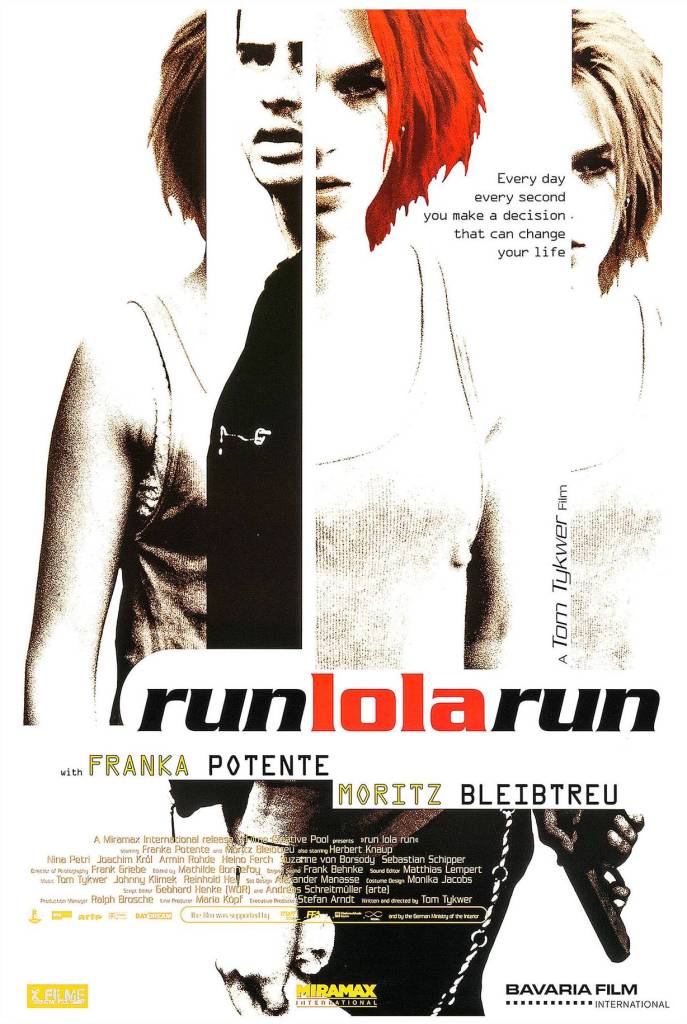
Note: mild spoilers ahead. Though nothing of substance is spoiled in this post, you may want to see the movie first.
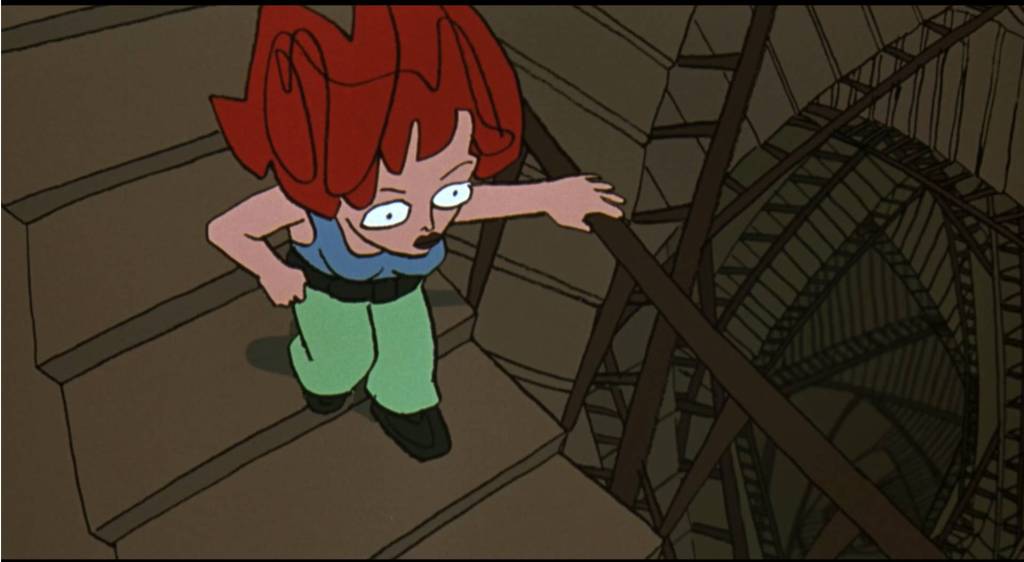
As Lola Rennt opens, a man in a security guard’s uniform advises us: “The ball is round, the game lasts ninety minutes. That much is for sure: everything else is theory… And away we go!”*
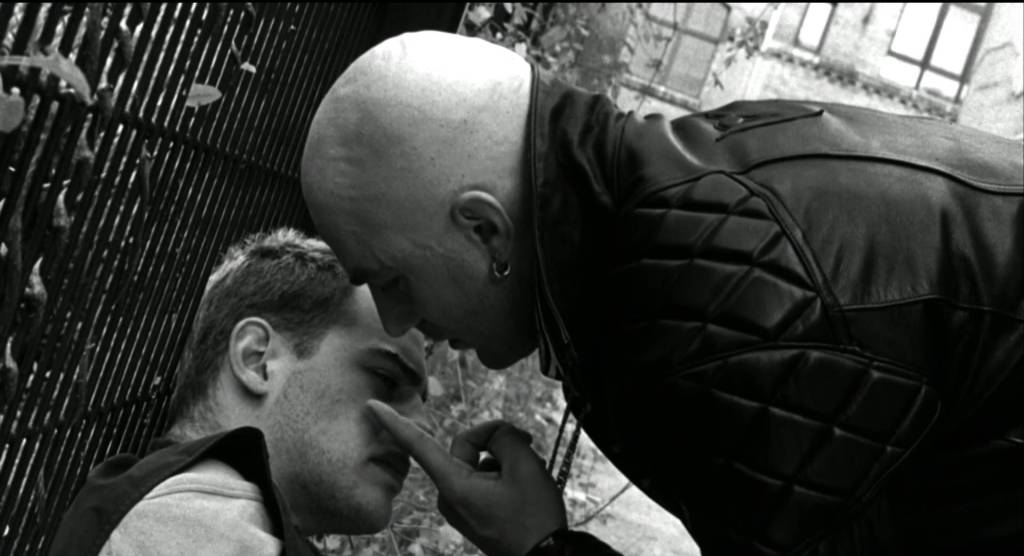
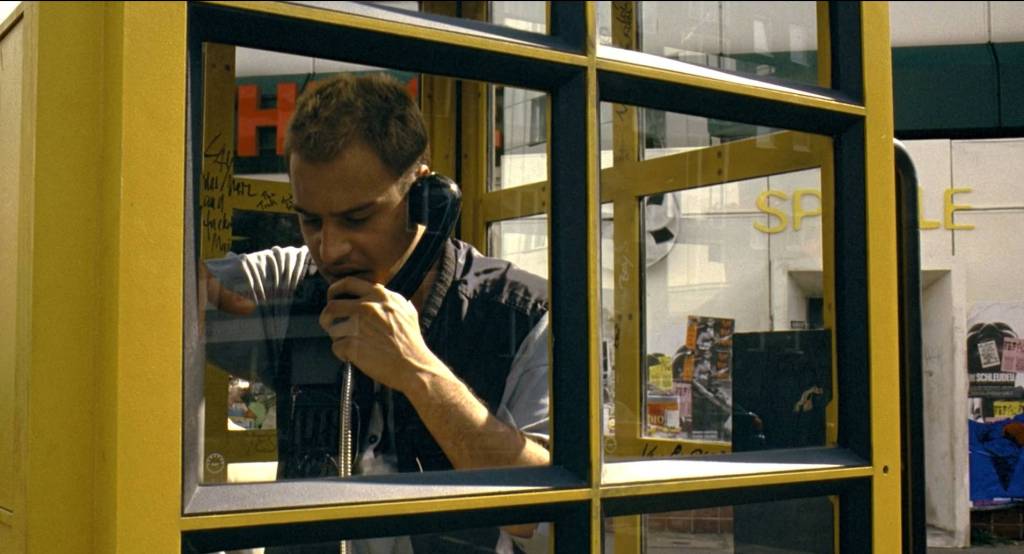
After the credits, portraying a running Lola as a cartoon character, we skip to Lola’s room, where she picks up the telephone. Her boyfriend Manni (Moritz Bleibtreu) is calling and he is in a state. Lola (Franka Potente) was late in picking him up, after some sort of criminal transaction. So he took the subway with a huge bag of cash. But, due to circumstances, the bag was left on the subway and now he has to come up with a hundred thousand marks in twenty minutes. Or the crime boss, Ronnie (Heino Ferch), who the money was meant for, will kill him.
“There, you see?” he sobs “I knew. Even you wouldn’t be able to figure this one out. I always told you. One day, something will happen, and even you won’t be able to find a way out. And not when you die: it’ll be much sooner. But you refuse to believe me. This crap about ‘love can do anything’. It can’t conjure up 100’000 mark in 20 minutes.”*
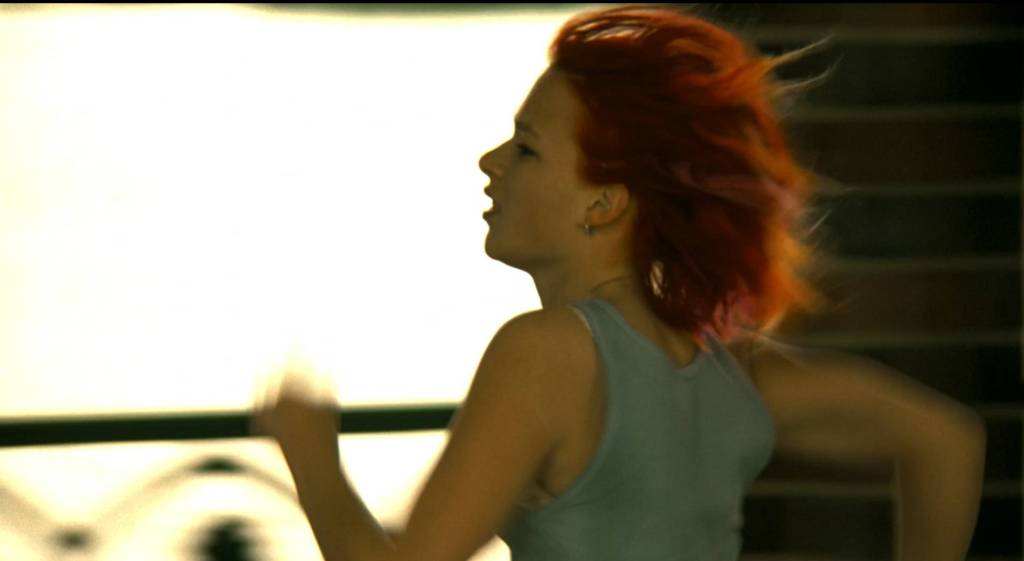
Lola tells him to stay there. To not move. To not do anything stupid. To not do anything at all. She’s on her way. And so Lola runs out of the apartment, through the streets of Berlin, towards the bank where her father works. This in order to convince him to give her the cash, so she can save Manni’s life.
And so this timeline unspools, her father won’t give her the money, she runs on to Manni and everything goes completely to pieces.
“Stop,” she breathes…
And she is back at her apartment, running out the door to repeat the timeline, only slightly differently this time around.
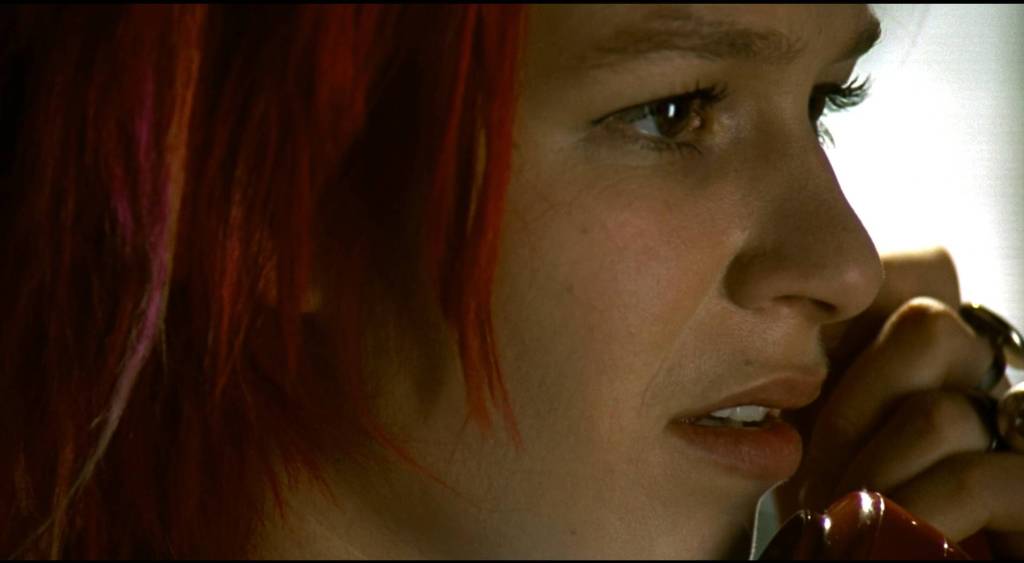
Lola Rennt is a very charming, very kinetic actioner. It is short, it is clever: it is effective. It has Moritz Bleibtreu and Franka Potente, both enormously compelling actors. But it’s also smart enough to not spell everything out for us. Through the little changes that happen, with Lola’s timeline, the fate of ancillary characters is radically altered. We see their alternate lifespans in quick flashes, as Lola runs by. It seems to be the case that Lola retains some knowledge of previous timelines: though that’s never made explicit. Lola just runs. The gentleman in the security uniform (Armin Rohde), who we saw in the pre-credit sequence, seems to know more than the other characters do. (“Bist ja endlich da, Schatz,” he observes in the third iteration. Or: “Here you are at last, sweetheart.” A term of endearment, incidentally, which their connection up until now hardly seems to warrant.), but he never gets actively involved. Ancillary characters resurface but in different situations. What happened? We never learn. Lola has to run, and run, and run again until the timeline concludes and is not rebooted anymore. Who is she? There are intimations of a sort of low-grade superpower. It is repeated that she always knows what to do. That she is always punctual. Is this because, perhaps, she has this time-bending capacity? But then why not change the timeline where she gets to Manni on time, to pick him – and the cash – up, get to gangster Ronnie, and avoid this whole disaster in the first place? The film is not interested. These are the rules: the phone rings, Lola runs out of her apartment to Manni, to try and avoid fate overtaking him again, and again, until the timeloop ends.
The ball is round, the game lasts 90 minutes. That much is for sure: everything else is theory.
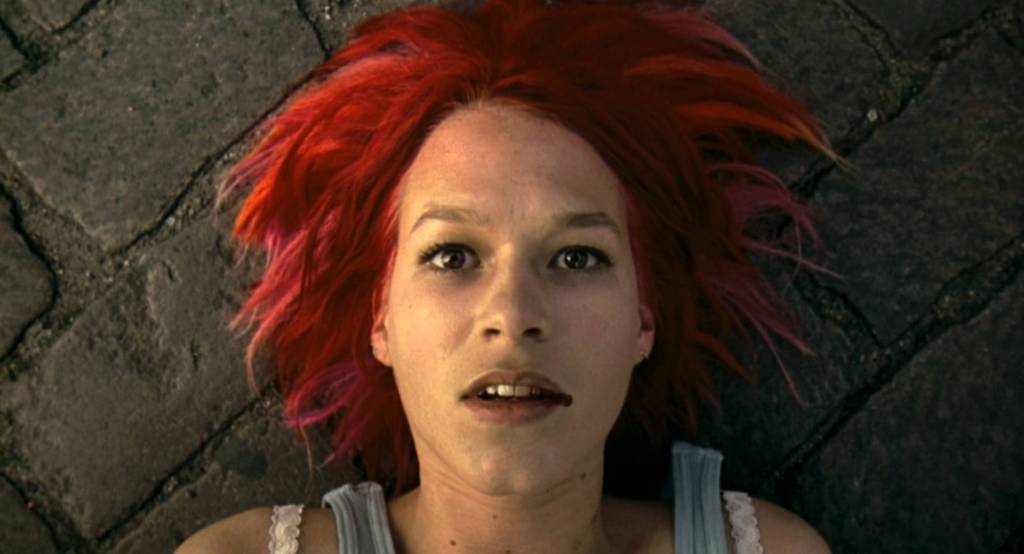
And, sure. There is a lot of very enjoyable speculation to get into (albeit perhaps rather superficial and faux-profound speculation), and inevitably people have. What to make of the scenes where Lola and Manni are lying in bed, and they muse about dying? (“What would you do if I died?” asks Manni. “I wouldn’t let you,” Lola retorts.) Are they flashbacks? Are they some sort of signifier of the connection between the two, which is otherwise left unexplained? Is it all about fate? Love? Does it even matter? What about Lola’s powers? What exactly are their limits, and do they only last until the timeloop expires? Lola runs, makes tiny changes in her path, and the lives of the people around her are fundamentally altered. Just as the butterfly flaps its wings in the overfamiliar metaphor, Lola runs. And all the people she runs into, sometimes literally, will never know when and why, or even realise at all, that their fates have unravelled. What does it mean? All just theory.
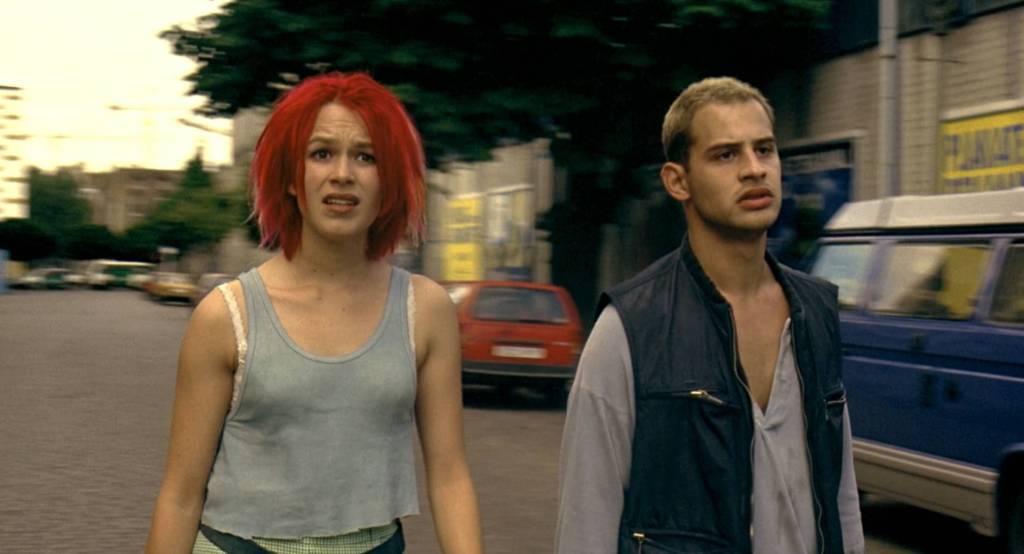
And while these rather haphazard metaphysics do add to the atmosphere of the film, they are certainly not necessary to enjoy it for what it essentially is. For those like me, who enjoy a pulse-raising, quick-and-efficient action movie, with quite a bit of heart and at least half a brain: it is eminently suitable for that purpose as well. The ball is round: the game lasts ninety minutes… And away we go!
*Note that I watched, and revisited, Lola Rennt (dir. Tom Tykwer, 1998) in the original German, so all translations are mine, and therefore may not correspond to the English version of the movie. These translations are not necessarily perfectly literal: they serve to make a point about the film. Any errors and embellishments are mine, of course.
** All screen captures from Lola Rennt remain © X-Filme creative pool GmbH/Bavaria Media GmbH (1998).
 A Damn Fine Cup of Culture