How do you begin with a film like Sátántangó? If you commit to its seven hours and 19 minutes, how much can you trust your own impressions at the end, and how much is the combination of Stockholm Syndrome and Sunk Cost Fallacy talking? There are films where I would say I liked them, possibly a lot – but would I recommend them to anyone else?
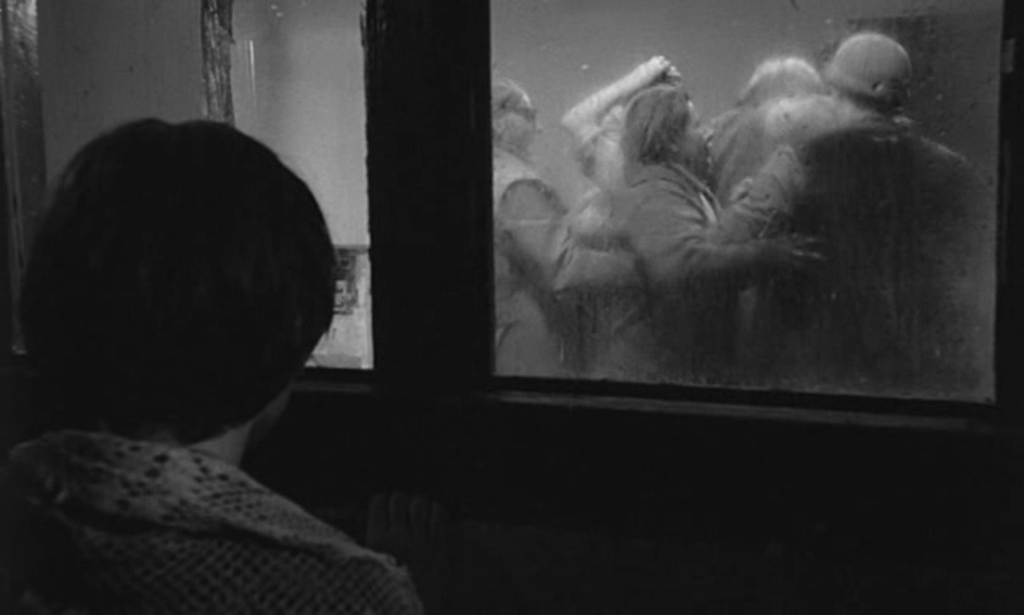
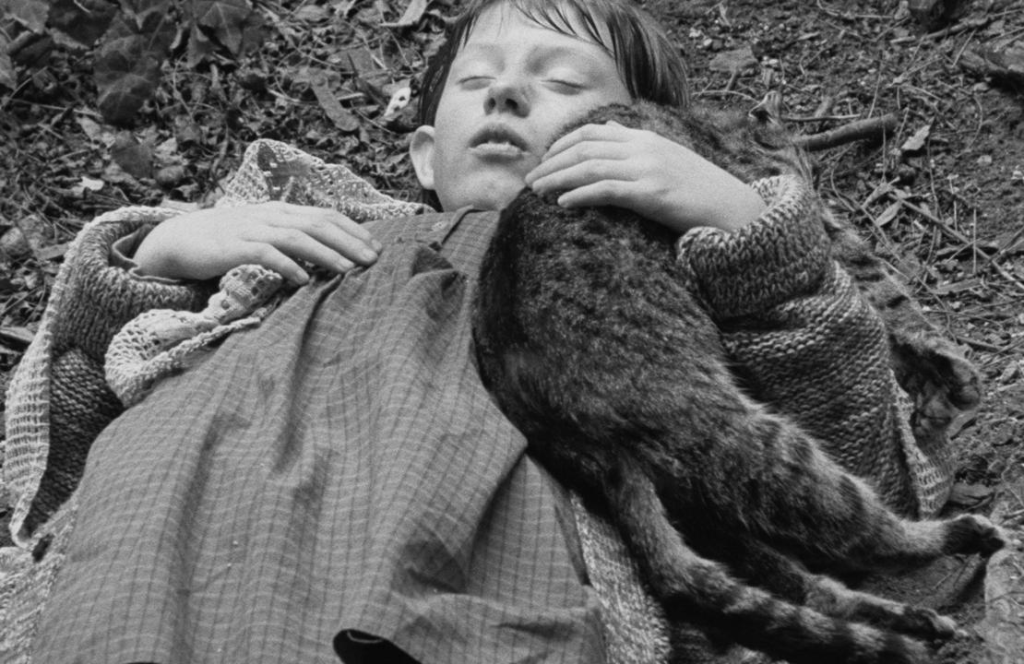
What I can say for certain is this: if this film is showing anywhere near you, if you have the time to go and see it, and if you are the least bit curious – go and see it. There are few experiences I am aware of in cinema that are like it, and that includes the other Béla Tarr films I’ve seen. (We were lucky – if that’s what you want to call it, seeing how the occasion was the recent death of the director – to catch Sátántangó as well as The Werckmeister Harmonies and The Turin Horse at the best local cinema over a couple of weeks.) If your experience is anything like mine, the length is the least of your worries. Worry more about the extended scene in which a child tortures and finally kills a cat. I will absolutely defend the scene… and I hope not to see it, or anything like it, in a long, long time.
Like the other films I’ve seen by Tarr, Sátántangó is set in a sort of apocalypse, though it is not the kind of apocalypse that moviegoers are accustomed to. There are no mushroom clouds or toxic rain (though there is so much rain, all of the time), and people aren’t turning into infected or (literal) cannibals. And yet, there is a sense of the end times to what we’re watching. There is a deep feeling of isolation and desolation, and it feels like the people we are watching may well be among the last people left in this world. (When we see a bigger city, its street are empty except for a herd of horses.) There is also an abiding sense of paranoia and mistrust, from the first scene. Even when we watch lovers, their embrace seems to be borne more out of boredom at best, despair at worst, than desire or affection.
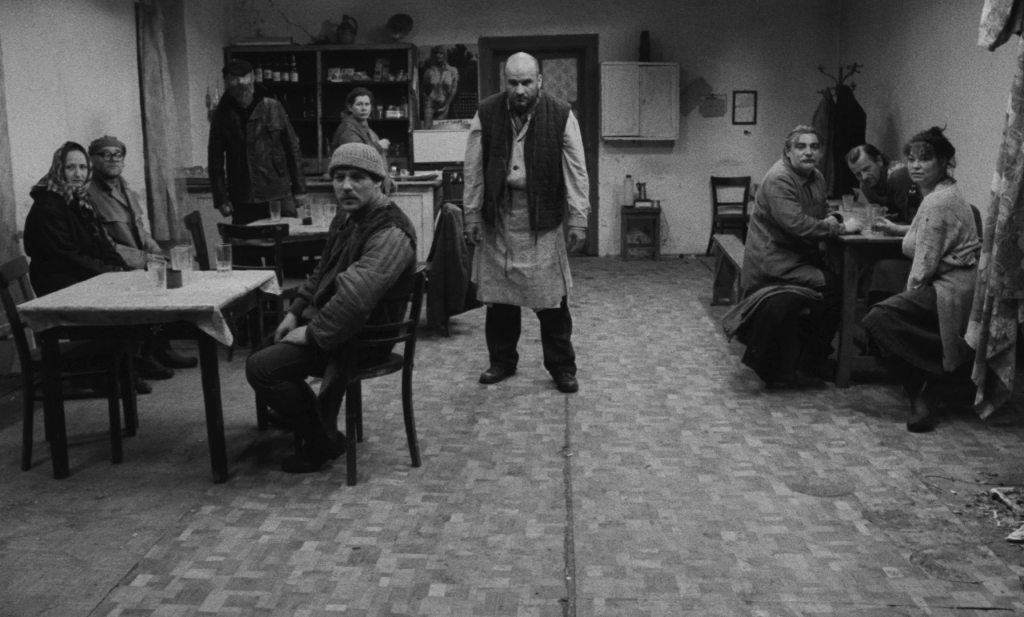
What is going on in this place? We don’t really know. The village seems to have been some kind of collective, but that collective has collapsed, and some of the villagers are plotting to make off with the remaining money. There are also rumours abroad of a man, presumed dead, walking the countryside on his way back to the village. Has he come back from the dead, was his death faked, or were the stories simply untrue? This is not a place or a time that breeds clarity, or trust, or hope. Most seem out to get whatever they can, and what grim solace there is can only be found in the bed of another man’s wife, or at the bottom of a bottle of booze, or possibly in passing on the pain you’ve been made to feel to whoever, whatever, is weaker and more helpless than you – such as that cat that still, for some reason, seems to trust you.
Is the little girl Estike (Erika Bók) evil when she mistreats the cat and finally poisons it? Or is she simply acting how she has learnt from the adults around her? There is a dreadful logic to her actions, even when they are more horrible than anything we’ve seen so far in the film – and that dreadful logic is also present when, after carrying around the dead cat with her and watching the grownups get drunk and dance at the local tavern, she runs away to a nearby ruin and poisons herself. Other people clutch to whatever life they have, but to what end? To whose benefit?
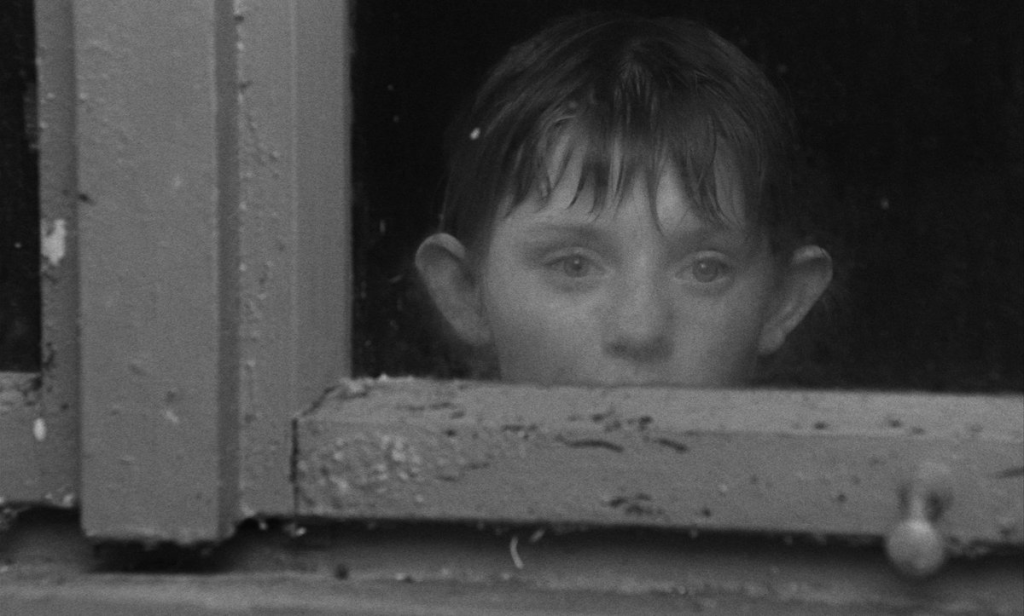
While the story that Sátántangó tells is a grim one, there is a strange beauty to its images – and what is even more strange is the pull this story develops. There is an uncanny quality to the films I’ve seen by Béla Tarr: while they are long and light on incident, they don’t feel slow so much as hypnotic. There is an underlying sense of tension from the first that grows stronger with every minute, a pent-up violence waiting to happen. Perhaps it is also this that makes the scene with the cat both more horrific and strangely more bearable: you constantly expect the villagers to be at each other’s throat, and it is the wait for some kind of explosion that is the worst. (The Turin Horse also has this sense of a simmering, escalating tension, perhaps even more so, as even less happens in that film than in Sátántangó, at least on the surface.)
And it is the seeming uneventfulness, the slowness, that infuses scenes with a feeling of urgency and dread. In one of the film’s chapters, we watch the village doctor, a shut-in who spends most of his time spying on his neighbours and making notes in his book. When he runs out of brandy, perhaps the only thing other than his voyeuristic curiosity that keeps him going, this badly looked-after, overweight man who seems in terrible health himself finally leaves his house – and his odyssey to somewhere, anywhere, where he might find the alcohol he so sorely needs becomes a nearly Herculanean struggle: each time he falls, we expect that to have been the last of him, but each time he finally gets back on his feet and battles on.
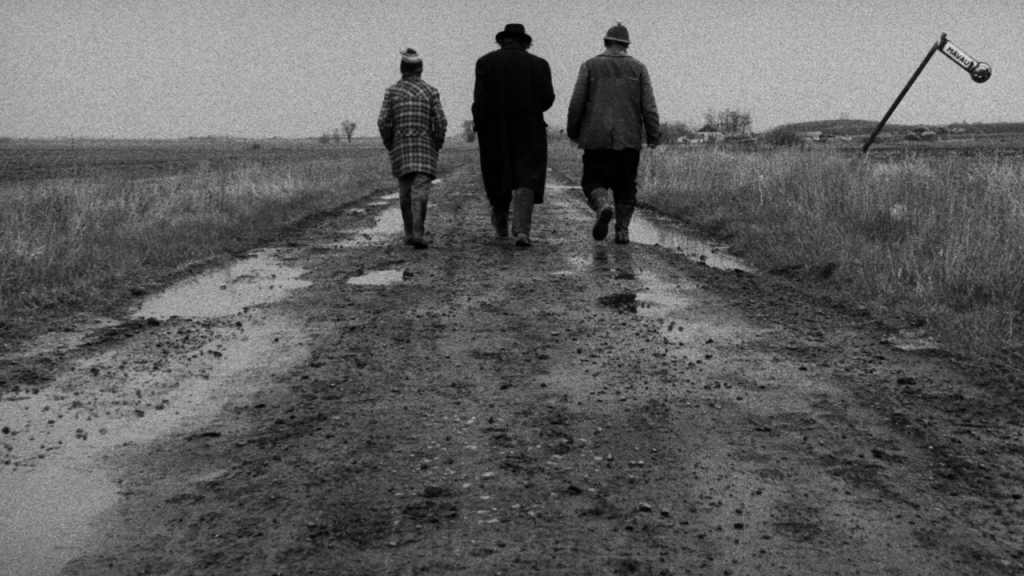
Does Sátántangó need its running time of 7 1/2 hours? If you ask that question, chances are that you’re already not in the film’s audience. I’ll admit: I wasn’t equally glued to every minute of this film, but that’s also okay. The film’s many sequences and long takes, the scenes that go on until they become uncomfortable, and then they go on for much longer, these all have a cumulative effect that is essential. I remember when I first saw The Turin Horse, in a cinema just underneath the roof of an old building, on a sweltering summer’s day, and people would occasionally lose focus or get up, go to the toilet, and come back, and little had happened in those few minutes – but it didn’t hurt the sense that you, like the film’s characters, were caught in a nightmare. There is more plot to Sátántangó, but largely it is about the world each of these characters is caught in, and how the more things change, the more they stay the same. There is a circularity to Sátántangó, one made literal towards the end – and that becomes all the more ominous for it. Few seem able to escape it. If, after more than seven hours, you feel a bit like this yourself, that may just be the point.
 A Damn Fine Cup of Culture