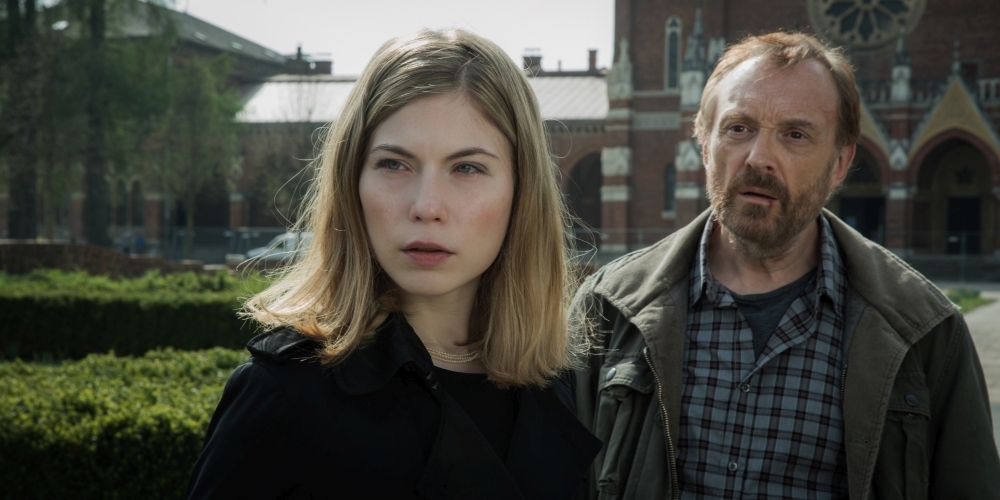
Das Ewige Leben (German for eternal life), the latest instalment in the Simon Brenner movies from Austria, starts with the usual slight comedic misunderstanding. Brenner, forever unshaved and in his shabby green jacket, wants to get social security, but has no job, no fixed address, no money, and no ID on him. “You’re homeless,” the woman behind the counter tells him. Maybe that has not occurred to Brenner.
Author: Mege
Mad to the Max
I am either the ideal or the wrong person to review Mad Max: Fury Road. I like my movies simple but suspenseful, on the realistic side, with weight and witty dialogue, with rounded, believable characters. Mad Max doesn’t have any of this. Instead, it’s a loud, shrill, monomaniacal high-speed romp through a barren, deadly post-apocalyptic landscape. Reader, I loved it. Movies like this elicit one of two likely responses: you either want to get off that hellride, or you cry for more. I cried for more. What doesn’t truck with me is complaining about the action and violence; that would be like jumping into a pool and complaining about the wetness. You’ve been warned.

Kurt Cobain will have his revenge on all of us
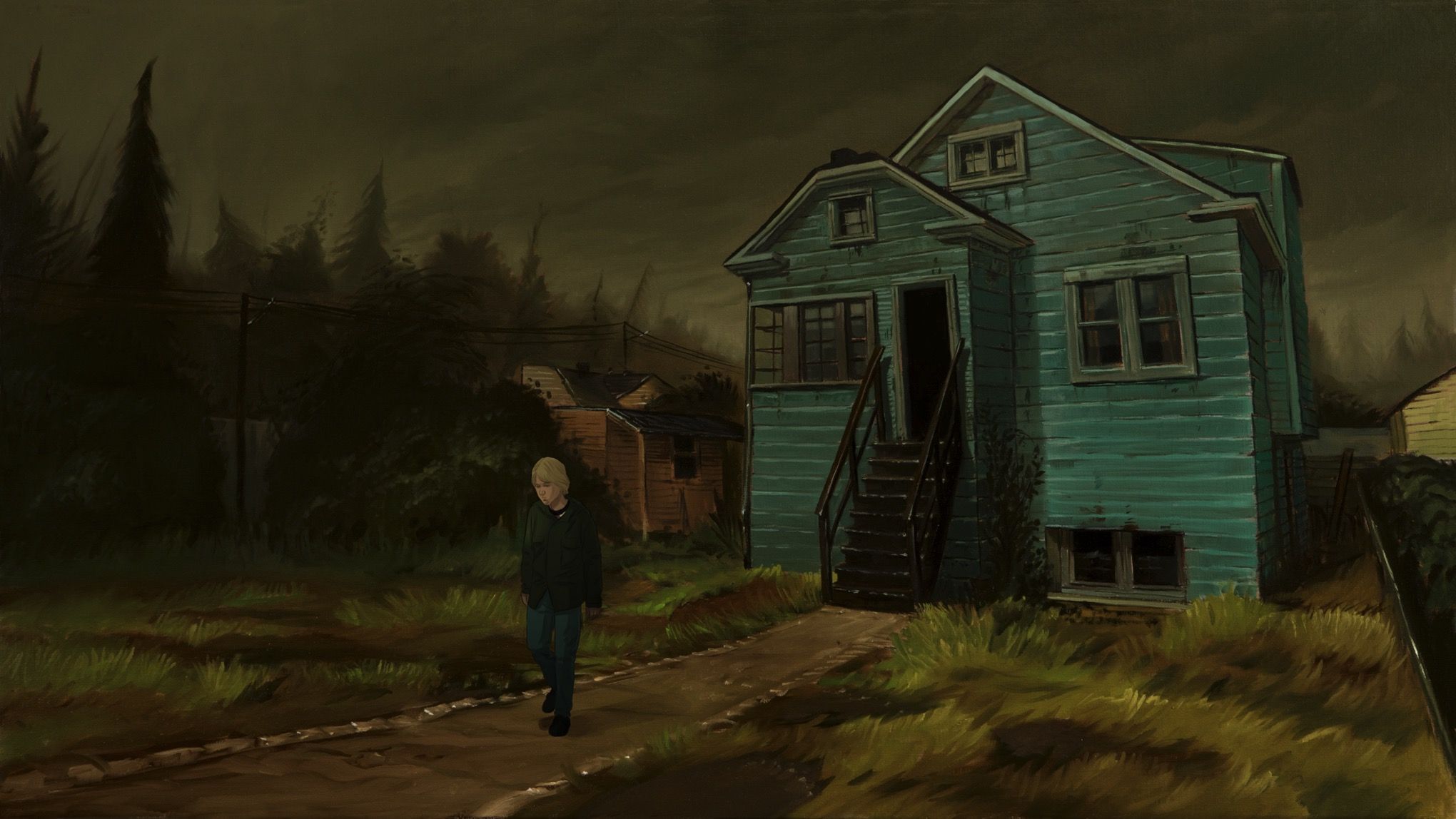
It’s the darnedest thing with Kurt Cobain: Montage of Heck. I can see that it’s a good documentary, but I have no idea what it wants to do or where it wants to go. It latches on to the biographical details as a red thread, and everything in it – the music, the drawings, the puppets and statues – is by, or at least featuring, Kurt Cobain. A bio-pic would feature a lot more interviews. Ok, so maybe it’s all about Kurt Cobain as an artist. Hardcore Nirvana fans will appreciate that, but all others must be warned: Cobain’s artwork is as uncompromising as his music. Since the movie is 130 minutes long, that means a lot of monsters. I grew slightly tired of exploding entrails and erected penises.
Love and war – same thing
Les combattants is essentially a love story, but the movie is at its best when it forgets that. There’s Arnaud, a carpenter who helps his older brother build pergolas in other people’s gardens. He looks on as the daughter of their latest customers fills a backpack with roof tiles and jumps into the family pool. He fears she might drown. “It’s combative swimming,” she replies, as if she did that every day. She does. Later, he will give her a ferret as a pet.

She also puts a whole fish in a blender and drinks it all. “I have to prepare for the end,” she says, although she doesn’t know exactly what that end might look like. Madeleine is not a gun-toting tomboy, nor a pessimist, but a young woman who thinks it’s her best choice to enrol in the French territorial army. She can be outgoing, but chooses to stay silent because she is not too good with people. She seems constantly on the brink of exhaustion, what with all that survival training. When Arnaud sees her, he is not love-struck at first, but curious enough about her to enrol alongside her. Madeleine has not much of a clue that he might like her. She takes his tagging along with a shrug.

Almost none of the scenes play out the way you think. There is a very tender moment where they paint each other’s face with camouflage colors. Another scene shows raindrops on her naked skin. Arnaud is fascinated, but all Madeleine wants is for him to punch her. Madeleine realises that the military is actually not hard-core enough for her, so she and Arnaud desert into the woods. There is a surreal scene at a gas station where they seem to grow apart, but actually find something out about each other. Arnaud doesn’t have much interest in joining the army, Madeleine wants it far too much.

The film avoids almost all of the clichés of boy meets girl or of the army. By the end of the movie, the two of them have grown closer together – in what way is for you to decide. Les combattants shows you fresh faces and an unusual story, told in an unusual way. Arnaud is played by Kévin Azaïs, slightly dorky and clueless about who he wants to be; Madeleine is played by Adèle Haenel, and I have a hunch that she might go on making good to great movies.
The Last Honest Businessman
A Most Violent Year isn’t as good as Margin Call or All Is Lost, the two previous films by J. C. Chandor, but it is still a fine film. What stands out here is the screenplay: there is very little actual violence, no grandstanding, no soul-searching, no deus ex machina, and no lucky coincidence. If Abel Morales can save his NYC heating oil distribution business, it’s by smarts and perseverance, not by some last-minute con. The threats to his firm come from outside: someone is stealing his trucks. There are armed goons observing his mansion at night. The DA (David Oyelowo) waves a warrant in his face during his daughter’s birthday party.

The film evokes the early 1980s effortlessly: Reagan, street crime on the radio. It features a lot of meetings, talks, negotiations. At the same time, crime is never far away: truck drivers get beaten up, trucks get stolen, a newbie on his sales team is hijacked. Abel Morales, played by Oscar Isaac, wants to keep his nose and his books clean at all costs. His wife and business partner’s goal (Jessica Chastain) is the same, but she is ready to do what needs to be done. A Most Violent Year has been compared to The Godfather: Part II – maybe because it is its opposite. It’s hard not to think of Scorsese or Coppola or Tony Soprano, especially if you cast Jerry Adler, but Morales is the principled center of the story while things fall apart around him.

The film’s weakest spot is its plot: if everyone around you turns out to be cheating, you can no longer stay clean. The fact that everyone is dirty is the opposite of a spoiler – it’s a stereotype. And the DA’s work does no longer seem to be a smart move, but a lazy, random stab: take any businessman to court, and you will find the dirt on him eventually. Seen that way, the movie slowly deflates. Juding from his earlier movies, J. C. Chandor’s strength is racking up tension by showing us characters who have created situations that slowly turn uncontrollable, so what will be their fate? Morales might give in to backroom deals, or he may refuse and go bankrupt.

This film is probably too predictable if you compare it to Margin Call, but it is interesting to watch. I’ve had my problems with Oscar Isaac, but he plays his role understated and straightforward. Jessica Chastain reminded me of Lady Macbeth because if her husband can’t take care of business, she will. And I didn’t recognise Albert Brooks or Jerry Adler until after the movie. New York City looks derelict, on the edge; apparently, 1981 was the year with the most murders. There is an early scene in a hospital where the corridor is strewn with litter. The outlook is bleak, not because business is bad, but because the people around you make it so hard for you and your business.
Paintings, People, Preservation
The worst thing I can say about National Gallery is that it is three hours long. It’s the latest documentary by Frederick Wiseman, a US filmmaker with more than 40 docs under his belt. It is my loss that I haven’t seen any of his work before.
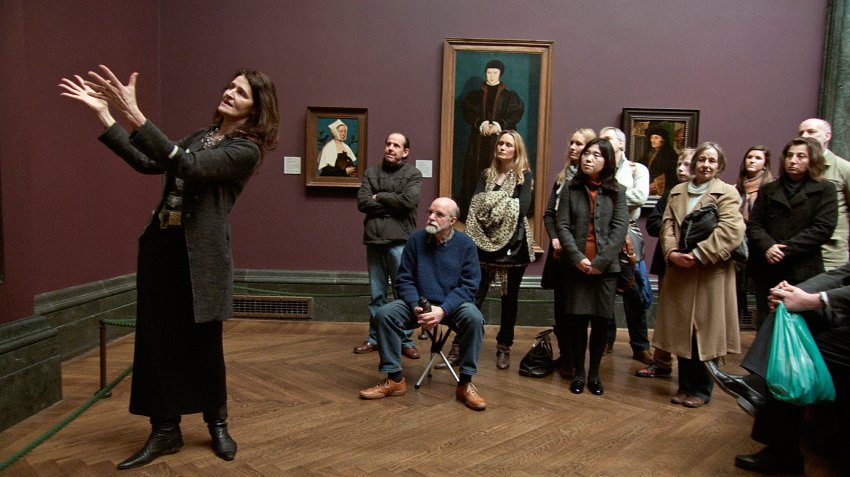
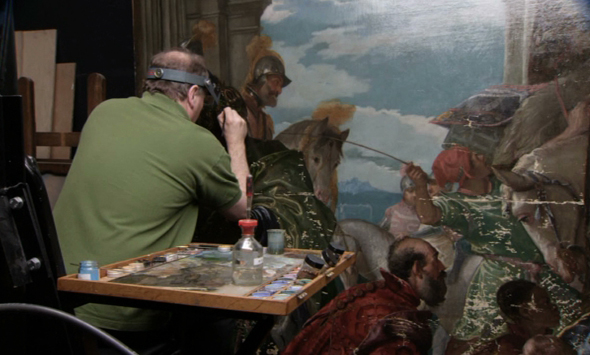
The movie doesn’t have any red thread to follow; it shows you paintings, it shows you people looking at the paintings – two portraits in one, you could say. Passionate tour guides will tell you about a detail in a painting. A restorer reveals the picture underneath another one. Budget meetings. PR meetings. Back to the paintings. Another film crew. Opening night. Greenpeace protesters. Morning, noon, evening and night over Trafalgar Square. Then back inside. The point is that Wiseman knows exactly where to place the camera. He has nothing to prove, nothing to press upon us. With his all-access pass, he is there to show us around, and to make our stay as interesting as he can.

National Gallery relies entirely on its visuals: there are no title cards, no questions from the off, no introductions, no looks at the camera, and yet you can intuit what’s going on very quickly. Wiseman leaves staff and audience be, and just lets the camera roll. It’s all in the edit.
You cannot make a movie like this one in the Louvre because the Louvre would be too overwhelming, and any movie would have to decide on which part it wants to concentrate. The National Gallery is big, but not too big. General entrance is free. You can see all it has to offer in one day, and then you can go back the next day and have a longer look at those paintings you liked best. Every time I’ve been there, I left drunk on inspiration and with a smile on my face. This movie reminded me of that, and it made me want to pay a visit again.
Cold war on the ice rink
Fetisov. Larionov. Krutov. Kasatonov. Makarov. Bykov, Tretiak and Tichonov. If these names take you back to your childhood, then you should go see Red Army. It’s a documentary about the Russian national hockey team in the 70s and 80s. Remember how they played like clockwork seemingly scoring one goal after another? Directed by Gabe Polsky, an American, it uses former team captain Slava Fetisov as entry point, probably simply because he is the only one ready to talk.
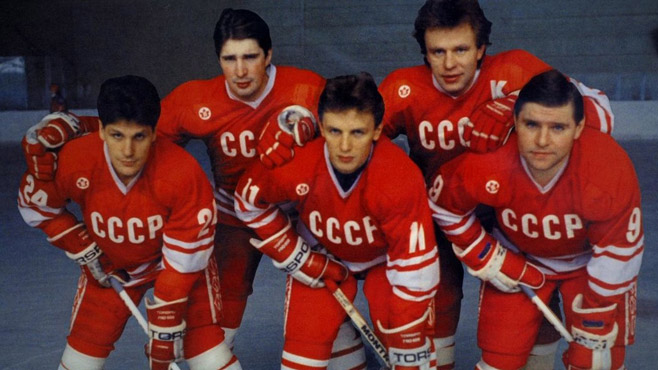
This is a very, very knowledgeable documentary, made by a guy who knows how to talk about ice hockey, but not losing himself in strategic details. It is, to a great extent, also the deconstruction of a myth. The main complaint is that some of the famous players don’t feature at all – that is true, but you can’t include them all, and some of them are basically saying nothing at all while on camera, and some might have refused to appear. It’s a short feature, but a two-hour long movie including everyone would have stretched my patience.
Sport was made to be a kind of warfare under Stalin, and the Red Army made sure that everybody got the message that Russia ruled over the ice rink. The title is not just a metaphor: the players were high-ranking officers, fighting for their ingrained belief that Communism really was the better way of life. Their constant winning was the best propaganda the Politbüro could wish for.
The dream team’s beginnings were whacky. Their early coach Tarassow took them to camps where they had to play chess against Anatoly Karpov. Strategic sessions were held using pawns. For physical agility, Tarassow took his players to the Bolshoi ballet and made them copy the dancers’ moves. Tarassow was fired when he interrupted a game because a goal of his team went unacknowledged. Breshnev had to wait 40 minutes without any gameplay, got impatient and had him sacked.
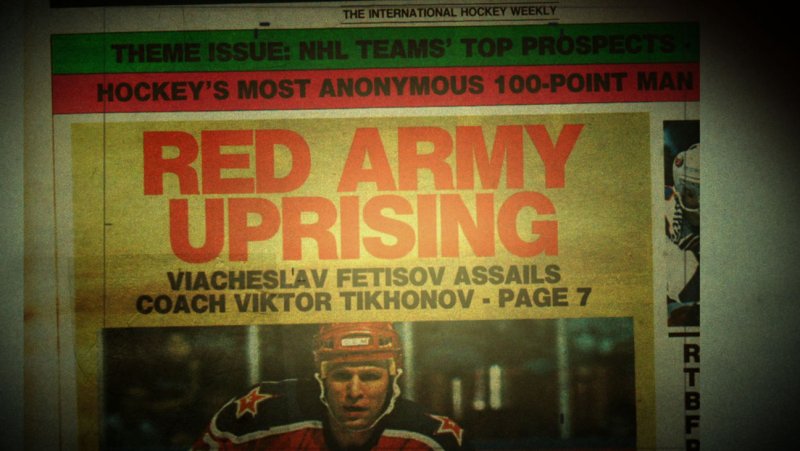
His successor was called Tichonov, and it is here that I started thinking of Whiplash more than once. Tichonov was a dictator in his own right. He made the players train and live together for eleven months of the year. Training sessions were held up to four times a day. Exceptions were unheard of: there is the obligatory scene where a player is refused to go see his dying father. On the other hand, just watch these guys play: skating backwards, leading the puck with the stick while looking elsewhere, passing the puck when every other player would have tried to score, scoring while flying through the air. Wayne Gretzky appears only briefly, but his confession of helplessness in the face of Russian strategy is all the more telling.
Trips for matches abroad were made with KGB agents aboard the planes. Eventually, players complained about the cruel treatment. Tichonov, who refused to be interviewed for this movie, yelled at them during matches and was rumored to beat them during training. The individual was nothing, the team everything. It’s no wonder some of them rebelled, although the lure of easy Western life might have played a part. Some of them wanted to go play hockey in the U.S., others rebelled because of the cruel treatment. Tretiak, the legendary keeper, refused to do any more oppressive training, but never left for the NHL. It was the end of his career. Others stayed out of patriotism or loyalty or fear. Some wanted an easier life, easier training, easier money. You can hardly blame them. In the case of Fetisov, the Politbüro refused to let him go, but sacked him. Tichonov publicly supported players who wanted to join the NHL, but did everything he could backstage to sabotage their transfers. To him, that must have felt like desertion.

After threats of deportation, Fetisov went to play for the NHL, where he was universally disliked, no matter how well he played. It shows in his face. There is a segment where you can tell how stunned he is by the brutality of the NHL. Only eventually did Fetisov and other Russians get some kind of fan-base. One of the weirdest pictures shows Fetisov, Kozlov and Larionov in Detroit Red Wing shirts, holding up the Stanley Cup in front of the Kremlin. That was in 1997, and by then, Gorbatchev was in charge, and it was hard to tell if that image was a victory or a defeat for Russia.
The documentary reveals that it was Fetisov who organised the whole Sochi winter games last year under Putin. Other former teammates are in similar key positions. If Red Army makes one thing clear, it is that those players were never rebels. They complained about their treatment and sought a way out. Some found it. You could admire them for leading impossible lives while playing almost hypnotic ice hockey, but as soon as their active careers were over, they re-joined ranks. Politics, unlike hockey, isn’t much of a spectator sport.
One movie, six stories tall
Wild Tales consists of six stand-alone stories of varying length and mood. The danger with episodic movies is always that you get yanked out of a good yarn, or that you might like some of the stories, but not others. That’s also the case here, but I am confident that Relatos Salvajes, as it is originally called, contains no filler for anyone in the audience, regardless of your preference for farce or gore or dark humor.

Besides Argentina as a location, if there is another unifying theme, it is revenge. Even before the opening credits, the movie starts with a plane full of seemingly random passengers, until they realize who has brought them there, and why. It’s the right kind of wild moviemaking, but it doesn’t overdo it; the director, Damián Szifrón, wisely avoids any Tarantino-style exaggeration. And the opening credits: the movie gives every actor an animal. No idea if that adds anything to the characters they play, but the pictures themselves are beautiful to behold. That sequence alone is why you should see this one on the big screen.

You can watch all of the stories as entertainment, but there is a deeper level to every one of them. If you get slighted, what kind of revenge are you up to? Do you turn murderous? Do you walk away because you are above such things? You might find out something about yourself, such as a talent for negotiation. Some scenes are incredibly powerful: a few drops of blood on a wedding dress, a chance encounter with a stranger on a rooftop at night, the despair of facing yet another administrative clerk on autopilot. And the most important philosophical question whether rat poison is stronger or weaker once it’s past its expiration date.
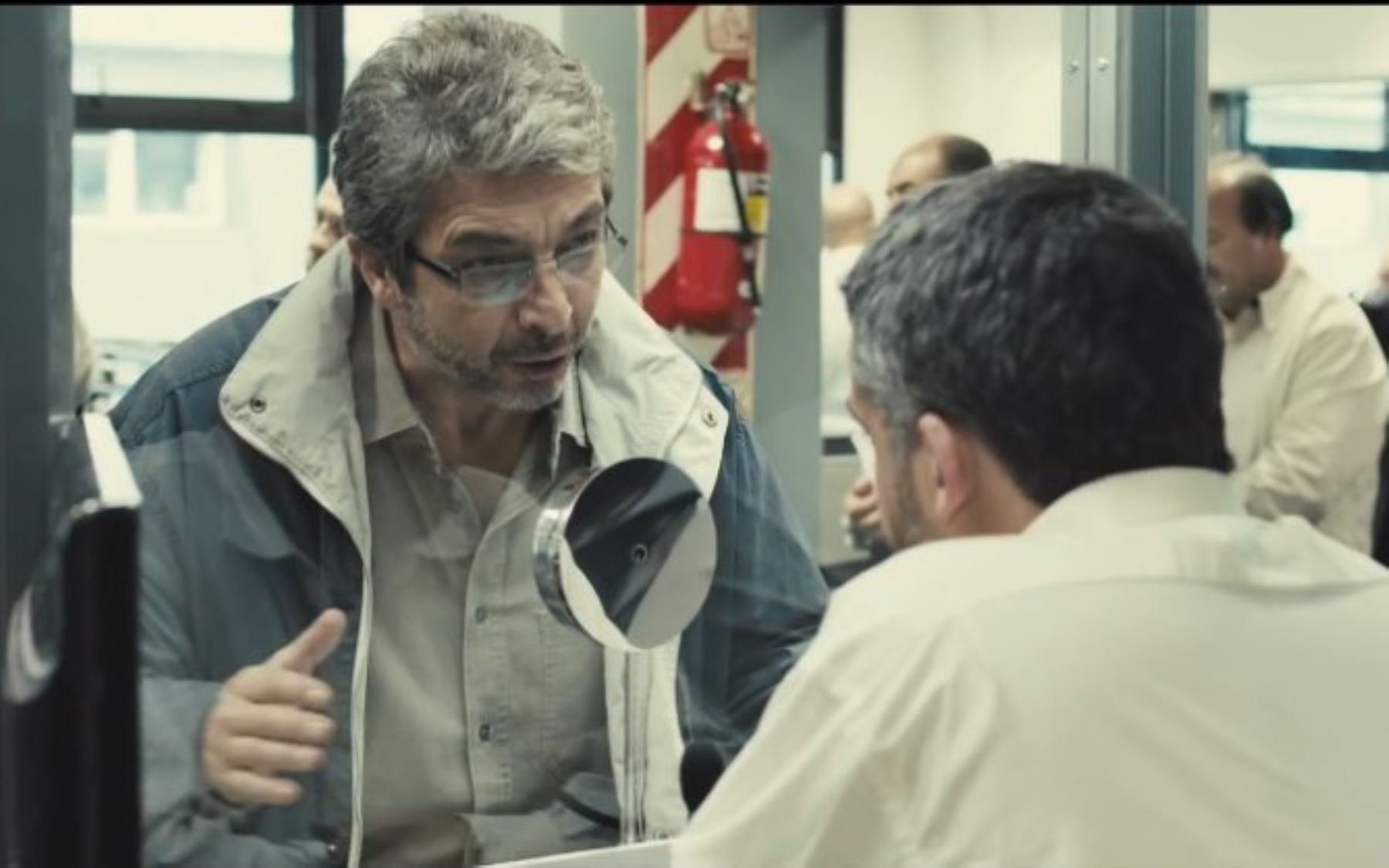
Wild Tales contains only moderate violence. There is one story that is basically a duel to the death, but both characters are clumsy and blind with fury, so much so that it all turns laughably funny. These two dumb guys deserve each other. The other stories turn violent only if they need to; there are moral questions to tackle first. Two segments are completely without any physical violence, but that doesn’t mean they’re easier to watch. Revenge is not just sweet; it’s also pretty devastating. And farcical. Sometimes it’s almost a logical consequence. I’ve never heard the words ‘Til Death Do Us Part sound so creepy.
Boom, bang, ta-tsk. Clang. Whoosh.
Whiplash does for music what Birdman does for acting: it shows the agony as well as the ecstasy that seems to come with the territory. Incidentally, both movies feature a lot of jazz. Whiplash tells the story of Andrew Neiman (Miles Teller), who is a passable drummer and wants to become a great one. He enrolls at Shaffer Conservatory in New York and starts playing in their Studio Band. If a jazz orchestra ever reminded you of a democratic collective, forget about it here. The band’s conductor and teacher is called Terence Fletcher, played by J. K. Simmons, and he is as sadistic as they come. When he enters a room, all dressed in black, his musicians snap to attention, like soldiers.

Fletcher will make a great drummer out of Andrew, but it’s one hell of a deal: it might cost you more than you are willing to give. Plus you might turn out to be a despicable human being. That is exactly Fletcher’s mission: he wants to push his students so that the next Charlie Parker can become the next Bird. He sincerely believes that his oppressive teaching is the way to greatness. Listen to his definition of a good job. If you want to know about dominance and submission, seek no further. Look at this movie sideways, and it’s a horror film.
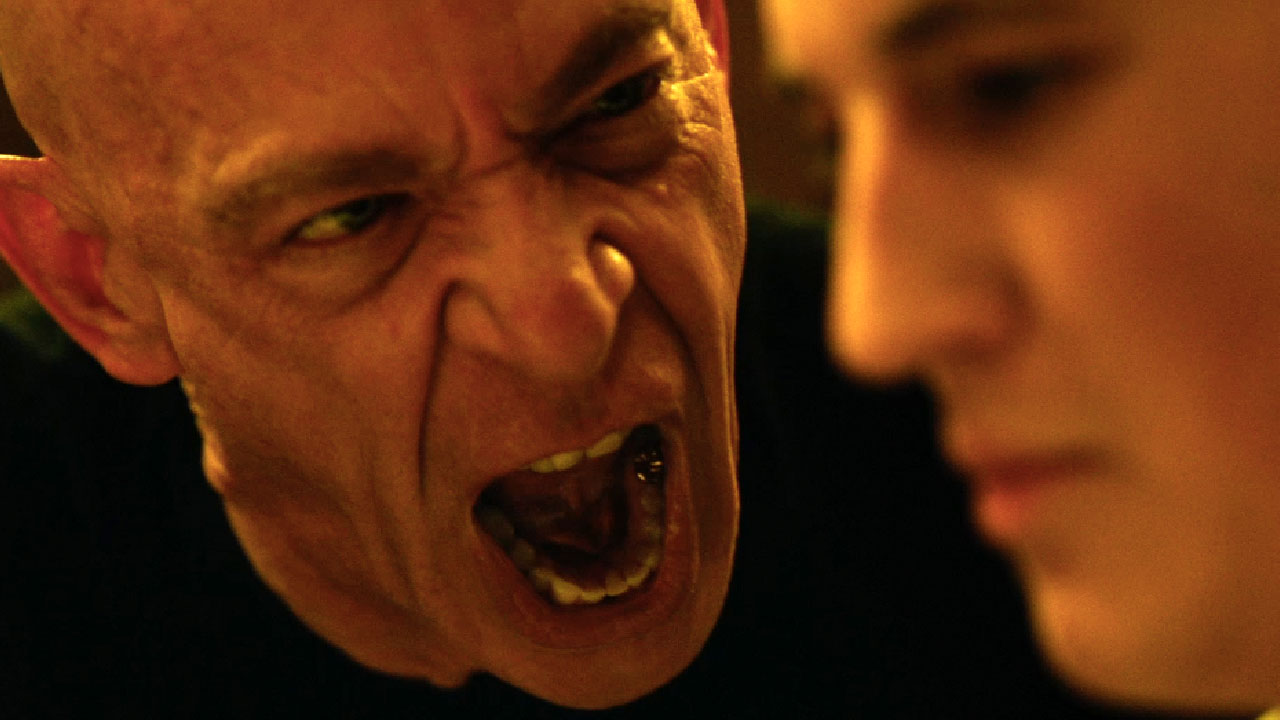
Andrew sees through Fletcher’s methods, but here is the thing: just because you are able to spot a sadist doesn’t mean you’re not affected by him. Something is going to rub off. On the surface, Whiplash seems like an easy movie, but I am not so sure. Quitting doesn’t mean Fletcher has won any more than Andrew has lost. In a sense, you don’t quit at all. Andrew starts surprising even himself, in good ways and bad ways. Was it worth it, in the end? There’s only one way to find out.
How did we get here?
Inherent Vice isn’t really exactly the way you think a movie with a doper as its main character should be. Doc Sportello has a hard time about who knows what about which crime, and which suspect, and when and why and all of that. But neither can the audience. I think I lost the plot half an hour into the movie, and I think the same thing would happen to me if I read Thomas Pynchon’s novel it is based on. Inherent Vice might be about a P.I., but he is used as a character, not as a conduit for a whodunnit. Joaquin Phoenix plays him wonderfully. The notes he takes are the movie’s highlight.

What drives Doc to investigate is that the case is brought to him by the lost love of his life, a beauty named Shasta Fay Hepworth (Katherine Waterston), a name that is repeated throughout the movie like a mantra. I am not entirely sure if she is really there some of the time. Other characters keep drifting in and out of focus. On the other hand, a character like Bigfoot Bjornsen, a hippie-hating crewcut copper, played by Josh Brolin, stakes his claim like a reality check. Just listen to him when he orders his pancakes at the diner. In a sense, Sportello and Bigfoot need each other: Bigfoot can heap his vitriol on hippie scum like Doc, and Doc has an excellent target for his bemused, woolly sarcasm.
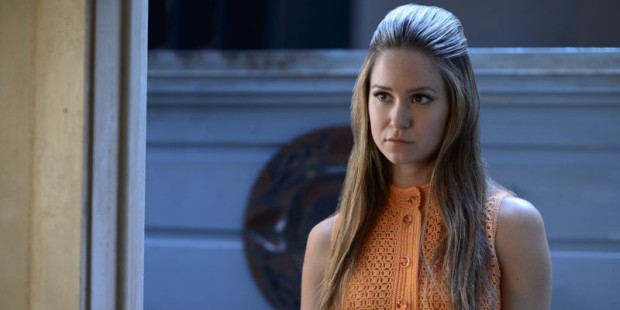
The movie doesn’t use one single scene to put us in Doc’s state of mind: no lens flare, no colorful caleidoscopic nonsense, no floating choruses. If you think something is not quite real, then it might not be, but then again, it’s hard to tell. There are no clear indications about where we are – we’re in California, sure, and it’s 1970 or so, but it’s like reality and Doc’s plane of existence run on parallel lines, side by side. The Summer of Love is already two years in the past, and Altamont has put a dent in West Coast hippie lifestyle. You can feel that Doc is no longer entirely carefree. Something, somewhere, is past its high point.
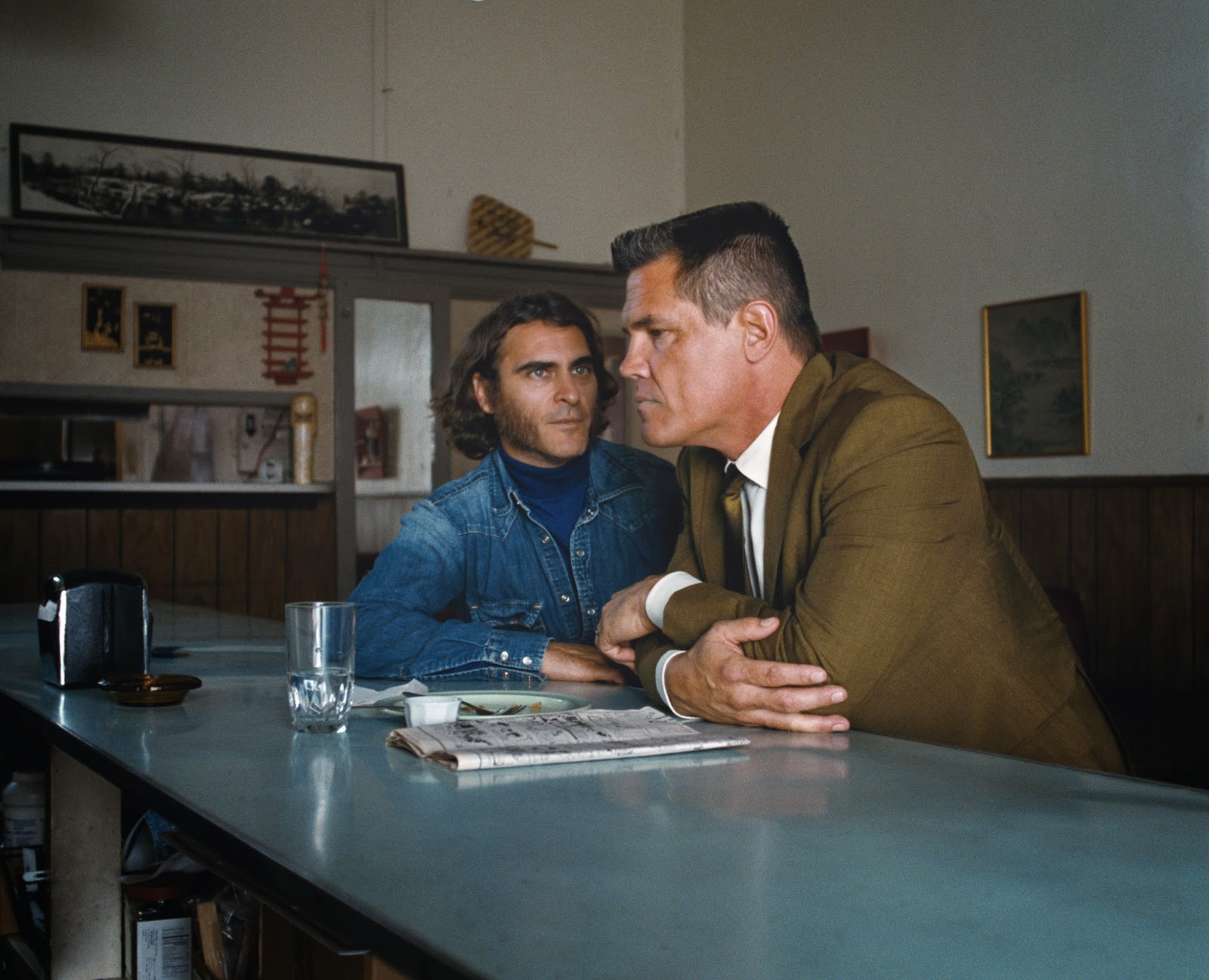
Inherent Vice has a truckload of supporting roles and cameos: Benicio del Toro, Jena Malone, Reese Witherspoon, Eric Roberts, Martin Short, Michael K. Williams, Maya Rudolph, Martin Donovan, Serena Scott Thomas, Michelle Sinclair, Owen Wilson. And many more, but I can’t remember them all. Some might complain that the movie is too long, and they might be right – but why would you want to kill such a nice buzz? A doobie takes as long as a doobie takes.
 A Damn Fine Cup of Culture