I’ve said so in the past: I’m the wrong person to talk to about romantic comedies. I don’t dismiss the genre altogether, but I find too many of them twee, manipulative and rather toxic, and that has coloured my perception of the genre as a whole. All too often, these films embrace iffy ideas of what relationships are and what they’re supposed to be, and even when they try to be hip and with it, they tend to espouse notions of gender that aren’t just heteronormative but downright reactionary.
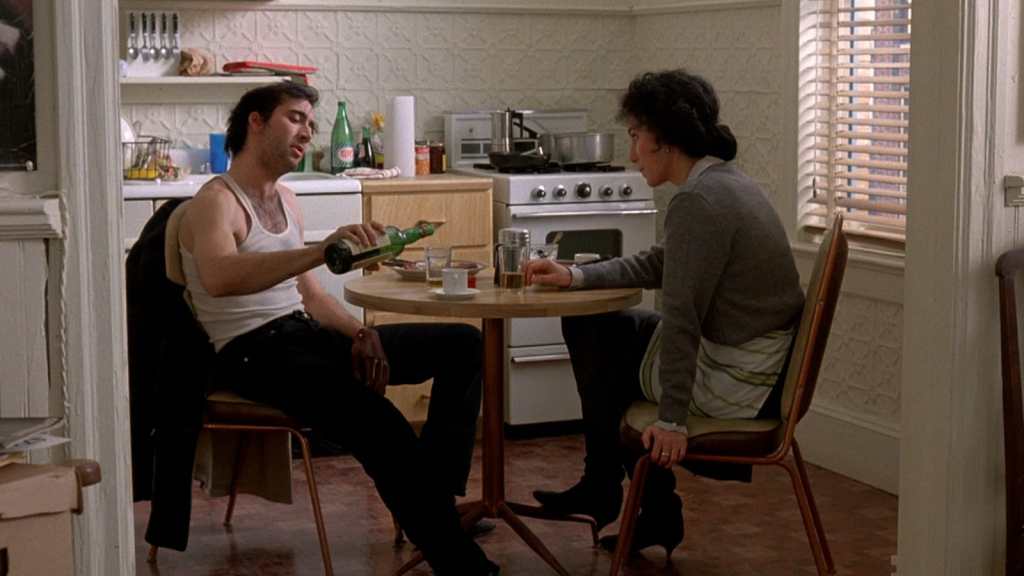
But: I love it when a romantic comedy really hits. And Norman Jewison’s 1987 hit Moonstruck – which went on to win multiple Academy Awards – is certainly a prime example of this.
Hirokazu Kore-eda‘s Still Walking was the second or third film by the Japanese director that I watched, after After Life and probably Nobody Knows. In some ways, I now recognise it as a more typical film for Kore-eda than After Life, in terms of its themes and character constellations. Where the earlier filmundoubtedly has the feel and emotional heft that I’ve come to recognise as typical of a Kore-eda film, it is much more high-concept in terms of its premise and plot. More than that, though, when I think of Kore-eda, it‘s his families, both biological and found, that come to mind, and where family isn‘t as obviously a theme of After Life, Still Walking is very much about this: the families we find ourselves saddled with, the ones we make for ourselves.
But family isn‘t just about the people we have in our lives, it is also about those we have lost. Still Walking is focused on a theme that is central to many of the director‘s films: considering the kindness and warmth that are perhaps the most apparent characteristic of Kore-eda‘s films at a first glance, it is striking how many of them are in no small part about death.
If you look at Mathieu Kassovitz’ 1995 modern classic La Haine with a dispassionate eye, it’s easy to criticise the film. It is obnoxious in the way it demands our attention, not too dissimilar from some of its protagonists and their look-at-me-fuck-you-too way of life. It can be accused, and fairly so, of being derivative, in terms of its style and its story: there’s more than a little Mean Streets and Do the Right Thing to the the film. And it’s not exactly subtle – when given the choice between going loud and going nuanced, nine out of ten times it will choose the former.
But, bloody hell, if La Haine isn’t still tremendously effective – and timely.
Watching Fellini’s 8 1/2 for the first time in 2024 is a strange experience: it is so clear that this film has inspired many directors who’d go on to make films of their own that are very much inspired by Fellini’s. From Bob Fosse’s All that Jazz via Tom Di Cillo’s Living in Oblivion to Charlie Kaufman’s Synecdoche, New Yorkand Paolo Sorrentino’s Youth – and that’s just some of the movies that, like 8 1/2, focus specifically on artists in a protracted state of crisis, trying to produce a work that, to all extents and purposes, is the film we’re watching.
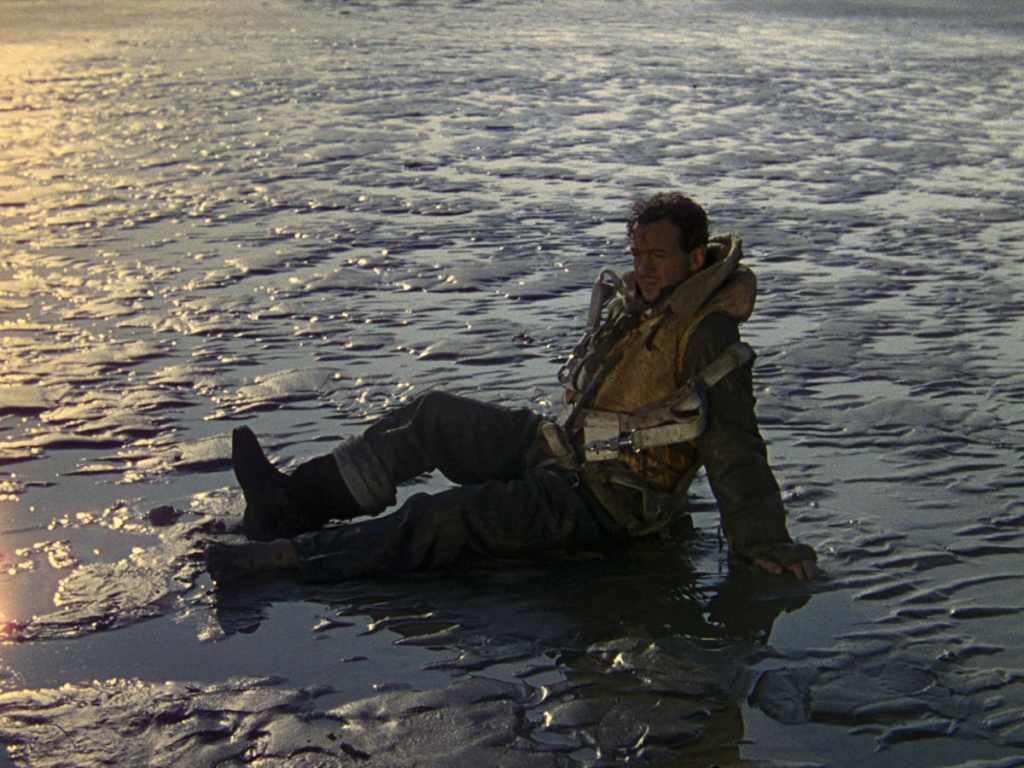
Late last year, the BFI ran a series of Powell and Pressburger films, which sadly I missed, living in the wrong country altogether (for BFI series, that is) – but it made me aware of their 1945 romance I Know Where I’m Going!, which was released on the Criterion Collection as one of their very earliest films: it’s the 94th release in the series, which by now contains more than 1200 titles. More than just being another Criterion release from a pair of filmmakers whose work I’ve liked a lot in the past, I Know Where I’m Going! is set in the Hebrides, so as a fan of Criterion, the Archers and Scotland, I didn’t have to think long and hard about getting the disk.
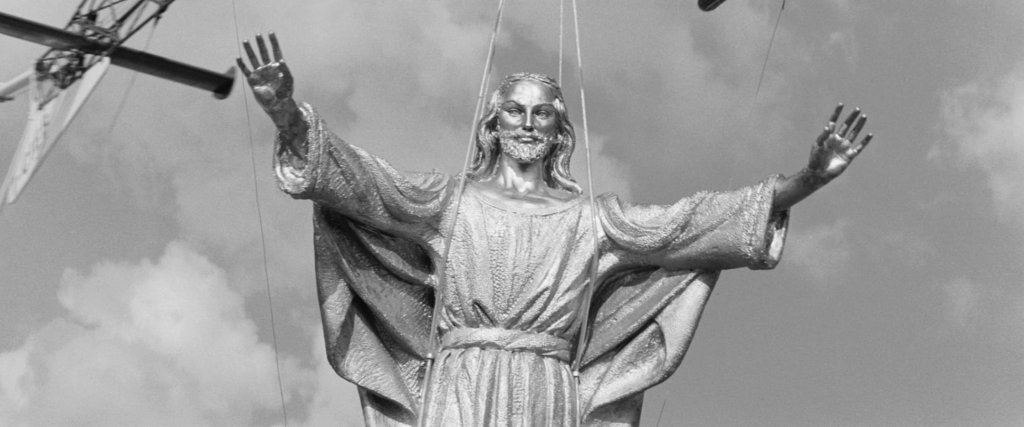
We all know the iconic images: the statue of Christ flying through Rome, transported by a helicopter; wild nighttime parties in the Baths of Caracalla; believers carrying the sick on stretchers, tabloid journalists and TV people crowding two small children that claim to have seen the Madonna; and, always and especially, Anita Ekberg in the Fontana di Trevi.
It’s the kind of meta filmmaking that’s catnip for critics and academics: screen legend Boris Karloff, firmly at the tail end of his career as a horror movie actor, plays the equally legendary Byron Orlok, a man firmly at the tail end of his career as a horror movie actor. Orlok announces his retirement from cinema, because he’s a has-been and his brand of cinematic horror is no longer scary, it’s camp. Meanwhile, a thoroughly modern kind of bogeyman stalks Los Angeles County: a young, blandly all-American insurance agent with an unsettlingly large gun collection, takes aim at random targets. Slowly but surely the two storylines converge, until they intersect – in a drive-in cinema, where Orlok is set to make his final public appearance. It’s cinema all the way down.
Just like Fellini used to be a big gap in my filmography – something this series, with a little help from Criterion, is supposed to address -, I’ve not seen all that many films by Pier Paolo Pasolini. The ones I have seen are an eclectic bunch: Mamma Roma (starring a magnificent Anna Magnani), The Gospel According to St. Matthew, and the Greek tragedies: Oedipus Rex and Medea. Based on having watched these, it’s difficult for me to get much of a grip of who Pasolini was as a filmmaker – but tonally he definitely seems to be a fairly different, much more overtly political storyteller from Federico Fellini.
Which makes Nights of Cabiria, on which Fellini collaborated with Pasolini, an interesting blend of the two men’s styles and preoccupations. The role of Pasolini, who was one of altogether four co-writers, was to help with the dialogue of the 1950s Roman demimonde of pimps, prostitutes and their tricks, giving it more authenticity. The world of Nights of Cabiria doesn’t actually seem all that far removed from that of Mamma Roma, who, like Cabiria, is a sex worker dreaming of a different life. However, while the director and his writers evoke a believable world that is earthy, that lives and breathes, this world isn’t what defines the film the most, instead providing a background to the central performance. As in La Strada before it, the star of the show is undoubtedly Giulietta Masina – who may be even better as Cabiria than she was as Gelsomina.
Of all the tropes in romantic stories that I’m not a big fan of, two people falling instantly in love is probably the most common. I can buy immediate attraction, especially of a sexual kind, and I am also okay with an almost instant sense of sympathy, a sort of mutual resonance that develops into something further – but when we’re supposed to believe in love at first sight, that there is deep, abiding love between two people the moment they meet, I roll my eyes, and they keep rolling if this instant romantic attachment is given a significance that is practically metaphysical. I am no fan of the notion in romances that someone is ‘the one’, that destiny has preordained certain couplings. In fact, I don’t find the idea particularly romantic to begin with.
There is perhaps one film where I buy into such almost instant love, and not just begrudgingly but entirely, 100%. That film is Michael Powell and Emeric Pressburger’s wonderful A Matter of Life and Death (1946).
In films, we’re used to con artists being the heroes. Not always, obviously, but more often than not, cinema presents swindlers as appealing trickster figures, with charm and charisma up the wazoo. At first, Il Bidone, the Fellini film that followed La Strada, looks like it might be one of those movies. Carlo (Richard Basehart) has a face that radiates a childlike innocence (as it did when Baseheart played the Fool in La Strada) and Augusto (Broderick Crawford) is the experienced, paternal figure of the gang, with only Roberto (Franco Fabrizi, whose character feels like he could have walked out of I Vitelloni, in which Fabrizi played one member of the central group of friends) being presented as something of a rotter. Il Bidone also sounds like one of those films, with Nino Rota’s score, a lilting tune, reinforcesing our first impression: these characters are fun con men, tricking rubes with a twinkle in their eyes, and all of this is supposed to be a lark.
Which makes it all the more jarring when the film uses scene after scene to show that the rubes being tricked are desperately poor and living off scraps. They are not greedy: if they are eager to make a quick buck, it’s because they don’t have much to begin with and need money fast. When the con men promise them wealth, they bite because they work day after day just to break even. The swindlers sell them hope at extortionist rates. And we watch our protagonists ply their trade, swindling Italy’s post-war poor out of what little they have, while Rota’s jaunty music plays.






 A Damn Fine Cup of Culture