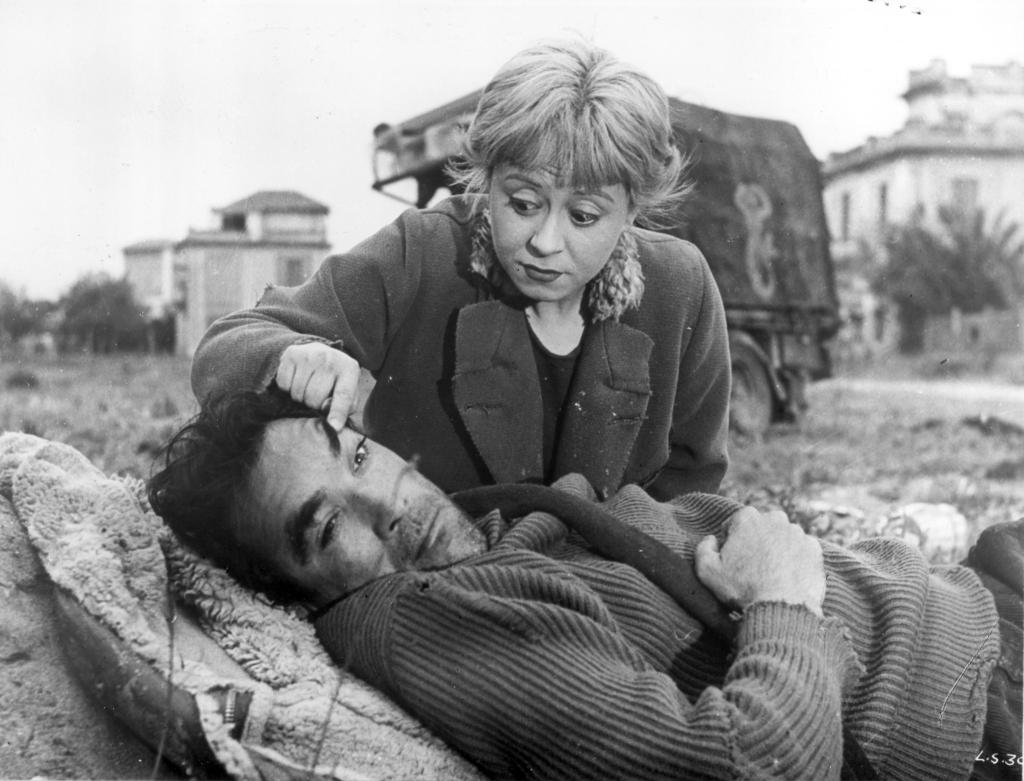
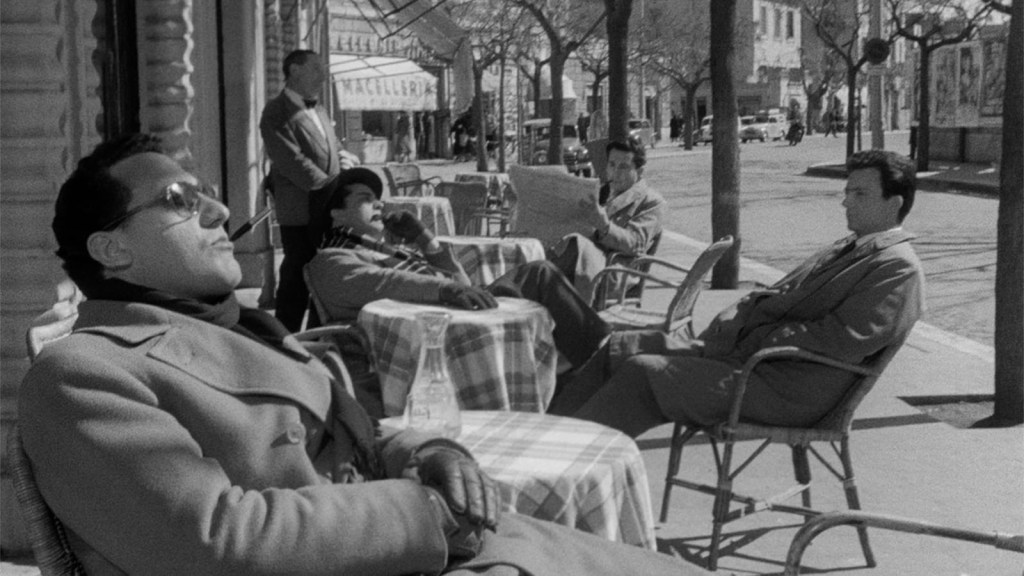
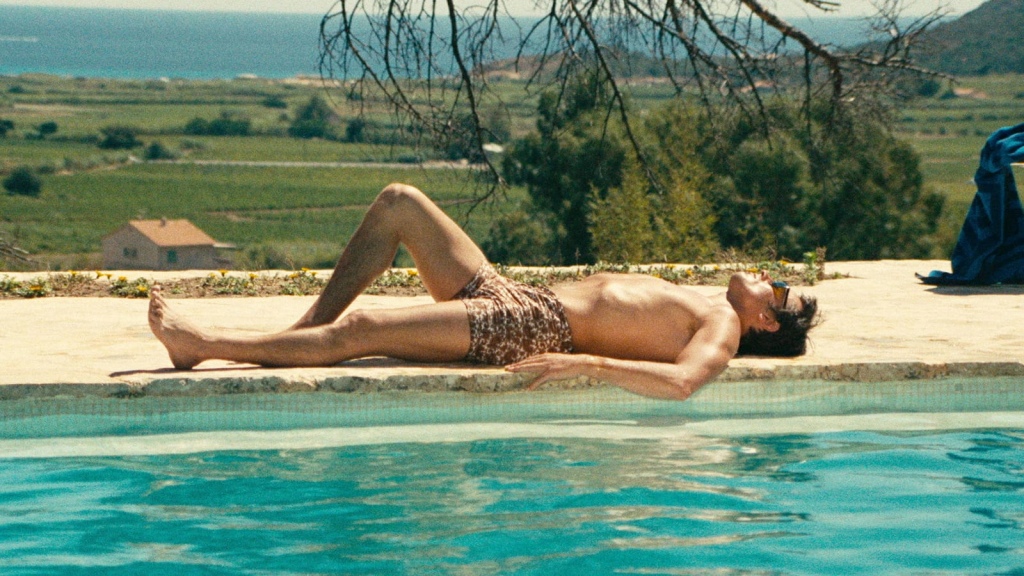
If I Vitelloni was the first of the films in Criterion’s Essential Fellini box set that justified the director’s reputation, La Strada more than confirms it. This is a beautifully made, heartrending film that deftly balances its tendencies towards the sentimental with a nuanced characterisation and an empathy that extends to those who may seem least deserving of it. And Giulietta Masina as Gelsomina steals the film, even though the main roles are all excellently played. Her performance is rightly remembered as iconic.
You arrive at a sort of waystation. The people working there give you a room, they provide food, and they tell you what has happened.
You’ve died.
Also, you’ve got three days to choose a memory of yours. The staff will take that memory, turn it into a short film, and that will be what you are left with, and what is left of you, for eternity.
So, go ahead. Choose. It can’t be all that hard, can it?
It was bound to happen sooner or later. I was somewhat lukewarm on Variety Lightsand The White Sheik; both films had things to like about them, but neither made me look forward to watching the remaining dozen films in Criterion’s collection dedicated to Federico Fellini. The third film in the collection, I Vitelloni, didn’t immediately seem like a big step up. As in the previous two films, we get men behaving badly (towards women, but not only), feeling entitled to all the best life has to offer and feeling sorry for themselves when they don’t get it. They’re more grating because of how the film plays a lilting Nino Rota score that suggests we’re to consider all of this as a lark: boys being boys, that sort of thing. But then, around the halfway point of I Vitelloni, something changes: a note of desolate sadness creeps in, a despair underlying the laddish performativity of it all, slowly but surely becoming the film’s dominant tone.
I only discovered the Coens and their films in 1996, with Fargo – a film that I loved the first time I saw it, and that I’ve only come to enjoy more and more every time I rewatch it. Which kinda messed up my first viewing of The Big Lebowski; I don’t know what exactly I expected, but I definitely didn’t expect this shaggy dog story of a Raymond Chandler parody. I have revisited the film repeatedly, though, and I’ve come to enjoy it a hell of a lot. Still, even though I bounced off of The Big Lebowski the first time around, I still tried to get my hands on some of the Coen brothers’ other films (possibly still on VHS at the time). One of the films I watched was Miller’s Crossing.
The order in which you watch, read, listen to things matters. It changes how you experience these things. Criterion’s Ingmar Bergman’s Cinema was organised thematically first and foremost. Even if a clear delineation wasn’t always possible, you’d get a set of films about marriage and relationships, followed by some movies about actors and performers, and then you might get a couple of films about crises of faith. Even though many of these themes pop up across all of Bergman’s films, there was still the sense of thematic focuses. And after watching Scenes from a Marriage, other stories about relationships gone sour would always have a certain subtext; Through a Glass Darkly would be lurking in the background when watching, say, Winter Light.
In contrast to this, Criterion’s Essential Fellini box set is ordered chronologically. This comes with pros and cons: you lose the thematic unity (that may be imposed or at least reinforced by the curators to some extent), but it’s easier to concentrate on how Fellini develops as a director if you’re watching the films in the sequence in which they were made – but with Bergman I was glad that we didn’t have to watch a whole slew of his early films first. Crisis and A Ship to India, to mention just two, certainly show some promise, but if Bergman hadn’t turned out pretty okay at this whole directing thing later in his career they’d probably be forgotten by now, and for good reason. And that’s the sense I get of these early Fellini films: that they were made by someone who’s talented, but whose talent isn’t fully in evidence yet. But boy, there’s some stuff here that hasn’t aged well at all, there are comedic bits that would have been lazy and clichéd at the time already, and those things don’t sit well with this idea of a timeless filmmaking genius.
Warning: The following post will spoil most of the plot of La Piscine. While it’s not necessarily a film to be watched for the twists and turns of the plot, be warned if you haven’t seen the film.
Really, it should be obvious: Maurice Ronet should stay well away from Alain Delon, and that goes double if they’re anywhere near water. The first time I saw the two of them together in a film (in Purple Noon, the French adaptation of Patricia Highsmith’s novel The Talented Mr. Ripley), Delon’s Tom Ripley stabbed Philippe Greenleaf (played by Ronet) to death and tried to sink him to the bottom of the ocean. Let’s just say that Ronet doesn’t fare much better in La Piscine, and again, it’s Delon that dunnit. Apparently, the two were close friends, but if I’d been Ronet, I would have been very careful around the former when there’s a camera running anywhere nearby and when there’s water in the picture.
Ladies and gentlemen, step right up! The time of drily ironic Swedes grappling with existentialist despair and God’s extended silence, indeed His existence, came to an end earlier this year. It’s taken us a while to move forward, but we have finally arrived at our destination: Essential Fellini, Criterion’s gorgeous box set including fourteen of the Italian director’s most important films.
In her fascinating series “Erotic ’90s”, Karina Longworth, creator and host of the long-running podcast You Must Remember This, discusses Thelma & Louise, Ridley Scott’s early ’90s pop-feminist modern classic. (Should I leave out that “modern” once a film is over 30 years old?) I remember being faintly aware of the cultural conversation about Scott’s film at the time, but as a teenager in the pre-internet age I certainly didn’t get more than the occasional snippet. At school, our English teacher had a subscription to Newsweek, so I may have read an article about the film, but other than I wouldn’t have been known about the brouhaha in the US that Thelma & Louise prompted. Listening to Longworth’s podcast, it’s crazy to imagine the culture wars hysterics that gripped especially male critics – but then, in 2023, no amount of culture war craziness should come as much of a surprise.
Superficially, Jean-Pierre Melville’s Army of Shadows isn’t too dissimilar from the gangster movies the director is famous for: it is a chilly meditation on a world inhabited predominantly by men following a grim, unforgiving code. Trust is rare, paranoia habitual – but there are islands of friendship and absolute loyalty, so that betrayal, if and when it strikes, is all the more tragic. And yet: even if the protagonists of Army of Shadows resemble the cops and robbers of Le samouraï or Le cercle rouge, even if they live their lives according to similar rules, they are heroes in ways that Melville’s gangsters aren’t. Their goals aren’t self-serving. They fight the Nazi occupation of France.
There are many kinds of resistance. The one that’s perhaps most familiar to us – more so from the cinema screen than from personal experience, most likely – is that of taking up arms against the oppressor. The French filmmaker Jean-Pierre Melville made a number of films in which the French Résistance and its fight against the occupying German army featured, most famously perhaps Army of Shadows (which may come up more prominently in a future post), and as one might expect, the film depicts a heroic (if bleak) armed struggle.
While the setting is a similar one – the Second World War, occupied France -, the resistance of Le silence de la mer (The Silence of the Sea) is of a very different kind; as is, arguably, the characters’ struggle with each other and with themselves.