Michael Haneke is what I would call the anti-Spielberg. He is a director who consistently avoids even a trace of sentimentalism or pathos. Based on the Haneke films I’ve seen, his goal is primarily to make people think – and when he wants to make them feel, he never dictates the specific feelings they should experience. Haneke’s work has been described as cool, distant, even clinical.
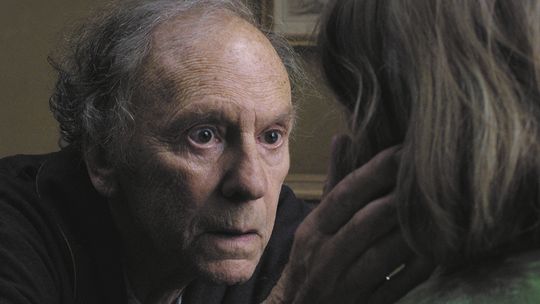
His most recent film Amour, winner of the Cannes Palme d’Or, doesn’t exactly break with this tradition; the film maker’s style, both in terms of his direction and his writing, is still very much in evidence. Nevertheless, I’ve found Amour one of the most affecting, profoundly emotional films, definitely of the year and possibly of the century so far. It is brutal and raw as much as it is tender and loving, and it is perhaps one of the best cinematic examinations of what it is like to watch a loved one die.
The immediate praise must certainly go to his duo of actors, Jean-Louis Trintignant and Emmanuelle Riva, both of whom don’t show a trace of obvious acting: they simply are the characters on screen. It is impossible to say which one is more impressive; while Trintignant captures the anguish, frustration and fear of a husband who can only be there for his dying wife but not help her (except in one way, ultimately), Riva is uncannily convincing as the wife who, after first one stroke and then another, slowly crumbles away and fades into the darkness like a latterday Eurydice. They occasionally share the screen with other characters, primarily the high-strung daughter played by Isabelle Huppert, but the film is entirely theirs.
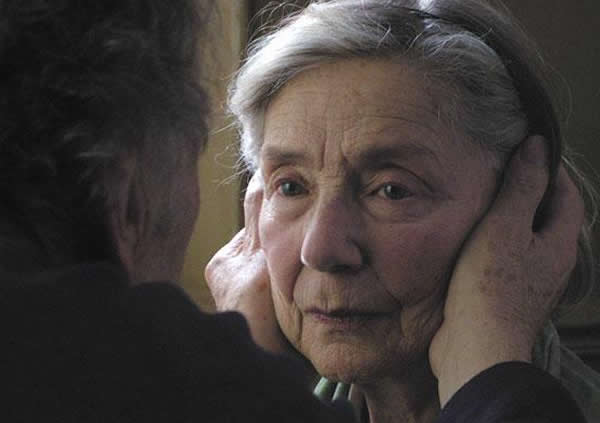
For me, it was impossible to watch the film and not be reminded of my mother’s death three years ago. I’ve talked to others who found it brought back the death of their loved ones: parents, grandparents. Yet while Amour captures something that seems universal about death and bereavement, at least in our culture and society, it is at the same time entirely specific to these characters. It does not go for vague, and essentially rather cheapening, generalisations along the lines of “Aren’t we all…” and “Don’t we all…”. And differently from some of Haneke’s earlier works, it never feels didactic or cruel. Its unflinching eye on the process of dying is hard to take at times, but it’s this commitment to the act of bearing witness that is finally tender and beautiful.
 A Damn Fine Cup of Culture