Over the last two years, I’ve been making my way through Criterion’s Essential Fellini box set. Starting with Variety Lights (1950 or 1951, depending on where you check) and ending with Intervista (1987), this beautiful set included most of Fellini’s films – though not all, skipping for instance the acerbic English-language Fellini’s Casanova (1976), in which a bewigged, increasingly ridiculous Donald Sutherland fornicates his way across Europe, getting further and further away from anything approaching happiness, or even pleasure, in the process.
We’re back, several months after 8 1/2 (sorry!), with a film that I find frustrating and confounding – and yet I’m difficult to shake it off: Juliet of the Spirits. Two years after Fellini’s last film, and after two movies in which Marcello Mastroianni played variants (albeit more overtly attractive ones) of the director himself, Fellini cast his wife Giulietta Massina, for the first time in eight years (he’d last directed her in Nights of Cabiria) – and, in a twist on what he’d done with Mastroianni, Masina plays a character not dissimilar from herself: Giulietta Boldrini is an upper-class housewife, married to a philandering, self-centred husband, and while the details are vague but specific enough to show that the Boldrinis aren’t literally Fellini and Masina, the constellation of their marriage isn’t a hundred miles from that of the famous film-making couple.
Just like Fellini used to be a big gap in my filmography – something this series, with a little help from Criterion, is supposed to address -, I’ve not seen all that many films by Pier Paolo Pasolini. The ones I have seen are an eclectic bunch: Mamma Roma (starring a magnificent Anna Magnani), The Gospel According to St. Matthew, and the Greek tragedies: Oedipus Rex and Medea. Based on having watched these, it’s difficult for me to get much of a grip of who Pasolini was as a filmmaker – but tonally he definitely seems to be a fairly different, much more overtly political storyteller from Federico Fellini.
Which makes Nights of Cabiria, on which Fellini collaborated with Pasolini, an interesting blend of the two men’s styles and preoccupations. The role of Pasolini, who was one of altogether four co-writers, was to help with the dialogue of the 1950s Roman demimonde of pimps, prostitutes and their tricks, giving it more authenticity. The world of Nights of Cabiria doesn’t actually seem all that far removed from that of Mamma Roma, who, like Cabiria, is a sex worker dreaming of a different life. However, while the director and his writers evoke a believable world that is earthy, that lives and breathes, this world isn’t what defines the film the most, instead providing a background to the central performance. As in La Strada before it, the star of the show is undoubtedly Giulietta Masina – who may be even better as Cabiria than she was as Gelsomina.
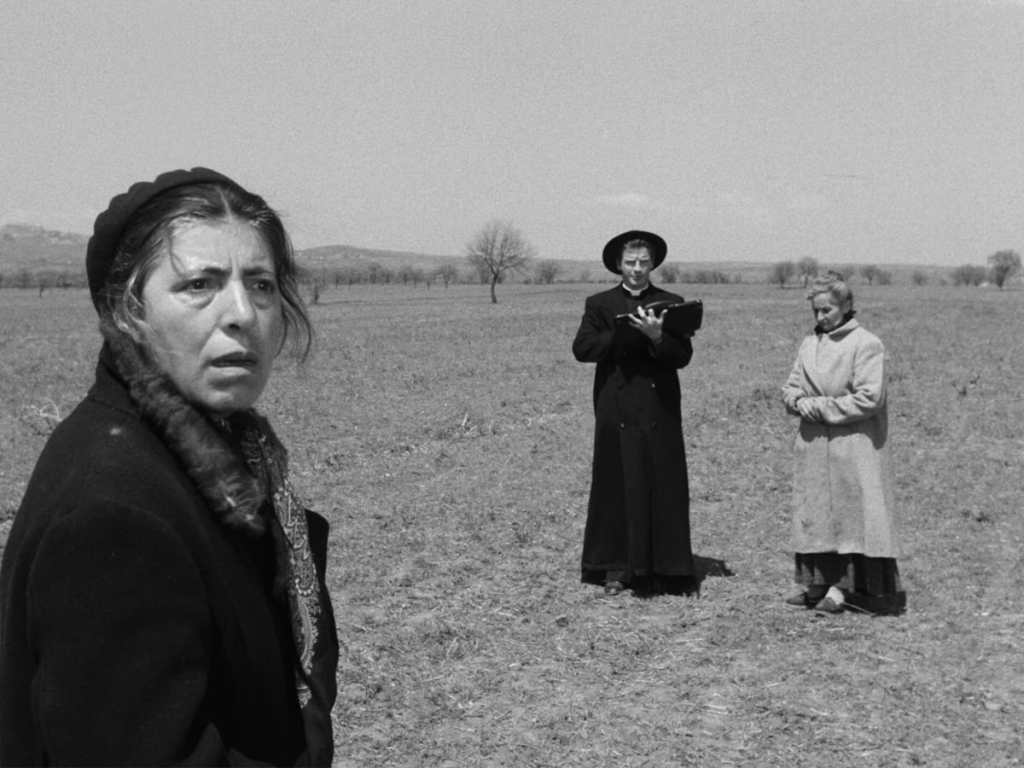
In films, we’re used to con artists being the heroes. Not always, obviously, but more often than not, cinema presents swindlers as appealing trickster figures, with charm and charisma up the wazoo. At first, Il Bidone, the Fellini film that followed La Strada, looks like it might be one of those movies. Carlo (Richard Basehart) has a face that radiates a childlike innocence (as it did when Baseheart played the Fool in La Strada) and Augusto (Broderick Crawford) is the experienced, paternal figure of the gang, with only Roberto (Franco Fabrizi, whose character feels like he could have walked out of I Vitelloni, in which Fabrizi played one member of the central group of friends) being presented as something of a rotter. Il Bidone also sounds like one of those films, with Nino Rota’s score, a lilting tune, reinforcesing our first impression: these characters are fun con men, tricking rubes with a twinkle in their eyes, and all of this is supposed to be a lark.
Which makes it all the more jarring when the film uses scene after scene to show that the rubes being tricked are desperately poor and living off scraps. They are not greedy: if they are eager to make a quick buck, it’s because they don’t have much to begin with and need money fast. When the con men promise them wealth, they bite because they work day after day just to break even. The swindlers sell them hope at extortionist rates. And we watch our protagonists ply their trade, swindling Italy’s post-war poor out of what little they have, while Rota’s jaunty music plays.
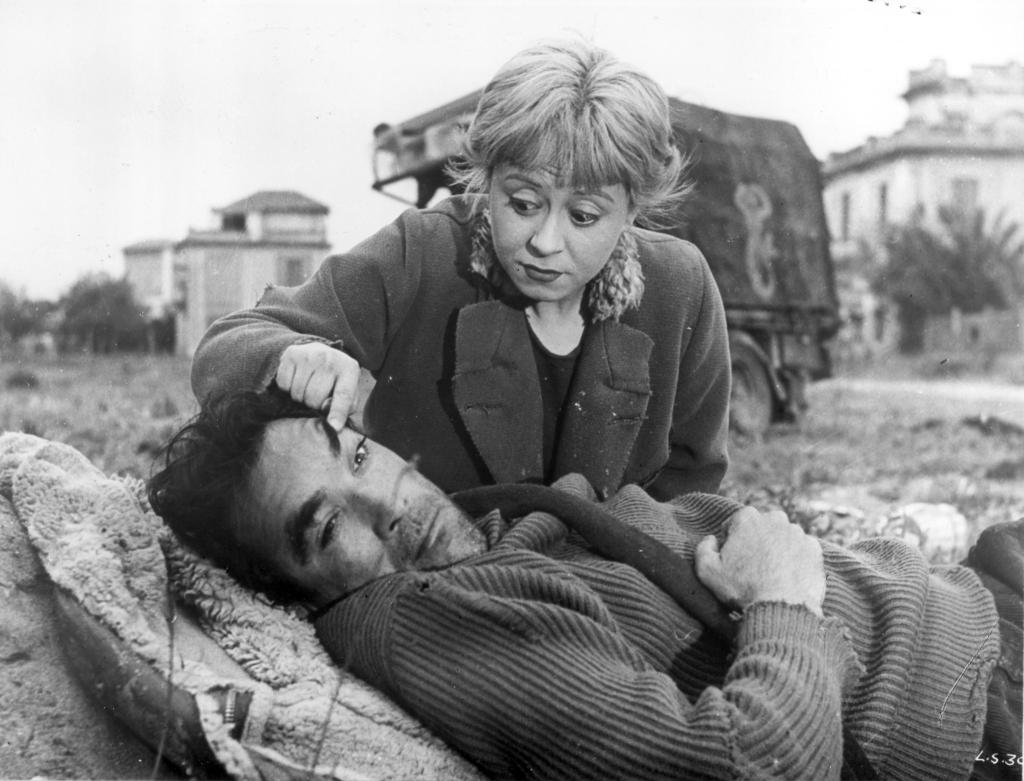
If I Vitelloni was the first of the films in Criterion’s Essential Fellini box set that justified the director’s reputation, La Strada more than confirms it. This is a beautifully made, heartrending film that deftly balances its tendencies towards the sentimental with a nuanced characterisation and an empathy that extends to those who may seem least deserving of it. And Giulietta Masina as Gelsomina steals the film, even though the main roles are all excellently played. Her performance is rightly remembered as iconic.


 A Damn Fine Cup of Culture