In films, we’re used to con artists being the heroes. Not always, obviously, but more often than not, cinema presents swindlers as appealing trickster figures, with charm and charisma up the wazoo. At first, Il Bidone, the Fellini film that followed La Strada, looks like it might be one of those movies. Carlo (Richard Basehart) has a face that radiates a childlike innocence (as it did when Baseheart played the Fool in La Strada) and Augusto (Broderick Crawford) is the experienced, paternal figure of the gang, with only Roberto (Franco Fabrizi, whose character feels like he could have walked out of I Vitelloni, in which Fabrizi played one member of the central group of friends) being presented as something of a rotter. Il Bidone also sounds like one of those films, with Nino Rota’s score, a lilting tune, reinforcesing our first impression: these characters are fun con men, tricking rubes with a twinkle in their eyes, and all of this is supposed to be a lark.
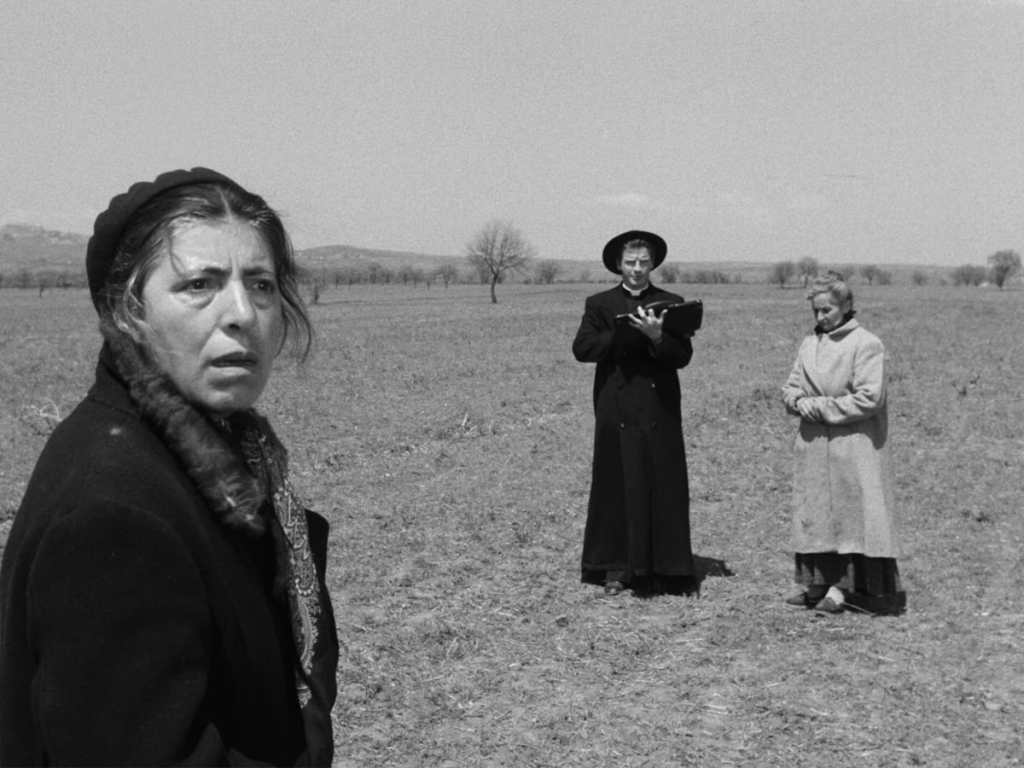
Which makes it all the more jarring when the film uses scene after scene to show that the rubes being tricked are desperately poor and living off scraps. They are not greedy: if they are eager to make a quick buck, it’s because they don’t have much to begin with and need money fast. When the con men promise them wealth, they bite because they work day after day just to break even. The swindlers sell them hope at extortionist rates. And we watch our protagonists ply their trade, swindling Italy’s post-war poor out of what little they have, while Rota’s jaunty music plays.
Continue reading A Damn Fine Cup of Culture