Blood in the kitchen sink

Broken is a great piece of storytelling. The editing, the pacing, the atmosphere – all add to its quality. Even if you don’t know anything about the movie, there are several hints in the first three minutes that there will be blood. After four more minutes, you think you’ve seen the worst, and the rest of the movie is about how people will deal with what has happened. Nope. Brace yourself, you’ve been warned.

And yet, the movie is not a long journey into night. There are hopeful moments, most of them involving Skunk, a smart, kind 11-year old girl. She is played by Eloise Laurence, in a debut performance that has much more to do with instinct than with acting. There is a sequence where she tries to talk her dad into buying her a new cellphone. That moment alone is worth seeing the movie. Eloise Laurence carries the story in the same way Jodhi May did in A World Apart. And oh, it was good to see Tim Roth again, without guns, without shouting. His Archie is a calm, benign father to Skunk and one of the solid centres of the small community, although he himself would disagree.Image

It’s hard to talk about plot. I guess it sort of starts with one of the daughters of the Oswald family, who finds a condom in her older sister’s room. She examines it and then tries to flush it down the toilet, where her dad finds it. Daddy Oswald presses his daughter into wrongly admitting she’s had sex, while she, clearly afraid of her father, blames Rick Buckley of rape, only because he is visible across the street, washing his dad’s car. Rick is thin-skinned and naïve, a good kid, but without any defences. Skunk looks on as Daddy Oswald comes rushing out of his house and beats up Rick. I have only mentioned the first six minutes of the movie. There is no way you can guess what happens next. It is fast-paced, non-linear, and it clocks in at 88 minutes, but feels longer because of all the things that happen underneath the plot. And yet, it never feels rushed. We always know where we are, with whom, why and when.

Daddy Oswald is maybe the most controversial character in this movie. He is played by Rory Kinnear as a wounded widower who does not have the slightest clue how to regain control over his three fast-growing daughters. I might feel for him if he didn’t try to rule by fear and rage.

The movie seems flawless, but I would wish for a less obvious ending. The moments in church are so conventional that they stand out as the weakest scene in the film. Luckily, it’s not a movie you watch for the ending – you watch it for the characters.

Skunk is in some danger because she goes towards people who may better be left alone. There is her brother who is busy becoming a teenager and nicks cigarettes from their nanny who, in turn, falls for Archie, who has no idea what to do with that love, or his own. There is the nanny’s boyfriend, played by Cillian Murphy, who can’t see that Skunk looks up to him, and should act accordingly. In a lesser movie, he would be the teacher who gets accused of abusing a student. Here, he does what any courageous man would do – and it’s very bad luck that he is a teacher. He is untidy with his feelings, but gets more punishment than he deserves. Maybe that’s what the movie is all about. Do we ever get what we deserve? Should we? And what DO we deserve? There is no deus ex machina in this movie – good or bad has to do with yourself and the people who are around you. Sometimes it’s not the stranger with candy that frightens you, it’s the well-meaning neighbour.
Disappointment. The ‘D’ is silent.

Waltzing with ChristophI want to say, “It’s not you, Quentin. It’s me.” But I couldn’t say it with much conviction.

What’s happened? Why the sad face on my part? It’s this: ever since first watching Pulp Fiction, I’ve been a Quentin Tarantino fan. This doesn’t mean that I love everything the man’s been involved in – I wasn’t too keen on From Dusk Till Dawn or Natural Born Killers, for instance – but I’ve greatly enjoyed his directorial work. While most people would go, “Yeah, I dig Reservoir Dogs, but fuck Jackie Brown, man, what a bore!” or “Kill Bill Part 1 rules, Kill Bill Part 2 drools,” I came away from all of them with a big grin on my face. Yes, even Death Proof, apparently the litmus test for Tarantino fans.

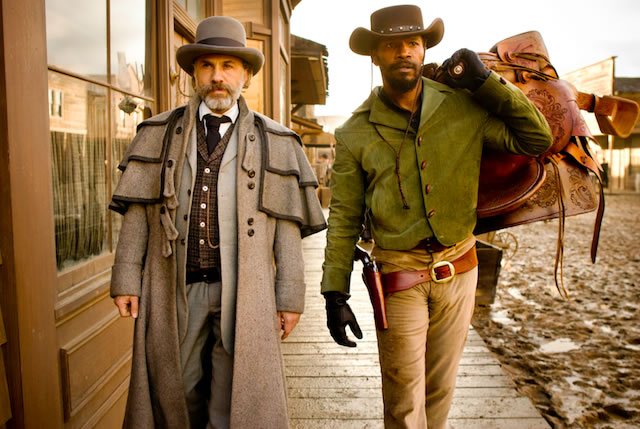
So what was wrong with Django Unchained? Let’s mention the positive first: I found the film very entertaining. It was funny, it had its tense moments, it was well crafted, it had good performances. Christoph Waltz was a joy to watch, Jaime Foxx was effective in the part, Samuel L. Jackson played a very different role from what I’m used to seeing. It’s just… I expect more than “very entertaining” from Tarantino. I remember sitting in the cinema for Jackie Brown and being hooked in the very first scene, thanks to the perfect combination of actress, visuals and music. I remember being pulled into the film immediately when Kill Bill started with a black and white close-up of the bloodied Bride and Bill doing his “Do you find me sadistic?” monologue, followed by the blackout and Nancy Sinatra’s “Bang Bang (My Baby Shot Me Down)”. With Death Proof it took longer – up until the halfway point I was prepared to hate the film for, well, finding it sadistic, but then things fell into place in the second part. And the first scene of Inglourious Basterds is pretty much perfect in how it creates tension and then ratchets it up to unbearable levels.

I felt giddy about all of Tarantino’s earlier films, sometimes due to the sheer exuberance of what he was doing, often because of the virtuoso way in which he remixed styles and genres to amazing effect, usually because the films had a sharp wit and intelligence that might not be apparent at a first viewing. Django Unchained, though? I never felt giddy. I never felt excited at what Tarantino was doing. The closest the film came was Christoph Waltz’s character and performance, which were pretty much pitch perfect, but other than that the film was strangely flat. No surprising juxtaposition (and no, it’s not enough to have Ennio Morricone and 2pac on the same soundtrack any more), not much in the way of subtext. Especially after Inglourious Basterds, which did some pretty intriguing things with its revenge plot(s), Django Unchained is strangely, disappointingly straightforward – and often it’s the lack of straightforwardness, the eagerness to stray of the most direct path, smell the daisies and cut them to shreds in an ironically postmodern homage to grindhouse gardening (“Alan Titchmarsh stars in The Gardener and his Hoe!“) that make Tarantino’s work stand out.

I’m wondering whether some of my disappointment comes from slavery being much more of a cultural issue in the States, and accordingly it wouldn’t resonate with me in the same way that it might with an audience that is still confronted with its racial past. Perhaps that adds an element that simply wasn’t there for me. Or perhaps Django Unchained is Tarantino light, at least with respect to the things I like best about Tarantino. Anyway, I’m in no particular hurry to see the film again (I saw both Kill Bills three times each at the cinema), but perhaps the film will grow on me if/when I sit down to watch it again. And in the meantime I’ll finally see what Pulp Fiction looks like on my TV…

We’re all going crazy, buck-jumping and Breaking Bad!

Wow. Just wow. Breaking Bad season 4 (yes, as always we’re a year or so behind the US) has done the series proud. Is it better than the previous seasons? I admit, there were moments when I felt the plot was spinning its wheels somewhat – we had scenes that were variations on earlier scenes without adding anything new, usually telling us something about Walter White’s personality that we already knew – and the season didn’t always maintain its well honed balance of plot, theme and characterisation, but when it worked (and it often did), boy, did it work… and off the top of my head, and before my first coffee of the day, I could mention scenes and whole episodes that were stronger than anything that had gone before.

He won.

And “Face Off”, the final episode of the season? I would put it up there with the most tension-building denouements I’ve seen or read in any medium. The way Vince Gilligan and his team have put together the individual building blocks to arrive at this ending for one of their most memorable characters, and the way it all comes together in Tio Salamanca’s muffled bell-ringing. As I’ve said: wow.

At the same time, Walter White – who I once thought to be a man trying to do as best he could in an impossible situation – has become one of the greatest villains in any visual medium. It’s difficult to read his tone of voice when he says “I won” at the end of the episode (it’s been described as smug and triumphant, but to me Walt’s shaking voice sounded not a little scared by what he’d become), but Bryan Cranston is pretty much perfect in his depiction of the character. Almost every episode of this season could serve as a master-class for budding actors, and a depressing one too – very few people will reaching the dizzying heights of Cranston’s performance and the character he has brought to life.

Just coming off the high of Breaking Bad‘s penultimate season, it’s difficult to segue neatly into the other season we’ve just finished watching, namely season 1 of Treme. I started watching David Simon’s latest with unrealistic, unfair expectations: The Wire is still the best thing I’ve seen on TV in many ways, and since Treme shares some of the earlier series’ main actors (Wendell “Bunk” Pierce, Clarke “Cool Lester Smooth” Peters) it’s even more difficult to shake these expectations. During Treme‘s first 4-5 episodes I kept repeating the mantra, “It’s not The Wire, it’s not The Wire“, which is true but not entirely fair: some of the themes are the same, but Simon and his cast and crew go for a different feel here. The series is much more meandering; it has a few plots threaded throughout the series, but character always comes before plot in this series.

I can’t pinpoint the moment when it all clicked – there were probably different moments for different characters – but by the end of the season, as the last episode of S1 transitioned into the flashback of all the characters preparing for Katrina, it definitely had. The writers and actors of Treme are impressively astute at balancing the depressing realities of post-Katrina New Orleans, at least for these particular characters, and the flashes of hope and humanity. I’ve never understood the people accusing Simon of cynicism (being a pessimist doesn’t make you a cynic!), and his deep sense of empathy has never been stronger than in Treme.

Except perhaps with Sonny, the Dutch louse – but given time even he could turn out to be human. Simon has a history of doing that… and I’ll gladly give him time to do so.

… when she says nothing at all

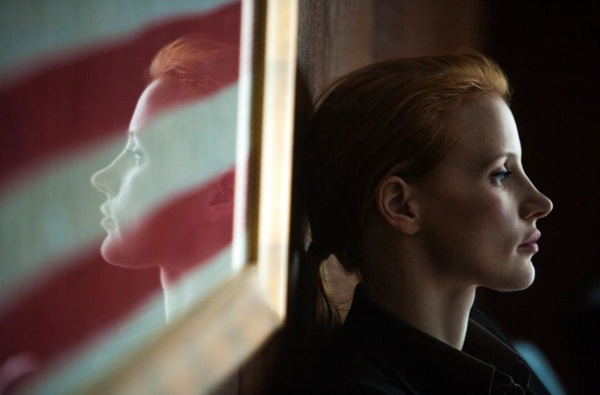
Anyone who’s used the words “Leni Riefenstahl” unironically to describe Kathryn Bigelow and her latest film, Zero Dark Thirty, needs to get a handle on themselves and a sense of proportion (and if they ever saw even an episode of 24, chances are that their frontal lobes would explode into mush). Seriously, if Zero Dark Thirty is supposed to be pro-torture propaganda, it is extremely inept at furthering a pro-torture agenda – and being inept at her craft is about the last thing you could criticise Bigelow for.

No, the problem with Zero Dark Thirty isn’t that it espouses problematic opinions – it’s that the film hardly has any opinion at all. It effaces practically every trace of an ideological or political position from its story, becoming one big Rorschach test in the process. Depending on one’s own view of the issues – the war on terrorism, the hunt for Osama Bin Laden, the use of torture – it’s easy to read any set of diametrically opposed intentions into the film. The same scenes can serve as evidence, with a bit of prodding and tweaking, that Bigelow approves of torture and that she sees it as a dehumanising evil, but without the outside input of the viewer’s opinions the movie does not forward any statement beyond “And then this happened.”

Zero Dark Thirty

I don’t particularly want to get into the quagmire of What Really Happened. I accept that this is a fictionalised version of the events, added to which I doubt there’s an unadulterated, unbiased, and most importantly unredacted version of what happened that Bigelow – or anyone, really – had access to. My issue with the film isn’t its political position but its blankness, which makes it difficult to engage with the film. I like cinema to be ambiguous, I enjoy making up my own mind and thinking for myself, so it’s not that I wanted Zero Dark Thirty to tell me how to feel about what was happening – but the film, its events and its characters are such blank slates that there isn’t even much there to engage with. There is a distinction between even-handedness and utter neutrality, and Switzerland could learn one or two (or two-hundred) things from Bigelow’s latest.

As a result, I found myself thinking and feeling relatively little about what was happening on the screen, beyond “Yeah, this – or something like it – did probably happen at some point.” Shouldn’t the events on screen carry some dramatic weight? The main adjective describing Zero Dark Thirty for me is this: professional. The film is well directed, shot, acted, edited; there is little to fault (except one clumsily manipulative scene that makes the characters involved look stupid) except its blankness. If anything, perhaps its very basic plotting can be criticised – a mere string of events reminiscent of a schoolchild’s essay on “What I did on my hols hunting for Bin Laden” – or its pedestrian characterisation, but both of these reflect what seems to be Bigelow’s intention, not to impose anything on the audience. But, Ms Bigelow, imposing on the audience and giving them something, anything, to work with, those are two very different things. Should I come away from a film on this topic feeling faintly impressed by the craft, faintly bored by the sheer length of the movie, but mostly just blank?