Welcome to Six Damn Fine Degrees. These instalments will be inspired by the idea of six degrees of separation in the loosest sense. The only rule: it connects – in some way – to the previous instalment. So come join us on our weekly foray into interconnectedness!

There’s a lot that gets written about lost Director’s Cuts. Original versions of films that the studio took, re-edited, ruined and then released to mostly audience indifference. Many film fans would queue around the block for a chance to see Billy Wilder’s original version of The Private Life of Sherlock Holmes or David Lynch’s original take on Dune. But occasionally there’s another version of a film that’s the tricky one to find. The maligned, original studio cut.
The first version of Sergio Leone’s crime epic Once Upon A Time In America that I saw was the 229 minute cut. The version of the film Leone wowed Cannes with – and a cut of the film he agreed to put together after the studios baulked at his 269 minute version. This was in the late ‘Nineties’90s, long after the film had bombed on original release and even some time after the longer version had been released to considerable reappraisal and critical acclaim. And understandably so, I was absolutely captivated by it – a genuine sweeping epic that felt funny, moving, melancholic and mystifying. If you buy the film today, or see it in the cinema, this is the version you’ll almost certainly see.
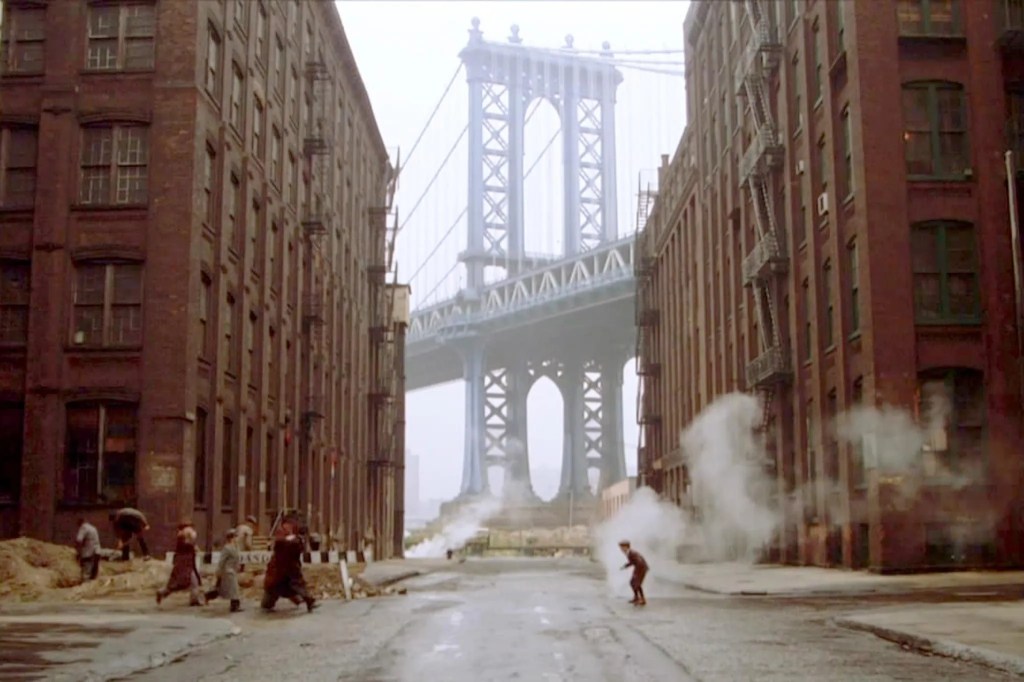
But this was not the version released in North America and many other film territories in 1984. That version was a truncated studio cut, clocking in at 139 minutes. Put together by the studio with no input from Leone, it famously bombed and was disowned by pretty much everyone involved with the project. On documentaries on the DVD, this version is sneered at, alleged to have been put together by the same editors responsible for the Police Academy films.
The more I read about it, the worse it seemed. The edit put the material into chronological order, wiping out the beguiling, unsettling shifts between timelines in the original. It was also meant to erase the ambiguity in the fate of characters – reediting scenes to include gun shots to make everything more obvious. But then a curious thing happened: I realised I really, really wanted to see this thing.
And that turned out to not be so easy. The (rightful) success of Leone’s 229 minute cut of the movie has all but erased the disastrous studio cut. Disowned, it has almost completely been assigned to oblivion. The ugly, unloved original, locked in the attic, never to be let out in polite society ever again.
Almost.
The Internet Archive was to be my salvation here. That controversial repository of material on the fringes of copyright acceptability. There I found a 4:3 VHS rip of the original studio cut. My pursuit of a deliberate hate watch had now got even more gloriously hateful – not only was the running time reduced, but the image had been squished from glorious widescreen to match ’80s TV sets.
With perverse excitement, I clicked on the video, sat back and finally got to watch the original studio cut. I was not disappointed… by which I mean I was utterly disappointed by it. It is truly dreadful. A shoddy, confused mess. The beautiful melancholic tone of the original is completely lost. A genuine problem with the original is that it is clumsy in its attempts to portray its leads as emotionally stunted – unable to handle their sexual feelings and so finding an outlet in violence. The edit barely touches upon that, indeed it just seems inclined to celebrate them as hoodlums who sometimes might just go a bit too far. The shift to 1968 becomes a coda at the end, boring and seemingly meaningless.

Watching the studio cut illustrates how much storytelling is achieved by the fragmented timelines of the original. The transitions repeatedly serve to undermine the narrative you think you are following, creating an unsettling mood that befits the reality of the film’s moods – while also ensuring that there’s no easy narrative happy ending here, just a melancholic fade. I can’t in all honestly recommend the film, but its a fascinating curio that underlines the strengths of the longer cut as well as a reminder of studio idiocy.
By being a curio it reminds me of another version of the film. The Extended Directors Cut running at 251 minutes was released in 2014. Seeking to recreate Leone’s very first cut, and shorn of a scene lost in a rights limbo, it’s fascinating but doesn’t really add anything. The variable picture quality on the restored footage makes the new material obvious and, like the studio cut, the use of Morricone’s music sometimes doesn’t quite work. But this has not come close to replacing the 229 minute version as the official version of the film.
Maybe one day they’ll get all the rights issues sorted and we’ll see the very long cut that Leone originally envisaged. And that will become for some the official version. But I can’t see the studio cut ever enjoying any sense of rehabilitation. It will remain where it belongs: a disjointed footnote in relation to the film, a testament to Hollywood studio idiocy.
 A Damn Fine Cup of Culture
5 thoughts on “Six Damn Fine Degrees #146: Once Upon A Truncated Time In America”