Welcome to Six Damn Fine Degrees. These instalments will be inspired by the idea of six degrees of separation in the loosest sense. The only rule: it connects – in some way – to the previous instalment. So come join us on our weekly foray into interconnectedness!
Welcome to Six Damn Fine Degrees. These instalments will be inspired by the idea of six degrees of separation in the loosest sense. The only rule: it connects – in some way – to the previous instalment. So come join us on our weekly foray into interconnectedness!
We’ve had a run of posts about movies and shows that have influenced us in the past. (Given the crowd here, they’ve mostly been creepy.) Which is timely: my kids, at 12 and 15, are just old enough that I can show them my favourite movies that live rent free in my brain. It’s great. They haven’t seen enough yet to be jaded by tropes. Everything is new and wonderful. The Sixth Sense, for instance, had them yelling “PLOT TWIST” and “no wayyyyy”. Back to the Future III, in which Doc falls in love in the Wild West but has a falling out with the lady, had my twelve year-old wail “My ship! They sunk my ship!”
It’s been educational for all of us.
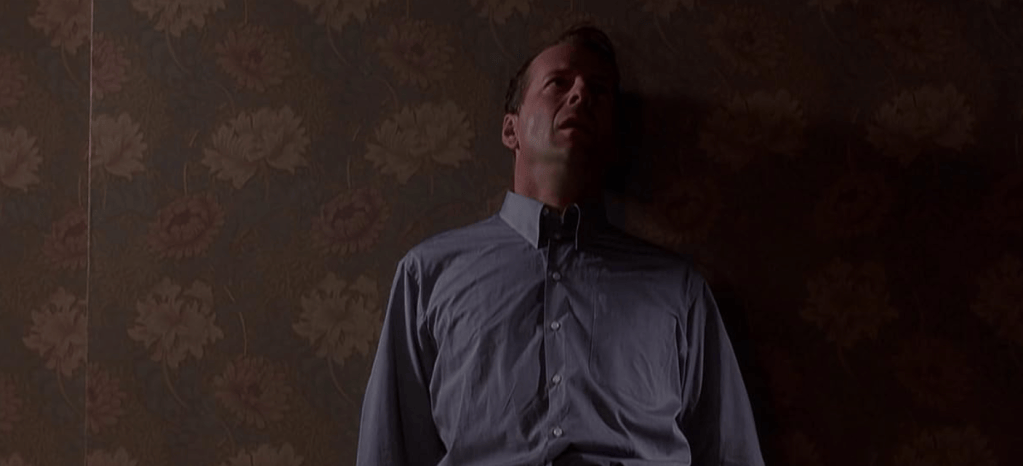
Bruce Willis having his own big reveal in M. Night Shyamalan’s best movie, The Sixth Sense (1990)Continue reading →
Welcome to Six Damn Fine Degrees. These instalments will be inspired by the idea of six degrees of separation in the loosest sense. The only rule: it connects – in some way – to the previous instalment. So come join us on our weekly foray into interconnectedness!
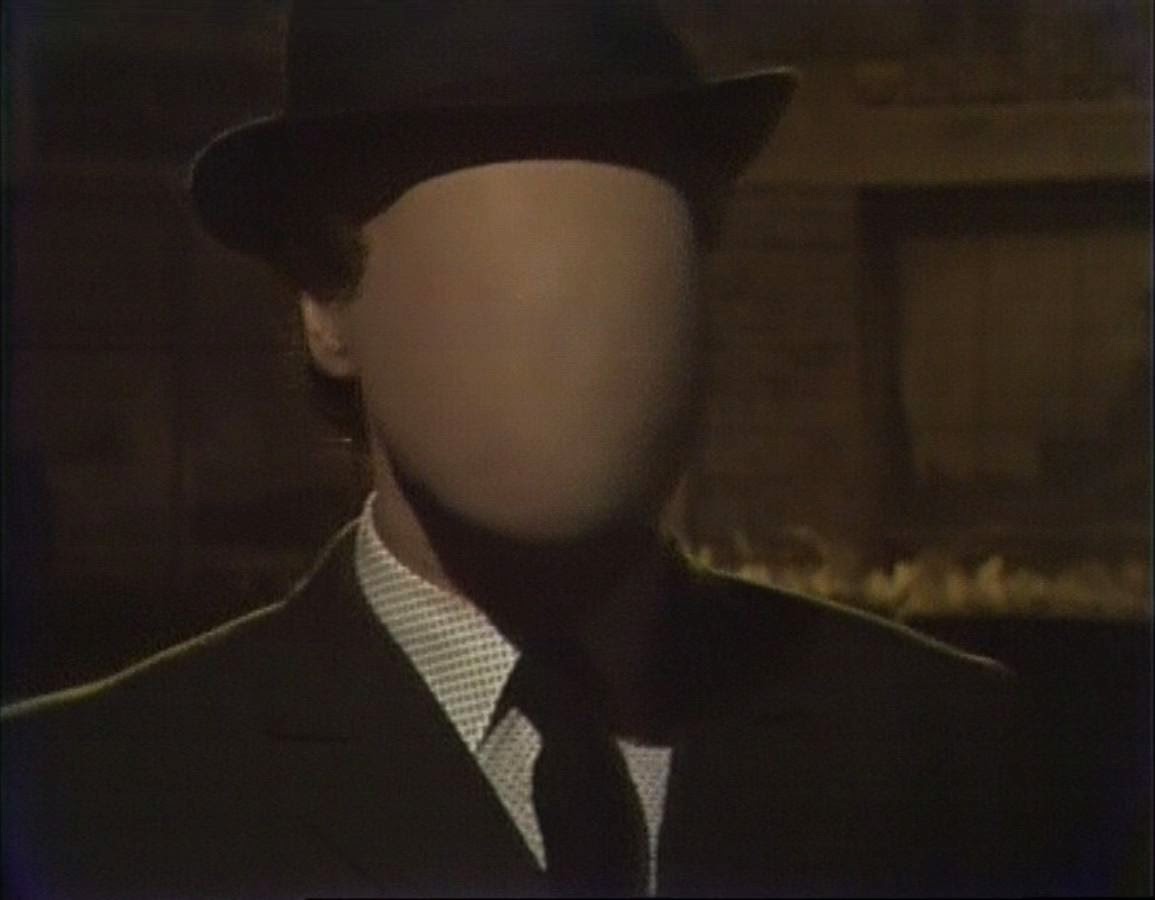
I can vividly recall a number of recurring dreams I had as a child that terrified me. One involved a burning photo, with the person in the image seemingly aware they were on fire. Another involved discovering that people, when hugged, would crumble into nothing. But worst of all would be to be unsettled by a man with his back to me. Only for him to turn around and reveal that he did not have a face.
Welcome to Six Damn Fine Degrees. These instalments will be inspired by the idea of six degrees of separation in the loosest sense. The only rule: it connects – in some way – to the previous instalment. So come join us on our weekly foray into interconnectedness!
At a time when Matt would geek out with his fellow uni pals over ’90s TV series on a regular basis, I was still stuck in a positively rural Swiss middle school just getting into taping films and shows and sharing them with people in my class. It was actually my very tech-savvy grandfather who was the innovator in our family and had not only bought the first computer (a Commodore Amiga) but more recently a double-decker video cassette recorder. Which meant that we were finally getting his hand-me-down, our first family VHS player/recorder! So at the tender age of twelve, I finally got my hands on anything from Star Wars, Star Trek, Alfred Hitchcock and, of course, James Bond. Many of these recordings were missing bits at the beginning or at the end, were shown in questionably censored pan-and-scan versions and were of course dubbed in German. Nonetheless, the good ones got through to us and – unequipped with cell phones or social media – the schoolyard became the arena in which we would review, pan or marvel at the latest tapes making the rounds.
Welcome to Six Damn Fine Degrees. These instalments will be inspired by the idea of six degrees of separation in the loosest sense. The only rule: it connects – in some way – to the previous instalment. So come join us on our weekly foray into interconnectedness!
I had the best start at Uni that any mid-’90s geek could have wished for: on my first day as a university student, I was introduced to another student who’d already been studying for a couple of years and who was a fellow geek, so before I’d even started signing up for seminars and lectures, I found that the place where I would be spending much of the next ten years or so (yes, I did hang around at Uni for a fairly long time), there was a bunch of likeminded people who were just as much into the geeky fare of the time as me. Star Trek: The Next Generation, Deep Space Nine, and especially the still relatively new hotness that was The X-Files: differently from school or from home, where I was pretty much the only one who was into these series, people here were just as excited as I was about Captain Picard, Data, Commander Sisko, Major Kira, Odo, Agents Mulder and Scully, Assistant Director Skinner, The Cigarette Smoking Man, and all the other heroes, villains, monsters and freaks.
Welcome to Six Damn Fine Degrees. These instalments will be inspired by the idea of six degrees of separation in the loosest sense. The only rule: it connects – in some way – to the previous instalment. So come join us on our weekly foray into interconnectedne
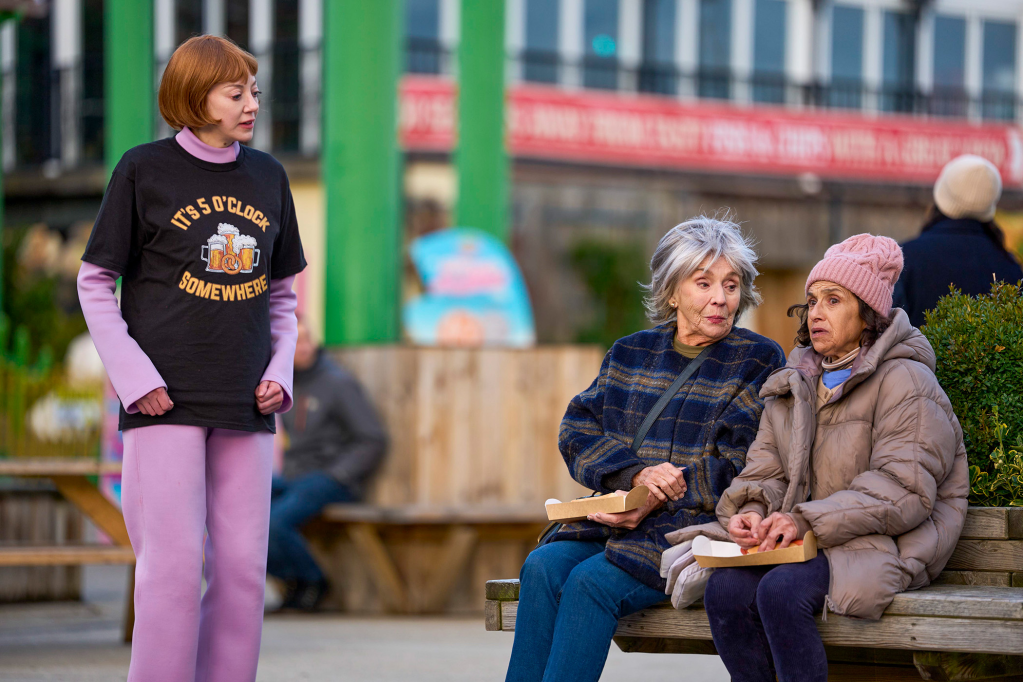
Diane Morgan (creator and star of Ann Droid) puts robots squarely at the centre of the BBC’s latest TV comedy.
To me when I was growing up, the anarchic sense of liberation that British humour offered on television was an essential tool to cope with the impending doom of the late stage Cold War world: Monty Python gave more than their middle fingers to conservative British society, their offspring (Fawlty Towers, A Fish Called Wanda) stretched the boundaries of propriety to the brink, and seemingly endless reruns of Rowan Atkinson in Black Adder and especially Mr. Bean cemented the sense of absolutely absurd, often silently physical comedy. I only discovered French and Saunders a bit later, but their spoofs of anything but the kitchen sink must have added another joyful layer to the rich cake that British TV humour became to me. There was a sense of security in having these characters and sketches available all the time, and their spread on YouTube and social media has made them even more timeless since.
Welcome to Six Damn Fine Degrees. These instalments will be inspired by the idea of six degrees of separation in the loosest sense. The only rule: it connects – in some way – to the previous instalment. So come join us on our weekly foray into interconnectedness!
There’s something fun about discovering a show via word of mouth. When friends who know you well start asking if you’ve seen the latest thing on television because, in their opinion, it’s “very you”. And then the subsequent joy when you finally get round to watching it and discover that it is indeed “very me”.
Welcome to Six Damn Fine Degrees. These instalments will be inspired by the idea of six degrees of separation in the loosest sense. The only rule: it connects – in some way – to the previous instalment. So come join us on our weekly foray into interconnectedness!
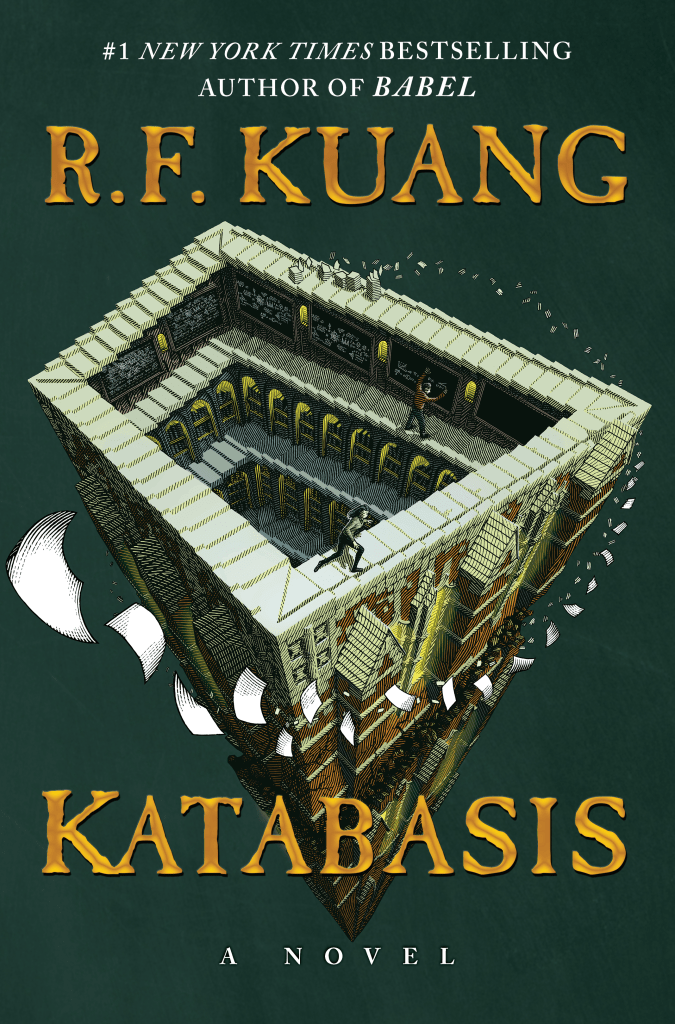
What if. What if hell were a university campus. In R.F. Kuang’s most recent bestseller, Katabasis, grad students Alice and Peter battle their way through eight Dantean circles to bring back their deceased advisor, the charismatic Jacob Grimes. One of their recurring discussions: they have no idea what circle he could be in. Greed? Violence? They are all too petty, too small for a man of his brilliance, for an academic visionary of his magnitude. Sure, he stole his male students’ research and was handsy and vindictive towards his female students. And sure, he abused them all, but, you see, he abused them and in doing so he elevated them. Sure, he made them do things, but they did them willingly, hungering for his approval. Grimes was the sun around which they were in perpetual orbit. What even is a crime, when it serves the greater good, as surely the work of such a lone genius must?
Welcome to Six Damn Fine Degrees. These instalments will be inspired by the idea of six degrees of separation in the loosest sense. The only rule: it connects – in some way – to the previous instalment. So come join us on our weekly foray into interconnectedness!
Note: while I conscientiously try to avoid spoilers in this short review: if you want to go in clean, you may want to come back to it later, as small spoilers on London Falling are inevitable in the text below.
Welcome to Six Damn Fine Degrees. These instalments will be inspired by the idea of six degrees of separation in the loosest sense. The only rule: it connects – in some way – to the previous instalment. So come join us on our weekly foray into interconnectedness!
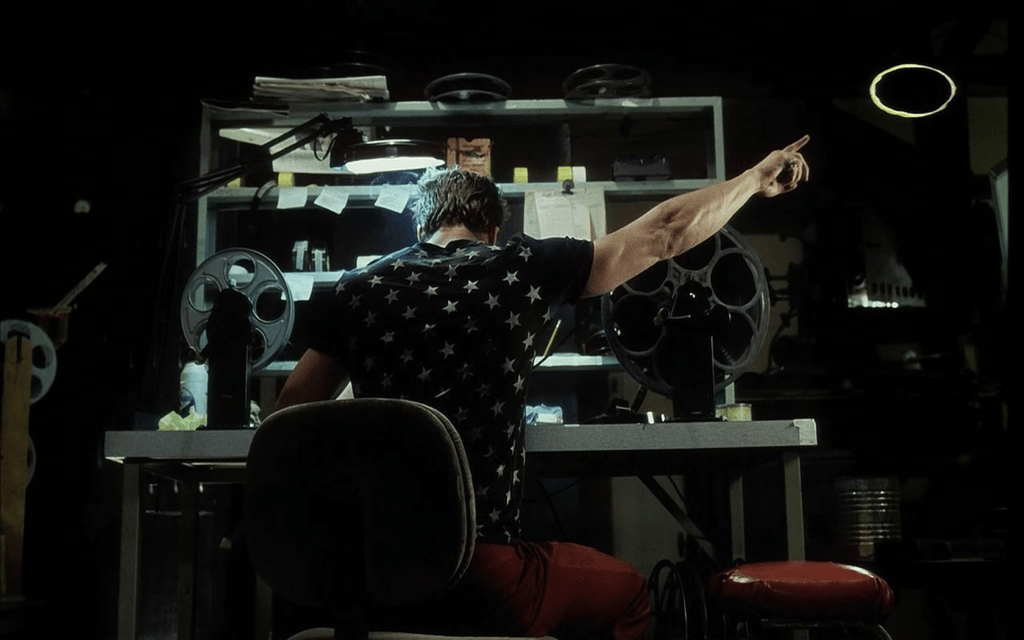
Most of the films running at my best local cinema are shown in digital format – but occasionally, after the ads and the trailers, there will be a slide saying something to the effect of: the following feature will be shown in an analog, 35mm version. Whenever that happens, I imagine that I hear a contented sigh from all the real cineastes in the audience. 35mm. None of those new-fangled bits, bytes and pixels. Real film: warm, grainy, as God intended.
Now, I consider myself a pretentious film geek with the best of them. But, honestly? I can’t remember a single such announcement that we’re about to see a film on, well, film rather than only a digital facsimile that didn’t make me think: couldn’t we have the digital version instead?





 A Damn Fine Cup of Culture