Welcome to Six Damn Fine Degrees. These instalments will be inspired by the idea of six degrees of separation in the loosest sense. The only rule: it connects – in some way – to the previous instalment. So come join us on our weekly foray into interconnectedness!

The Summer of 1982 means only one thing to me: the first Football World Cup I can remember. I’d never before experienced the idea that different countries could play each other at sport. Across the duration of the tournament, I learned about all these nations out there. I learned about their different cultures – especially as expressed through their football. I got to see their different flags, and discovered that I was fascinated about why they had the colours/designs they had. When rivals met on the pitch, I got my first taste of geopolitics.
I mean, I also got to watch some football matches, but its an interest in flags that’s the real legacy.
I remember my Irish grandfather being so disappointed with my brother and I cheering on Brazil over Scotland that, to boost Celtic solidarity, he offered us a pound for every goal Scotland scored. It didn’t work. With a team of amazingly talented individuals all in the tightest of ‘eighties’80s shorts, Brazil were always going to be way cooler. They had names like Zico and Socrates. They looked like they were having fun (and half-time cigarettes). I mean, we cheered the money when Scotland scored first, but our hearts were with Brazil.
But the other thing I remember is German relatives being absolutely disgusted by a game. Germany had turned up at the tournament as one of the favourites. Their first game was against unfancied Algeria and there was a general attitude in the German camp that they could just turn up and that would be enough to win. It’s rumoured they were joking before the game about dedicating their seventh goal to their wives and the eighth to their dogs. Only, reality had other plans. The Algerians beat them 2-1. This isn’t the game that so disgusted folk, though.
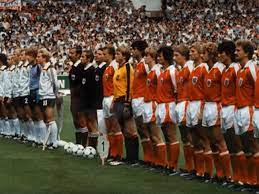
Defeat did not eliminate Germany from the tournament. In the early stages, the national sides were placed in groups of four, all the teams would play each other, with the best performing ones progressing. This makes sense – there’s no point having a team spend ages to qualify for a major summer event, only for the team to be sent home after one game. Germany and Algeria were in a group alongside Austria and Chile and so they all played each other. Until there was one game left.
And that game was Germany v Austria. And it was before that game that both sides realised that they would both progress in the tournament if Germany won the game by just one or two goals. And so they allegedly but almost certainly and absolutely definitely did collaborate to make sure that was the result.
Germany scored early on, and then, well, the game just effectively stopped. Neither team had any inclination to play, so they just half-heartedly started kicking the ball around. And when the final whistle went, both teams went through and the Algerians were eliminated from the tournament. Upset and angry Algerian fans in the crowd waved money at the players. They appealed to FIFA, but FIFA, normally such a bastion of honest sportsmanship, found that neither team had actually done anything wrong. So the result stood.

The furore over the result taught me two things. Firstly it was a crash course in geopolitics, learning why Germany and Austria might ally: the common language, an overlapping shared history. And also the scale of Algeria’s grievance, a former European colony finally getting the chance to step up on the world stage and being thwarted by a deal in a backroom somewhere in Europe. The more I looked into the story, the more the rich historical narrative opened up to me. School couldn’t interest me in this stuff, but a game could.
And I also remember as a kid discovering at this moment that unfair and unsporting behaviour took place in sport. And that cheats could get away with it. And I remember sitting with German relatives during their semi-final victory over France with there being a general sense of ambivalence over who should win. Especially after one of the most brazen assaults on a goal-bound player in the history of football!

A horrible act the German player got away with. But by that point young me wasn’t gutted that they had. I had already, in the few short weeks of the tournament, learnt how to be cynical about it all. Where once I had refused to come out from under the dining room table because of the scale of the injustice to Algeria that something had to be done about, I think I now just rolled my eyes. It’s a valuable lesson when it comes to major sporting tournaments. And, you know, I now had flag factbooks to be excited about.
 A Damn Fine Cup of Culture
3 thoughts on “Six Damn Fine Degrees #156: The Disgrace of Gijón”