Welcome to Six Damn Fine Degrees. These instalments will be inspired by the idea of six degrees of separation in the loosest sense. The only rule: it connects – in some way – to the previous instalment. So come join us on our weekly foray into interconnectedness

When I was a kid the cartoons of Hollywood’s Golden Age were rarely off the television. Looney Tunes and Merrie Melodies were staples on the schedule, convenient filler for when the channel had five minutes they had to fill up between bigger shows.
As a result all the famous characters from the period were still household names well into the 1980s, and it didn’t seem like any of us children watching were nostalgically indulging an old classic. They felt fresh and fun. We just did not think they were old at all. They still felt contemporary, their occasional period oddity just part of the silliness.
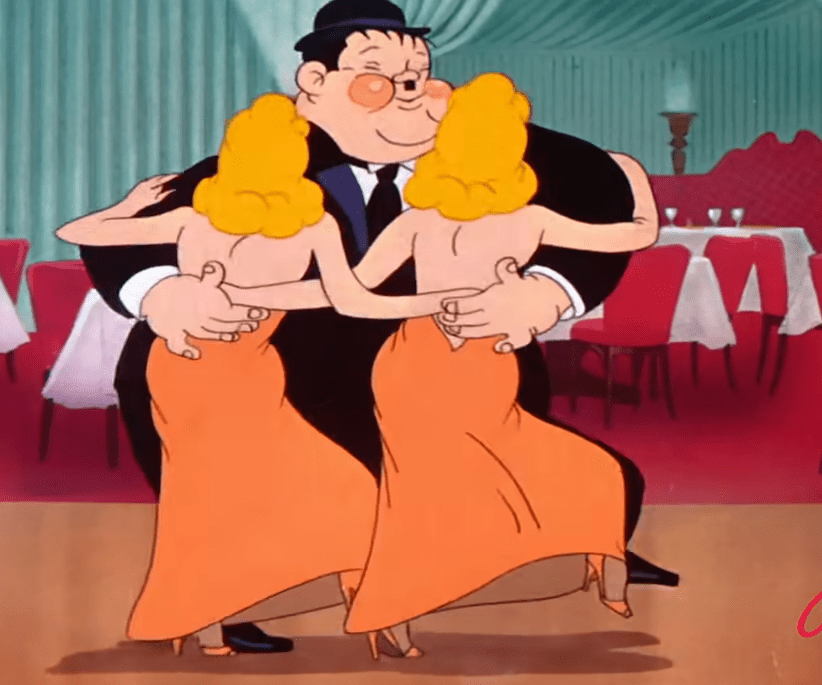
That said, I don’t think those running the channels back then put much thought into the content of the cartoons. They were five minutes of filler, there to do a job and maybe placate the simple minds of children who’ll just be happy with any cartoon. Which would result in the truly jarring experience whenever “Hollywood Steps Out” got broadcast.
It’s a Merrie Melodies cartoon, directed by Tex Avery that doesn’t contain a single staple from the cartoons. Instead its a five-minute animated satire mocking all the stars of the day. The problem for us kids in the early ’80s is that the “day” in question was in 1941. I still recall the weirdly frustrating feeling when first watching this cartoon – as a cavalcade of grotesques filled the screen. None of whom I recognised. All doing strange stuff that made no sense. The odd visual gag landed, but without the reassuring presence of a Bugs Bunny, it was a surreal and slightly warped experience.
Which makes coming back to the cartoon many years later such a different experience. In the decades since, I’ve got into the Golden Age of Hollywood. Famous actors who died before I was born are now instantly recognisable to me. And now the cartoon makes sense.

Watching it again now – pretty much the first caricature of the cartoon is obviously Cary Grant. It’s clearly meant to be him, with a stilted impression of his voice. And his dialogue is just a gag were he slips references to all his big cinematic hits into his dialogue.
“If I ever told my favourite wife the awful truth, I’d be on the front page.”
It’s not a great line, but was probably cute in 1941. But for a kid in 1981? What on Earth was going on? And then a Greta Garbo caricature turns up selling cigarettes, her disinterested persona again the gag. As is a reference to her rumoured massive feet – a punchline from the gossip magazines at the time. Which, I probably don’t need to emphasise, we knew nothing of aged six.
The whole cartoon is like this. Utterly baffling to me as a child, but recognisably satirical for me as an adult. Clark Gable is seen being a womaniser. James Stewart stuttering and awkward. Bing Crosby owns useless race horses. And Mickey Rooney as Andy Hardy needs a soulful heart-to-heart with his father. But even my knowledge of the time period still has its limits. I’m still occasionally transported back to the early ’80s by the sheer unrecognisable oddity of someone called Jerry Colonna and his catchphrase of “Yahudi”. Or a character that went by the name of the “Ol’ Perfessor”.
It’s also a useful reminder that, at the time they were made, the cartoon weren’t seen as just for children. Their irreverent humour seen as just as much for the adult audience seeking escapism. And that’s emphasised here with a few risque jokes that flew right over heads back in 1981. When it’s implied that the famous burlesque dancer at the time Sally Rand leaves her fan dance feathers at the cloakroom, the gag is she’s now naked. And the cartoon does little to disguise Gable’s randiness.
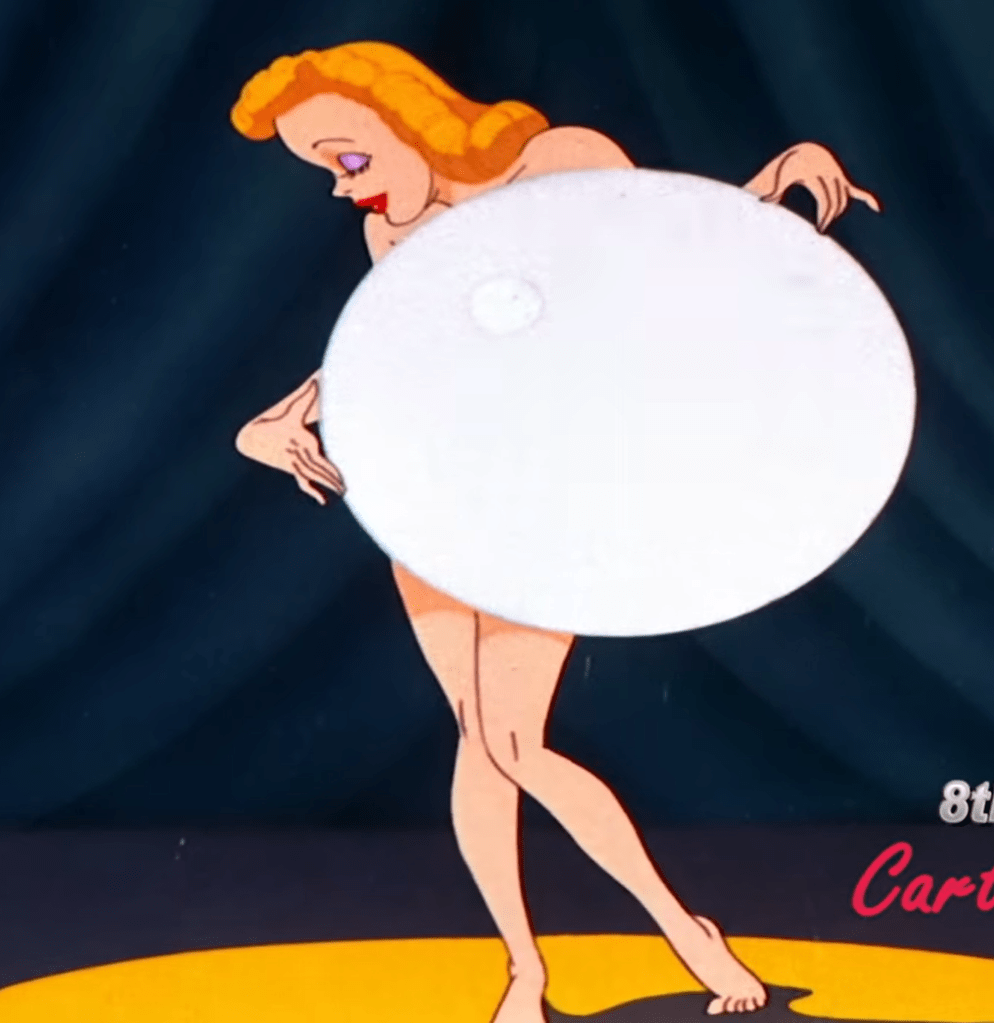
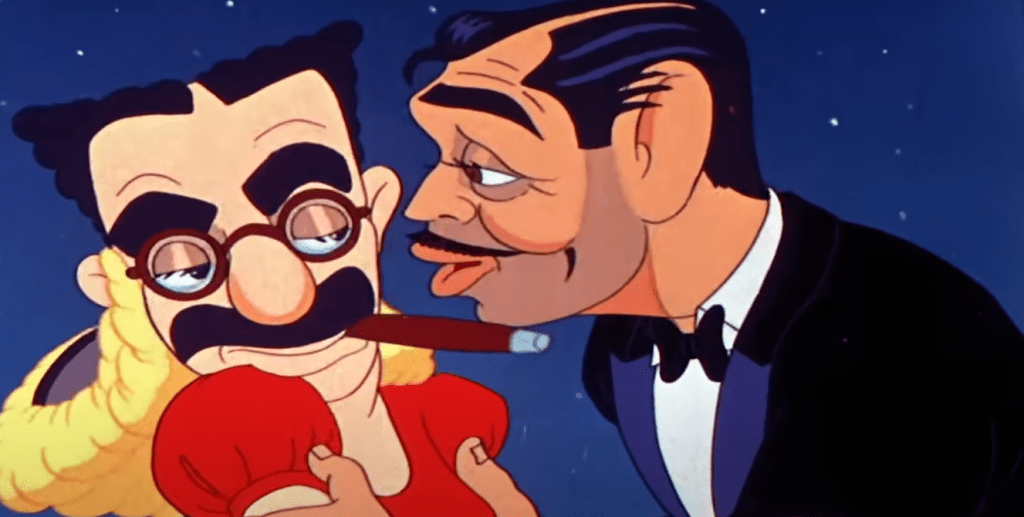
Despite this surprisoingly adult content for what would have been used as filler during kids’ TV, its also interesting as an adult to learn that the hand of censorship was to strike the original version of this cartoon. The final end would have seen Clark Gable, having chased an attractive, coy blonde for the whole cartoon, discover that in reality its Groucho Marx – but ends up giving him a big kiss anyway. This kiss has long since been excised from the cartoon and is sadly a lost scene.
Ultimately, though, the cartoon is now an interesting curio, both of the personalities and the popular culture in 1941, and of interest to those who look back on that era. But it is also a reminder that so much of the the rest of the Merrie Melodies/Loony Tunes output hasn’t aged at all. The only reason this cartoon was so jarring to six-year-old me is because the cartoons didn’t usually feel dated at all. Which, I think, is a great testament to their timeless brilliance that gets celebrated by later generations.
 A Damn Fine Cup of Culture
Great piece!
I had to google Jerry Colonna…blast from the past…and can’t find the Old Perfessor. Your experience reminds me of watching The Adventures of Bullwinkle J Moose with my older brother, it was funny for kids but hilarious for older folks which of course I realized when I became one