Welcome to Six Damn Fine Degrees. These instalments will be inspired by the idea of six degrees of separation in the loosest sense. The only rule: it connects – in some way – to the previous instalment. So come join us on our weekly foray into interconnectedness
When I was a child, I remember there being a certain Hollywood magic to films that seemed to have simply everyone in them. I’m not talking about your average ensemble cast (or the kind of ensembles that Robert Altman worked with, which were very much their own thing), but the kind of cast where every name that is dropped in the credits makes you go, “Ooh, wasn’t he in… And didn’t we see her in…? And wasn’t he great as…?” In my head, the archetypes of this kind of film are the 1970s Agatha Christie adaptations featuring Belgian super-sleuth Hercule Poirot: Murder on the Orient Express, in which you’d get Lauren Bacall on the table next to Ingrid Bergman and Jacqueline Bisset, looking across the aisle at Richard Widmark, Michael York, Sean Connery and John Gielgud, or Death on the Nile, whose cast ranged from Bette Davis via Angela Lansbury to Mia Farrow, and from David Niven to Jack Warden, and that’s not mentioning the Maggie Smiths, Jon Finches and Peter Ustinovs. Then there’s the grimmer but equally star-studded A Bridge Too Far, again with Sean Connery, but also Gene Hackman, Dirk Bogarde, Edward Fox, Michael Caine, and many, many others.

But of course the practice started much, much earlier than that. I’m sure that not even George Cukor’s The Women with its all-female, all-star cast was the first of these films where the trailer could just go on dropping names for several minutes, evincing gasps from the audience: Joan Crawford! Joan Fontaine! Norma Shearer! I’m not the silent-movie connoisseur on our line-up of culture fiends, but I expect that Julie could mention similar formats from before the movies opened their mouths and started to talk.
What about more recent years? The format is still with us, but I’m not sure it still has the same significance. In 2008 there was a modern remake of The Women. The film was a commercial success, even though critics weren’t too keen – but does anyone remember that version? In spite of its cast, which included Meg Ryan, Annette Bening, Carrie Fisher, Candice Bergen, and Bette Middler, the 2008 version didn’t exactly have legs. Nor did Kenneth Branagh’s 2017 remake of Murder on the Orient Express, or indeed his later Death on the Nile, though both had casts that were not to be sneezed at (the latter a bit less so, admittedly, coming across more like the budget-friendly type of ensemble). And while I probably know the actors in these modern versions of the star vehicles of yore better than I knew the casts of Death on the Nile or A Bridge Too Far as a kid, those films simply don’t muster the same kind of excitement. You got those four A-listers together to star in the same film? And you added a generous helping of well-known character actors? Well, good for you.
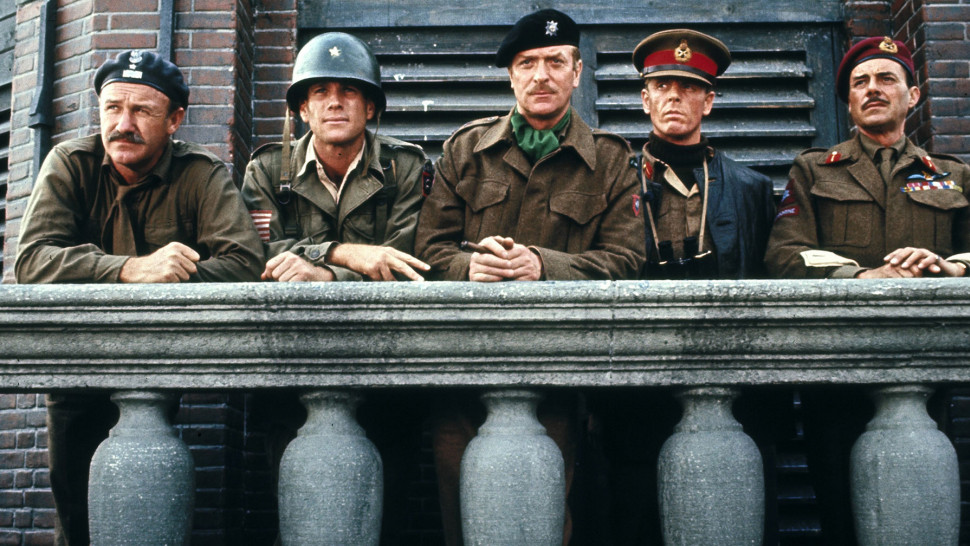
Why is it that whatever worked in the 1970s, or the 1930s, or at any rate in the golden past, no longer works in the 21st century? Are we too jaded? Or do stars no longer have the allure they had back then? Why is it that pre-teen me got more excited about an ensemble of A-listers, half of which were already dead when I saw the movie on TV, than present-day me gets about whatever Hercule Poirot film Kenneth Branagh dons his gargantuan stache for, getting together a bunch of Hollywood mates?
The star-studded cast isn’t entirely dead yet: I admit that Soderbergh’s Ocean’s 11 got me to cheer for the all-star cast (though Ocean’s 8 less so), definitely more so than I’m sure the Rat Pack original would these days. And there was something exciting about Marvel’s franchise buildup culminating in the climax of Avengers: Endgame, as much for the spectacle of all these characters vying for space in the same frame as for all the stars getting together to punch Thanos. But those were very much the exception: on the whole, modern all-star vehicles don’t hold the same glamour, the same sense of “Wow, all of these people in the same movie!” as their equivalents of 50 or 100 years ago did.

Is it that stardom no longer means quite the same? is it that actors, even the big names, the Julias the Brads and the Leonardos and the Margos and the Georges and the Scarletts, are somehow actors first and stars second? Because to some extent, that was what was exciting about films like the 1978 version of Death on the Nile: you came to watch Bette Davis and Angela Lansbury and David Niven, not Marie Van Schuyler, Salome Otterbourne and Colonel Race. These parts were like the celebrity cameos in Christmas Pantos, where the point is that you’re sitting there watching Ian McKellen, albeit as Widow Twankey. In the old films, there was this sense that as soon as one of the stars made their first appearance, or had their death scene, the audience should applaud, because here’s Sir This-and-that or Dame So-and-so, here’s another star, and here’s yet another star. That may be exactly why Avengers: Endgame felt surprisingly similar to those star vehicles of former decades: the fun lies in waiting for the next celebrity cameo, and in this case the celebrities were both the superstars and the superheroes. A double hand for Captain America and Chris Evans!
So, what does this mean for the star-studded ensemble movies? Is present-day stardom simply not all that well suited to them? Are modern stars too much bent on being actors and artists first? Or are modern films written differently, so that they simply don’t work as well as revues, where the celebrity appearances get a round of applause from the audience? I don’t know – but what I do know is that Hollywood will try again and again, and as the movie industry changes, as stardom changes, as our tastes change, it’s more than likely that there will be more attempts at recapturing the magic of films such as The Women or the Sidney Lumet version of Murder on the Orient Express. Who knows? Perhaps in twenty, thirty years we’ll be watching a film about a series of outlandish murders on an intergalactic space cruiser, and we’ll be going, “Oh, isn’t that Frodo? And wasn’t she Scarlet Witch? Ah, that one was James Bond after Daniel Craig! There’s John Wick! And he, I’m sure he was, what was it, Dameron Poe! And she was Imperator Furiosa!” And we’ll all be wowed by the galaxy-wide moustache on Timothée Chalamet as he calls all the surviving stars together in the Observation Deck to lay it all out and point the finger at, say, Rachel Zegler… which is ludicrous, because at that point we all know that it was Emily Blunt whodunnit.

 A Damn Fine Cup of Culture
3 thoughts on “Six Damn Fine Degrees #161: Hollywood A-Listers Assemble!”