Welcome to Six Damn Fine Degrees. These instalments will be inspired by the idea of six degrees of separation in the loosest sense. The only rule: it connects – in some way – to the previous instalment. So come join us on our weekly foray into interconnectedness.
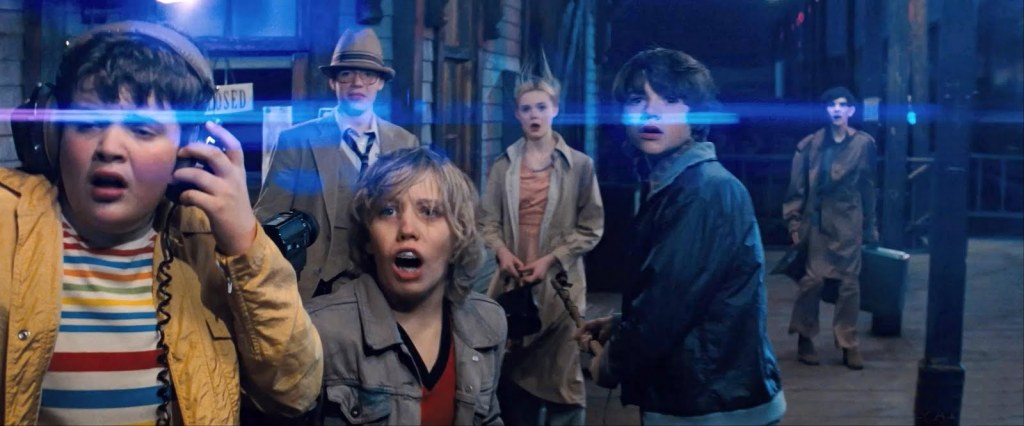
Reading Mege’s critical reappreciation of all Stranger Things from last week, I became aware of how much I had loved that show’s first season. It not only made me a first-time Netflix subscriber but also truly excited me and my friends, leading to numerous binge parties with all the hairs on our necks standing up for most of it. I found the little-boy-lost storyline heartbreaking, the unfolding monstrosities riveting and the bond between the group of friends heartwarming. The ’80s references seemed loving but not overdone and the show came to an almost perfect conclusion.
Alas, the enthusiasm was not meant to last, for even at the very end, we all knew that a second season was in store. The excitement only lasted for about one or two episodes into the continuation before I realised what we were in store for: overdone ’80s references galore, storylines for each main character that stopped properly building up or intersecting and a forced rehash and exaggeration of the things the makers assumed had made the show so popular in the first place. Season two seemed to have been rushed through production, and season three only reconfirmed these impressions, and I haven’t even made it through all the horrific gore of season four that seems to play to more ‘mature’ audiences and put a Kate Bush classic and our group of overripe teenagers centre-stage rather than giving us something to truly care for, or at least a taught plotline.
Of course, Stranger Things in its best moments wonderfully harkened back to its role models, mostly Spielberg’s sense of childhood and youth, especially his masterpiece E.T., plus all the youth adventures of that era (The Goonies, Explorers, Stand By Me, IT), mixed in with the era’s horror and fantasy cinema (Alien, Nightmare on Elm Street, The Neverending Story in particular), not only alluding to them but using these references as building blocks to tell its own story.
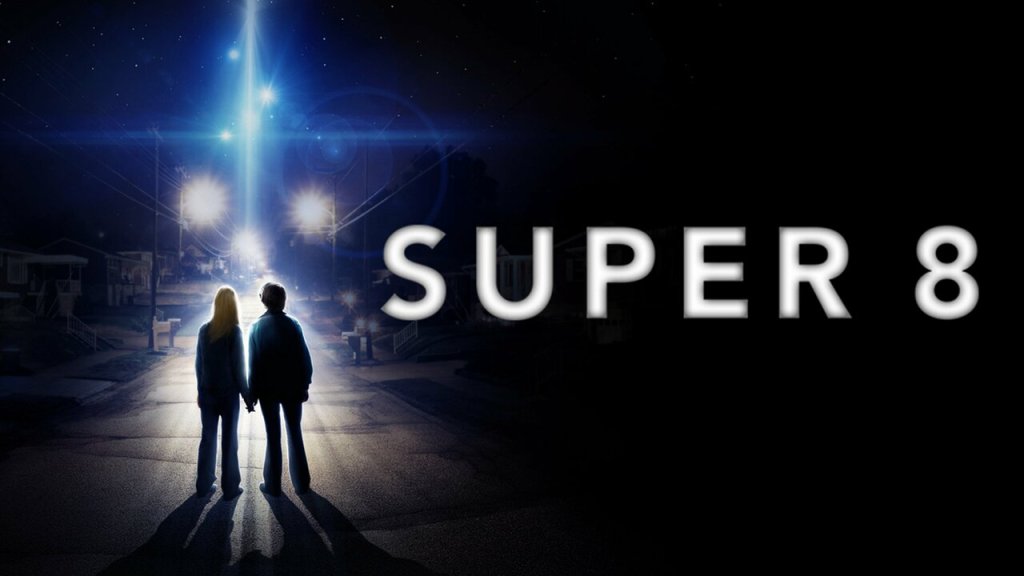
I was reminded then that the exact same recipe had given us a film several years before Stranger Things, and by a man who would later tackle his own reboot of a beloved franchise of that era – Star Wars: J.J. Abrams’ Super 8 from 2011. It is strange to rewatch this now in retrospect and be aware of how much it served as a quasi-template for the Netflix hit show. What it gets wonderfully right compared to Stranger Things, however, is its limitation to one full-scale adventure that turns all expectations on its head and makes the film’s monster into a mirror of its protagonists and their own family histories.
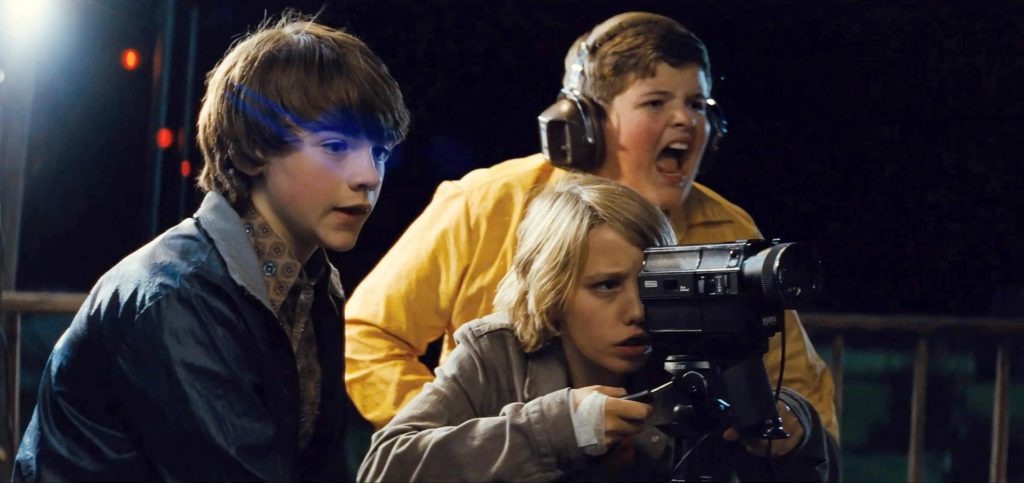
At its core, Super 8 tells the story of a police deputy father and his son (Kyle Chandler and Joel Courtney) mourning the death of their wife and mother, and the responsibility put on another father with a daughter (Ron Eldard and Elle Fanning in her breakout role). When the children reluctantly start to bond in the course of a teenage movie project, a gory zombie flick shot at the local train station, the filming is brutally interrupted by the massive collision of a freight train carrying a dangerous monstrous cargo. While federal agents start swarming the town, the kids decide to keep their cameras rolling and their investigation going and slowly, they start unravelling the astonishing secret of the monster on the loose.
From the start, Super 8 is brimming with loving homages to Spielberg and ’70s and ’80s cinema in general while building a convincing cast of characters among both its teenage and adult characters. The special effects are spectacular but not overwhelming, and the storyline borrows from E.T. and Close Encounters of the Third Kind just as much as Stranger Things later did, but what is reveals about the monster at the end and how this affects our main characters, is quite something else. Towering over this, is an excellent score by Michael Giacchino, who had just reinvented Star Trek for J.J. Abrams with a glorious new theme and gave Super 8 such bravura horror and action moments, while coupling it with one of his most moving compositions that comes to full fruition in the powerful if somewhat abrupt finale.
Thus the film culminates on a truly satisfying note, and even if we would have liked to see the continuation of our protagonists’ journey, it does what Stranger Things is seemingly unable to do: it finds conclusion and resolution and doesn’t endlessly turn new rounds in its overstretched multiverse. Even more, it’s an easy movie to watch and appreciate repeatedly, just like its great role youth adventure role models of yesteryear. Its sense of wonder is as contagious as Spielberg (who co-produced the film), its friendship vs. horror theme as affecting as 1990s IT and its cast of characters as endearing and real as season one of Stranger Things. In our world of constant continuation and rehash, copying and regurgitating, it remains a soothingly singular and unique cinematic entry!
 A Damn Fine Cup of Culture
2 thoughts on “Six Damn Fine Degrees #190: The Better Stranger Things”