Welcome to Six Damn Fine Degrees. These instalments will be inspired by the idea of six degrees of separation in the loosest sense. The only rule: it connects – in some way – to the previous instalment. So come join us on our weekly foray into interconnectedness.

In the early ’80s, Bob Fosse’s stock as a film maker couldn’t have been higher. Having revolutionised the world of theatrical dance choreography, he’d spent the ’70s building up a reputation as a major new directing talent. Cabaret and Lenny had been well regarded successes, and he’d ended the decade with All That Jazz – winning the Palme D’Or and four Oscars alongside healthy box office returns.
His next choice of film, however, was to damage all that and end up being the final motion picture he made. It failed at the box office – always a cardinal sin for Hollywood – but it also created enmities within Hollywood and the entertainment industry that weren’t going to be easy to fix. This is Star 80 – an attempt by Fosse to dramatise the real-life story leading up to the rape and murder of the actress Dorothy Stratten by her ex-husband and ex-manager Paul Snider.
One of the most striking things about attempting this story is how recent this criminal event was. Stratten is murdered in August 1980. As the Playboy “Playmate of the Year” her death was a huge story at the time, affecting a large number of people – who would clearly still have been dealing with the grief when Fosse announced he was working on a screenplay in May 1981. Even though it wasn’t released till November 1983, the fact that this is a dramatisation of such a recent event – with actors performing fictionalised but named takes on these real-life individuals – gives the film an edge that it hasn’t really lost with time. It still feels like a raw, fresh wound is being exposed here.
In terms of the basic facts of the story, Fosse sticks with what we know to be true. Paul Snider was a pimp and nightclub events promoter in Vancouver, California. One day he is served by a 17-year-old Dorothy Stratten in a fast food restaurant. Taken by her look, he persuades her to pose for professional nude photos, which he send to Playboy magazine. Soon after she’s invited by Playboy to Los Angeles and her career begins to take off. She becomes Playmate Of The Year 1980 and begins to act in TV and film.
She gets cast by as major director in his next big project, and begins an affair with that director while they are filming. She files for divorce from Snider, hoping to sever all personal and business connections. Finally she agrees to meet him at his house, where Snider was to rape and murder her, before turning the gun on himself.
The fact Bob Fosse chose to stick with these facts means that this isn’t what is controversial about Star 80. The issue is, as you watch the film, it becomes pretty clear that Fosse is interested in one character in this story. Not Dorothy Stratten, but her murderer Paul Snider. And, in attempting to explore this character, and his motivations, Fosse presents a surprisingly sympathetic portrait of a small-time hustler desperate to get rich. A man seemingly pushed to the edge by the tragedy that every time he gets near to success, it is taken from him: by gangsters, by his business associates, by Playboy magazine owner Hugh Hefner and finally by Dorothy Stratten asserting full control over her life and career.
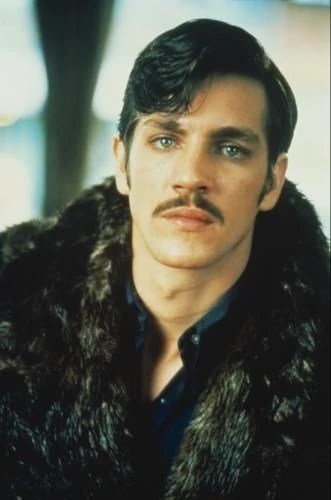
In creating this portrait of the character, Fosse is assisted greatly by Eric Roberts who delivers an incredible performance as Snider. Now perhaps more synonymous with phoning it in on countless b-movies, it’s striking to go back to his earlier performances and realise quite how talented he is. He brilliantly conveys how the sleazy charm of the character still credibly works as charisma, he oozes an injured insecurity that drives his ambition, his desire for fame and success. And as his levels of self-delusion grow that he’s still the one that’s going to make it big here, he never descends into a cartoon caricature of idiocy. Eric Roberts didn’t get even an Oscar nomination for Best Actor that year, something that genuinely feels like a snub.
But by choosing to put all the dramatic weight of the film on this character, Fosse makes what I think is his big mistake, one that scuppers the whole picture – because this relegates the character of Dorothy Stratten to a one-note cliché of a naïve, folksy starlet. Muriel Hemingway does all she can here with minimal material here but it never stops feeling like there’s a massive chunk of the story missing. And it’s her story.
When you go back and read interviews with people who knew Dorothy Stratten a far more complicated and interesting individual emerges. And someone with all the talent and charm required to become a star. You can catch glimpses of all that potential in her performance in Peter Bogdanovich’s They All Laughed, the last film she made before she was murdered. But this talent and charm just isn’t anywhere in Star 80.
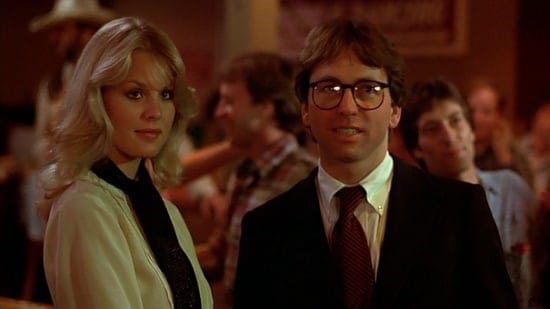
In real life, it was while making this film that Dorothy Stratten began a relationship with the director Peter Bogdanovich. And while Star 80 primarily names the actual characters in the story – with Cliff Robertson delivering an avuncular sleazy businesslike Hugh Hefner – the real-life Bogdanovich threatened to sue if he – or anyone remotely like him – was portrayed in the film. So instead we get a different director character, one so lifeless there’s actually no risk at all that he can be compared to anyone actual living. It provides the film with the narrative it needs, the affair that Stratten has that makes her decide to end her marriage, but none of the actual drama that might give her more character. She doesn’t get to experience the joy of falling in love here at all: she’s just being seemingly lectured by a besotted director and then – bam – she’s in bed with him. Still being lectured by him.
The film’s story builds towards the final murder/suicide moment, which – rather strikingly – Fosse films in the actual house where the rape and murder took place. It’s clearly the pivotal moment in the whole motion picture, Roberts and Hemingway sharing a scene that we – as the audience – will know ends horribly. It’s also the moment where Fosse has to fictionalise the most. We do not know what happened between the two people in real life here as the only two people involved died. And it’s here where the imbalance between the dramatic weight given to both characters is so telling. Roberts gets to portray Snider’s final collapse into anger and possessive rage, building on everything we’ve seen in the story so far. Hemingway just gets to react. And as the scene unfolds, her reactions don’t seem to make coherent character sense. She’s there to provide all the required steps to let Roberts have his collapse. But the viewer is given little insight into why she is doing what she does, why she makes the decisions reacting to Roberts’ actions that get him to the next stage.

The media gets rightly criticised whenever it reports on stories of a “family man” who murders his family, focusing on his seemingly positive qualities that make his crime all the more shocking. While the wife becomes little more than a footnote, smiling out at us from the ‘happy’ family photo they’ll print to juxtapose with the details of the tragic murder. By being made so soon after the actual events, I think Star 80 is guilty of very much the same reporting imbalance.
Added to that here is the seedy glitz and expensive glamour of Hollywood. There’ll never be lack of interest in murders in Tinseltown. From the shooting of William Desmond Taylor, the slaughter of Sharon Tate, even the murk that surrounds the drowning of Natalie Wood – these are stories that will keep getting retold. But in Star 80 Bob Fosse made a flawed final film by retelling that story and ignoring the victim. If anyone ever chooses to go back to this, I hope they redress this.
 A Damn Fine Cup of Culture
One thought on “Six Damn Fine Degrees #192: Star 80”