Welcome to Six Damn Fine Degrees. These instalments will be inspired by the idea of six degrees of separation in the loosest sense. The only rule: it connects – in some way – to the previous instalment. So come join us on our weekly foray into interconnectedness!

Warning: Spoilers ahead for the film Memories of Murder.
Towards the end of lockdown, when the cinema’s reopened, I have fond memories of my earliest trips to see movies. I mean, it wasn’t quite the same. At least half the seats in most cinemas had been removed to create gaps between punters. Masks were compulsory and the experience felt jarring. But there was still something about being able to see films again on the Big Screen – especially given concerns just a few months earlier that the cinemas might never reopen.
The first few trips were pleasant enough. But then I saw the 2003 film Memories Of Murder for the first time. And it was fabulous: a reminder of just how great movies can be. I walked out the cinema on a high, desperate to find out more on the film, but giddy at the thrill of what this big screen experience is all about. Spending time hooked on a story that is engaging, entertaining, thought-provoking, angry and unsettling.
The basic story concerns a serial rapist and killer operating in a small town in South Korea in the late 1980s. The local police force are completely ill-equipped to deal with such a serious crime. the lead detective, played brilliantly by Song Kang-Ho, is convinced he has the instinct to be a great cop, able to read lies on the face of those he’s interviewing thanks to his “shaman eyes” The force he leads mess up crime scenes, they seek to frame known local creeps, and they behave with a false macho bravado that most commonly reveals itself as misogyny to both the victims and the sole woman on the investigation. All the while, the murders keep happening – leading to a more professional investigator from Seoul to be sent, played by Kim Sang-Kyung. And the different cops clash as to how best to approach catching the criminal… while still getting nowhere.
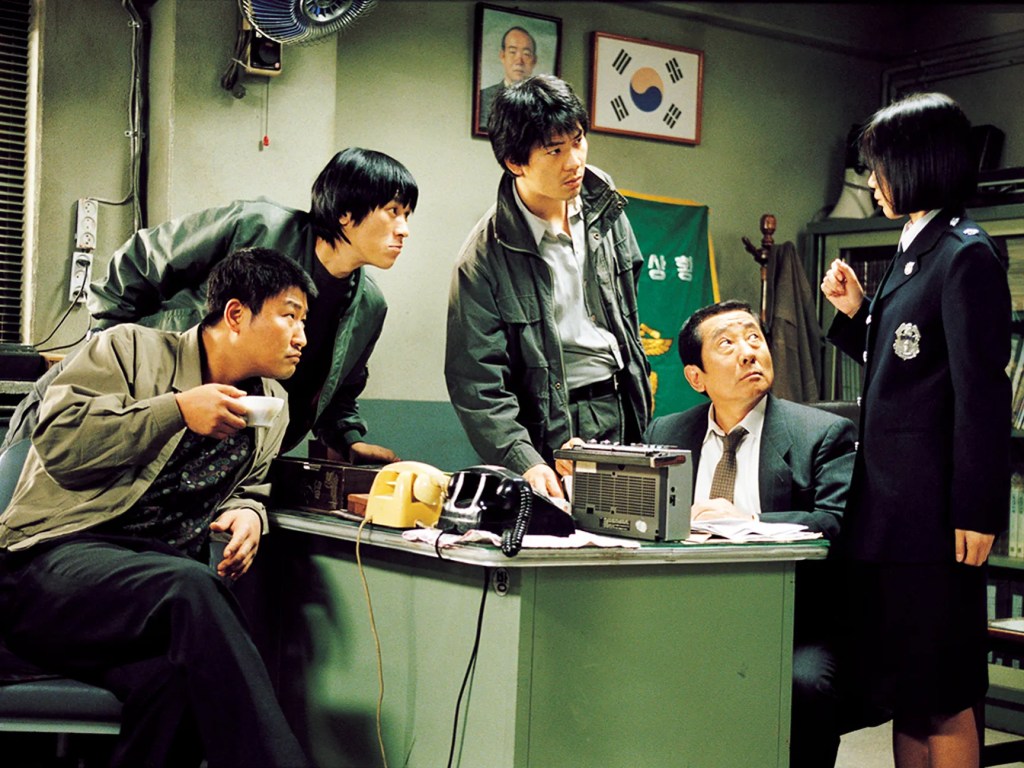
There’s a perfectly pitched vein of black comedy here. There are genuine laugh-out-loud moments at quite how badly the police are messing up crime scenes, or how the boorish cops lack any of the skills to properly investigate the crime and protect women in the town. But this comedy never dispels the darkness, as the film progresses the tragedy of this incompetence becomes overwhelming. This killer will get away with it because the police are so useless.

And that’s where the anger at the heart of this film comes in – because this is a film furious about the injustice here. Not least because the story at the heart of the film is based on an actual series of crimes: the Hwaseong Serial Murders. Between October 1986 and April 1991, ten women were raped and murdered by a serial killer who the police failed to catch. Bong Joon Ho’s anger at this injustice is all over this film, from the uselessness of the cops to the lack of resources available to them as the the autocratic regimes that then ruled South Korea tries to crush democratic protests.
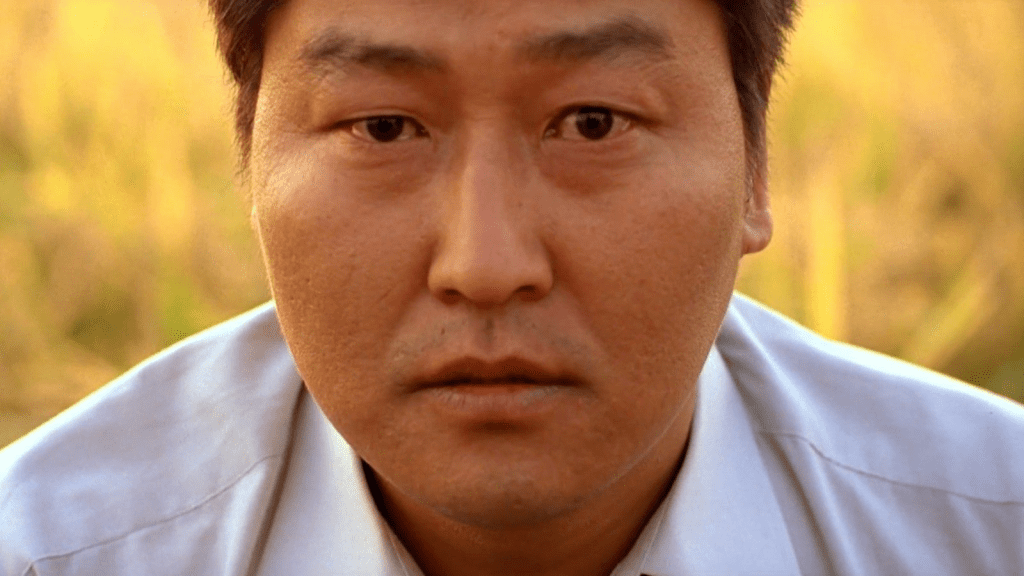
When the film was made, the Hwaseong killer had not been caught. So, in a striking sense, this absent character from the film is the most striking because he’s the real person. This leads to one of the most haunting endings to a film I’ve ever seen. In a scene set years later, the lead detective – no longer a cop and still smarting from his failures on the case – comes across another frustrating detail about the killer. At which point, Song Kang-Ho looks direct at the camera and talks to the killer. A scene that Bong Joon Ho put in there because he thought that the killer himself, still free and out there, might go see the film. And he wanted a final accusatory face to talk directly to him.
And as a further twist on this tale, in 2019 the criminal was caught. A prisoner called Lee Chun-Jae, already jailed for life for the rape and murder of his sister-in-law was connected to the crimes via DNA evidence and confessed to it all. This then revealed that the reality of the investigation was not too different from that presented in the film. Lee stated that he “thought I would get caught easy,” as he hadn’t actually tried too hard to cover up his crimes. He’d even once been interviewed carrying the watch of one of his victims, and had stated that these interviews were primarily the cops asking him about others they suspected – never about his possible guilt.
And it turned out that Lee had indeed gone to see the film in the cinema. His reaction – “I just watched it as a movie, I had no emotion towards it” – doesn’t undermine the power of the ending. Indeed, perhaps, it enhances it. Now it leaves the audience with a haunting accusation, powerless and yet powerful. A strong emotion that reminded me when I saw the film of just how great cinema could be. It was good that it was back.
 A Damn Fine Cup of Culture
4 thoughts on “Six Damn Fine Degrees #194: Bong Joon-Ho’s “Memories Of Murder””