Welcome to Six Damn Fine Degrees. These instalments will be inspired by the idea of six degrees of separation in the loosest sense. The only rule: it connects – in some way – to the previous instalment. So come join us on our weekly foray into interconnectedness!
As Alan describes so well in last week’s post on seeing Memories of Murder as his perfect post-pandemic return to the cinema, the question about what we love most about movies can reveal itself within just one such film: a fantastically involving plot, equal levels of suspense and amusement, inspiring visuals and soundscapes, carefully fleshed-out characters and themes, as well as a totally satisfying ending. With a different film at hand, I just felt the same again with Hitchcock’s Rear Window, the film I always describe as probably the best cinematic experience ever made.
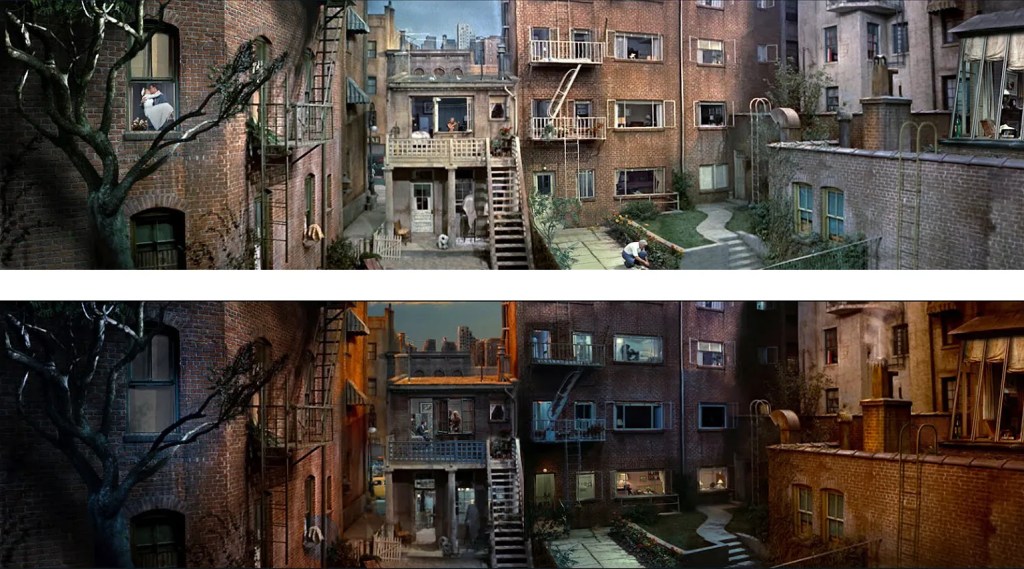
Of course, Rear Window is best enjoyed on one of the past hot summer nights with all the windows open and my own view of my neighbourhood activities. To be fair, no view compares to what Hitchcock had constructed at Paramount Studios that year! On a recent return to the Paramount Tour in Hollywood, I not only had a chance to see the original studio lot (which is now used for Paramount+ productions), but I also heard about the scale and scope of this amazingly detailed set and the enormous demands by the director – including actual street traffic, whose carbon emissions almost poisoned the film crew! It is this lovingly crafted set up that pulled me completely into the neighbourhood voyeurism of James Stewart’s protagonist from the beginning.
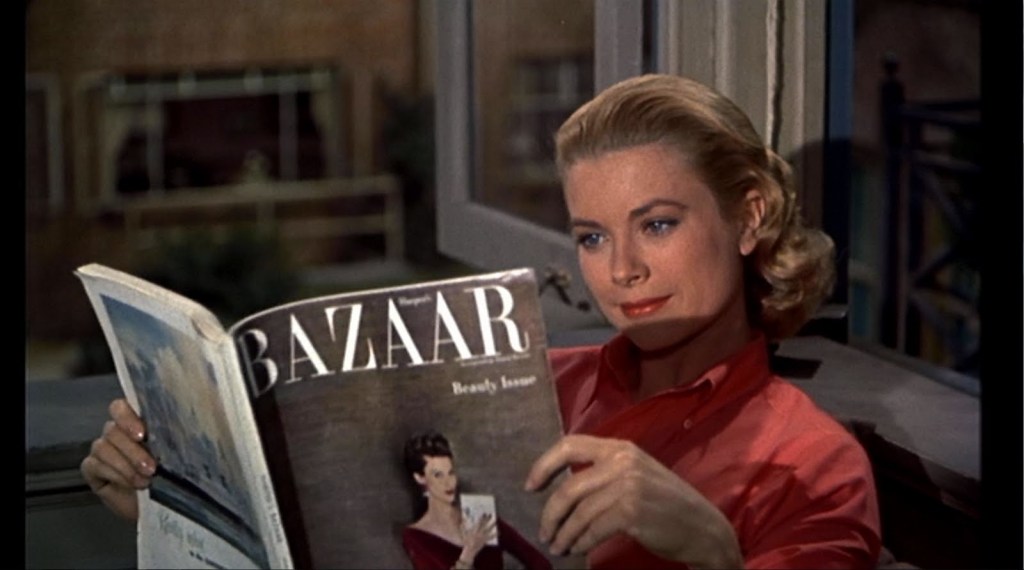
Much has been written about the meta levels and symbolism of wheelchair-bound L.B. Jeffries becoming first curious, then obsessed about the goings-on in his neighbourhoods, a catalogue of all different states of solitude, love and interrelationships that Jeffries reflects on while pondering whether to involve himself with the perfect-seeming woman: Grace Kelly’s gorgeous Lisa Freemont.

The neighbourhood windows as kaleidoscopic cinematic nutshells have also been widely discussed, and I especially enjoyed this time around how thoroughly Hitchcock takes us through all his favourite genres and tropes: the melodrama of Miss Lonelyheart, the sex comedy of the newlyweds, the inspiration journey of the composer and the sculpting lady, as well as the romantic juxtaposition of bouncy “Miss Torso” and the couple sleeping on the fire escape ledge – not to forget the murder mystery that unfolds at the Thorwalds’. One of my dream displays would be to have the totality of this backdrop as a massive photograph or painting in a future living room. I would never take my eyes off of it!
It was also the aural landscape that I enjoyed so much this time around, one of the most audacious soundtracks up until that era. Having a seasoned composer like Franz Waxman actually compose a score that constantly sounds like it’s source music is one thing, but mixing it with pre-existing songs (“Mona Lisa”, most importantly) and reflecting the composition process on another song (“Lisa”) is quite another feat. How music and sound effects become one constant ebb and flow of urban impressions was something I had quite forgotten, but they make up a key reason why the whole film is such a complete experience from beginning to end, drawing you in immediately and only letting go at the very end.
Of course, and most importantly, it’s the main plot and characters in the foreground that play off of this background so perfectly: the immobile photographer who is torn between his former life of daring adventures and the beautiful threat of a more sedentary life with uber-socialite Lisa. There is plenty of comedy instilled by means of a hilarious Thelma Ritter as house nurse Stella and dry Wendell Corey as Stewart’s colleague Tom Doyle, but it’s Stewart and Kelly themselves that are still so perfect in their seemingly incompatible roles. The way Kelly proves her point about the compatibility of their lives and the resistance Stewart puts up against it still rank among my favourite couple dynamics on film.
Finally, it’s just as much the perfect ending that makes Rear Window so utterly satisfying: of course, the levels of suspense gradually increase with the discovery of more and more evidence that Jeffries actually did witness the murder of Mrs Thorwald across the courtyard, but when Lisa puts her own life at risk by entering Thorwald’s apartment and is caught, we are absolutely on the edge of our seats, as I can always tell when watching the films with people who have never seen it before. The suspense level is ingeniously turned up with Thorwald’s attack on Jeffries and his eventual fall – but the satisfaction stems as much from his survival as from the final scene that follows: while the neighbourhood vignettes have developed into fresh romance, artistic fulfilment and next stages of relationships, Jeffries and Lisa seem happily stuck, both physically and mentally.
The levels of perfection that this cinematic experience reaches, to me, is still the unparalleled joy of Rear Window: it feels fresh, modern, quirky and exciting at the same time, and its unabashed use of the best techniques available to create its artificial yet so realistic human worlds is still such a pleasure that reminds me of why cinema ultimately makes me such a happy participant.
 A Damn Fine Cup of Culture
A masterpiece from beginning to end. This and Vertigo are in a solid tie for me as his best films.