Welcome to Six Damn Fine Degrees. These instalments will be inspired by the idea of six degrees of separation in the loosest sense. The only rule: it connects – in some way – to the previous instalment. So come join us on our weekly foray into interconnectedness!
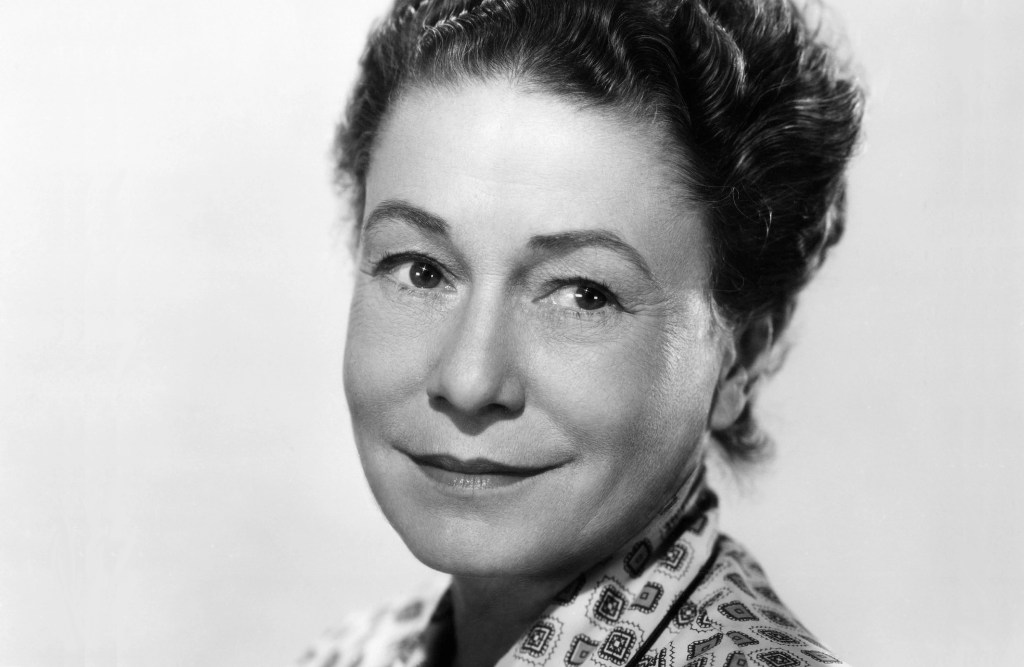
“She could reveal to an audience the tragedy of the human condition and do it by being a supreme comedienne” ~ Paddy Chayefsky on Thelma Ritter.
The term ‘character actor’, when applied to women, too often only implies a woman of a certain age. The one who doesn’t get to be the lead, who doesn’t get her own movie romance. If, that is, there are even any parts for her at all. The one who is ‘just’ there for support. But these actors not only have to hold their own against the lead every moment they are on screen, they need to knock it out of the park on every single take. And Thelma Ritter is the real deal. Instantly recognisable with her looks, and the way she sounds: instead of having herself made over to be more palatable for the public, she embraced these things to great effect. Every scene she was in, even her uncredited early roles, however brief, are memorable.

Take The Misfits (1961), for example. The story is that the production was more than a little bit troubled. And Monroe (whom she adored, and who is fantastic in it), couldn’t always manage to do all her takes correctly. So Ritter had to be at the top of her game, for every single one, to make sure that when a take worked, it worked for everyone. And she didn’t just have to hold her own with the dazzling Marilyn (not to mention Clark Gable). She played opposite such luminaries as Bette Davis (All About Eve, 1950), Gene Tierney and Miriam Hopkins (The Mating Season, 1951), Jimmy Stewart and Grace Kelly (Rear Window, 1954), Doris Day and Rock Hudson (Pillow Talk, 1959), to name but a few favourites.

Ritter was born in 1902, and worked many jobs to get herself through the American Academy of Dramatic Arts, also taking small roles in several plays. But she married, and focused on having a family, rather than pursue her career. At the request of an old friend, George Seaton, she agreed to appear in Miracle on 34th street (1947) for an uncredited role. She was 45. (Incidentally, this film also stars a very young Natalie Wood.) Ritter was so impressive in her few minutes of screen time, that she was signed by 20th Century Fox, and got a part in A Letter to Three Wives (Mankiewicz, 1949). It was this part which landed her the role of Birdie in All About Eve, for which she was nominated for an Oscar (she lost to Josephine Hull for Harvey). “What a story!” Birdie observes sarcastically in her patented Brooklyn drawl, “Everything but the bloodhounds snappin’ at her rear end,” immediately intuiting the backhanded Eve’s agenda before anyone else does. Small wonder this film brought her a fanbase of her very own.

Her Stella in Rear Window exudes a similar energy. She cares about the couple Jeff (James Stewart) and Lisa (Grace Kelly) and she permits herself to snappily advise Jeff about his romantic prospects. With similar gentle sarcasm to Birdie in All About Eve, she succinctly concludes: “I can hear you now: ‘Get out of my life, you wonderful woman. You’re too good for me.’”
But she didn’t always play such soft-hearted figures. In Pickup on South Street (1953), Samuel Fuller’s bruising noir, she plays Moe, an aging stool pigeon who informs on the protagonist. Her death scene in which she comes home, exhausted, only to find an enemy waiting for her, is still affecting. With tremendous courage and great dignity, she observes: “So I’m not going to get the fancy funeral after all… Anyway. I tried… Look, mister,” she continues, her voice cracking with weariness, “I’m so tired, you’d be doing me a favour if you blew my head off.” And as the camera focuses on the gramophone playing a sad tune, the shot cracks. In the end, she makes us care about this ambivalent and complicated character (plot spoilers in the clip below).
Pickup on South Street earned her another of her five Oscar nominations, losing out to Donna Reed for From Here to Eternity. In the end, she never won even one.
Thelma Ritter sadly died of heart failure at only 66 years old. But she leaves behind an extraordinary body of work. She is one of those actors who, whether the movie she’s in is good, bad or indifferent, it is always worth seeing: just for her.

 A Damn Fine Cup of Culture
2 thoughts on “Six Damn Fine Degrees #196: Thelma Ritter”