Welcome to Six Damn Fine Degrees. These instalments will be inspired by the idea of six degrees of separation in the loosest sense. The only rule: it connects – in some way – to the previous instalment. So come join us on our weekly foray into interconnectedness!
A ’70s-inflected theme starts up: raspy, excitable horns, tense vibrato strings. On a burgundy background, a slim image appears across the width of the screen, a pair of eyes opening and looking at the audience, looking with intent. The eyes disappear and the background changes to a dark blue; the eyes pop up again, this time at the bottom of the screen, looking to the left. Again they disappear, the blue becomes darker, and the pair of eyes, familiar by now, comes up centre-screen, peeking right at first but then again focusing on us, the audience. White lines appear from the sides of the screen, one horizontal, one vertical, crossing over the eye on the right, then five concentric circles, going from large to small, all centred on where the lines cross – forming crosshairs, taking aim. The innermost circle turns into an O – and the title is revealed: TATORT.
The title sequence continues at this point, the theme becoming even more ’70s, if that is even possible, with a slapping bassline that’s probably more familiar to TV audiences across Germany (and Austria and Switzerland) than the German national anthem. It’s Sunday evening, 8.15pm. It’s Tatort time.
Tatort (German for “crime scene”) is the longest-running German TV series, and possibly one of the longest-running TV series in the world. (Wikipedia has it in 36th place.) It has been running since 1970 – not every single week, but ARD, the oldest German TV channel, has been airing about 30 episodes about 90 minutes in length every single year the series has been showing. Tatort has been around for longer than present-day Germany, arguably: in fact, it came into existence during the Cold War, and in one of the more amusing rivalries between the two Germanies, a year later the German Democratic Republic developed its own take on the format, called Polizeiruf 110. (Both series still exist in something of a sibling rivalry, with Polizeiruf making fewer episodes and generally aiming at being the more ambitious of the two in terms of storytelling.)
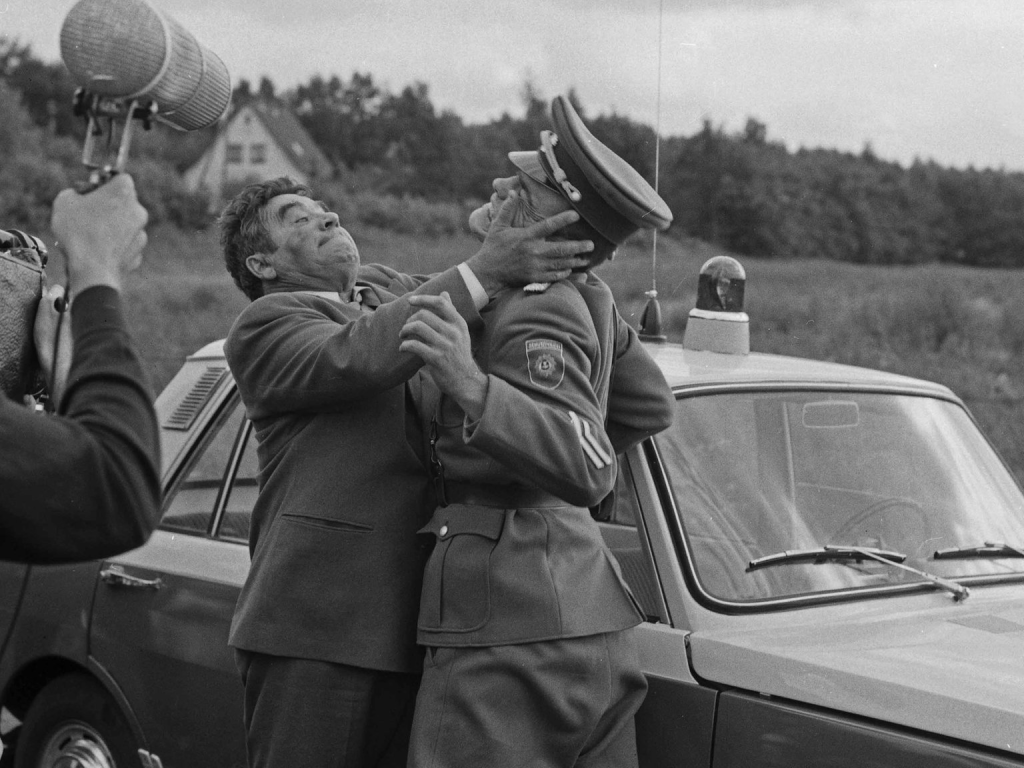
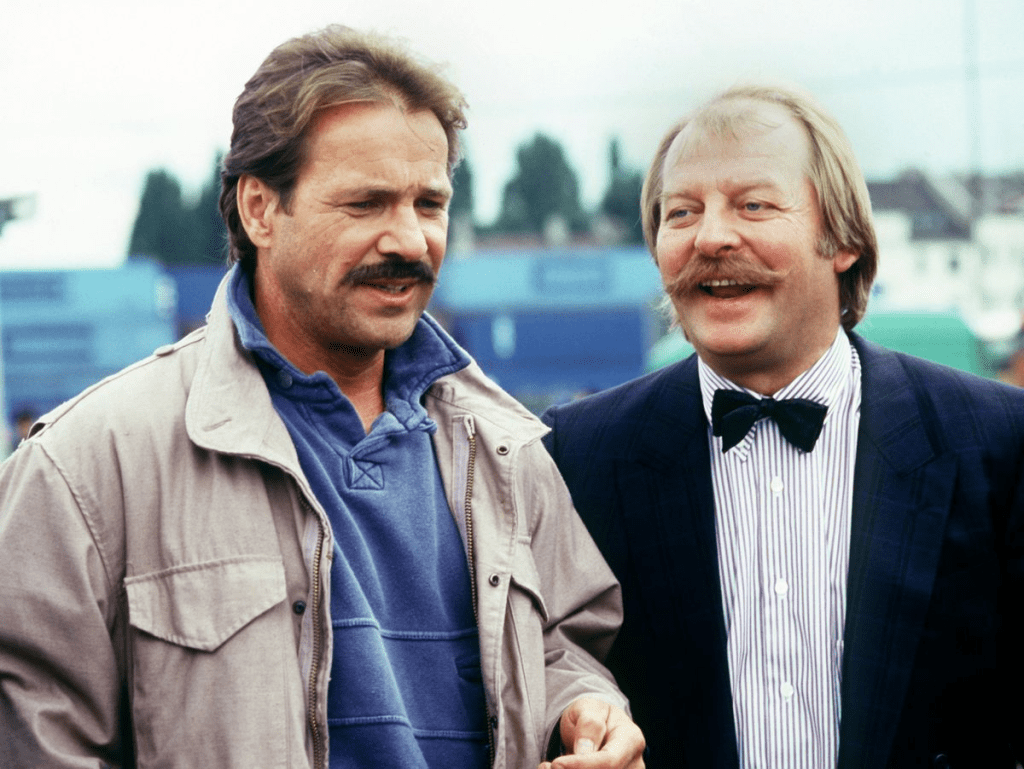
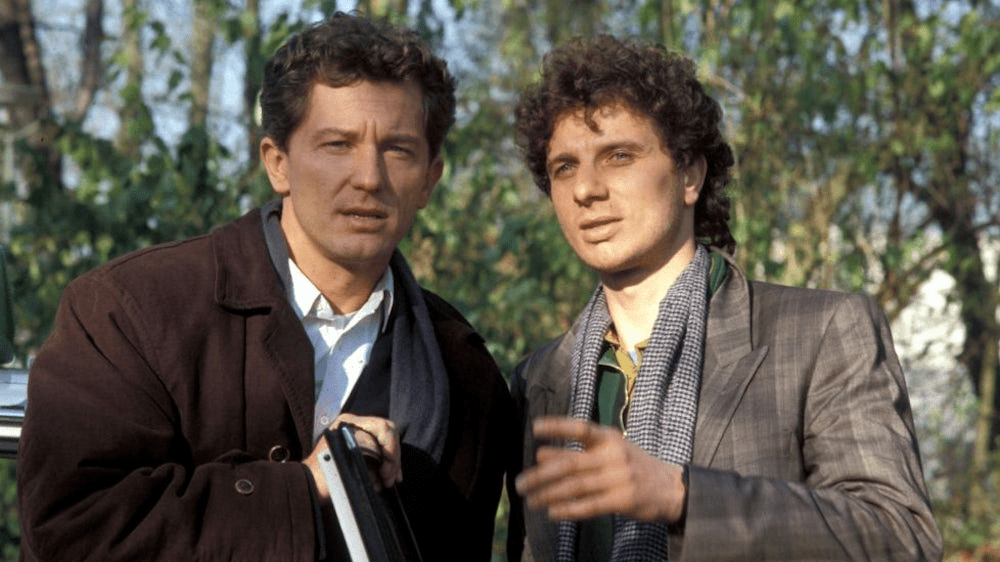
The format is as follows: at any time, there are Tatort teams, generally a pair of homicide detectives, in a number of cities in Germany, and the episodes alternate between those teams. Each team has its own characters and flavour: ever since 1991, Munich has been looked after by Ivo Batic and Franz Leitmayr, the Odd Couple of German television, two increasingly grumpy, increasingly old men that hide their affection for one another behind their prickly irritability; in Cologne, it’s ladies’ man Max Ballauf and the rotund Freddy Schenk who have made sure that killers don’t get away with it since 1997; and Klaus Borowski has been getting on his quasi-Nordic noir in Kiel since 2003. Some teams have a more jocular or even farcical tone, others are deadly serious. Some only last for a few episodes, but others have been on screen for decades, the aging detectives holding up a mirror to the audience getting older. And some of the Kommissare and Kommissarinnen (that’s the rank most of these are at) are played by German-language acting royalty, such as Ulrich Tukur, who’s appeared in films by Michael Haneke and Steven Soderbergh, Mathias Gnädinger (who appeared in the Swiss Academy Award-winning film Journey of Hope and in the often-memeified Downfall) or Eva Mattes (who was a regular cast member in Rainer Werner Fassbinder’s films). And Tatort isn’t just a German thing: in 1971, Austria joined the fun, and from 1990 until 2001 and again from 2011, Switzerland’s been contributing episodes to the series – though, sadly, while the Austrian team is generally praised as one of the best teams in the series, it’s generally accepted that the Swiss Tatort episodes tend not to be very good.
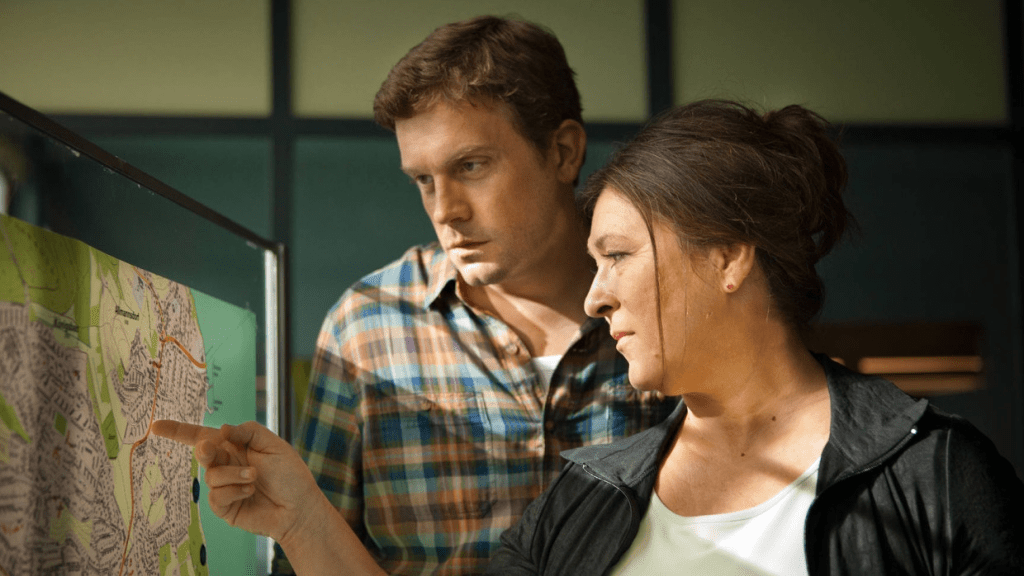
Talking of “not very good”: the average Tatort episode can kindly be described as mediocre. Tatort tends to be generic and aimed at the widest audience possible, in terms of the writing and filmmaking. Someone is killed, the detectives talk to the witnesses, they follow up on their leads, they catch the bad guy or bad girl. Often current affairs and the topics of the day (well, of one or two years ago) are integrated into the storylines, not always very elegantly: political corruption, immigration, class conflict are perennials, but in recent years there’ve been storylines about COVID-19, social media, identity politics, Artificial Intelligence. Originally, Tatort episodes were entirely episodic, so that audiences could easily miss a team’s previous case and still get what was going on in their next case, but for the last decade or so Tatort has dipped its toe into the serialised well, with more so-called ‘horizontal storytelling’. Whether it’s been successful at this is another matter: some of the most serialised Tatort teams only get one or two episodes per year, while the teams whose cases tend to be more episodic can make four or five appearances in any given year. It’s difficult to tell a serialised story when that story only progresses once a year, so The Wire it ain’t.
Why has Tatort been around for such a long time (1274 episodes and counting!), if a lot of the episodes are middling at best, and some are downright awful? My guess is that it makes for the perfect TV tradition: it’s Sunday evening, and German families have been plonking down in front of the tube for years, sometimes for generations. It’s the kind of television that you can watch with your kids and your grandparents. The latter may complain that modern Tatort is too complicated, too violent, too woke, the actors’ enunciation becomes worse and worse (and Opa Klaus is too proud to switch on the subtitles), and the former may find Tatort hopelessly outdated, but the material generally goes down easy. Families can guess at whodunnit, and generally they’ll be right with their second or third guess, because your average Tatort script by now reads like it could have been cobbled together by generative AI trained on 54 years of Tatort. It’s comforting because even while it reflects the present day, in more fundamental terms most Tatort episodes follow the same format and structure. The series tends to be the same every single week (except during the summer break, when people can watch reruns from over five decades, unless they’re on holiday).
But, and that’s the fascinating thing: while most of Tatort is predictable and follows clear, repetitive patterns so much that there’s little there to surprise or even shock anyone, sometimes they get in filmmakers who are more ambitious. Writers and directors who want to have fun with the format. And it’s exactly because Tatort is so generic that you can riff on the format in weird and wonderful ways. An early Tatort was directed by Hollywood legend Sam Fuller, with the evocative title “Tote Taube in der Beethovenstrasse” (Dead Pigeon in Beethoven Street) There’ve been episodes that were set in real time (obviously the makers had watched 24 when it was the new hotness). A couple of episodes were developed in improvisation, though those particular experiments usually didn’t turn out particularly well. One episode riffs on Groundhog Day, with the detective becoming involved in a hostage situation dying over and over again, in more and more bizarre ways, only to wake up in his bed and having to try another time, and another, and another. One memorable, and very good, episode introduces an assistant for the two long-serving detectives that immediately gets on their nerves – and then he is killed himself, presumably by the same person who committed the murder they’re investigating. And the episode tops it all off by having the detectives more or less stumble onto the killer – but he runs away, into the path of an oncoming car, dying himself. The detectives and the audience are denied the closure of certainty: there are echoes of The Pledge (both the Dürrenmatt novel and the adaptation by Sean Penn) here, though without feeling overly derivative.
Perhaps my favourite Tatort episode – and sadly one of the earliest ones I’ve seen, ruining me somewhat for the more average Tatort – is “Im Schmerz geboren” (which translates as “born in pain”, though the German sounds more poetic). It is a Tarantino-style remix of Shakespeare, complete with one character soliloquising to the camera and the audience and a final curtain call by the 47 characters who died in the episode, Truffaut (with a Jules et Jim-style love triangle and Georges Delerue music), and Sergio Leone: the episode starts with a man coming off the train at a provincial train station, where three killers await him – and it is the lone man who walks away, while the killers all bite the dust. Sound familiar? The thing is, though: while “Im Schmerz geboren” is up front about its influences, it doesn’t feel like a mere copy, developing its very own style and flavour. How often does TV, let alone national television, pull this off?
Sadly, by and large the Tatort audience does not appear to appreciate these formal experiments, however successful they are in artistic terms. You’d get a small number of critics and film nerds like me who’d be all over the weirder, more ambitious episodes, but audience ratings for these are generally much lower. People don’t want Shakespeare or Leone or even Groundhog Day in their Tatort: they want one murder, one murderer, two Kommissare, ninety minutes of investigation and interviews and false leads falling away one by one, and they want the story to end like all Tatort episodes should end, with the killer caught or, at a pinch, dead. Some banter is fine, some very mild violence too. Not too much social criticism, please, and definitely none of that woke stuff. (Admittedly, the Tatort writers have been known to deliver some material that almost comes across as right-wing satire of PC storytelling in its utter lack of subtlety and nuance.)
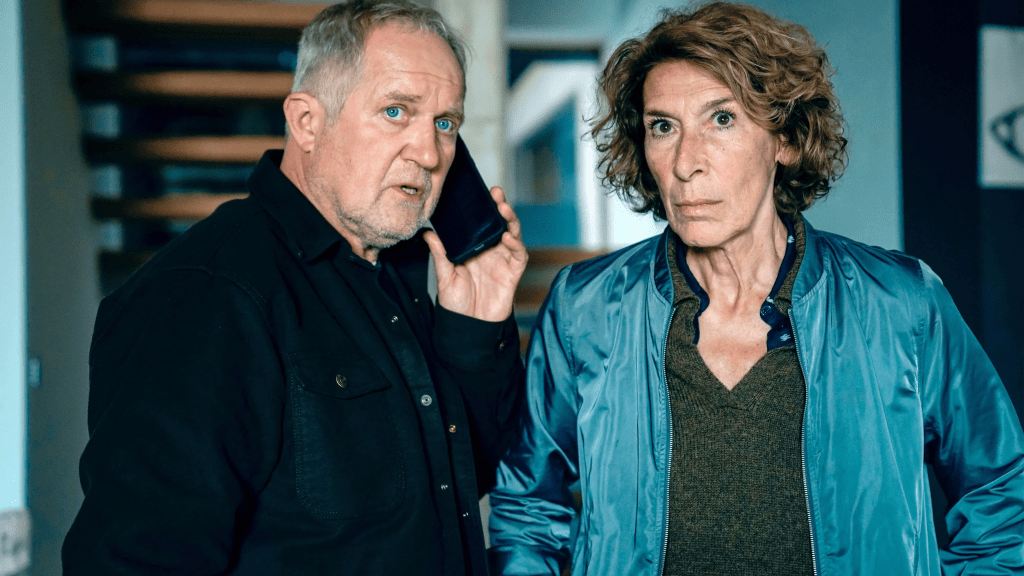
And, added to this, the times when families would plonk down in front of the telly on a Sunday evening are a thing of the past. So far, Tatort is still producing its few dozen annual episodes, but some teams have been cancelled because they are too expensive (Heike Makatsch, who readers may remember from Love Actually, was one of the detectives with one annual episode, but they pulled the plug after her fifth appearance). There hasn’t been any official talk of putting the series to rest any time soon, but when half the teams seem to be well past retirement age it’s difficult sometimes not to feel the series may be down for the count before long.
Having come to Tatort late myself – it never was a tradition in my family, and I only watched my first ever episode in my late 30s – I don’t have the same tradition for it as others. It does make for a nice ritual on Sunday evenings, something to watch with my wife, but I have to admit that when there’s a run of four or five very average episodes, or ones trying too hard to be timely and relevant, I wouldn’t mind if they reduced their episode numbers to twenty, perhaps, or to an even dozen, making sure that the remaining ones are solid and interesting – though I know that fewer episodes don’t automatically translate into higher quality. At the same time, though, Tatort is iconic, even at its most generic. Its format is unique, and it has reflected Germany, its history, culture and concerns, for the 54 years it’s been airing. For this already, a case could be made that UNESCO should add it to its list of intangible cultural heritage. If Tatort didn’t exist, someone would have to invent it.
 A Damn Fine Cup of Culture
3 thoughts on “Six Damn Fine Degrees #202: Crime scene, German-style!”