Welcome to Six Damn Fine Degrees. These instalments will be inspired by the idea of six degrees of separation in the loosest sense. The only rule: it connects – in some way – to the previous instalment. So come join us on our weekly foray into interconnectedness!
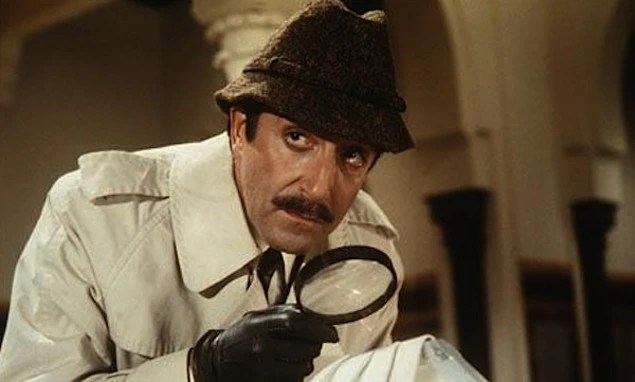
When I was a kid, the Pink Panther films seemed to be regulars on the television. Not quite as ubiquitous as Bond or the Carry Ons, but probably not far behind. As a result I can’t remember a time when I didn’t know of Inspector Clouseau of the Sûreté, a clumsy comedy incompetent with an amusing French parody of an accent. I even have a distinct memory of one of the films being on when I was very young, and Sellars getting attacked by his assistant Cato (Burt Kwok playing a lazy Orientalist stereotype of a martial artist a world away from the characters in Julie’s post last week). Seeing the obvious shock and distress in my face, it was patiently explained to me that Clouseau paid his assistant to attack him at random times, to make sure he was always ready. I seemed to find this incredibly reassuring.
Which film was I watching when this happened, you might ask. But if you did I would have no answer. Because I have memories of frequently watching these films, I don’t have a single recollection of an actual film, or the plot of any single one of them. Just some moments of silliness. Alongside regretting that the animated Pink Panther wasn’t in the films more, because Young Me thought he was the best bit.
So, thanks to the convenience of modern streaming, I decided to go back and watch the Pink Panther films of the original franchise in chronological order. To try and work out which film was which, but also to reassess what was once a pretty ubiquitous cultural phenomenon.

So I started with the original The Pink Panther. And, sacré bleu, this has not aged well. Painfully slow-paced and with a negligible gag rate, it seems pretty incredible today that this inspired such a long running franchise. It’s awkwardly laboured in pretty much every comedic scenario, and wastes a strong cast. Sellars is one of the best elements in the film, but compared to the version of the character in the popular imagination he is surprisingly muted here. He’s also only one element in the film, which also wants us to care for a number of other storylines, primarily David Niven playing the suave jewel thief Charles Litton. Only the theme tune is 100% on point from the very beginning: a classy, cinematic number that immediately feels like a classic.
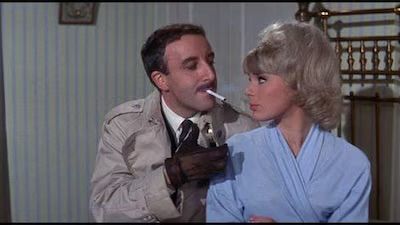
Released in December 1963, the first film was a big hit. So when Blake Edwards was offered the job of filming a big hit play of the time called A Shot In The Dark, he agreed as long as he could extensively rewrite it to give Sellars’ Inspector Clouseau the main role.
The original Broadway play – itself an adaptation of French hit L’Idiote – had one of the characters be an incompetent investigating magistrate. (Played on stage by a pre-Kirk William Shatner!). This character had their part rewritten for Inspector Clouseau and considerably beefed up. Edwards and Sellars were then to brainstorm and improvise whole new comedic situations for the character, meaning that the final film barely resembled the source play.
Quickly adapting a successful play meant that Clouseau’s second outing came out just months after the first, in June 1964. Sellars has clearly worked on the character in those months which means that he gets his first few real laugh-out-loud moments when the manic intensity of his idiocy crashes up against his cast iron pomposity- he is now recognisably the Inspector Clouseau of popular culture. The set-up is also incredibly strong, testament to its origins in a very successful play. It’s just that the gag rate throughout the film is surprisingly low – especially given that this is ultimately a plot-light collection of set pieces.
As this film was another hit, the studio wanted a further Clouseau film. But Sellars and Edwards’ relationship deteriorated during the making of the film, and when they finally reconciled a couple of years later, they determined to make The Party together. Not wanting to wait any longer to try and profit from the comedy character, the studio pressed ahead with Inspector Clouseau in 1968 without Sellars or Edwards. Upcoming American comedian Alan Arkin was cast as Sellars’ replacement in the lead role.
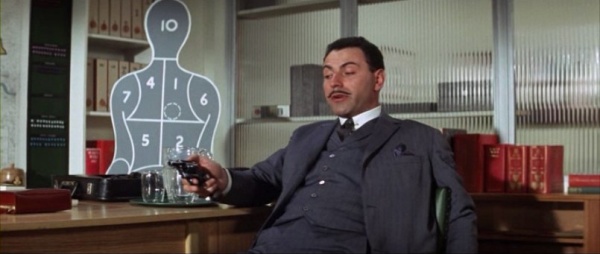
Arkin’s take on the Inspector is more straight-laced, a decision that works well in the contrast when this façade breaks and he’s called on to be very silly. But this does tend to make him an underwhelming presence for most of the film, lacking the manic energy the bubbles away below the surface even when Sellars is being serious. Bud Yorkin’s direction is sharper than Edwards, there are fewer scenarios that drag on long past any mild comic potential they might have had. Unfortunately, while there’s the basis of the decent comedy in the idea of a criminal gang robbing multiple banks wearing Clouseau masks in order to frame the Inspector, the actual execution of the story is woeful. The editing is frequently clunky, and it fails to generate any real sense of drama or thrills. Lengthy sequences either have no relevance to the caper or are just dry detailed scenes of its execution. Arkin has fun, though, playing numerous gangster Clouseaus but his take on the titular character just never clicks in a way that feels like it can carry a film. Audiences at the time certainly felt so, and the film bombed.

The box office failure of the third film seemed to suggest the character had run its course. But seven years later, in 1975, both Sellars and Edwards were in need of a hit. As a result they returned to their initial 1963 success and crafted a sequel. The Return Of The Pink Panther brings back the titular “Pink Panther” diamond, as well as the first film’s jewel thief Charles Litton (now played by Christopher Plummer) alongside Clouseau.
Watching the film now, these decisions seem slightly mystifying. Was there really a huge demand for another Charles Litton plot? The missing diamond subplot seems tedious, and when Litton becomes a James Bond secret agent figure trying to locate the jewel’s whereabouts within the criminal underworld, it fails as a globe-trotting thriller. There’s no comedy in these sequences, but unfortunately there isn’t much by the way of excitement and action to replace it. Sellars is clearly rehashing his best moments here – but, again, the contrived comedy scenes for his character just seem to go on for far too long.
These decisions seem mystifying to me now, but at the time they were vindicated by massive box office success, taking in fifteen times its production costs at the box office. Recognising this, all parties rushed to get a sequel out the following year with The Pink Panther Strikes Again. This marks a curious moment for the franchise as it represents the moment when the name “The Pink Panther” becomes attached to the character of Clouseau rather than the titular diamond of the first film. (Decades earlier a similar curious twist of nomenclature was to hit the Thin Man series of films.)

It’s also the moment where the franchise really seems to embrace the inherently cartoon nature of Sellars’ detective. This film feels throughout like a wacky live-action cartoon where nothing is to be taken seriously. And surprisingly, it works rather well: the silliness is used to up the gag rate quite considerably.
Originally conceived by Edwards as a three-hour epic comedy, the studio’s insistence on cutting it down to a far more palatable 103 minutes mean that nothing feels laboured: there’s a breeziness to the storytelling as it races from place to place. The pace feels modern for the first time, and you can definitely see the wacky tone of this film being a huge influence on the much later Austin Powers movies.
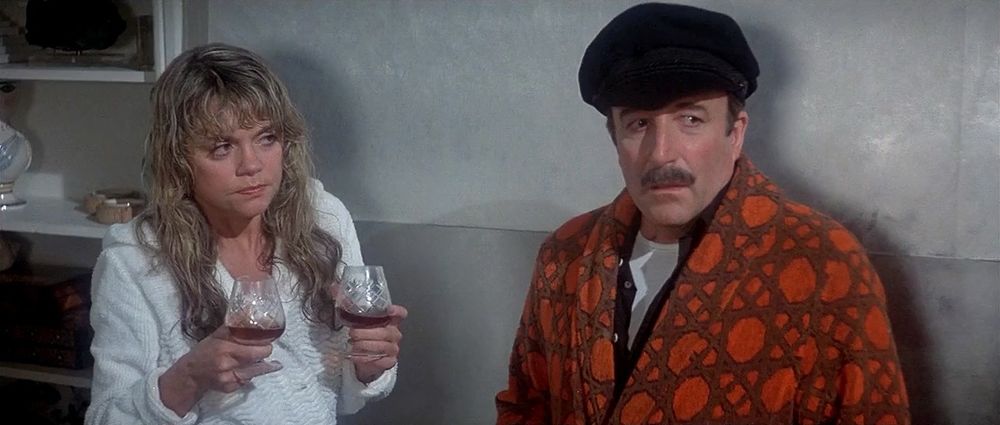
Another sizeable box office smash so yet another film was rushed into production: 1978’s The Revenge Of The Pink Panther. By now the franchise seems to have struck upon something of a format. An evil villain is out to get Clouseau, who globetrots his way to success, oblivious to most of what is going on around him, and ending with a beautiful lady. The genius of this format is that for all Clouseau’s faults of arrogance and stupidity, he’s set against truly despicable criminals and killers. We can enjoy his inadvertent part in their downfall, root for him and ultimately even get charmed by him. This film also teams him up with Dyan Cannon, fantastic as the mistress of the chief villain. Indeed, alongside a beefed up role for Burt Kwok and another return for Herbert Lom, this is the first film that genuinely feels like it’s got a funny ensemble cast. Cannon is the funniest of all of Clouseau’s love interests, a great performance aided by a script that gives her so much more to work with. Kwok shows off a talent for deadpan delivery, while Lom at this point has pretty much perfected portraying a ball of pure suppressed rage. It’s a shame that a more rounded and slightly subversive comic role for Kwok seems to come coupled with more overt racist language from Sellars, but overall this is easily the best film so far in my opinion. And it was yet another big hit at the box office, prompting demands for yet another outing for Clouseau.
However, once again the relationship between Sellars and Edwards deteriorated during production, resulting in Sellars making his own plans for a final swansong for the character. The Romance Of The Pink Panther was co-scripted by Sellars and would see the character successfully woo a cat burglar known as “The Frog” and ride off with her into the sunset together. When Sellars died in 1980, the studio didn’t initially abandon plans to make this film, and considered recasting. But eventually they decided to give Blake Edwards a call.
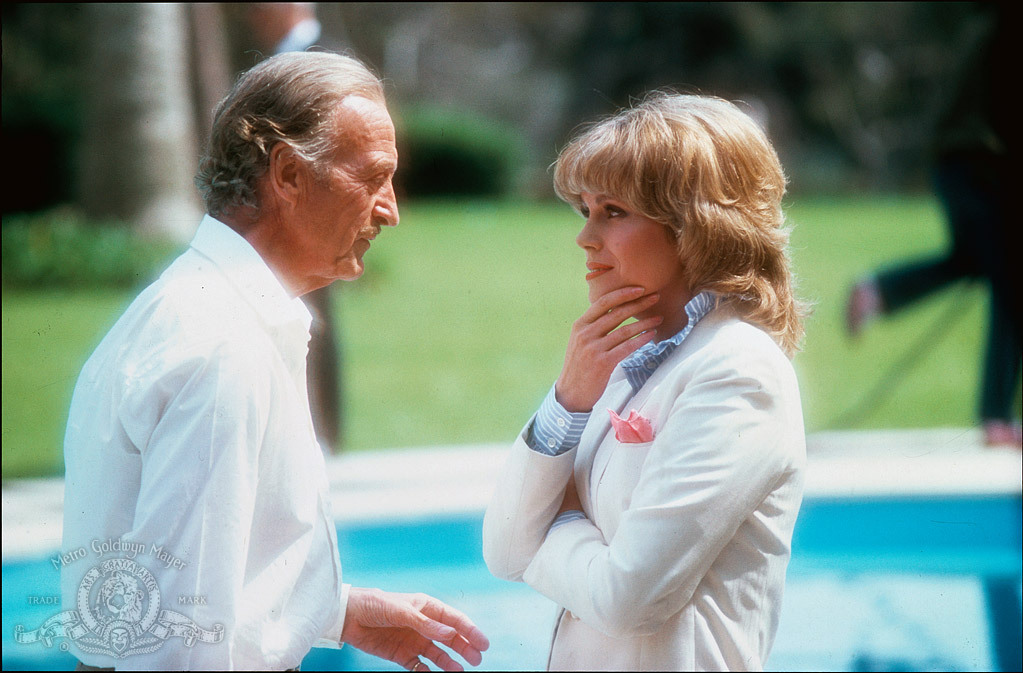
It seems to be the case that Blake Edwards was still smarting from all the edits made to cut down his three hour Pink Panther Strikes Again epic. Because his solution was to create a set-up that would allow him to use many of these within the context of a new story. Trail Of The Pink Panther (1982) starts with Clouseau investigating, yet again, the disappearance of the Pink Panther diamond, allowing them to use footage shot where he was investigating the missing diamond in the earlier film. Only then the world of the film is shocked when the character disappears, leading French investigative journalist Marie Jouvet to seek out those who knew the missing inspector and listen to their anecdotes. Anecdotes that fade into flashbacks, giving the film the excuse to play all sorts of random unseen clips.
And it’s a terrible film. Joanna Lumley is shockingly miscast as a French investigative reporter, with an accent that evokes cringe but never Sellars-style weird pronounciation comedy. All too often the clips selected are, at best, okay. There were good reasons why they were edited out of the earlier film, and they just don’t work here. The whole thing meanders to a truly clunky conclusion. You end the film feeling like you’ve been subjected to ninety-six minutes of A Very Bad Idea.
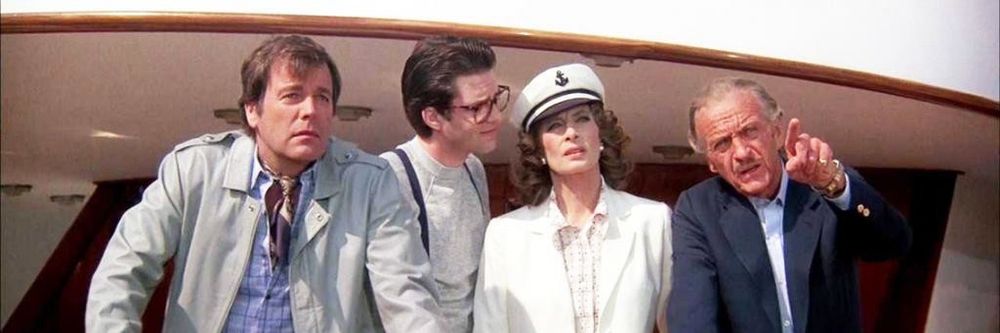
Get used to this feeling, because just a year later Blake Edwards would deliver An Even Worse Very Bad Idea in Curse Of The Pink Panther. Intended to relaunch the franchise with a new lead – it introduces bumbling New York cop Clifton Sleigh, played by Ted Wass. Once again the Pink Panther diamond has gone missing, and Sleigh gets assigned to the case. Wass’ Sleigh was probably envisaged as a cross between Christopher Reeve’s clumsy Clark Kent and Buster Keaton’s blank stare in the face of chaos. However, in execution he is simply wooden and charisma-free.
There’s a scene midway through the film where Sleigh is undercover in a cafe, with an inflatable woman sitting next to him at his table serving as part of his innocuous disguise. It has the real potential to play to Wass’ attempt at Reeves-style awkwardness to get a laugh, but the humour in it is killed stone dead by Edwards’ insistence, yet again, of keeping a comic scene going for far too long on pretty much a single camera shot. Static and drawn-out, Wass’ quite funny affectations get repeated over and over until the only feeling left is boredom and annoyance, an emotion that is pretty consistent throughout watching this incredibly unfunny film.
Amazingly Clifton Sleigh is bad but he’s not the worst thing in this, as the film also seems to think the audience out there want loads more of Charles Litton and various minor characters from the franchise’s past – none of whom were memorable in the first place, but still get tedious runtime in pointless indulgent scenes. As a final indignity, David Niven playing Litton was so unwell, his lines were dubbed by someone who doesn’t really do a good impression of him. (Niven was to die just two weeks before the film was released).
Roger Moore’s cameo – as Inspector Clouseau! – is about the only thing worth seeing the film for – and honestly you can skip to the last few minutes where he appears and you’ll miss nothing. A huge critical and box office failure at the time, the series seemed dead.

A decade on, though, and Blake Edwards seemed keen to bring it all back with Son Of The Pink Panther. Kevin Kline, Rowan Atkinson and Gérard Depardieu were all considered to play Clouseau’s illegitimate son – before Roberto Benigni got the role. He seemed ideal following Italian comedy Johnny Stecchino, a film which mined a recognisably Clouseau-sian vein of silliness and which was the biggest ever hit in Italian cinema up to that point. He’s not bad casting – but the film is dreadful. The script is woefully unfunny, and Blake Edwards still thinks the key to comedy to just sit a static camera in front of a lengthy, slow rather basic piece of slapstick. He also still can’t let go of the past – as characters from entries in the franchise released in the Sixties get pointless returns, played by actors who played different roles in other films in the franchise. It begs the question as to who they thought would be interested in 1993 in the return of the character Maria Gambrelli from 1964’s A Shot In The Dark, now played by the actress who played Princess Dala from 1963’s The Pink Panther. Edward’s devotion to the past stops the film from ever being its own thing. Another box office failure globally, although a huge hit in Italy from the Johnny Stecchino crowd.
And that was it for the original Pink Panther film franchise. Over a decade later, Steve Martin was to reboot the whole shebang for two more films in an exercise of brand exploitation that didn’t last long. Overall, the most striking thing in revisiting the original franchise was just how low quality most of it was. There isn’t a single film that could be labelled a stone-cold comedy classic; Revenge of the Pink Panther probably comes closest. There’s a couple that are, well, alright. And there are just too many that are painful to sit through. Peter Sellars was to make better, funnier stuff elsewhere, and Blake Edwards was to make much more entertaining and interesting films.
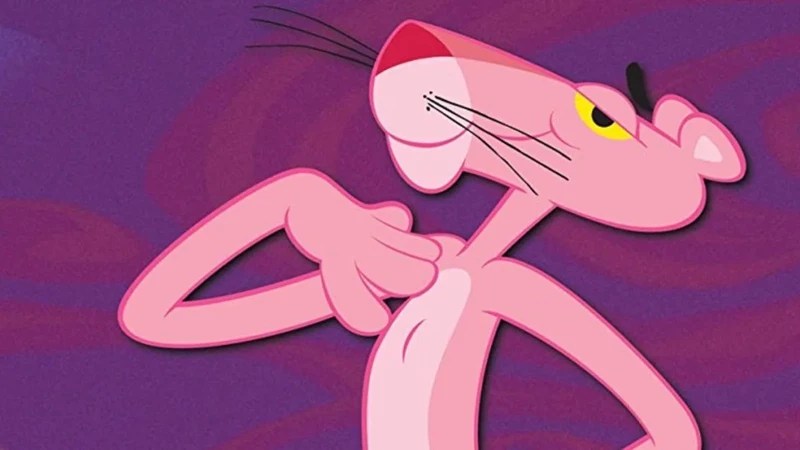
But still, the animated Pink Panther remains a design classic and in the theme tune Henry Mancini created an instant, recognisable masterpiece. More than dodgy French accents, or slapstick silliness, if ever this brand gets resurrected again it’ll be mainly as an excuse to give that incredible, slinky, exciting and fundamentally cinematic piece of music another big screen outing.
 A Damn Fine Cup of Culture
3 thoughts on “Six Damn Fine Degrees #223: A Pride of Pink Panthers”