Welcome to Six Damn Fine Degrees. These instalments will be inspired by the idea of six degrees of separation in the loosest sense. The only rule: it connects – in some way – to the previous instalment. So come join us on our weekly foray into interconnectedness!
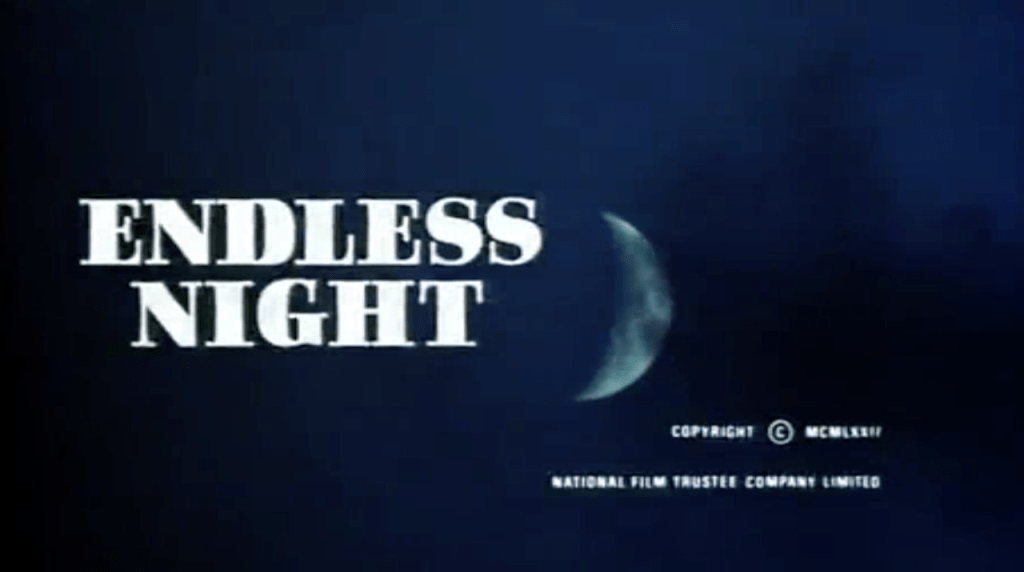
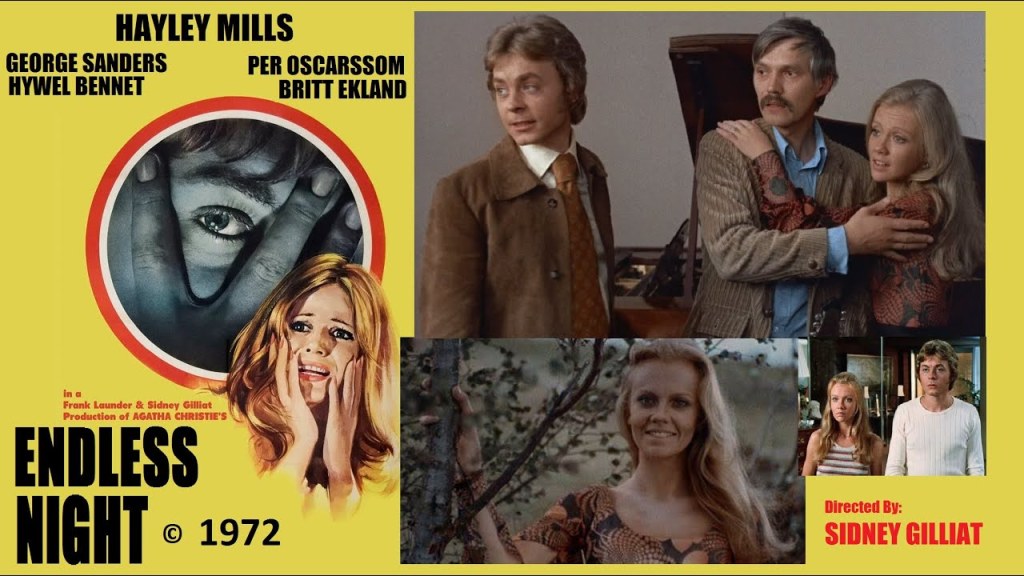
Waves crash against anonymous moonlit rocks while the credits promise an eclectic mix of British and international talent: it’s Hayley Mills and Hywell Bennet (fresh off 1968‘s Twisted Nerve), Swedish actor/director Per Oscarsson (from 1966’s Hunger) and fellow countrywoman Britt Ekland (between her Peter Sellers and Rod Stewart relationships and soon to be Bond Girl). There’s eternal Miss Moneypenny Lois Maxwell and All About Eve‘s George Sanders, and it’s directed by Sidney Gilliat (author/producer of Hitchcock’s early British films) and, unmistakeably, scored by Bernard Herrmann – its ondulating, dramatic main theme reminiscent of the perturbing romanticism of Vertigo and The Ghost and Mrs. Muir. Have I gone to cinematic heaven? How could I have missed a film like this one, the 1972 adaptation of Agatha Christie’s late novel Endless Night?!
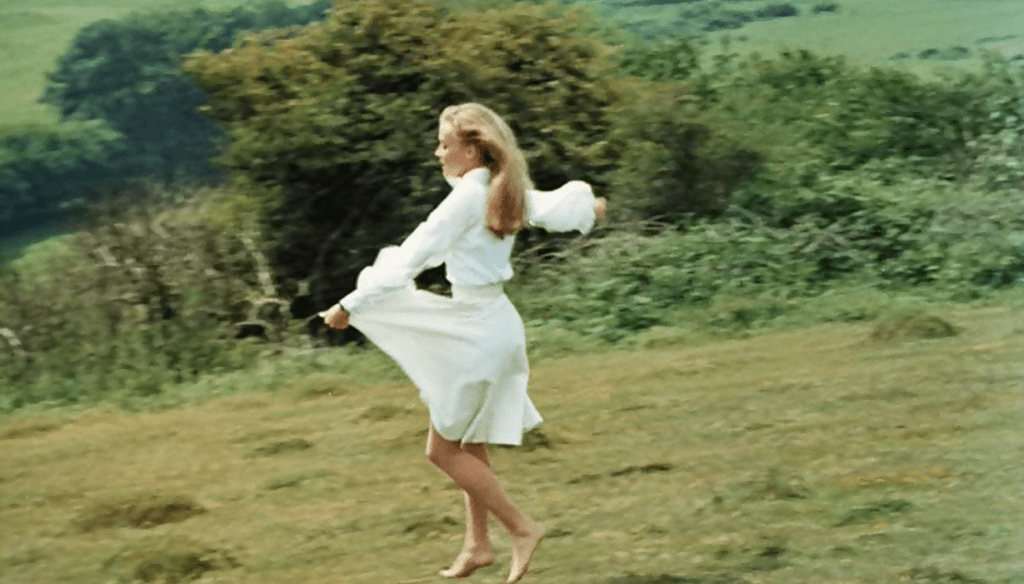
Fair enough: I remain hooked when right after the credits, a slow pan across the green pastures of ‘Gypsy Acres’ are overlaid with engulfing narration by our protagonist Michael (Bennet) and then suddenly cut short by the image of a young woman (Mills) in white turning to the camera, revealing an empty space where her face ought to be. What’s the mystery behind this nightmarish image, heightened by psychedelic colours and 70s zooms?
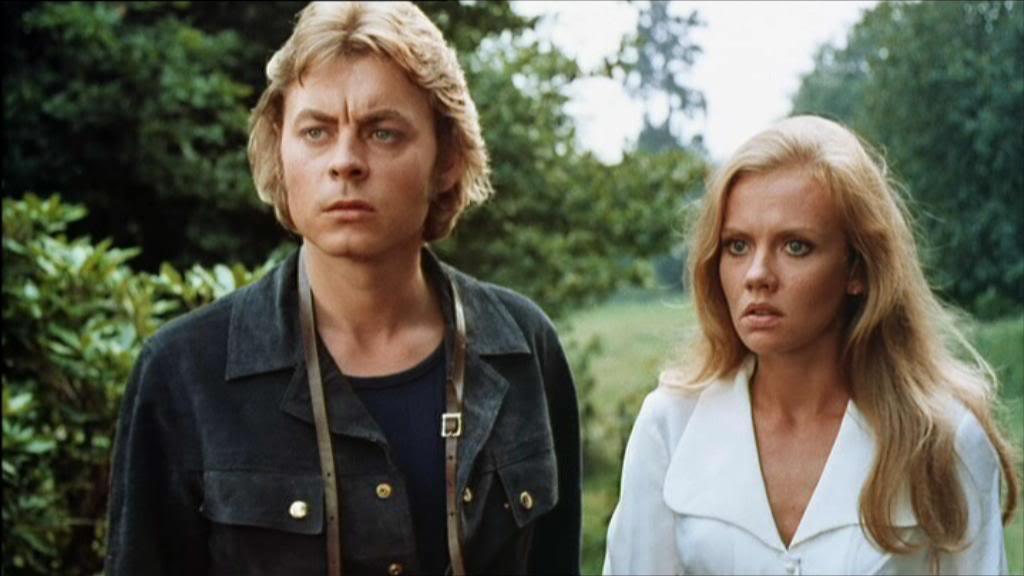
Agatha Christie‘s 1968 novel of the same name forms the basis of the plot to follow. Michael first appears to be chauffeur to the spoilt upper classes before he encounters his two love interests: Mills‘ Ellie, whose substantial inheritance is later revealed, and Santonix‘ (Oscarsson) architecture. Mesmerised by his construction plans on a visit in Positano, Italy, Michael hires the architect to build them an intricate modernist palace, complete with sliding walls and living room swimming pool. But there is trouble on Gypsy Acres, with eerie scarecrow-like Mrs Townsend roaming the premises, scaring especially Ellie into madness and, eventually, a bad fall from a horse. The appearance of some unwanted neighbours (Lois Maxwell is deliciously unlikeable for once) and Ellie‘s good friend Greta (Ekland) spells further doom, and the third-act reveal is a surprise indeed!
It’s a far cry from Christie’s famous detective stories featuring Poirot or Miss Marple, but it’s still a story ripe with class envy, deceit — and murder. Michael‘s true intentions and his eventual descent into madness are cleverly disguised and there is a contemporary twist by replacing the cliché Victorian mansion with an Eames-style bungalow. Christie apparently wasn’t too happy with this adaptation of her work, however, minding especially the standard brief nudity of early ’70s cinema. Critical reception was equally unenthusiastic, and the film, Gaillat‘s last, was soon forgotten — had it not been for on particular feature that deserved reappraisal and re-releases: Bernard Herrmann‘s sumptuous score.
The composer, who had famously fallen out with long-time collaborator Hitchcock during Torn Curtain (1965), was about to experience a final career spring with French, British and New Hollywood directors employing his services. Having scored Truffaut‘s Fahrenheit 451 and Twisted Nerve recently, Endless Night seemed especially suitable to his love for English mystery romance like Jane Eyre and Wuthering Heights, which he had turned into a sweeping score and his only opera respectively. The music he composed here clearly hark back to his most romantic compositions and predated his last masterpieces for Brian de Palma (Obsession) and Martin Scorsese (Taxi Driver).
It was Herrmann‘s score that lifted Endless Night out of obscurity and onto a Blu-ray release and a re-recording by the Basque National Orchestra in 2020, highlighting both the effective use of Moog Synthesizer and the Robert Burks-inspired lyrics for an original song by the film‘s title. It‘s these moments of artistic freedom by the filmmakers that elevate the film above the fray: the symbolic visit to Verdi‘s La Forza del Destino at the London opera, a Rubens painting coming to life, and the eclectic tastes of Michael eventually spelling his downfall.
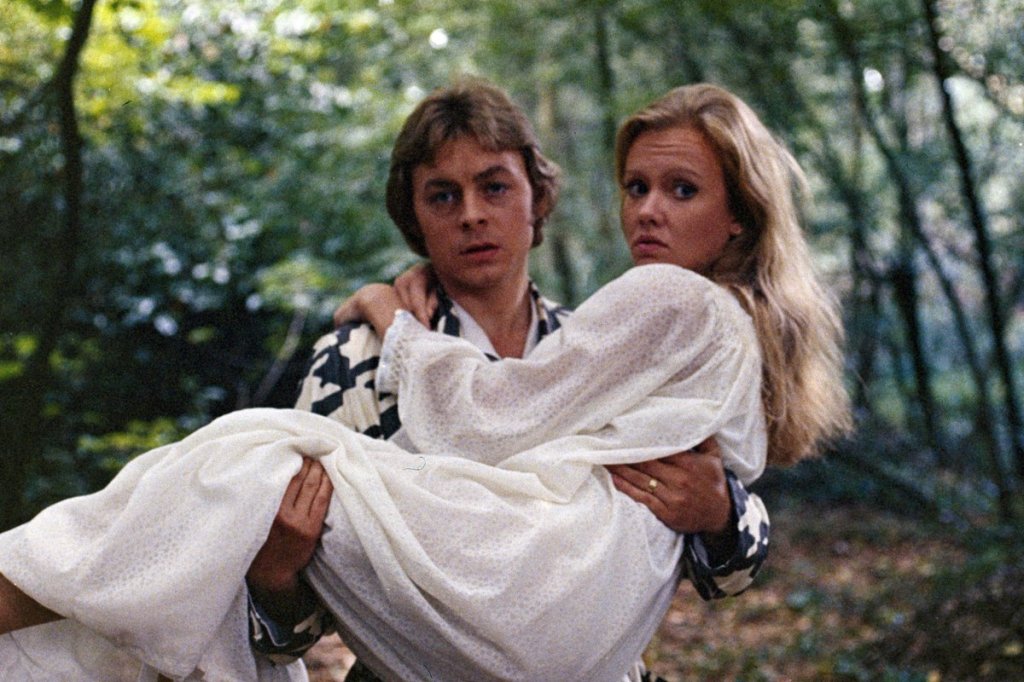
It’s a fairly contrived and lengthy ordeal otherwise, with lacking production values and meddling acting making for a less than a thrilling experience. It’s interesting, though, how the moments defined by Herrmann‘s music and the pastoral landscapes, as well as the final unravelling of Michael make for some of the strongest moments. After all, the composer knew best how to score disturbed, murderous minds spiralling downwards. The problem was that this was no Norman Bates, but he’d soon get one last shot with Travis Bickle.
It’s noteworthy that Herrmann died on Christmas Eve 1975, just hours after the last recording session for Taxi Driver, soon marking exactly 50 years since his premature passing. Brian de Palma‘s Carrie would have been his next assignment. We can only imagine what could have been — and appreciate what marvellous journeys into endless nights he left behind!
Incidentally, for Christie and Herrmann enthusiasts alike, despite its flaws, Endless Night should still make for enjoyable viewing.