Let’s be honest: it’s no big secret that 2025 was a shitty year in many ways, so much so that at times, as if we’d woken up in an episode of Black Mirror, it felt like reality itself had installed a doomscrolling plugin. You no longer have to take out our phone or tablet: just walk around with open eyes and the rest will take care of itself.
And yet: not everything is bad. Whenever I hear or read someone going on about how culture, originality, cinema and TV are dead, I can’t help but roll my eyes – because there is so much out there that is pretty damn good: fresh, engaging, challenging, riveting.
See exhibit A:
While Sinners is perhaps not the film that will stay with me the most this year (not a criticism of the movie, just a matter of preference – it’s a fantastically well made film in a genre I like but don’t love), that scene is probably my favourite piece of cinema of 2025 in its sheer audacity. When Ryan Coogler was left with the unsolvable problem of making the Black Panther sequel, he did what he could, but it was an uphill struggle – as much because of the MCU treadmill as because of Chadwick Boseman’s untimely death. But Sinners is a great illustration of Coogler’s remarkable talent at crafting greatly entertaining cinema that is about something, as well as of the many talents of his collaborators, and that scene is a perfect encapsulation of this.
In general, 2025 has seen the release of several memorable films, from the monumental, confounding The Brutalist via The Phoenician Scheme (so clearly a Wes Anderson film, and yet so different in key ways to Asteroid City and the other movies that preceded it), to It Was Just an Accident (Jafar Panahi’s latest is funny and chilling in equal measure), One Battle After Another (perhaps the Paul Thomas Anderson film I’ve enjoyed most since Magnolia) and The Secret Agent.
But that’s just the new releases I saw in 2025. Courtesy of what is arguably the best cinema in the world (in Bern), I started the year with a retrospective of films released between 1929 and 1959 by Columbia Pictures, which included classics such as Twentieth Century and Only Angels Have Wings (both by Howard Hawks), The Big Heat, Mr. Deeds Goes to Town and Nicholas Ray’s darkly melancholic In a Lonely Place, but also wonderful little gems I’d not heard of such as The Talk of the Town (which has so much fun with its queer subtext) and Murder by Contract, and the eerily timely All the King’s Men. And just in time for the year to end, we got a retrospective of the films of Yasujiro Ozu, which gain so much when seen together, bringing Ozu’s subtle play with repetition and variation into sharp relief. I also finally managed to remedy one major gap in the films I’ve seen: a couple of weeks ago, I saw the stunning Metropolis for the first time, on one of my city’s biggest screens.
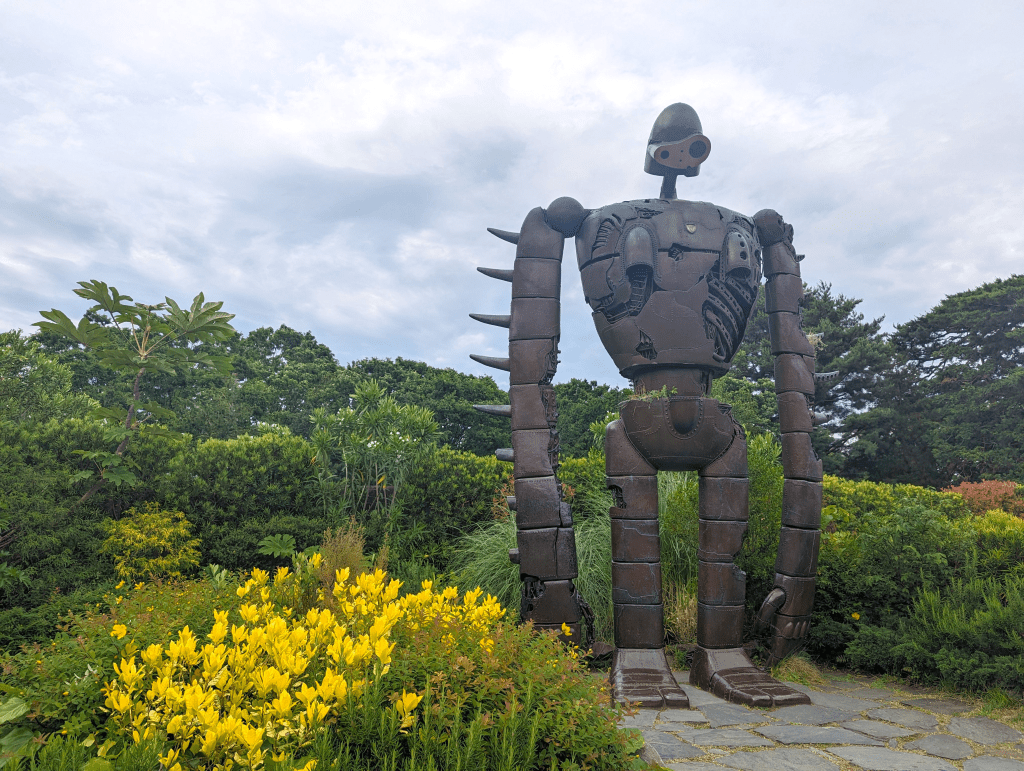
Before moving on to other media, I’d like to highlight the moving feature-length making-of Hayao Miyazaki and the Heron, portrait of one of the foremost living artists in animation – and the perfect preparation for me before visiting Japan for the first time and getting to see the Ghibli Museum in Mitaka, Tokyo: a beautiful and fitting reminder of the wonderful work by Miyazaki, his long-time friend and rival Isao Takahata, and the artists at Studio Ghibli. Getting tickets to the museum wasn’t altogether easy, but for anyone with any affection for the films of Miyazaki and Takahata, getting to see the museum is more than worth the effort.
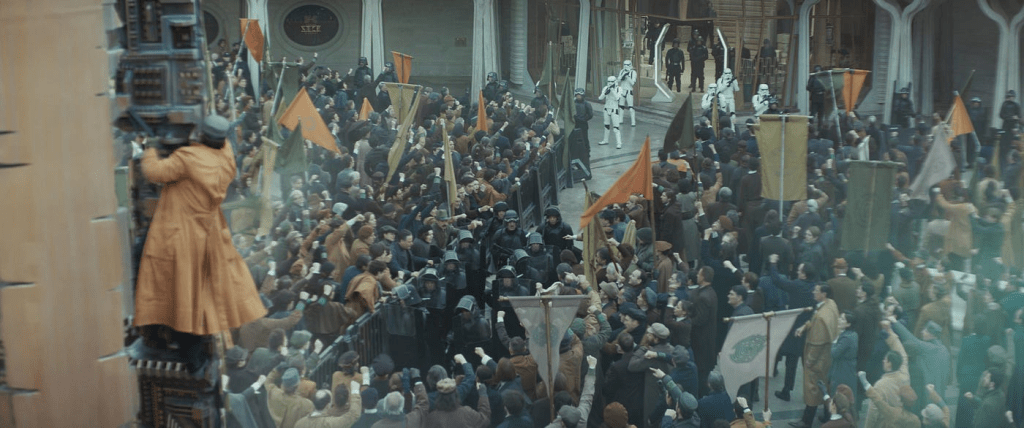
Also for people that are more into longform narrative, there was a lot to love in 2025. I’m still stunned by how well Tony Gilroy and his team managed to continue and complete Andor, with a second season that somehow manages the impossible yet again: to tell a story that is entirely Star Wars, yet at the same time it’s altogether about the present time and a galaxy all too near to ours. It’s smart, sharp, fantastically written and acted. It also uses music extremely well, whether it is the reprise of the dancefloor number “Niamos” as Mon Monthma tries to drink and dance her own culpability away, or the doomed people of Ghorman assembling and raising their voices in an act of resistance, before the Empire does what throughout history has come all too easily to empires.
While I don’t think it quite stuck the landing, I was also impressed with Noah Hawley’s Alien: Earth and the way the series remixes tropes that had become stale, and I enjoyed both Hirokazu Koreeda‘s Netflix series Asura and the Apple TV documentary Mr. Scorsese (directed by Rebecca Miller) a lot. Severance‘s long-awaited second season too had a lot going for it, though to my taste the series lost something as it fell in love a bit too much with the more surreal elements of its world at the cost of some of its characters and themes, with a memeable self-consciousness (baby goats! “Devour feculence!”) that sometimes got in the way of what the series is about. I’m still curious where they’ll take it – and even if the series ended with the second season’s final cliffhanger, it could work as an ending -, but just a bit less so than I was after the nearly perfect first season.
Perhaps the series that surprised me most this year is The Pitt – though, admittedly, I’ve only seen two thirds of it so far. Here is a hospital series that drops the usual soap-opera theatrics almost entirely and brings in the real-time structure of 24 without it ever feeling like a gimmick – and it’s riveting television. Plus, it’s introduced me to a number of great actors I’d not been aware of so far, not least Fiona Dourif (who eerily looks like a young female version of her father Brad at times) and Taylor Dearden (who looks nothing like her dad, Bryan Cranston, but is just as watchable as him).
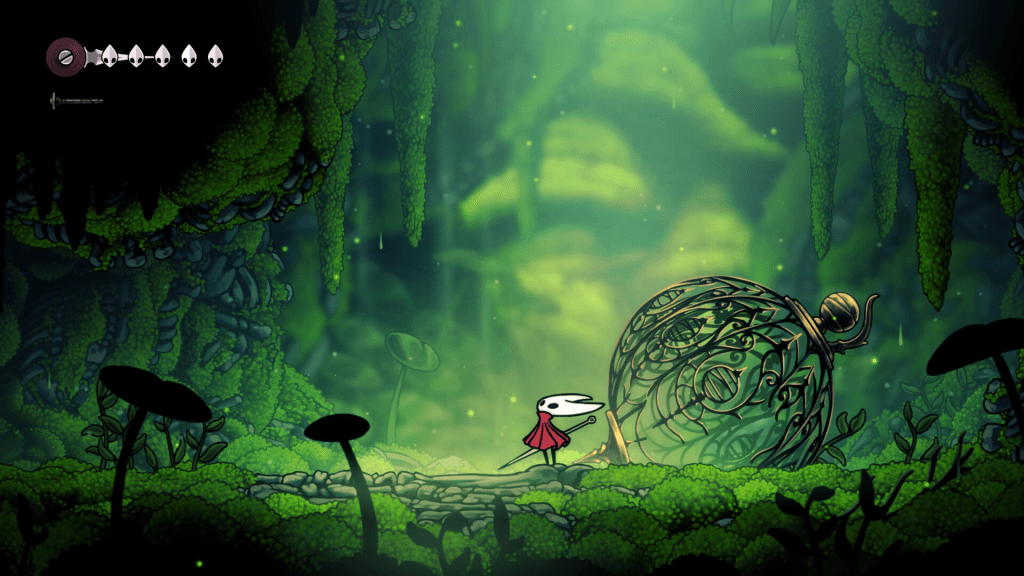
I didn’t play as many video games in 2025 as in previous years, mainly due to a lack of time, but the year saw the release of a long-awaited sequel in Hollow Knight: Silksong. The original Hollow Knight was one of my favourite games of the last decade, an often brutally hard adventure set in a dying kingdom populated by bugs that managed to use its difficulty, setting and darkly cute aesthetic to evoke a world and set of characters suffused with melancholy. If anything, Silksong is even more difficult, sometimes to the point of sadism, but its developers, the Australian indie Team Cherry, have again done a beautiful job of evoking a world, complete with a society, several cultures, and a mythology that is rich and resonant. And not many developers manage to take that ultimate trope of video games, the boss fight, and make it something tragic and poignant!
And that is it for 2025, a year as enfuriating and despair-inducing in many ways as it proved generous and giving in others. I’m sure 2026 will give us plenty prompting us to lock ourselves away in our rooms and hide under the blanket – but there will be stories in various forms and styles that will lure us out from under there.
 A Damn Fine Cup of Culture