Considering how much we watch, read, listen to and play in any given month, it’s almost a bit sad that we only write about a fraction of these. So, starting this month, we’re trying a new monthly format: on the last Wednesday of each month, we will release a few shortcuts: quick impressions of films, series, books, albums, games, or any other damn fine cups of culture that we’ve enjoyed this month, whether they are new or we only just got around to them now.
So, with no further ado, here are our first Shortcuts. Enjoy!
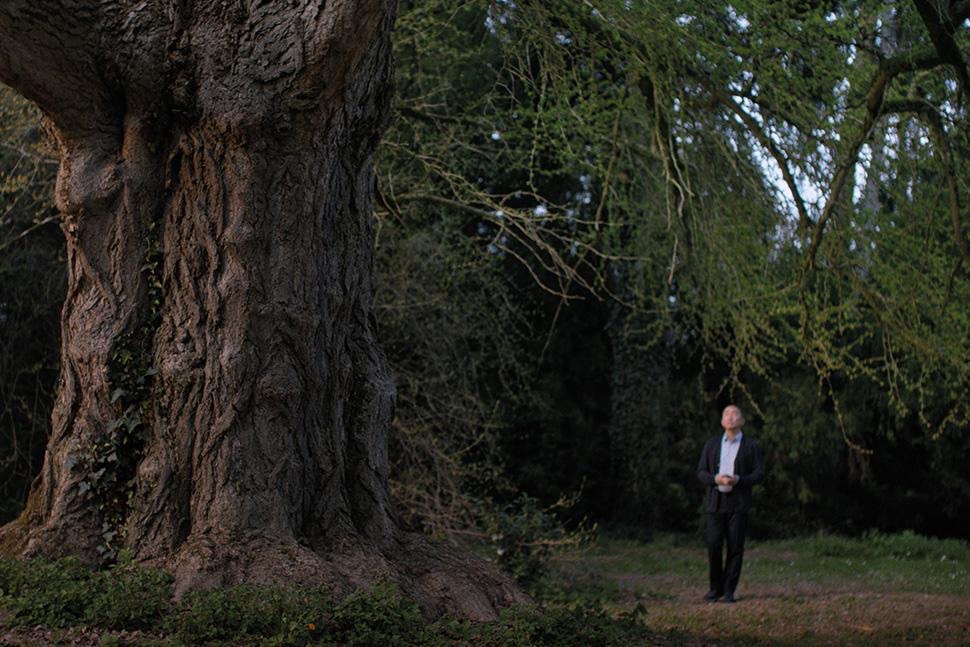
Silent Friend (2025)
When I saw the trailer for Silent Friend by Hungarian writer-director Ildikó Enyedi, I was apprehensive: the film, which evidently was about researchers trying to learn the language of plants, looked po-facedly New Agey. I’m very glad I went to see it nonetheless: Silent Friend is poetic, which may put some viewers off, but it is not New Agey, and it has a wry sense of humour. Set in three eras – 1908, 1972 and 2020 (and yes, COVID does play a role) – and starring Tony Leung (yes, that Tony Leung!), Luna Wedler, Léa Seydoux and Sylvester Groth, it is about isolation and the human (and vegetal?) need to reach out and connect, but it is also about science and the different approaches we take when it comes to observing the world around us. It is very much the kind of film you might catch at a festival, and it’s unlikely to play across multiplexes around the world, but it’s a gentle gem of a film if you’re receptive to its slow rhythms and its understatedness.
— Matt
The Pitt (2025 -)

When The Pitt came out, I couldn’t quite believe the hype: it’s a hospital series, I thought, how much leeway is there for it to be more than good measured by the standards of the genre? Even if done well, wouldn’t it just be another medical drama? Well, having just finished season 1 (while season 2 started a couple of weeks ago): The Pitt lives up to the hype. It’s smart, well-written, and while there are a few plot points that are familiar from other series in the genre, the execution here is exceptional. The cast is great, the writing top-notch – and the series uses the real-time trope better than anything else I can remember. Even if, like me, you hear “medical drama” and your eyes glaze over, check this one out: it is thrilling and even strangely joyful to watch people be this good at what they do – both the cast (Noah Wyle, Taylor Dearden and Katherine LaNasa stand out, but they’re all great) and the characters they play – without turning into shallow, flawless heroes. So much of the enjoyment of The Pitt is in watching the sheer logistics of this overcrowded, underfunded hospital ER in Pittsburgh in action – and, as the series proves, logistics can make for astonishingly compelling drama.
— Matt
28 Years Later: The Bone Temple (2026)

I enjoyed last year’s 28 Years Later, but I didn’t love it. It delivered a nice amount of post-apocalyptic thrills and had some inventive moments, without doing much earth-shattering. But two of the moments that I enjoyed were the striking Bone Temple, and the brief appearance of a violent gang modelled on Jimmy Saville – so I got a lot out of the sequel that really focuses on these in particular. Ralph Fiennes and Jack O’Connell give two tremendous performances of two very different individuals shaped by the trauma of an apocalypse. Nia DaCosta’s direction is mercifully free of some of the more pretentious flourishes that Danny Boyle stuck in the last one, and shows a tight grasp of horror and telling very human stories. More than anything, though, it’s a film stuffed with ideas that doesn’t overstay its welcome. I’ve sat through too many sci-fi and horror streaming shows that take ten hours to tell the story this manages in 109 minutes.
— Alan
Heated Rivalry (2025)
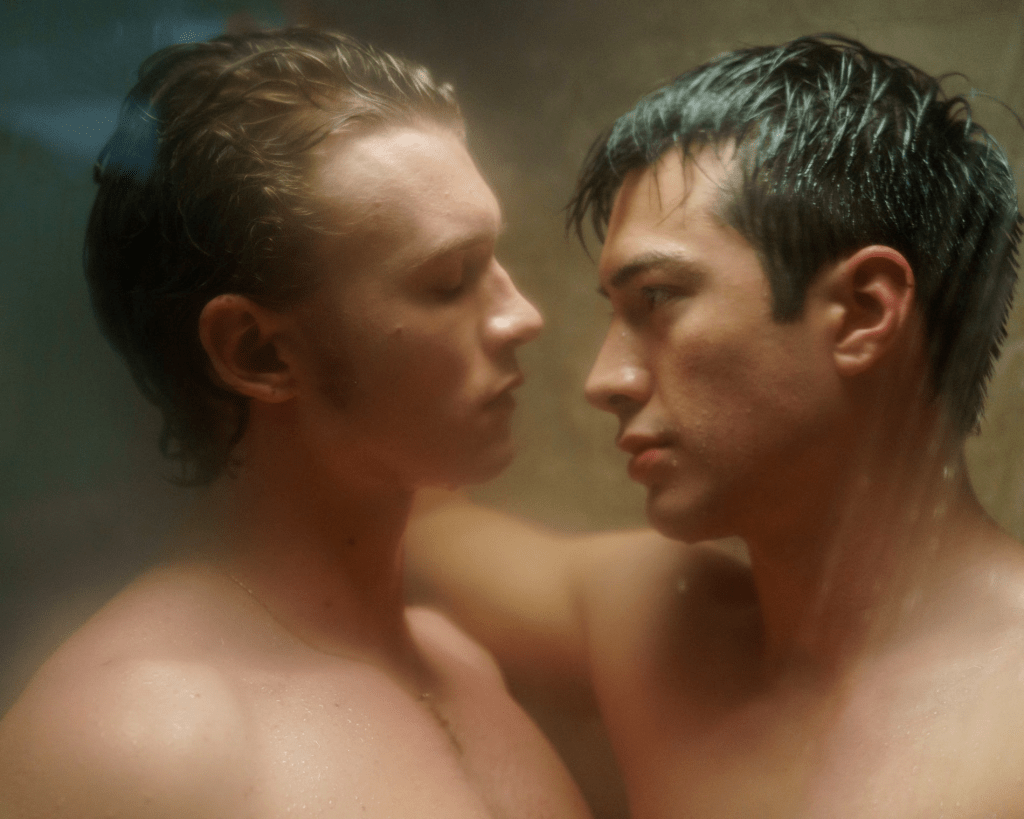
The hottest thing st(r)eaming right now has to be this Canadian-produced show about hockey players playing hooky away from the ice rink and falling in love. What lures audiences into the show far beyond the queer community is currently the discussion of even Guardian and New York Times editorials. Especially among straight female audiences, the consensual, frank and fun interplay between the leads (newcomers Connor Storrie as Russian Ilya and Hudson Williams as Canadian Shane) has caused a veritable watch party and social media craze.
I can safely say it’s really as good as everybody wants you to believe: an initially very sexy, but increasingly also heartfelt, honest and refreshing take on communication, love and being closeted in professional sports. What at first is pure guilty pleasure in the end turns into a veritable uplifting heartbreaker – or is that heart-heater?
— Sam
The Chair Company (2025)
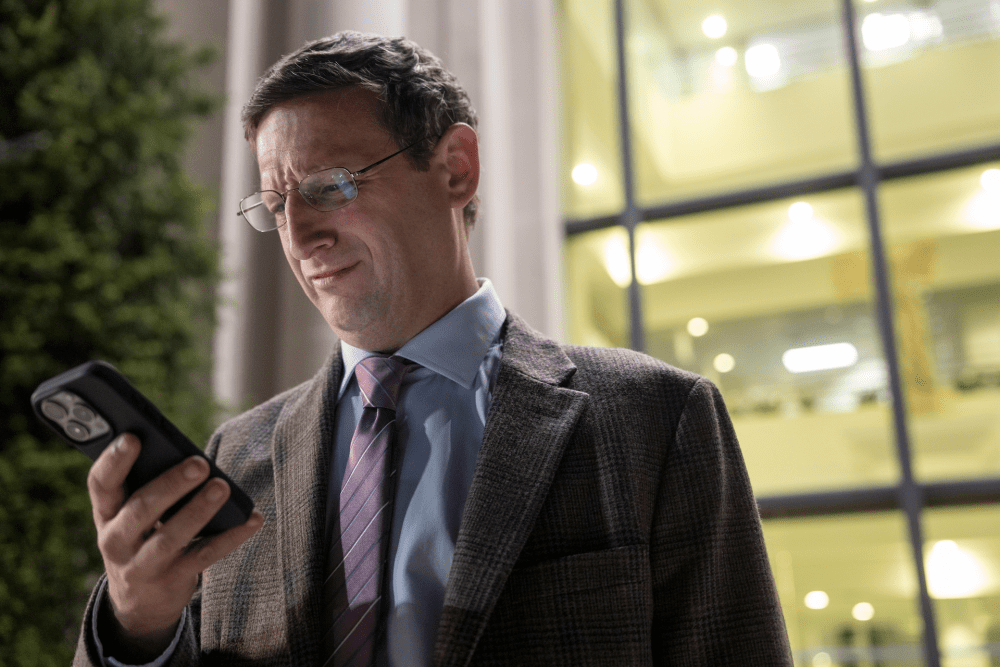
Tim Robinson’s awkward sketch show I Think You Should Leave is an acquired taste, one I’ll admit to liking as much as the first and last time I had a Vegemite sandwich. The Chair Company is also an acquired taste, but less so – it offers a palatable comedic veneer of taking something small and blowing it out of proportion for laughs: namely, Tim Robinson’s ostensible everyman, Ron Trosper. Ron’s relatable in a way Tim Robinson’s characters usually aren’t, a middle-aged man stymied by an obsessive nature, questions of self-worth, and his stubborn inability to let go of a grudge when a chair collapses on him right after he aces a critical presentation.
But the comedy in The Chair Company doesn’t just blow things out of proportion for laughs; it continues to do so until the effect distorts reality itself, and Trosper’s digging burrows into a conspiracy that threatens to suck his entire life up into its dark maw. The overall effect is something almost Lynchian, easily phasing into the surreal at the drop of a hat while visiting side characters and situations that could only exist at the periphery of society. It’s a strange trip anchored by what starts off as a character study but gives in to Robinson going off the rails by the end with his trademark blowouts; it doesn’t work as well as it should, because nothing here is as oddly charming and human as Lynch even at his darkest. But Robinson isn’t Lynch; he’s more of a showman. You can tell because The Chair Company answers one of the questions it asks at the beginning in an unexpectedly satisfying and conventional way after all the buildup, then pulls the rug out from under you with a note completely out of left field. You have to wonder where it’s trying to go with the other crumbs the show’s dropped until that point, and that’s a good way to pitch a Season 2.
— Eric
Dispatch (2025)
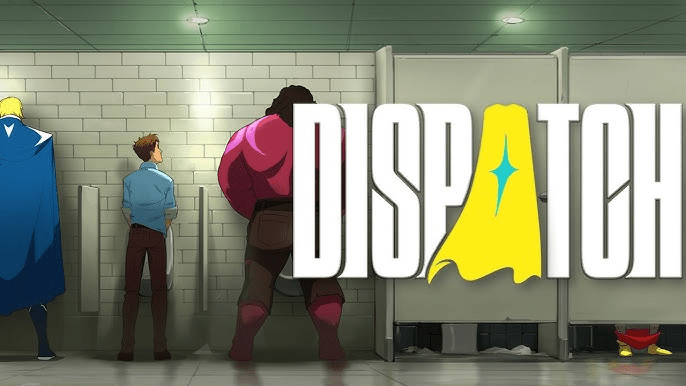
Dispatch is hard to categorise as a video game: part animated cartoon show, part visual novel, part strategic management sim. Some of the folks responsible for Telltale’s best work (The Walking Dead S1, Tales from the Borderlands, The Wolf Among Us) banded together to create AdHoc studio, and Dispatch is their first title. Starring another everyman, this time it’s a former superhero called Mecha Man, who’s just a guy named Robbie Robertson in a suit. The game opens with his suit being totalled, and Robbie is forced to retire to normal life since he doesn’t have the money to repair it – until he gets an offer to lend his experience fighting crime to team manage a bunch of supervillain misfits into a redemption arc. And that’s where the dispatching comes in.
While this story’s a bit of a contrived hard sell, it’s told winningly by a bravura voice cast headed up by Aaron Paul, who shows off his chops with a measured, wryly optimistic performance that feels perfect for Robbie. The other actors (including Jeffrey Wright) get their licks in, and there’s tons of chemistry and crass jokes up the wazoo, all of it lovingly animated – the game’s not shy about penises or areolae, and gives you chances to comment on both. It’s a story for your inner teen, sex and violence and explosions and banter and superpowers, but it’s also got charisma in spades, and a side of relatability for just about everyone, even the maligned, gangly janitor kid whose superpower is that he projectile vomits water. And to achieve that kind of empathy: well, that’s a superpower all its own.
— Eric
 A Damn Fine Cup of Culture