
Welcome to Six Damn Fine Degrees. These instalments will be inspired by the idea of six degrees of separation in the loosest sense. The only rule: it connects – in some way – to the previous instalment. So come join us on our weekly foray into interconnectedness!
Did you know? Your reading diet casts quite an accurate picture of who you are. Or, more precisely, of those aspects of yourself that you’re focusing on, perhaps even obsessing about. You do know it. Of course.
I didn’t draw that conscious conclusion until I read Matt’s post on China Mieville. Mr Mieville is a brilliant writer. Back in the 2000s, I obsessed over the world he’d crafted. But even then, I thought that his characterisations in Perdido Street Station left something to be desired. The story was unputdownable, but I couldn’t bring myself to care about any of the characters. I found them all equally off-putting. There was something cool and untouchable about them. Something, in hindsight, quite doomed.
But it suited me, it was something of a type. Back then, I didn’t believe in people. I believed in smarts – or smartasses – and survival and façades. And, I suppose, in certain doom. So I adored books like Great Apes by Will Self.
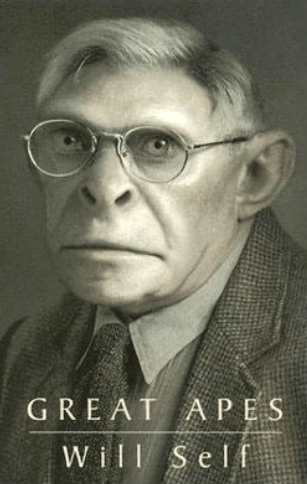
Great Apes is a satire about an artist who, after a drug-fueled night, wakes up to psychosis. Not only has he turned into a chimp, but so has everyone else. And so the famous chimp psychiatrist Dr Zack Busmer sets out to cure him of his sad delusions of humanity.
It is absolutely, darkly hilarious. I had the chance to listen to Mr Self at a book festival once. He radiated prick and seemed proud of it. His books, like his public persona, are smart and cruel but also very funny.
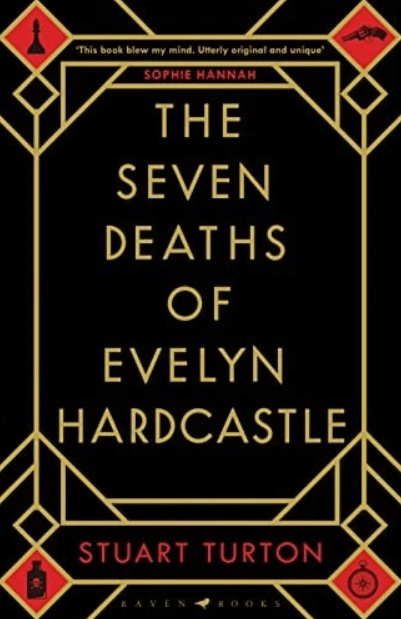
I obsessed over concept books like The Raw Shark Texts, The Gone-Away World, The Seven Deaths of Evelyn Hardcastle – all of those brilliant stories that take a certain concept and run with it to the bitter end. The Gone-Away World follows what happens when a weapon is used that makes things “go away”. The Raw Shark Texts deals with mind-eating concept sharks, and The Seven Deaths – well, that was a mind-blowing read. I highly recommend it.
Author Stuart Turton said it took him two months to map out where each character is at each point of the plot, and I imagined him in an underground lair with red string pinned between pictures and bills and ticket stubs, like an insane spider.
I thought of the world as a puzzle back then, something to be cracked and conquered, and I was going hard at it. I thought of human connection as a casualty of these overweaning concepts. Something incidental, savoured as long as it could last but not, in a sense, real. Not a foundation of lasting worth. Characters were just not the issue.
At some point, as they say, life happened. Something cracked in me.
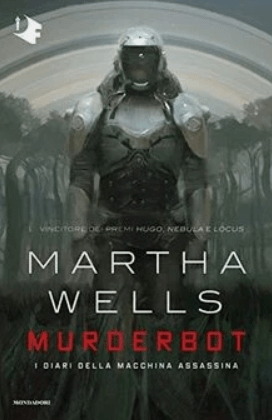
I read more about people I cared about. I consumed character-focused novels like Lois McMaster Bujold’s Penric & Desdemona series, Katherine Addison’s Goblin Emperor, Martha Wells’ Murderbot Diaries, Tamsyn Muir’s Gideon the Ninth. (And it is surely not a coincidence that these are all female writers.) I began to root for the connections between the characters, to see that as the thing most worth saving in the entire plot.
And I began to read romance. You can say what you like about this oft-maligned genre, but here are two undeniable truths about it: 1) Romance books, per definition, have a Happy Ever After (HEA) or a Happy For Now (HFN). No doom whatsoever. If it ends tragically, it’s not romance, and if you mislabel it as such, you’ll have some very angry readers baying for your blood. 2) Romance is fundamentally about the longing for human connection. It takes two very different characters and throws them at each other to see what sticks. Everything else is just window dressing. Thus, there is no one better at writing people with all their vulnerabilities and depths than a good romance writer.
At this point, let me recommend KJ Charles and her oeuvre. She also has a very interesting blog about publishing and the genre here.
If you’re wondering where I’m going with this, well, I’ve taken to watching my own reading diet to understand myself better. Much like other people use Tarot cards, meditation techniques or conversations with their shrinks. (And oh, believe me, confessing this feels as demented as it sounds.)
So there we are: paying witness to someone else’s self-reflection is undeniably tedious. If you’re still there, thank you for your grace. What it leaves you with is, perhaps, the idea that what you read and what you are getting out of it can tell you a lot about your personal story.
It’s a valuable thing, the story that you tell yourself about yourself. It’s worth paying attention to.
 A Damn Fine Cup of Culture