Welcome to Six Damn Fine Degrees. These instalments will be inspired by the idea of six degrees of separation in the loosest sense. The only rule: it connects – in some way – to the previous instalment. So come join us on our weekly foray into interconnectedness!
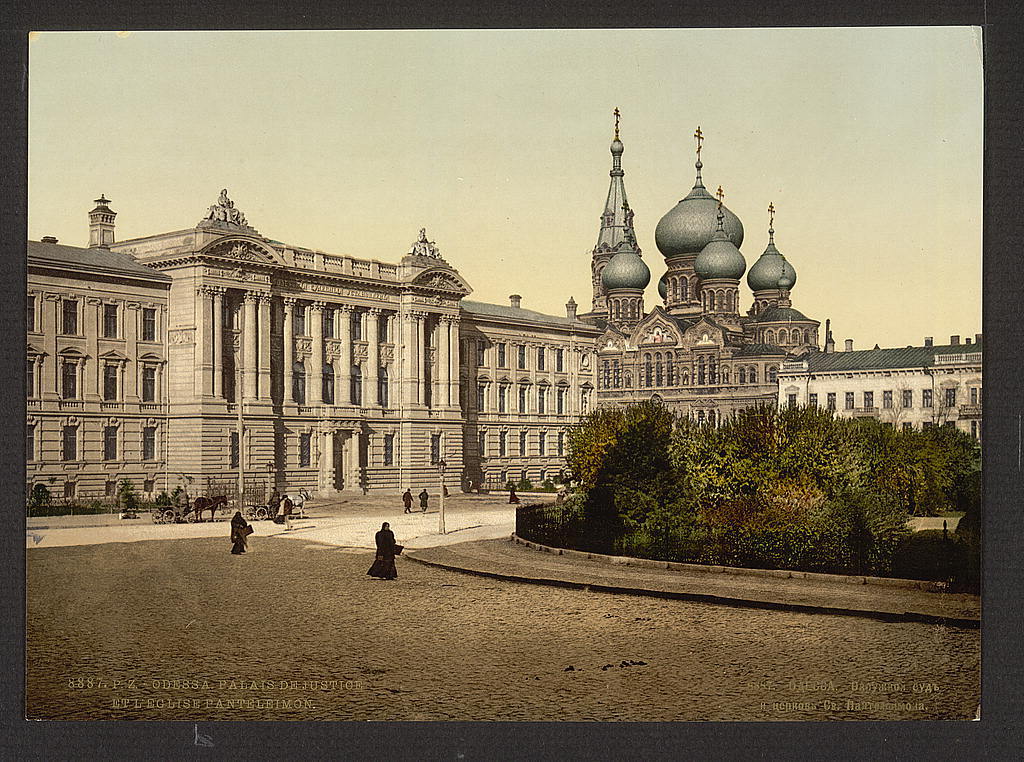
What are the origins of modern nations? Where does national identity come from, and how has it been shaped to fit modern political structures? Going by a lot of the recent books I have read, this definitely seems to be a subject I’m interested in right now.
In part, it’s a topical interest. The current war in Ukraine has seen the Russian government – and many of its supporters in the West – assert that Ukraine isn’t really a country and that its true “natural” status is to be part of the Russian nation. At its most aggressive, the Russian argument runs that the Ukrainian identity in itself was created as some sort of global psyop by the West/Catholics/Jews/Illuminati [delete as appropriate] solely to undermine rule from Moscow
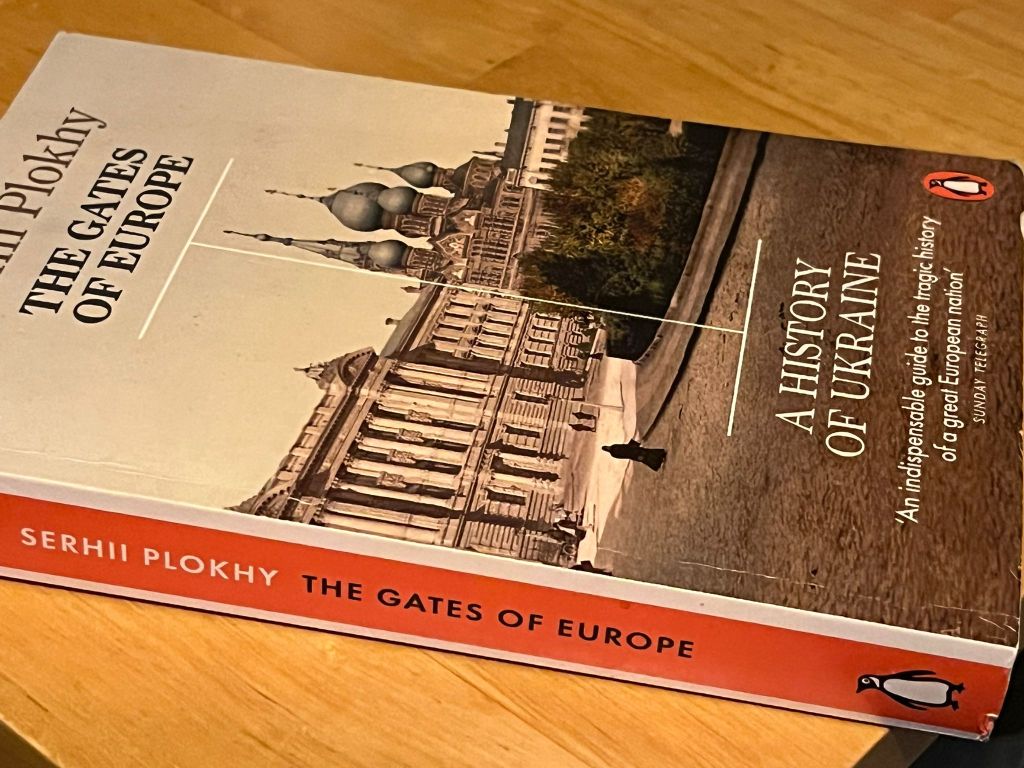
To try and make sense of where this claim came from, and the lack of any real evidence to support it, I can wholeheartedly recommend Serhii Plokhy’s The Gates of Europe. A comprehensive history of Ukraine, the part I found most fascinating was the early chapters. The story of who lived on that land going back thousands of years and how the various polities/tribes/city-states that lived there was – over the centuries – to form identities that built the Ukrainian nation of today.
And this fascination led me to ask a further question: if that is how the pre-nation state identities evolved in that one country – what about elsewhere? And curiously, this is often an aspect that many history books miss. Often, histories written about specific nations start relatively recently, with the birth of the modern recognisable nation-state. Or the very modern freedom fighters who helped create it.
The more you explore this, the more it becomes clear just how arbitrary most national identities are. Go back far enough, change just a couple of things, and you’d probably have a very different atlas today. What if the Danelaw had remained separate from the Anglo-Saxon Kingdoms, creating two very different national identities in what is today England? Indeed, across the Island of Great Britain its not hard to think that the place might become Balkanised between Saxons, Celts, Britons, Danes, Picts, and maybe others had history gone down a slightly different route.
I think what I find most interesting about all this is the way that it all resonates with storytelling. Modern nation-states were built on narratives. Stories from antiquity are mined for heroes and events that now form part of the new political creation. Or more recent poets, artists or warriors are imbued with national greatness to help inspire the contemporary polity.
It doesn’t always matter that the same histories and characters end up getting claimed by different nations. The early history of the city of Kyiv is foundational to Ukrainian identity. A fact that curiously doesn’t seem to have stopped the city of Moscow nearly one thousand kilometres away from also claiming it as foundational for their Russia. The fact that the Russian language has its own preferred Latin alphabet spelling of the same city – Kiev – creates two words for the one city, both now loaded with history, resistance or imperial ambition. Your choice of spelling now feeding into declaring a view on that history. Words becoming so important in these national stories that even the choice of how you spell them ties you to a specific view on the history of nation creation.
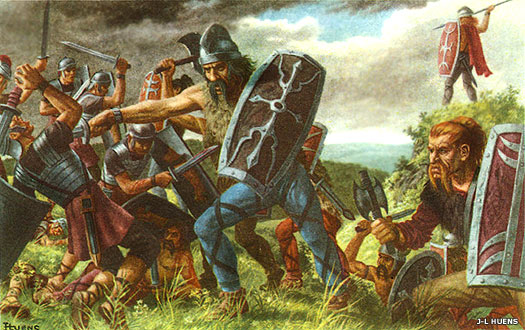
Another aspect that modern nation-states do to help create their national story is to dive deep into antiquity. The Belgae were an ancient Celtic tribe conquered by the Romans. A name that got repurposed over a thousand years later, when the Austrian Netherlands wanted to rebel firstly against Austrian rule and then from rule by their Northern Dutch neighbours. Belgium was a useful way to root the new nation in its own ancient history. There’s little by way of a direct link in reality – but it forges a story that can be used by the new Belgians to insist their national story is its own thing, precluding rule by others. Similarly, when four small British colonies in Africa won their independence, their combined new state took the name Ghana from an African Kingdom that existed seven hundred years earlier. It wasn’t quite geographically where they were, but it was a useful way of asserting a shared cultural narrative with polities that existed before colonial conquest.
This dive into history to find names for new countries is found around the world. And imperial powers fighting independence movements are often also engaged in attempts to discredit an emerging national identity being forged from pre-colonial history. When the British were building an Empire in Southern Africa, they were to call one large chunk of the land they exploited Rhodesia – after Cecil Rhodes, a man whose wealth had been built from African diamond mines and expropriated land. This name was clearly unacceptable to many Africans in the country, so the independence movement was to look to the name of a great city – now abandoned – that had sat in the south of the region. The city of Greater Zimbabwe became the root of the country’s new name once the white elite had been overthrown, linking the new nation to an earlier era. And here the story of how narratives are used in these fights becomes even more complicated, as the white elite – going back to Rhodes himself – had frequently attempted to create an invented history where the abandoned city had actually been built by Europeans many centuries earlier. A bogus narrative to try to justify their claim to the region, and deny the story of the independence movement.
Language becomes tied to the story of many national identities. So much so that you can come across two different nations speaking virtually identical languages that still get named differently for the country they are spoken in. Or the attempt to create the national identity in the first place leads to the creation of a new national standard – deliberately drawing from various not-so-identical dialects – resulting in a language that no single person at the time actually speaks. Tolkien delved into the world of language creation for his own stories – but you find many across the world in Norway, Slovenia, and Kazakhstan, where defining the language is part and parcel of defining the national identity.
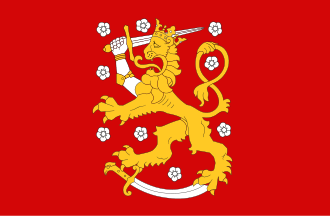
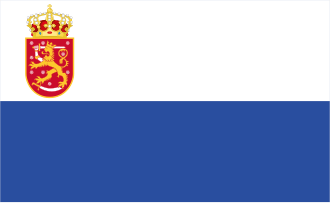
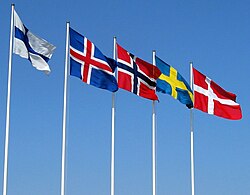
Decisions are made when forging these identities that work so well; most people don’t realise that they were the result of a deliberate decision. When the Finns were tired of constantly being part of Russia’s Empire, they sought to define a flag that would help create their national identity. Several proposals were made – drawing from their heraldic heritage within the Russian Empire – but this was seen as just maybe implying that they were ultimately part of the wider Russian Imperial World. So they deliberately designed a flag that styled itself on their Western neighbours: Sweden, Norway and Denmark. A conscious attempt to brand the country which, despite major cultural and linguistic differences, preferred a Nordic future over being seen for its Russian past.
Nowadays, Finland seems so firmly embedded in the world of its Scandinavian neighbours, that it’s striking to realise that this was done deliberately. Creating a story of the country’s place in the world and a denial of its past stuck in an Empire. Delving into the history of how nations come about is full of so many stories like this. How are the modern Greeks linked to the ancient Greeks? What about the modern state of North Macedonia and the ancient Macedonians? Or their neighbouring Bulgarians, who speak a nearly identical language but look to the ancient Bulgars of Central Asia for their origins.
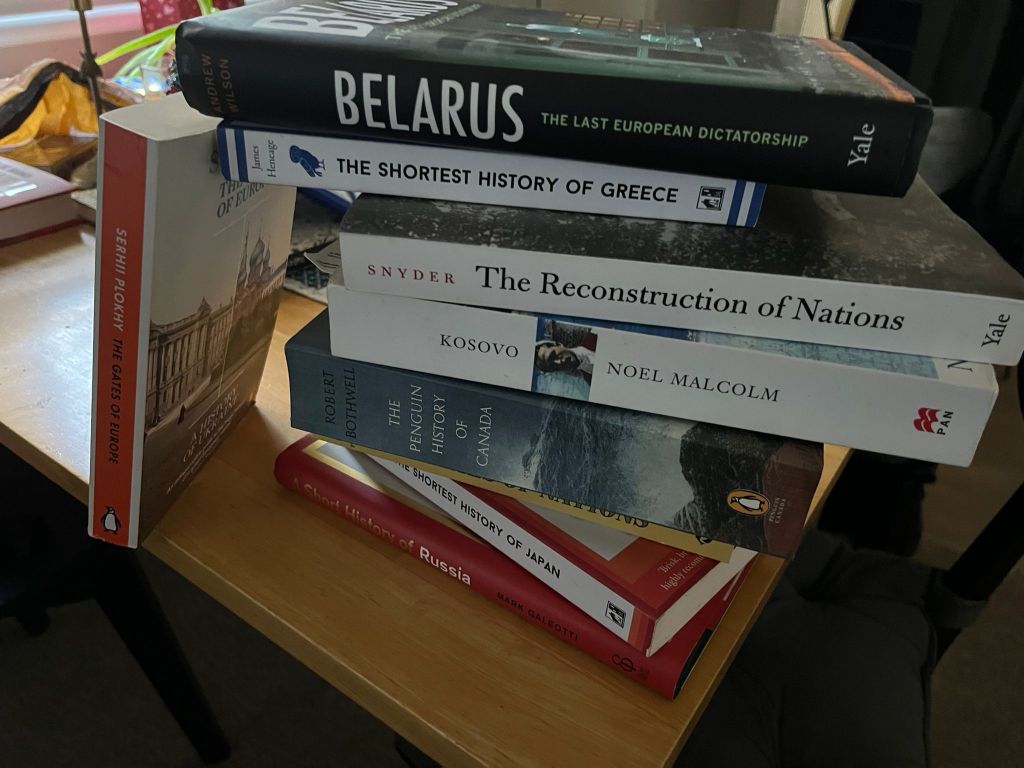
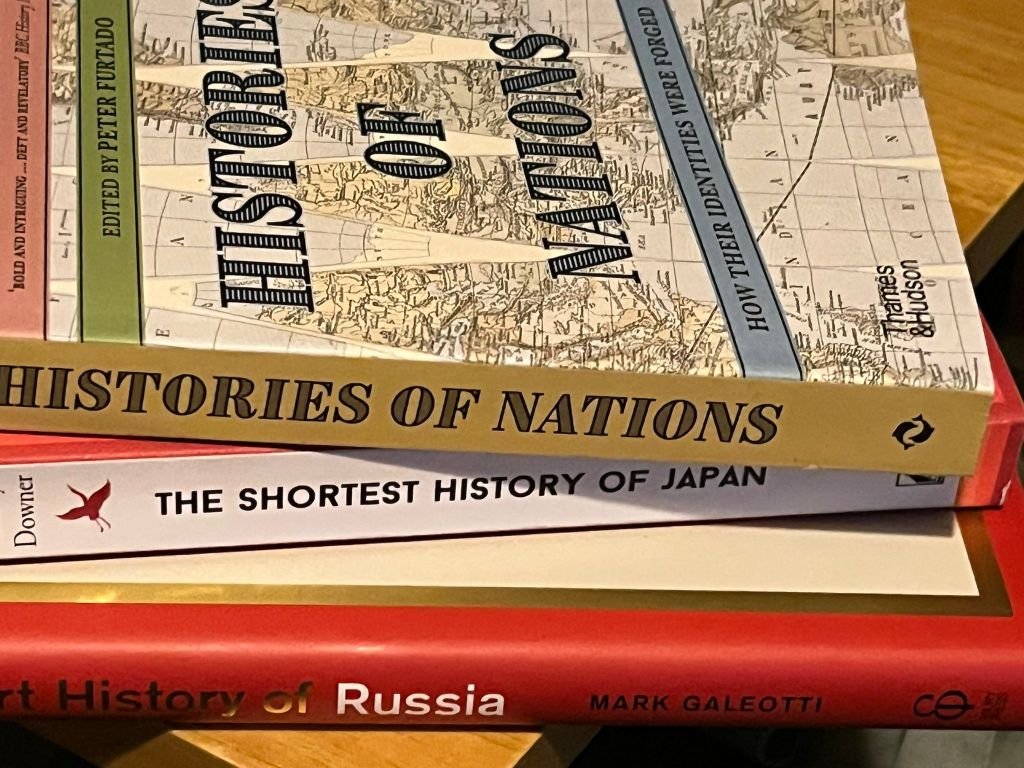
It’s all become quite a feature on my bookshelves. Books on Germany, Korea, the United States and Switzerland (and others!) are not even featured on the above image, because shifting the lot of them looked suspiciously like hard work. Perhaps it’s time for me to change things for a little while – a nice little domestic family drama maybe? Or something that conveniently segues into what’s being written about next week!
 A Damn Fine Cup of Culture