Welcome to Six Damn Fine Degrees. These instalments will be inspired by the idea of six degrees of separation in the loosest sense. The only rule: it connects – in some way – to the previous instalment. So come join us on our weekly foray into interconnectedness!
Myself, I’ve never been to Sarajevo. In fact, I’ve not been to much of the East of Europe. I’ve been to Bratislava, which has the coolest little pancake place. And I’ve been to Prague – which is almost a bit of a cliché, at least for my generation (which, as you may have guessed, lies somewhere between W and Y). At Swiss grammar schools, classes would go on what is called a ‘Matura trip’ (the Matura being the final exam), which teachers would try to make as educational as possible, while students would try to make sure would provide ample opportunity for partying, and pretty much the generic destination for a Matura trip in the early to mid-’90s was Prague. Plenty of education, plenty of culture, plenty of beer.
However, that’s not the trip to Prague I remember most fondly. Even though I did get my CD of the Blade Runner soundtrack there.
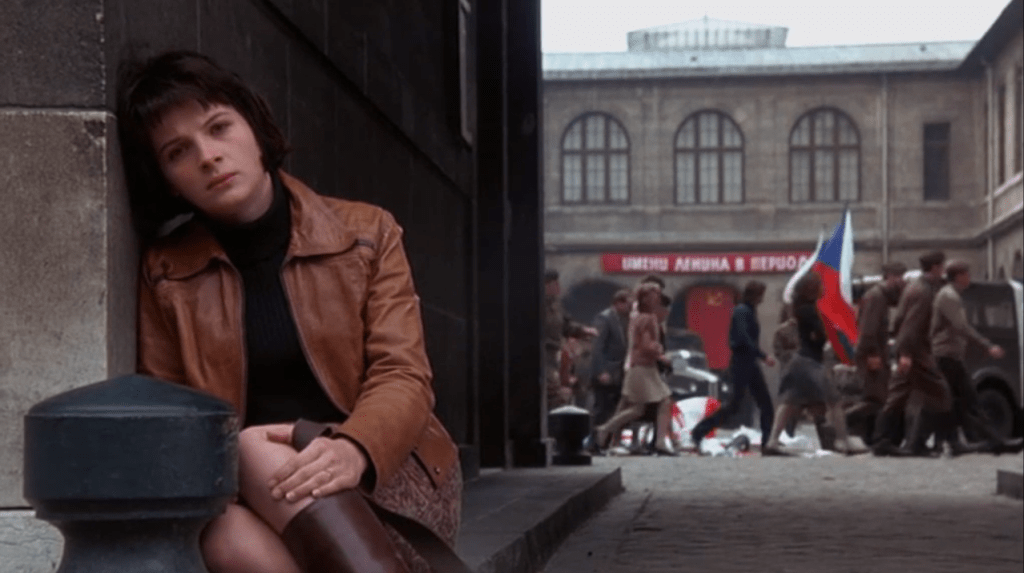
More than ten years ago, my wife’s mother invited us – that is, her daughter and son, their partners, and also my dad – to Prague. The city had a special significance for her: both my parents-in-law fled Czechoslovakia at the end of the 1960s. Prague is where the liberal reforms under Alexander Dubček started, and it’s where the Soviet Union and its Warsaw Pact allies came down hardest after invading in 1968. The visit to Prague was, in part, an opportunity to share her memories of the time with us. I remember all of us standing at the top of Wenceslas Square – one of the main city squares, one of the best-known locations in Prague, and one of the places occupied by the Soviet tanks – as my mother-in-law started to tell us her story of the invasion.
And then my dad, who didn’t always have the best sense of when to talk and when to shut up, interrupted in order to make the story about him: sitting at his kitchen table, listening to the radio and hearing about the Soviet tanks entering Prague. For my mother-in-law, this was perhaps the event and time in history that left the deepest mark on her; for my dad, it was the momentous occasion of sitting in the kitchen and listening to the news on the radio. It’s astonishing that Wikipedia has an entry for the former, but not for the latter.
Obviously, this totally warranted the interruption and the change of focus onto his memory of the events. Totally. It wasn’t rude and massively inappropriate at all. And, obviously, it had something of an impact on our feelings towards my dad for the rest of the trip. (It may sound like a cringy anecdote, but it is something that still rankles quite a bit.) Though, at the same time, there are also a number of things I feel bad towards my dad about when it comes to that Prague trip, so perhaps it evens out. Where would we be without residual family guilt?
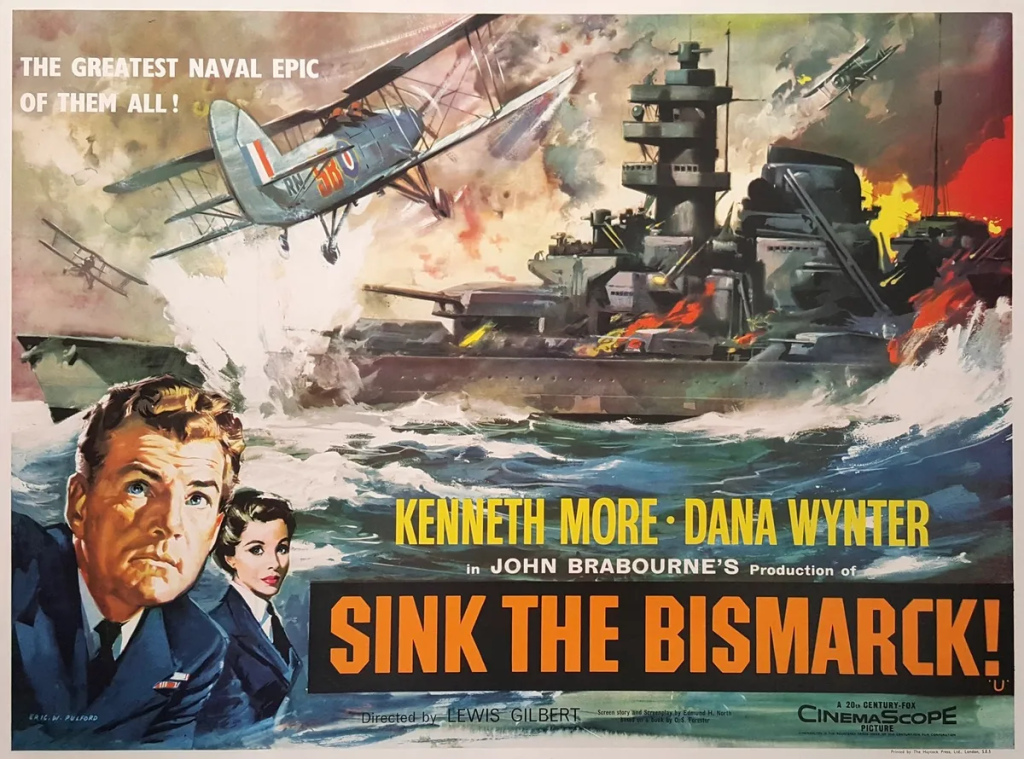
I’ve written before about the influence my parents had on what I watch and which films and series I seek out. Obviously there’s not a straight line from what they enjoyed watching to what I watch now, and there are a lot of films, directors and actors I love that they would have zapped away from in a matter of seconds if these had popped up on their TV. There is another dimension to this, though: sometimes I watch something and wonder whether this film or that series would have resonated with them. This is especially the case when it comes to historical films. My dad was born halfway through the Second World War, my mum just after. She loved war movies, he less so, which may have been due in part to where they were from: my mum was a Brit, my dad was from Germany, and it’s probably easier to enjoy war films if you’re from the winning side, so to speak. Though there was the rare war film or series that they both enjoyed, such as Das Boot.
Seeing how both of my parents had left the countries where they were born before they were thirty, I suspect that watching movies and TV series set in those countries, and at a time they remembered (or were told about by their own parents), was a way of reconnecting, if not with their places of birth then with an idea of those places. Differently from my wife’s parents, they had not been driven from their countries by an invasion. They had both chosen freely (more or less) to emigrate, to leave behind the reality of ’60s Germany and England, respectively. And yet, in their ways, and like so many voluntary emigrants, they both nonetheless missed something about the places they’d decided to leave. Films gave them a safe, easy way to return, briefly and to what was generally a simpler, more ideal version of these countries.
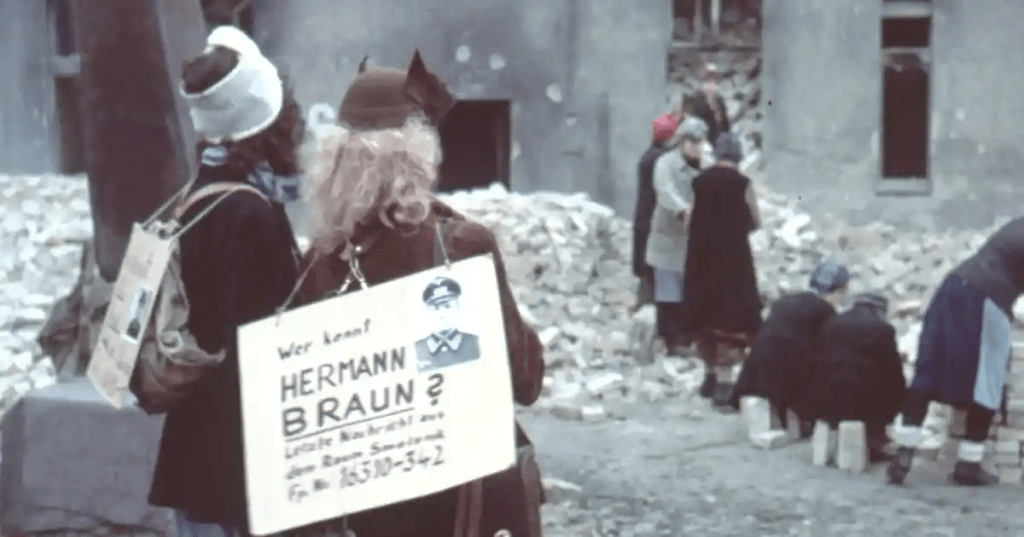
Well, at least this was true for my mum, while she was still alive. If she liked war films about stoical, quietly heroic Brits, that’s what we watched, even if my dad was less interested, by and large. But, most likely, it’s not entirely fair to think of my mum as the sole ruler of the remote control: I understand that my dad, having been a toddler at the tail-end of WW2, might not have wanted to watch movies and series about the burden of German guilt – and a lot of popular post-war German fare, from the few glimpses I’ve had, was simply not very good. Sure, there would have been the later, more political German cinema of the 1970s and 1980s, but my dad’s tastes didn’t extend to the Fassbinders and Schlöndorffs, the Wenders (Wenderses?) and Herzogs.
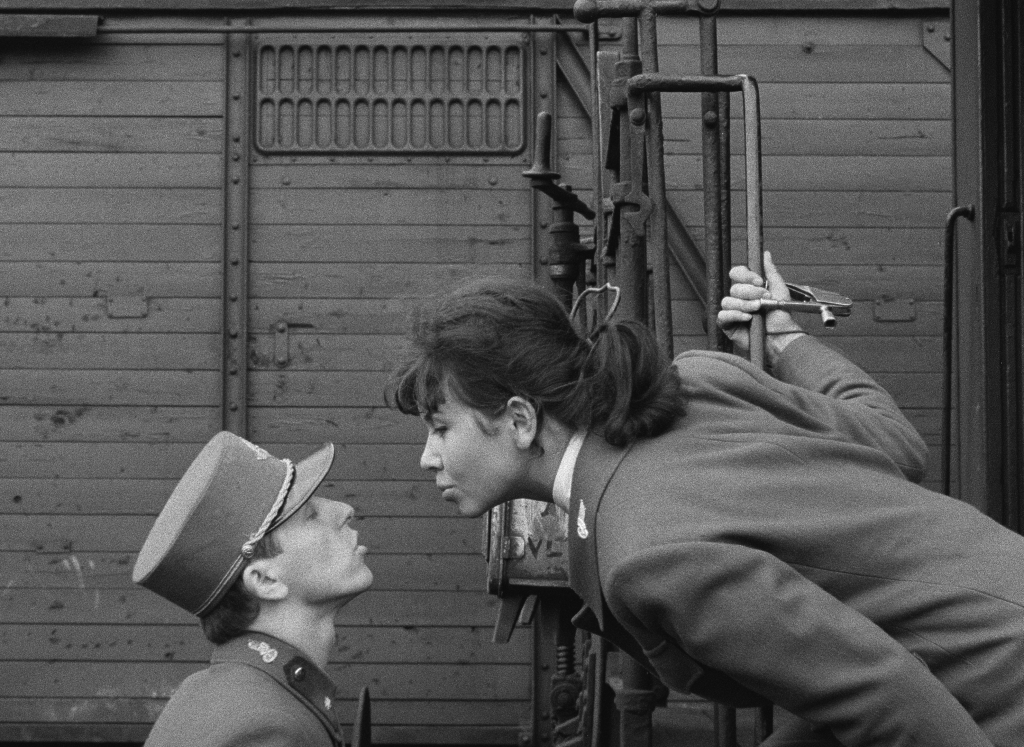
Neither of my parents are still alive, nor are my wife’s. But every now and then we watch something and I wonder: would Annette have liked this, or Hans, or Maria or Franz? It usually happens when we watch something older that they could have seen themselves when they were young, or something that’s set in a world they would have recognised. When there’s a film on at our favourite cinema from the heyday of Czechoslovak movies, we tend to go and see it, and we wonder afterwards whether it’s one that my wife’s parents had seen before leaving their country. But even with a contemporary film such as Pillion, set partly in the gay BDSM biker scene, I found myself thinking afterwards: there’s something so cosily British about this movie, even with the fairly explicit gay BDSM sex scenes (well, certainly explicit for a film co-produced by the BBC!). Would my mum have felt right at home?
And this is where it all comes full circle: I’m certain that my emigrant parents, and I expect my parents-in-law, sometimes used film and TV as a TARDIS of sorts, a machine making it possible to travel in space and time and imagination, to places that looked like the ones they remembered, places that once were home. And I know that, now that our parents are no longer around, I use film as a way to connect to them and their memories, and to my memories of them. When I sit at the cinema and watch a film that makes me wonder how my dad or my mum, or my wife’s parents, would have liked them, they’re there with us at the cinema: mostly transparent but aglow, and flickering like the film projected in front of our eyes.
 A Damn Fine Cup of Culture