Welcome to Six Damn Fine Degrees. These instalments will be inspired by the idea of six degrees of separation in the loosest sense. The only rule: it connects – in some way – to the previous instalment. So come join us on our weekly foray into interconnectedness!
In the autumn of 2009, my mother was in the last few months of her fight against cancer. In fact, she’d battled more than one cancer throughout her life, and even when she was doing well, the knowledge of how it had affected her life and the fear of its return, at some point, in some shape, was always with her. Earlier in 2009, an episode had revealed that one of the tumors had returned and metastasized, making it clear, if not to her then to most of her family members, that this would be her last fight, and it was just a matter of time until she lost it.

My father, who had retired early (not entirely of his own volition), looked after her while she was still at home, before her final stay at hospital. They’d not always been very happy together, but they had seemed to find a way of being kind with each other during the last couple of years they were both alive. But there was a weekend when my dad said he wouldn’t be around – I don’t remember the details, but I assume he needed a break, as anyone would. So my sister and I split the weekend between ourselves, and I looked after my mum for the first part of it. This meant that I prepared dinner for the two of us – pasta, predictably – and, just as predictably, I brought along a film we could both watch together. The film: The Life and Death of Peter Sellers, in which Geoffrey Rush played the iconic English comedian and actor.
I’d picked that film because I thought my mum would enjoy it. She had liked Sellers, who she’d known as a comedian on the radio back when she still lived in the UK. I had however underestimated her condition at the time – which was naive of me: her cancer was affecting her brain, and even though she responded somewhat to her treatment, it also drained her and she wasn’t really in much of a state to watch a whole movie. She was still fairly responsive during the first half or so, but already then she asked some strange questions that indicated she wasn’t really taking it all in, and past the first hour or so she was unable to continue watching.
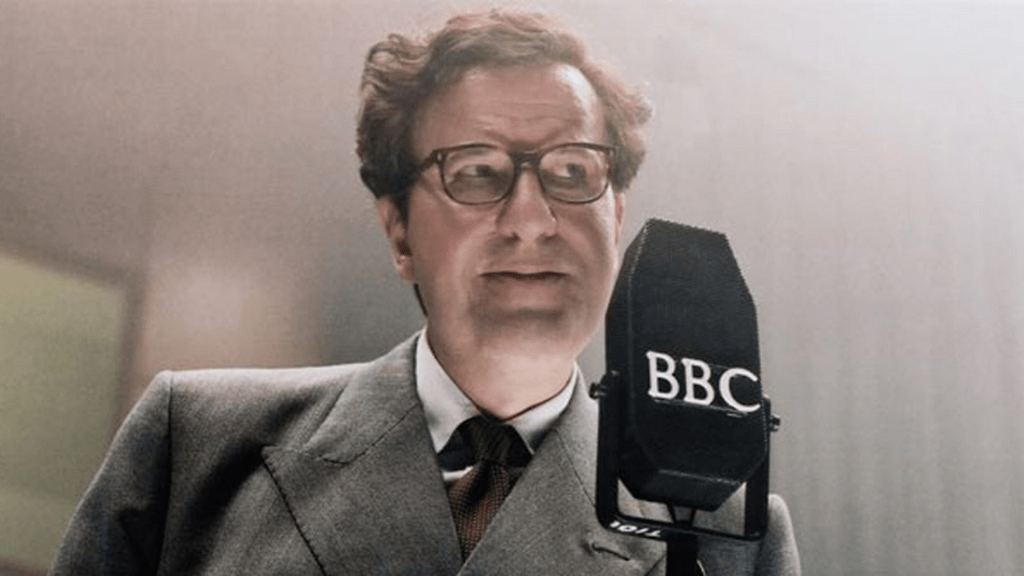
Obviously it doesn’t matter: I wasn’t there so that she could see a film I’d liked a lot myself. I was there in order to be there, with her, while it was still possible. It’s not like we could have had much of a conversation: even apart from her state at the time, she made it quite clear that she didn’t want to acknowledge or talk about what was happening to her. There were only very occasional moments when she’d address, obliquely, the fact that she was dying, and that day there was none of that. Still, I thought it was a pity that she couldn’t really watch the film – and, more than that, I wish I had lent it to her, or given it to her as a gift, years earlier. I think she would have enjoyed The Life and Death of Peter Sellers. It would have reminded her of things she’d enjoyed when she was young.
I’ve written before about how my parents didn’t much restrict our viewing when we were kids, at least not in the usual terms: we got to watch a lot of grown-up TV and films when we were still young. But I grew up at a time when streaming wasn’t a thing (nor was the internet), and when we had limited options in terms of TV channels. What we did have was lots of video tapes, recorded off of UK television and sent to us by my mother’s younger brother. In my memory at least, it wasn’t really my dad who decided what was watched on TV: other than Sportschau, the German show that had been showing since the 1961, focusing mostly on football, he seemed happy to watch whatever was on.
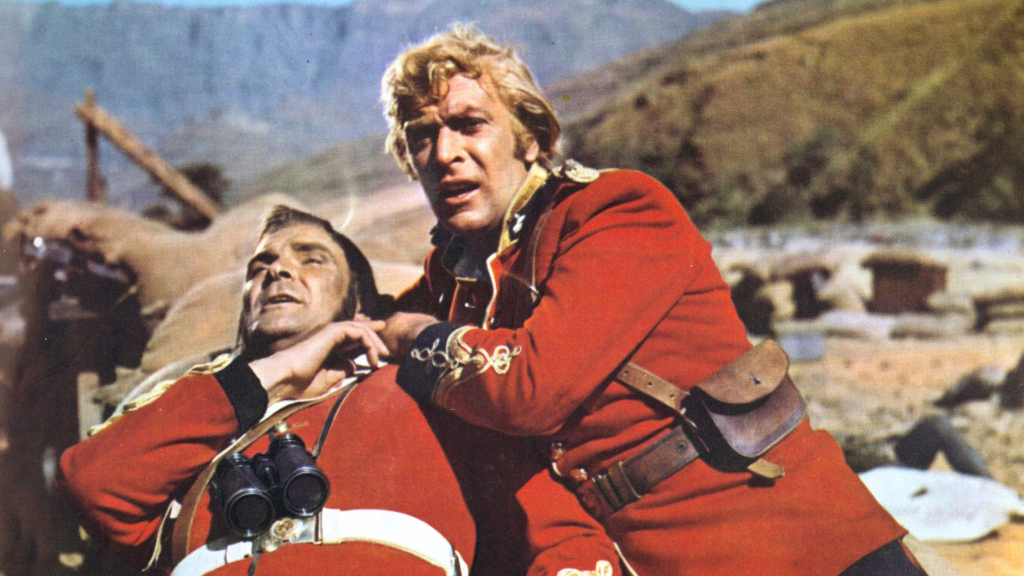
My mother, though, had relatively specific tastes. She loved watching war films, with a clear preference for English ones – though she, like most people, watched Das Boot when it was shown as a TV miniseries in 1985. She was also a big fan of the 1964 historical epic Zulu, starring a young pre-Ipcress File Michael Caine. All in all, the films she enjoyed watching were much more traditionally male fare: films about men doing hard work, making hard decisions, defending the Empire, fighting the Nazis, going down with the ship if that’s what was called for. (At the time, it seemed to me that half of those films starred the English actor Kenneth More, who seemed to be present at each of the theatres of war, fighting the Germans on land, water and in the air.)
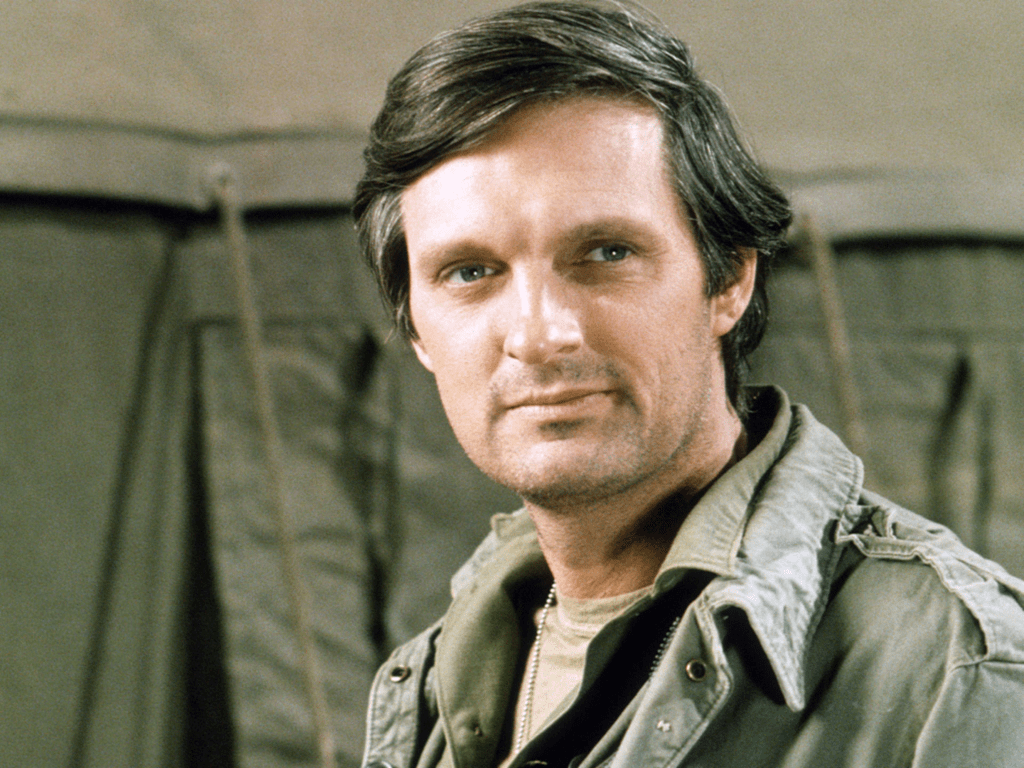
She was much less interested when it came to Americans fighting the good fight, and she was more than a little anti-American (long before the current takeover by the idiocracy) – though she did like M*A*S*H, the TV dramedy about a Mobile Army Surgical Hospital set in Korea, which my uncle recorded for us religiously. We were lucky that they were broadcasting the series on BBC 2, without the dreadful, intrusive canned laughter, and for many years M*A*S*H was one of our TV staples, quite possibly priming me for the extent to which long-running series would be central to my adult familial life.
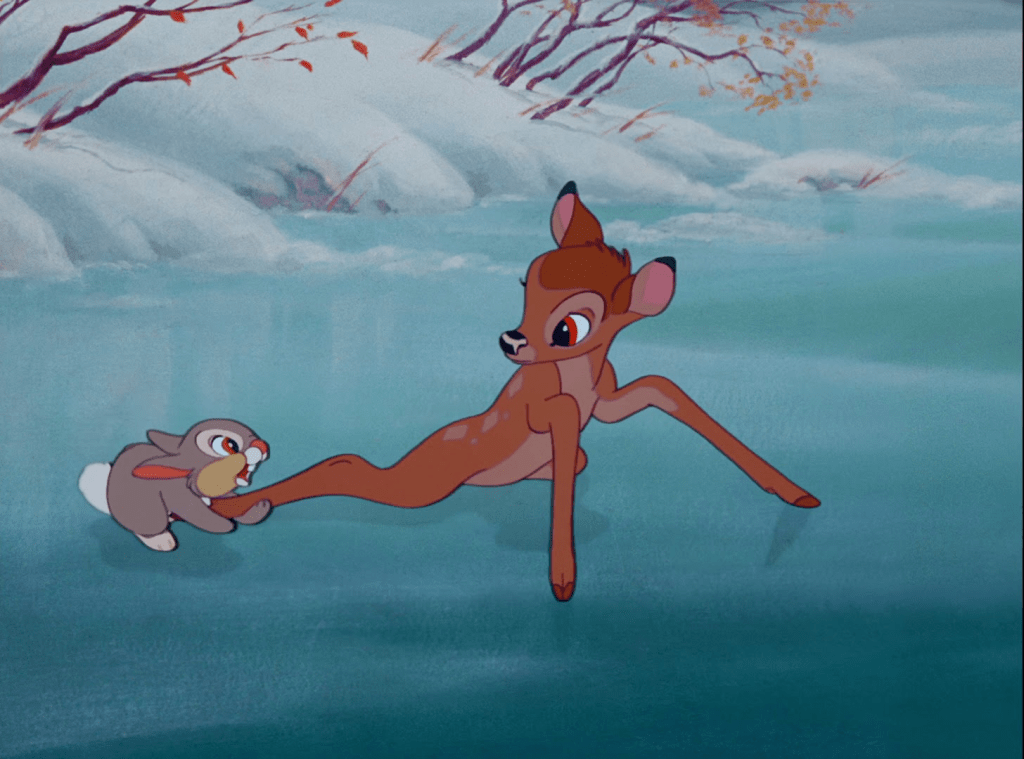
For most of my childhood, my mum’s choice of TV programmes was formative, even if later, once we got a second TV and even more once I had a small TV and VCR in my own room, I watched more and more things that I was interested in myself, while no one else in the family was. (I don’t think my mum would have been into Twin Peaks, and we all know what that series led to.) Certainly my mother’s tastes imprinted on me to some extent, though it was rarely ever a case of her actively wanting us to watch certain films and series. However, one of my strangest, and most touching, memories regarding my mother and films was when a local cinema showed a re-release of Disney’s Bambi – a film I’d never seen, not even as part of our pre-Christmas tradition of going to see a Disney movie. And she suggested that the two of us go and see the film in a matinee showing. Why? I don’t know. I assume she’d seen the film as a child, though she hadn’t been born when it first came out. It was certainly an odd choice for her: as mentioned, my mum was much more into films where brave soldiers took on Hitler’s armies and gave their lives to protect freedom and democracy. Cute cartoon animals weren’t her thing. (She might have liked Watership Down.) Moreover, I was well into my mid-teen years at the time, so an afternoon trip to see a film about Disneyfied woodland animals – and, not to forget, a mother being killed by a man with a rifle – was unexpected, to say the least.
To be honest, I don’t remember many details, either about the outing or about Bambi: the snippets I remember may just as well be from YouTube, Hollywood documentaries or video essays tearing present-day Disney to shreds. But even if I don’t have a strong memory of that day, the fact that it happened, and the oddness of it, means something to me. I spend so much time watching films and going to the cinema, and there are moments, pretty much out of the blue, where I’m watching a movie and I find myself reminded of my parents: watching Amadeus, or The Great Escape, whenever Alan Alda or Michael Caine pop up, or when I see a cartoon deer slipping and sliding on the ice. The films are imbued with the memories – and when these have largely faded, the feelings.
 A Damn Fine Cup of Culture