Criterion Corner: Godzilla (#594)

I admit: knowing many of those old, black-and-white monster movies only from short snippets or animated GIFs, I tend to go in assuming that they’re kinda silly, and while you might enjoy them, it’ll be the kind of enjoyment that comes with an ironic distance. You enjoy them for their silliness, their camp aspects. You enjoy them because it’s so obviously a guy in a rubber suit stomping on toy cars.

Sometimes that may be true, or you might enjoy the historical aspect, or the craftsmanship of a time when the effects guys were literally making up a new industry. Sometimes, though, you can watch one of these films and realise that they still work as what they were meant to me: earnest works of horror. Perhaps not in their entirety – but there’s an earnestness and filmmaking skill on display that can’t be dismissed with any amount of jaded irony.

Continue reading

Criterion Corner: La Cérémonie (#1199)

There are so many iconic directors that came out of the Nouvelle Vague, the French New Wave. Obviously there’s François Truffaut and Jean-Luc Godard, and even if you don’t like either or both, there’s no getting past them. Then there are the likes of Rohmer and Rivette, and others associated with (but not always counted as part of) the Nouvelle Vague, such as Resnais, Demy or Varda.

And then there is Claude Chabrol, who stands out for his dedication to genre cinema, something that is rare in the movement. He is one of the directors I’ve been aware of for a long time, but I had only seen a couple of films: The Colour of Lies (original title: Au coeur du mensonge, translated more accurately as At the Heart of the Lie), a thriller that I enjoyed at the time but that didn’t leave all that much of a trace, and the Highsmith adaptation The Cry of the Owl (Le cri du hibou), which I absolutely hated. Highsmith should be a good fit for Chabrol, but this particular adaptation didn’t work for me, leaving some characters utterly vague, others grotesquely one-note, and all of them annoying. (I later saw the more recent English-language version with Paddy Considine, which was almost aggressively mediocre but nonetheless felt like an improvement on Chabrol’s take.)

Because of this, I went into La Ceremonie with some trepidation: would I bounce off as much as I had with The Cry of the Owl? Does Chabrol just not do it for me all that much? Should I go back to the less genre-minded members of the French New Wave?

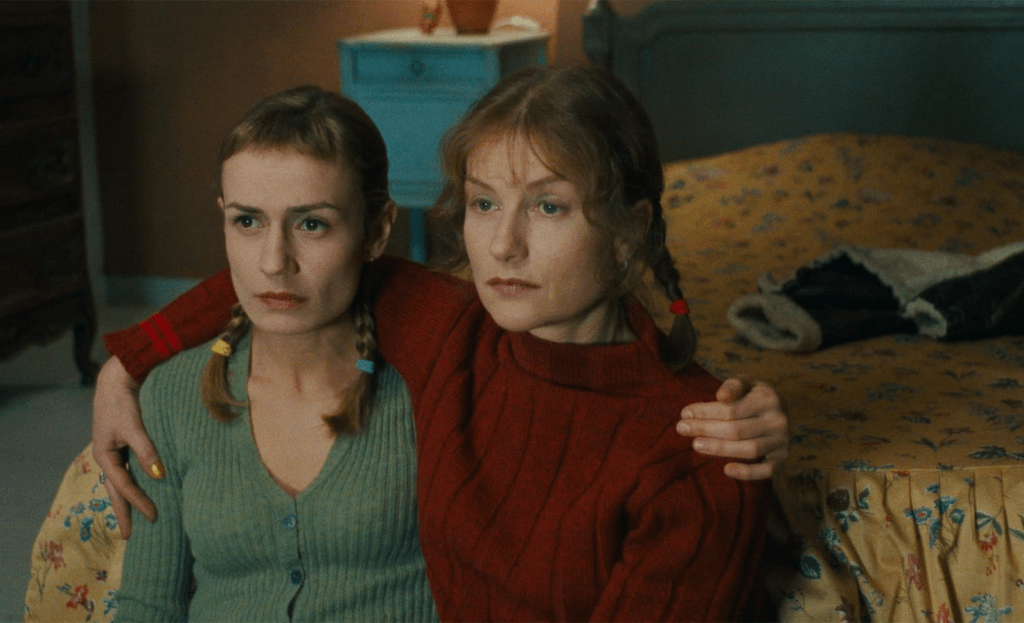
I’ll cut it short: even if I’d not seen any other Chabrol films at all – hell, even if I’d only seen, and hated, The Cry of the Owl -, La Ceremonie‘s strength would be enough to make me a fan. This is a definite keeper – that is, if you’re okay with thrillers that leave you feeling deeply uneasy for days.

Continue reading

Criterion Corner: Diamonds of the Night (#969)

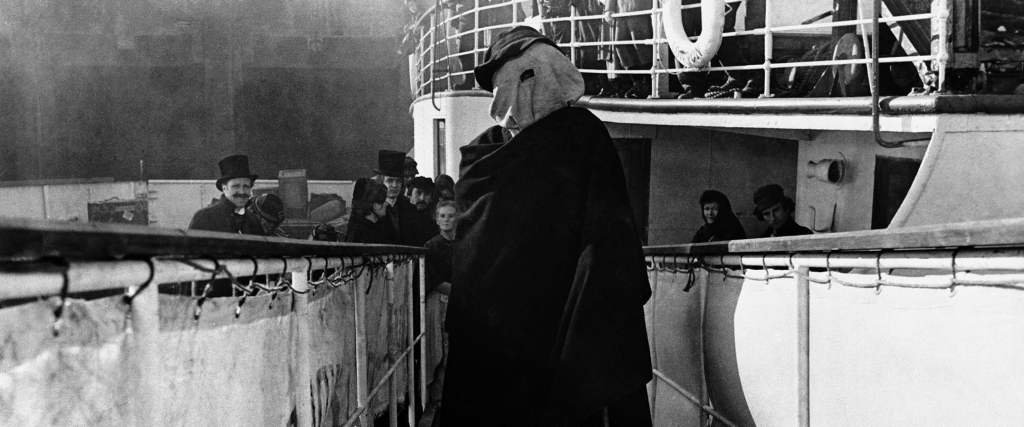
Two adolescents jump off a moving train. Shouts come from the train, and shots, but who would stop at the behest of people who are already shooting at you? The young men continue running, shedding the long coats marked “KL” (for Konzentrationslager, concentration camp – an abbreviation that was later changed by the SS to “KZ”, allegedly for its harsher sound) as they move further and further into the forest, cold, hungry, ill-prepared for their journey.

But, before long, we get the sense that, run as they might, the two men are doomed. And perhaps more than that: perhaps they are dead already.

Continue reading

Criterion Corner: Picnic at Hanging Rock (#29)

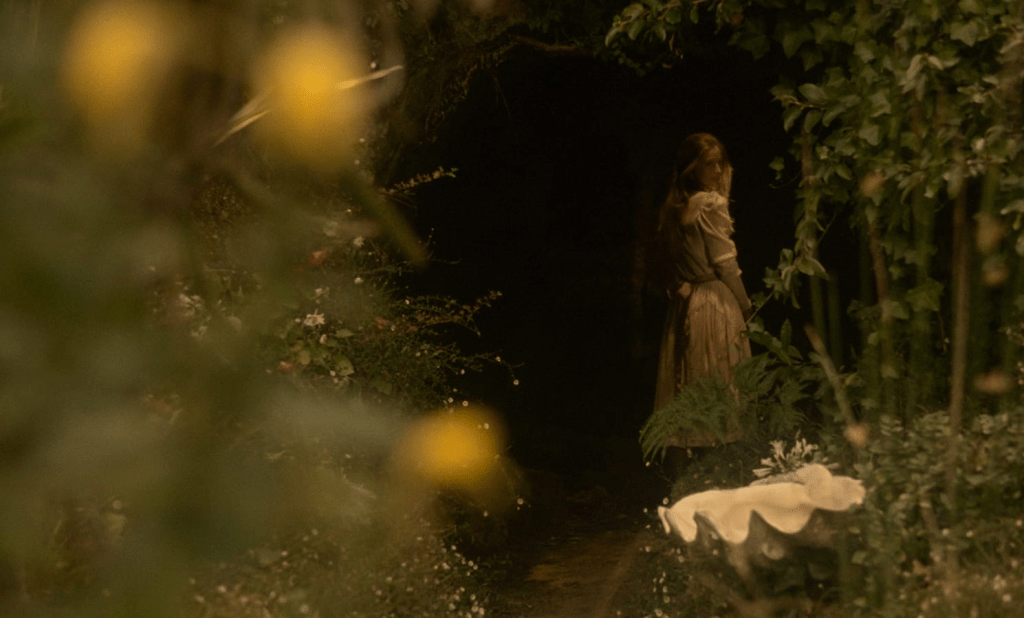
Stop me if you’ve heard this one before: pupils from a girls’ school in Australia go on an outing to a nearby geological formation. Some of the girls go to explore the area – and disappear. One turns up later, with no memories of what happened. The others remain gone. No traces are found, no blood, no bodies. Nothing.

The mystery is never solved. And it is this, not knowing what happened, that begins to corrode the lives of those left behind.

Continue reading

Criterion Corner: Moonstruck (#1056)

I’ve said so in the past: I’m the wrong person to talk to about romantic comedies. I don’t dismiss the genre altogether, but I find too many of them twee, manipulative and rather toxic, and that has coloured my perception of the genre as a whole. All too often, these films embrace iffy ideas of what relationships are and what they’re supposed to be, and even when they try to be hip and with it, they tend to espouse notions of gender that aren’t just heteronormative but downright reactionary.

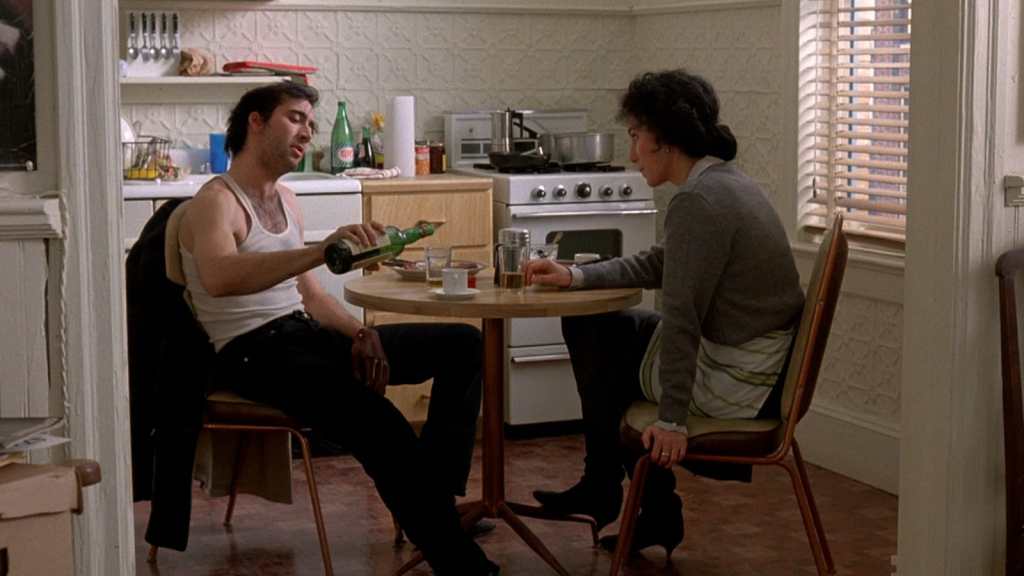
But: I love it when a romantic comedy really hits. And Norman Jewison’s 1987 hit Moonstruck – which went on to win multiple Academy Awards – is certainly a prime example of this.

Continue reading

Criterion Corner: Still Walking (#554)

Hirokazu Kore-eda‘s Still Walking was the second or third film by the Japanese director that I watched, after After Life and probably Nobody Knows. In some ways, I now recognise it as a more typical film for Kore-eda than After Life, in terms of its themes and character constellations. Where the earlier film undoubtedly has the feel and emotional heft that I’ve come to recognise as typical of a Kore-eda film, it is much more high-concept in terms of its premise and plot. More than that, though, when I think of Kore-eda, it‘s his families, both biological and found, that come to mind, and where family isn‘t as obviously a theme of After Life, Still Walking is very much about this: the families we find ourselves saddled with, the ones we make for ourselves.

But family isn‘t just about the people we have in our lives, it is also about those we have lost. Still Walking is focused on a theme that is central to many of the director‘s films: considering the kindness and warmth that are perhaps the most apparent characteristic of Kore-eda‘s films at a first glance, it is striking how many of them are in no small part about death.

Continue reading

Criterion Corner: La Haine (#381)

If you look at Mathieu Kassovitz’ 1995 modern classic La Haine with a dispassionate eye, it’s easy to criticise the film. It is obnoxious in the way it demands our attention, not too dissimilar from some of its protagonists and their look-at-me-fuck-you-too way of life. It can be accused, and fairly so, of being derivative, in terms of its style and its story: there’s more than a little Mean Streets and Do the Right Thing to the the film. And it’s not exactly subtle – when given the choice between going loud and going nuanced, nine out of ten times it will choose the former.

But, bloody hell, if La Haine isn’t still tremendously effective – and timely.

Continue reading

Criterion Corner: I Know Where I’m Going! (#94)

I’ve by no means seen all, or even most, of the films that Michael Powell and Emeric Pressburger made together (mostly under the moniker of “The Archers”, the name of their production company), but I like, even love, the ones I’ve seen. I wrote about their wonderful A Matter of Life and Death earlier this year, and I’d consider The Life and Death of Colonel Blimp one of my favourite films.

Late last year, the BFI ran a series of Powell and Pressburger films, which sadly I missed, living in the wrong country altogether (for BFI series, that is) – but it made me aware of their 1945 romance I Know Where I’m Going!, which was released on the Criterion Collection as one of their very earliest films: it’s the 94th release in the series, which by now contains more than 1200 titles. More than just being another Criterion release from a pair of filmmakers whose work I’ve liked a lot in the past, I Know Where I’m Going! is set in the Hebrides, so as a fan of Criterion, the Archers and Scotland, I didn’t have to think long and hard about getting the disk.

Continue reading

Criterion Corner: Targets (#1179)

It’s the kind of meta filmmaking that’s catnip for critics and academics: screen legend Boris Karloff, firmly at the tail end of his career as a horror movie actor, plays the equally legendary Byron Orlok, a man firmly at the tail end of his career as a horror movie actor. Orlok announces his retirement from cinema, because he’s a has-been and his brand of cinematic horror is no longer scary, it’s camp. Meanwhile, a thoroughly modern kind of bogeyman stalks Los Angeles County: a young, blandly all-American insurance agent with an unsettlingly large gun collection, takes aim at random targets. Slowly but surely the two storylines converge, until they intersect – in a drive-in cinema, where Orlok is set to make his final public appearance. It’s cinema all the way down.

Continue reading

Criterion Corner: A Matter of Life and Death (#939)

Of all the tropes in romantic stories that I’m not a big fan of, two people falling instantly in love is probably the most common. I can buy immediate attraction, especially of a sexual kind, and I am also okay with an almost instant sense of sympathy, a sort of mutual resonance that develops into something further – but when we’re supposed to believe in love at first sight, that there is deep, abiding love between two people the moment they meet, I roll my eyes, and they keep rolling if this instant romantic attachment is given a significance that is practically metaphysical. I am no fan of the notion in romances that someone is ‘the one’, that destiny has preordained certain couplings. In fact, I don’t find the idea particularly romantic to begin with.

There is perhaps one film where I buy into such almost instant love, and not just begrudgingly but entirely, 100%. That film is Michael Powell and Emeric Pressburger’s wonderful A Matter of Life and Death (1946).

Continue reading