If the cosmic astronaut God-baby from the end of 2001 came back to earth and made a movie, this would be it. (And we wouldn’t understand what it was trying to tell us, either.)
– Andrew O’Hehir, Salon
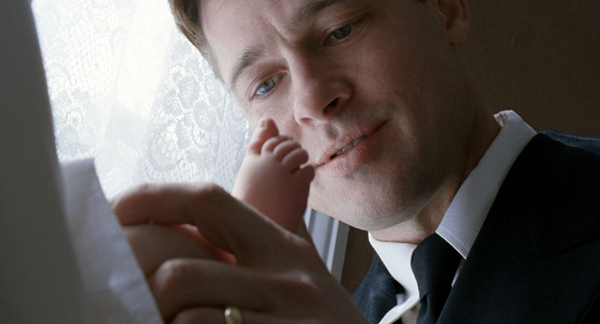
There can be no doubt about it – Terrence Malick has made some of the most visually beautiful films in the history of cinema. Narrative coherence, strong characterisation, those are not what anyone should look for going into a Malick movie, but they can expect to see awesome images. And not in the Michael Bay, big explosions, expensive CGI and Megan Fox’s cleavage way; Malick and his DPs create images that are poetic, both grand and intimate, and they’re masterful at evoking moods and emotions. Even if all the dialogue were stripped from his films, they’d still be powerful pieces of cinema.
In fact, perhaps the films would be more powerful without the dialogue. Malick is often accused of pretentiousness, and especially from The Thin Red Line onwards the voiceovers are less and less about characters and increasingly about giving voice to Malick’s philosophical concerns. The problem is that the questions voiced are not only grand but veer towards vague commonplaces. Why are we here? Why does Man fight against himself? Where are we going? Are we there yet?
No doubt, these are big and important questions, but they’re so big that they need to be broken down to be addressed, unless you’re having one of those student dorm, 2am, after a bottle or two of cheap red wine conversations. At his best, Malick breaks them down by providing many individual moments and perspectives, all of them contributing in impressionistic fashion towards answers. At his worst, the voiceovers evoke a sarcastic “That’s, like, deep, man!”
The Tree of Life has some of Malick’s most beautiful, evocative images to date, and I enjoyed the film more than his last, The New World. (I’m a Thin Red Line man, myself – and give me Days of Heaven any day.) It also relies less on voiceovers, which is good, because the more verbal Malick gets in his last few films, the more he risks becoming preachy and annoying, like one of those dreadful slim volumes of facile sub-Zen meditations on life. But in its elliptic nature, The Tree of Life becomes vague in ways that are condusive less to deep thought than to confusion. Who’s that kid? Is he one of the brothers? Are those Jack’s parents fighting? Why are we watching a dinosaur step on another dinosaur’s neck? Is Jack dead? Are those angels? Is that Aunt Petunia? Isn’t Smetana’s “Moldau” a beautiful piece of music, even if it’s criminally overused? Should I get a Coke in the break?
During the film’s strongest moments, its insistence on narrative ellipses is as evocative as the visuals. Malick can pull this off as well as Tarkovsky. At its worst, though, The Tree of Life is so intent on letting its visuals and the audience do its work, meditative becomes soporific and self-consciously coy. Does it make the film deeper, more meaningful that there are three brothers, if two of them barely become more than cyphers? Do glimpses of some kid having an epileptic fit in the background, while Jack is being led away, add to the experience if we have no idea whether that kid is a neighbour or a brother or just some random kid off the street? Gaps in the storytelling can be great starting points for our own thoughts, but if the gaps are too big, our thoughts become random – we’re as likely to think about what we need to get from the shops the next day as we are to ruminate about our existence and the grandiose beauty of creation. And the ending? I was torn between being moved, intrigued, “Huh?”ed and thinking, “I remember when this was an Orange ad.”
Would I recommend The Tree of Life? Probably not. Did I enjoy it? That’s a qualified yes. Was it beautiful to look at? Definitely, almost achingly so. Just don’t think too much about that plesiosaur. Just be awed, and don’t feel too bad if your thoughts wander to the shopping list.
P.S.: Is it just me, or is Hunter McCracken (who plays Jack as a child) almost eerily like a young version of Jim Caviezel’s character in The Thin Red Line?
 A Damn Fine Cup of Culture