I’ll be in my trailer… watching trailers: Attica! Attica!

Join us every week for a trip into the weird and wonderful world of trailers. Whether it’s the first teaser for the latest instalment in your favourite franchise, an obscure preview for a strange indie darling, whether it’s good, bad, ugly or just plain weird – your favourite pop culture baristas are there to tell you what they think.

It’s only rarely that we get to show off the fact that one of our baristas is a Doctor Who fan of many, and I mean many, years. This week offered one such opportunity, as Alan got to talk about season 23 of the original run of Doctor Who, also known as “The Trial of a Time Lord”.

Continue reading

Six Damn Fine Degrees #262: The Valeyard

Welcome to Six Damn Fine Degrees. These instalments will be inspired by the idea of six degrees of separation in the loosest sense. The only rule: it connects – in some way – to the previous instalment. So come join us on our weekly foray into interconnectedness!

Back in 1985, Doctor Who was not in good health. The show had been struggling in the ratings for a few years, and the planned relaunch of the show in spring of that year – with a new Doctor, a new format and a Saturday teatime timeslot – failed to find an audience. A show that for several decades had been demonstrating how to create imaginative stories on limited budgets seemed out of place against the slick action dramas of the Eighties. Rumours flew that the show was getting axed, but when it finally got recommissioned for its 1986 season, there were a few changes.

Continue reading

I’ll be in my trailer… watching trailers: Akira Kurosawa and Sergio Leone walk into a bar

Join us every week for a trip into the weird and wonderful world of trailers. Whether it’s the first teaser for the latest instalment in your favourite franchise, an obscure preview for a strange indie darling, whether it’s good, bad, ugly or just plain weird – your favourite pop culture baristas are there to tell you what they think.

Want something new in your streaming playlist? Once again, Melanie delivers a top-notch tip in her latest Six Damn Fine Degrees post, this time about Chinese historical drama Flourished Peony. (Make sure to switch on subtitles in the trailer below!)

Continue reading

A Damn Fine Cup of Culture Podcast #94: Lost Summer – The Vanished

Hundreds of films and TV series make it onto our screens each year – but just as many vanish, some before they ever make it in front of an audience. The second episode of our summer series, the Lost Summer, is dedicated to these: the films that are destroyed or vanish into some vault, the TV series that were never archived, or even the legendary scenes that are much talked about but never seen. Join Julie, Alan and Sam as they explore the romance and the frustration inherent in this vast library of lost film and TV. Why are we fascinated so much by what is lost? Why are the movie and television industries often so cavalier about preserving this cultural heritage? And which of the vanished would our cultural baristas most like to see found again?

P.S.: Make sure to check out the other entries in our Lost Summer, running from June to September!

Continue reading

Six Damn Fine Degrees #193: Any resemblance to real persons, living or dead, is purely optional

Welcome to Six Damn Fine Degrees. These instalments will be inspired by the idea of six degrees of separation in the loosest sense. The only rule: it connects – in some way – to the previous instalment. So come join us on our weekly foray into interconnectedness.

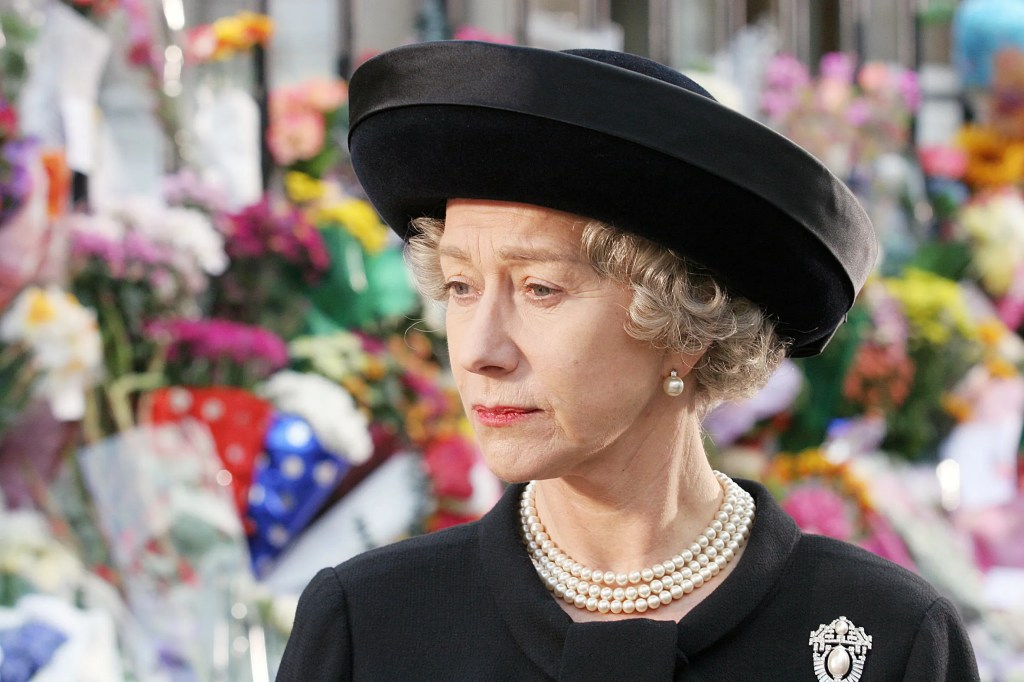
There’s always something strange to watching an actor play a real person, doubly so when the actor in question is one we know, and know well, from other parts, and triply so when that real person is still alive. Oh, look – there’s Gary Oldman playing Lee Harvey Oswald, and there’s Bruno Ganz as Adolf Hitler! There’s Helen Mirren or Emma Thompson (did you know that?) playing Queen Elizabeth II! Is that a trio of Truman Capotes or is that Philip Seymour Hoffman, Toby Jones and Tom Hollander having a chat? We recognise Taron Egerton, but we also recognise the bespectacled pop star he’s playing. We know that neither Michelle Williams nor Ana de Armas are Marilyn Monroe, but when we watch them on screen they are somehow both. And is it comforting or monstrous (or both at the same time) that the horrible person in the Oval Office isn’t actually Donald Trump but Brendan Gleeson playing the man?

Continue reading

I’ll be in my trailer… watching trailers: Back from the dead, and twice as bad

Join us every week for a trip into the weird and wonderful world of trailers. Whether it’s the first teaser for the latest instalment in your favourite franchise, an obscure preview for a strange indie darling, whether it’s good, bad, ugly or just plain weird – your favourite pop culture baristas are there to tell you what they think.

Norman Bates is back! Well, not exactly – but for this week’s Six Damn Fine Degrees, Matt wrote about his positive but patchy memories of Psycho II, and the reasons why he doesn’t particularly want to go back and find out whether the film was really surprisingly good or whether at the time it just benefited from really low expectations (and Meg Tilly, obviously).

Continue reading

Six Damn Fine Degrees #136: Some like it cult

Welcome to Six Damn Fine Degrees. These instalments will be inspired by the idea of six degrees of separation in the loosest sense. The only rule: it connects – in some way – to the previous instalment. So come join us on our weekly foray into interconnectedness!

The classic series The Avengers has frequently popped up on my radar, and it’s usually mentioned in positive terms. And yet, I’ve never bothered to seek it out. Too much to watch already, too many things that come first on my TV bucket list – and that’s before I even get into the favourites I’d like to revisit – if the streaming services of my choice haven’t taken them off their catalogue and erased out of existence, that is. Same with, say, Miami Vice, or Absolutely Fabulous or (don’t tell Alan) Randall and Hopkins (Deceased). And, to be honest, one main reason is that people talked about them with a great sense of reverence – or they don’t talk about them at all. They’re cult TV – and that’s something that tends to make me hesitate.

Continue reading

Will The Returned Return Again?

Sometimes the end should be the end. Some stories should remain concluded. There’s a reason why revenants are creepy, and TV land is full of evidence for this. No, I’m not talking about existential French horror – I’m talking about ITV’s Broadchurch, which came to its second end this week, though with a promise of more.

The first season of Broadchurch was nearly perfect in terms of what it was aiming for. Certainly the cast was one of the things going for it, but more than that it had a theme it committed to, and practically everything served that theme: the slow unravelling of a microcosm – a family, a community – due to a horrific deed. It’s not the most original of themes, granted, but Broadchurch handled it smartly and with honesty and the seriousness it called for. It stumbled towards the end, but it nevertheless ended up one of the most poignant British TV series in recent years, and definitely more consistently strong than the BBC’s uneven output in quite a while.

My thoughts exactly

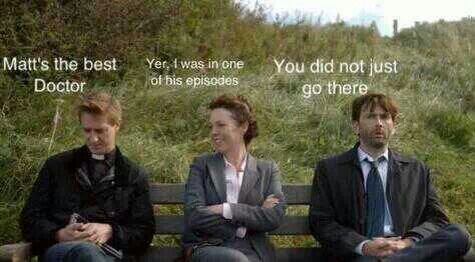
Obviously it was tempting to bring back that world, those characters and especially those actors for a second series. A large part of what made Broadchurch so enjoyable was the David Tennant/Olivia Colman team-up; who wouldn’t go giddy at the chance of watching them for another eight episodes? Except that way lies fan service, which rarely makes for compelling storytelling. Broadchurch went into its second season with a proven cast of characters and actors that were enjoyable to watch the first time round, and there were enough story strands to pick up – but obviously no driving idea, no theme, that would give the continuation the sense that this is a story that has something to say. In fact, series 2 never felt like they started with anything other than the decision to do a second series, much to its detriment. The whole thing reeked of desperation and last-minute panic, resulting in a story that felt made up from one week to the next on the basis of some shaky brainstorming. What if DI Hardy had one of the people involved in his previous, failed case hidden away in a cottage in Broadchurch? What if that Susan Wright woman comes back to wreak ineffectual revenge against her estranged son, repeating what we already had in the first series? What if we got Charlotte Rampling but had no idea how to use her in an interesting way, so let’s say her character goes blind, her mother dies and she’s a closeted lesbian?

One of the what-ifs had more potential: what if Joe Miller, the man who turned out to be the killer in the first series, pleaded “not guilty”? What would this do to the community and to the family left behind? What goes on in a man who is culpable but desperately wants himself to be proclaimed innocent of the crimes he’s committed? Instead, this was wasted as we didn’t get character-driven drama so much as badly written courtroom melodrama with characters that wished they had even a second dimension. And we spent so much time with the underwritten dramatis personae of Sandbrook, Hardy’s previous case and a whodunnit that it was difficult to care about. The murder that launched the first series was meaningful, because it was specific: the victim mattered, the murderer mattered, because it was all about bringing a community close to its breaking point. Sandbrook, on the other hand, happened far away and could have been any case, really. It was irrelevant to Broadchurch. There were attempts at connecting the two cases in terms of themes and motifs, but they were half-hearted and ineffectual to the point of being a nuisance rather than an asset.

Couldn't resist...

The first series of Broadchurch still stands as graceful, moving TV, and a wasted second series doesn’t change that much. However, it doesn’t exactly fill me with happy anticipation to see, at the end of the final credits, the caption “Broadchurch will return”. Do they have a story worth telling? Or do they simply have a great cast in need of work and the hope that people will tune in on the strength of the original series? Do the makers of Broadchurch even have a clue what made the series work in the first place? I don’t think so, and no number of scenes with Tennant and Colman acting the hell out of a leaden script will make for a strong reason why Broadchurch needed to continue.

In fact, if a third series of Broadchurch is made and ends up as utterly superfluous as the second one, I’ll personally go and beat up the people responsible with my box sets of the fourth season of Deadwood and my 14-disk Complete Firefly.

You can find my previous comments on the second series of Broadchurch here.

Doctor Noo

Confession time: before this summer I’d dabbled in Doctor Who, but only very occasionally. A couple of Chris Eccleston episodes here, the occasional David Tennant or Matt Smith one there – and most of the time I came away from it thinking that it’s like Marmite in that you have to have grown up with it to have a chance. It always felt too much like an in-crowd thing, like a more British and less sex-obsessed Rocky Horror Picture Show, with Daleks instead of Tim Curry in suspenders. (It gets even worse, and this may just get me ostracised by any Whovian friends: while Doctor Who didn’t click for me, I really enjoyed the “Children of Earth” arc on Torchwood, the much-reviled spinoff series.)

Then again, give me a Scottish accent and I’m anyone’s – so the news that flappy-handed Smith would be regenerated as Mr Scary Eyebrows himself, Peter Capaldi, led to me checking out Capaldi’s first outing and staying for the rest of the season. Am I a convert to the Church of Who, though? Not entirely.

Don't mess with the Doctor

There’s still an element there that for me (and, I’d imagine, for most newcomers to the series) is difficult to get into, and that’s the weight of worldbuilding the series carries around with itself. It’s one thing not to know who the Daleks or Cybermen are, but if you see your first Dalek episode less than a year before you turn 40, it’s not easy to get around the fact that, well, they’re more than a little naff. One man’s revered iconography is another person’s incredulous “And we’re supposed to find these scary?” – Which leads to a related issues I had, on and off, over the course of the season, and that’s the issue of tone and intended audience. “Is Doctor Who a children’s series?” seems to be one of the big questions in human existence, alongside “Who are we?”, “Where do we come from?” and “Where shall we have lunch?” From my newbie perspective, the series seems to want to have its child-friendly cake and eat it in a decidedly more adult way. I’m okay with children’s stories being sad and frightening, but at times the tone of the season’s episodes veered so much between make-believe fun for the kids, with a randomness and lack of coherence that can be liberating in storytelling but that can equally make it difficult to suspend your disbelief, that it was difficult to believe in the emotional reality of the stories and characters. Added to which, Doctor Ex Machina doesn’t necessarily make for better storytelling than its more theological cousin.

In spite of this, though, and in spite of some uneven writing, I was surprised to find how much the season’s core relationship, between the Doctor and his companion Clara, pulled me in. In the couple of episodes I’d seen starring Eccleston, Tennant and Smith, I felt there was often something too self-aware to the respective actors’ performance, a knowing wink to the audience. Capaldi’s Doctor isn’t a muted, realistic character, and he does enjoy his broader moments, but I bought the character, and I bought the not always entirely healthy but always interesting interplay between him and Clara.

Doctor-Who--Death-In-Heaven_article_story_large

There would be more to say about the individual episodes and about the season-spanning antagonist, Missy, who in theory I would’ve liked if she hadn’t felt so exceedingly like a regeneration of another Moffat baddie, namely James Moriarty as played by Andrew Scott, and like Sherlock‘s Moriarty I felt she overstayed her welcome. I was surprised by how much I enjoyed an outing featuring a mummy, that most hoary and least frightening of monsters,  and on the whole I’d say that while I’m not a full convert I’m definitely seeing the potential in the series, its setup and its set of characters. Admittedly, though, half of that may be due to the accent, the eyebrows and the memories of one Malcolm Tucker – at this stage Capaldi seems to be turning the air blue even when he’s delivering perfectly PG-rated lines. So perhaps that’s the solution to my issues with those laughable Daleks and Cybermen: make them Scottish.

Doctors and vampires and ghosts, oh my!

Okay, time for a confession: although I have a UK passport, I fail the Brit Purity Test on several counts. 1) I don’t like football. 2) I am painfully indifferent to cricket. 3) I neither love nor hate Marmite.

The most egregious, though, is this: 4) I don’t get Doctor Who.

Let me repeat that: I don’t get Doctor Who. Admittedly, I’ve only seen a handful of episodes, but what I’ve seen has left me… non-plussed, I guess. Somewhat confused at what all the fuss is about.

Let’s start at the beginning. My mum, the born-and-bred Brit in the nuclear family, was never much into sci-fi, and she told me at an early age that Doctor Who was a load of rubbish. Living in a country far, far away (let’s put it like this: we can see Europe from here!), it was never on TV, at least as far as I could tell, so I was never able to catch an episode as a kid. I had some faint awareness of the series and its trappings: that weirdo blue phone box-looking thing, a ’70s guy with curly hair and a long, multicoloured scarf, and low-rent, evil R2D2-alikes going “Exterminate! Exterminate!” like so many homicidal Stephen Hawkings. But I’d never seen an episode.

Growing up, I picked up info about the series here and there – but it was only a few years ago, when Doctor Who got the Christopher Eccleston treatment that I thought perhaps I should check it out. A few years later I got a three-episode DVD set for Christmas, which had been gathering dust on a shelf until a week or two ago, when I decided that The Time Had Come. I was going to check out the series and finally get an idea of what all the fuss is about. (For the record, the three episodes I’ve seen are the first episodes featuring Eccleston as the Doctor.)
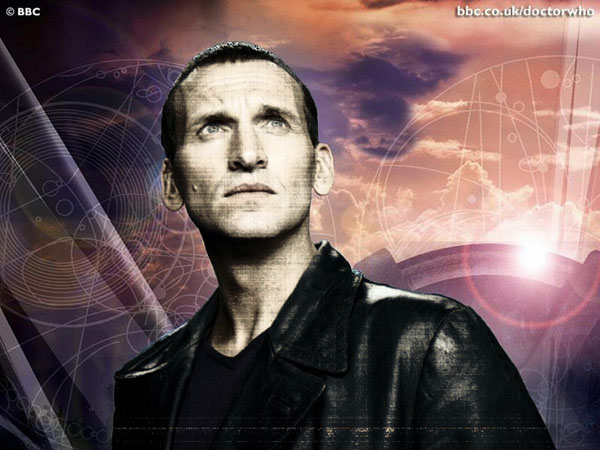
For the first two episodes (“Rose” and “The End of the World”), I simply didn’t get it at all. The acting was broad, the writing lacked wit, Billie Piper… actually, Piper, an actress I don’t usually like, was probably the best thing about it, keeping things relatively grounded. My main problem, though, was that the series seemed to be firmly aimed at kids. I understand that it’s something of a UK tradition for children to watch the series while hiding behind the sofa because it’s allegedly scary (hundreds of thousands of British kids must’ve grown up afraid of plastic trashcans…), but since so many of the people extolling the virtues of Doctor Who were in their 20s and 30s, I expected something more, well, mature? I don’t mind tongue in cheek, but the winking, isn’t-this-a-lark tone reminded me mostly of Christmas pantos. The humour mostly fell flat, and the cheesy production values didn’t feel charming so much as smugly self-satisfied, less idiosyncratic style than shtick.

I came this close to getting it, though, with the third episode, “The Unquiet Dead”, featuring Charles Dickens (acted by Simon Callow with genuine charm) and space zombies. The ingredients were the same – moderately scary villains with a sci-fi slant, tongue-in-cheek humour, Billie Piper’s mouth hanging open – but Mark Gatiss’ scriptworked, added to which the episode knew well enough to take its central conceits seriously enough. With the tone a lot less all over the place, I could see why people would take to the character and to the series’ mix of sci-fi, mild horror and British eccentricity. (In fact, I hope this Gatiss fellow finds some more writing jobs – if only there was another BBC series about an eccentric, intellectually brilliant main character with a loyal companion where the man could use his talents…)

I might end up checking out more episodes, in the hope that they are more along the lines of “The Unquiet Dead” – but I’m not sure I trust the series to balance its tone so it doesn’t come across feeling silly rather than charming and pandering rather than scary. We’re currently watching another BBC series that to my mind has similar problems with tone: Being Human. I enjoy the series well enough, but it is very hit-and-miss in how it combines high-concept, whimsical sitcom, horror clichés, Neil Gaimanesque supernatural-meets-the-mundane and character-driven drama.
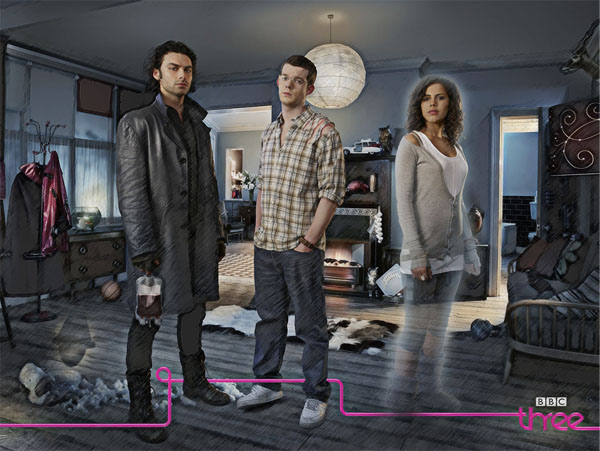
In fact, both of these series have given me a new appreciation for Joss Whedon’s work on Buffy. Whedon isn’t always perfect, and when he’s bad he’s ghastly – but he is amazingly deft when it comes to juggling wildly different tones and managing to be funny, poignant and scary at the same time. While his sense of humour is also very ironic, it maintains the integrity of his characters and what they’re going through; the occasional wink to the audience is handled well enough for the audience to chortle but still take the protagonists seriously. And all of this in spite of similarly cheesy production values as in Doctor Who.

So there it is, good people. Give me Whedon instead of Time Lords in Tardises (Tardii?). The question remains: where do I hand in my passport?

P.S.: None of this would’ve happened if I had been raised on a steady diet of Doctor Who, The Ashes and Man U. But I did watch Casualty religiously for several years – shouldn’t that count for something?