A Damn Fine Espresso: February 2026

The show must go on: our recent podcast episode on Tom Stoppard’s Rosencrantz and Guildenstern Are Dead got Sam and Matt thinking. While there’s a long-standing link between the stage and the screen, theatre and cinema are nonetheless different forms of art. What makes theatre tick differently from film? What translates well from one format to the other, and what is lost in the process? Where could a lot of cinema perhaps learn from the stage? What films are there based on stage plays that survived the transition from one medium to another – and perhaps even benefited? And what movies escape the conventions of cinema and bring a dollop of theatrical magic onto the screen?

P.S.: For more theatre talk at A Damn Fine Cup of Culture, make sure to check out last year’s March espresso, in which Sam talks to Julie about putting Clare Boothe Luce’s Broadway play The Women – famously made into a film by George Cukor in 1939 – on the stage. And for a discussion of Miloš Forman’s brilliant film adaptation of Peter Shaffer’s Amadeus, may we recommend A Damn Fine Cup of Culture Podcast #53: Exactly the right number of notes – Amadeus (1984)?

Continue reading
Longing for that paper moon

For all the imagination that goes into creating new worlds and fantastic creatures on screen, film and TV are predominantly beholden to naturalism. For these media, suspension of disbelief means being able to accept wholeheartedly what is on screen as real, at least for the purpose of the story you’re watching. Directors, VFX crews and CGI artists need to keep happy the twin deities of Spectacle and Realism: that dragon, that lizard the size of a building, that planet that no one has ever set foot on, they all need to fool us into believing that they are real.

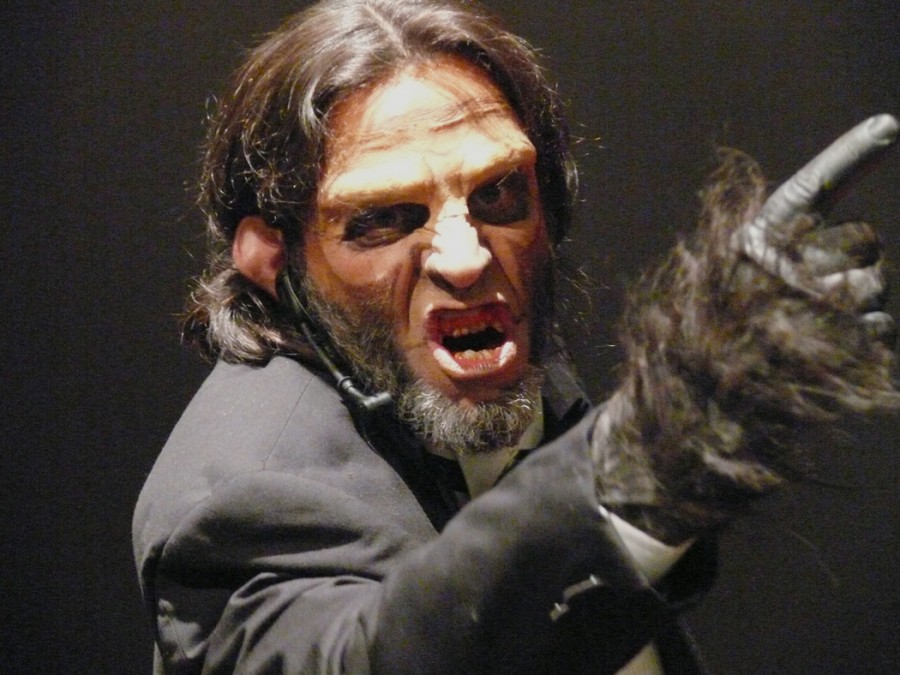
Infinithéâtre's Kafka's ApeI am not immune to the lure of big screen spectacle, and I like a well made special effect as much as the next geek. I too get pulled out of a film if the greenscreen fakery is too obvious, if the orcs, goblins or giant worms look like My First Photoshop. At the same time, there is something limiting to the extent to which we’re conditioned to expect a narrow, superficial expression of naturalism. There is something liberating to forms that are overtly unreal: even at their most real-seeming the animated worlds of, say, Hayao Miyazaki are made rather than found, and the audience is aware of this, whereas the Pandora of James Cameron’s Avatar needs to look as much as possible as if Cameron and his crew had filmed on location. And the more what we see is removed from the Real Thing (or the Convincing Fake), the more we as audiences are tasked with co-creating these worlds in our imagination. Continue reading