Six Damn Fine Degrees #274: Berlin on film

Welcome to Six Damn Fine Degrees. These instalments will be inspired by the idea of six degrees of separation in the loosest sense. The only rule: it connects – in some way – to the previous instalment. So come join us on our weekly foray into interconnectedness!
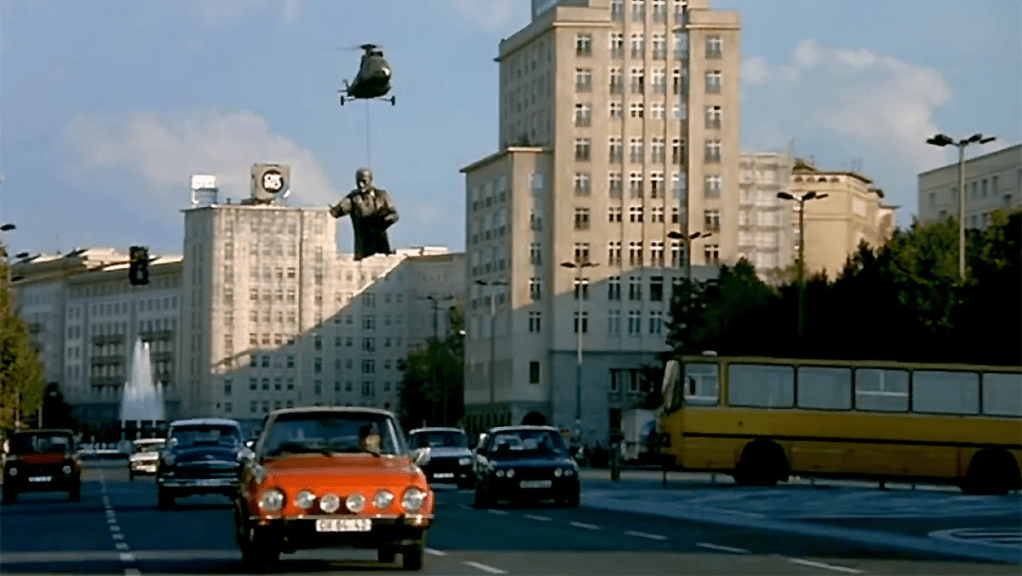
At first glance, Berlin hasn’t quite been as cinematic a city as, let’s say, romantic Paris, foggy London, cosmopolitan New York or sunny L.A. However, its tumultuous history during the first 100 years of cinema has made it an ideal space for movies that used it as more than just a postcard background. Arguably, the number of times Berlin’s cityscape felt like an active participant in the plot has to be significantly higher than the myriad establishing shots of the Eiffel Tower, Big Ben or the downtown zoom shot of the Hollywood sign used elsewhere.

Continue reading

I’ll be in my trailer… watching trailers: Attica! Attica!

Join us every week for a trip into the weird and wonderful world of trailers. Whether it’s the first teaser for the latest instalment in your favourite franchise, an obscure preview for a strange indie darling, whether it’s good, bad, ugly or just plain weird – your favourite pop culture baristas are there to tell you what they think.

It’s only rarely that we get to show off the fact that one of our baristas is a Doctor Who fan of many, and I mean many, years. This week offered one such opportunity, as Alan got to talk about season 23 of the original run of Doctor Who, also known as “The Trial of a Time Lord”.

Continue reading

Criterion Corner: The Spy Who Came In from the Cold (#452)

Most people, when asked to think about spy movies, will think of James Bond, of Sean Connery or Roger Moore or Daniel Craig. They’ll think of shootouts and stealth and suave secret agents bedding exotic beauties.

The novels of John Le Carré, inspired and informed by Le Carré’s own work for both MI5 and MI6 in the mid-20th century, are as far from James Bond as one could imagine – though it is just about possible to bend them into something more Bond-like in the name of entertainment, as happened for instance with the TV adaptation of The Night Manager that was released in 2015. As written, Le Carré’s stories are often less thrillers, though they can be thrilling, than tragedies, infused with existentialism, paranoia and a Kafkaesque sense of inevitability. And these are rarely as much in evidence as they are in Martin Ritt’s 1965 adaptation of The Spy Who Came In from the Cold.

Continue reading