When I think of the films of Yorgos Lanthimos, many things come to mind: first and foremost, his deadpan absurdity (Lanthimos is part of a film movement referred to as the Greek Weird Wave), but also recurring themes such as the arbitrariness of social mores, sexuality, heteronormativity, and structures of power and authority. What I associate most strongly with Lanthimos, though, the unease they evoke. Even when they make me laugh, Yorgos Lanthimos’ films are often supremely uncomfortable.
Which is why it comes as something of a surprise that his latest film, Poor Things, which tells the story of an infant whose brain, Frankenstein-style, is implanted into the body of an adult woman and who finds liberation through sexuality, may just be Lanthimos’ most feel-good film.

Poor Things, an adaptation of a 1992 novel by Alasdair Gray, has garnered a lot of praise and an astounding eleven Oscar nominations (including Best Picture, Best Director and Best Actress). In the cinematic landscape of 2023, it stands out for its bold, often strikingly surrealist vision and its many scenes of a sexual nature. Even for Lanthimos, a filmmaker whose works stand out from the crowd whether they are set in present-day Cincinnati (like The Killing of a Sacred Deer) or the 18th-century court of Queen Anne (like The Favourite), Poor Things looks utterly unique, thanks in no small part to the distorted cinematography by Robbie Ryan, the production design by Shona Heath and James Price, the costume by Holly Waddington, to name just a few of the artists involved in giving the film its distinct aesthetic flavour. It’s rare to find a film that illustrates so well how close beauty, ugliness and the grotesque can be to one another.
In spite of the praise the film received, Poor Things also got some remarkable negative, even hostile reviews, often focusing on its depictions of (especially female) sexuality. The film has been described as pornographic (which I disagree with, as its sexual scenes don’t play like they are meant to be arousing), and there have even been those who called it out for what they see as child pornography. Bella Baxter (Emma Stone, entirely deserving of her Oscar nomination), the protagonist of the film, is the result of an experiment by mad scientist Godwin “God” Baxter (Willem Dafoe): he takes the body of a woman who killed herself and replaces her brain with that of her unborn baby. When she discovers her sexuality, first through masturbation, and when she later becomes the lover of the lawyer Duncan Wedderburn (a wonderfully ridiculous Mark Ruffalo) she still has the mental age of a pre-teen child. Taken literally, Poor Things depicts sex between an adult and a child, or at least a person who arguably lacks the mental maturity to give consent in sexual matters. However, this raises a fundamental question: should we read a film that is so clearly moving in absurdist territory in such a reductively literal way?
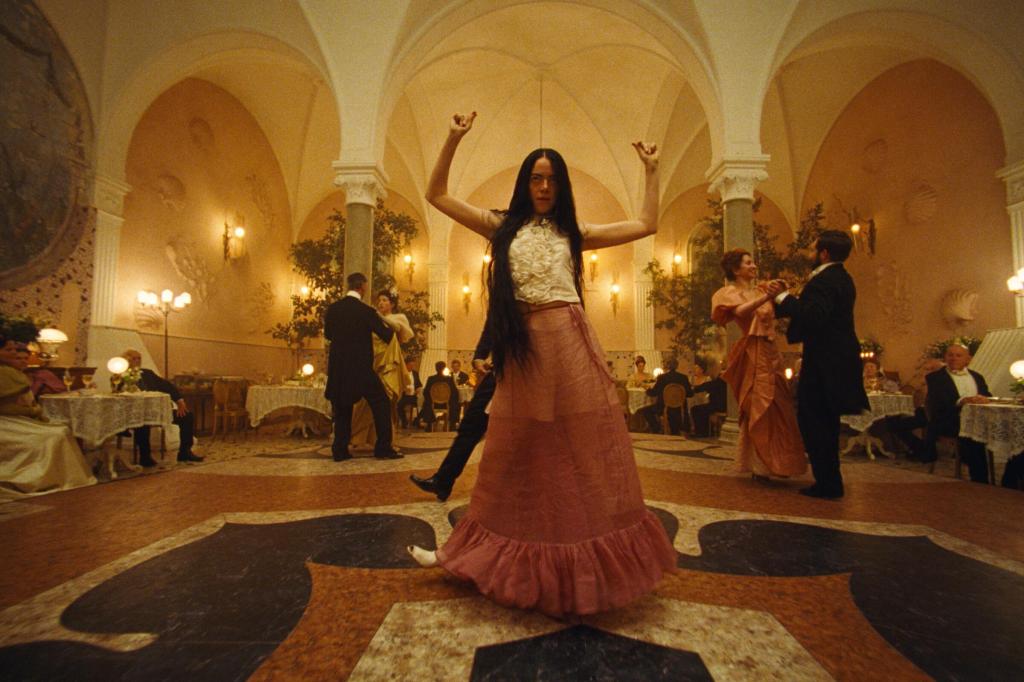
While some of the criticism of Poor Things comes across as simplistic in how they focus on individual aspects while ignoring the film as a whole, I came away from Lanthimos’ latest feeling that the film itself was somewhat simplistic itself, and the way it treats its own premise plays into this impression. While a literal reading of Bella as an infant or child, albeit one in an adult body, may be reductive, the specificity of the metaphor nonetheless asks to be examined. Lanthimos’ film and especially the script by Tony McNamara (who also wrote the director’s previous film, The Favourite, and who is nominated for Best Adapted Screenplay at this year’s Oscars) seem oddly disinterested in thinking through the implications of their story and characters. Bella’s story is largely the story of a woman who finds emancipation through claiming her own sexuality, and from a very early point in the story she is shown to have a striking amount of agency when it comes to expressing her sexuality, which sits at odds with the setup of Bella as literally having the mind of an infant. It is sex-positive to an extent that at times comes near to being disingenuous in how it largely shrugs off any implications of the story that don’t fit the point it wants to make.
Bella first finds sexual liberation with the ludicrous Wedderburn – but even if we don’t read her as a literal child (albeit in an adult body), there are nonetheless questions of power that Poor Things doesn’t seem to be very interested in. Later, Bella abandons her lover, who cannot cope with her growing sexual agency and who by this point himself has been behaving like a needy infant for a while, and she takes up work in a brothel in order to survive. Here too, the film primarily shows Bella to have more complete agency in sexual matters than I find credible, as if agency was just a question of willpower. My issue isn’t a moral one: I am not asking Poor Things to depict the affair between Wedderburn and Bella as clearly abusive, or the brothel as primarily exploitative – but it doesn’t feel altogether credible that these aspects are given such short shrift in the story Lanthimos and McNamara tell. Questions of social power structures are given lip service to, for instance in one of Bella’s co-workers at the brothel being a card-carrying socialist, but the way Poor Things keeps going back to its narrative of emancipation through sexuality ends up feeling one-dimensional. Perhaps this is me being too literal in my reading of the film, but even if we’re supposed to read Bella’s time at the brothel as metaphorical, McNamara seems to dismiss many of the implications of his metaphor. After all, Poor Things‘ plot is set into motion when a young woman kills herself because she is pregnant – so it seems odd, to say the least, to have a 19th-century Parisian brothel without pregnancies, abortions or STDs, where Bella seems to find a way to maintain her agency in every single sexual encounter. The point is not to moralise sex or sex work – but Poor Things seems so keen to show sex as a means of female liberation (which it undoubtedly can be), it ends up being turned into a comic-book version of itself.
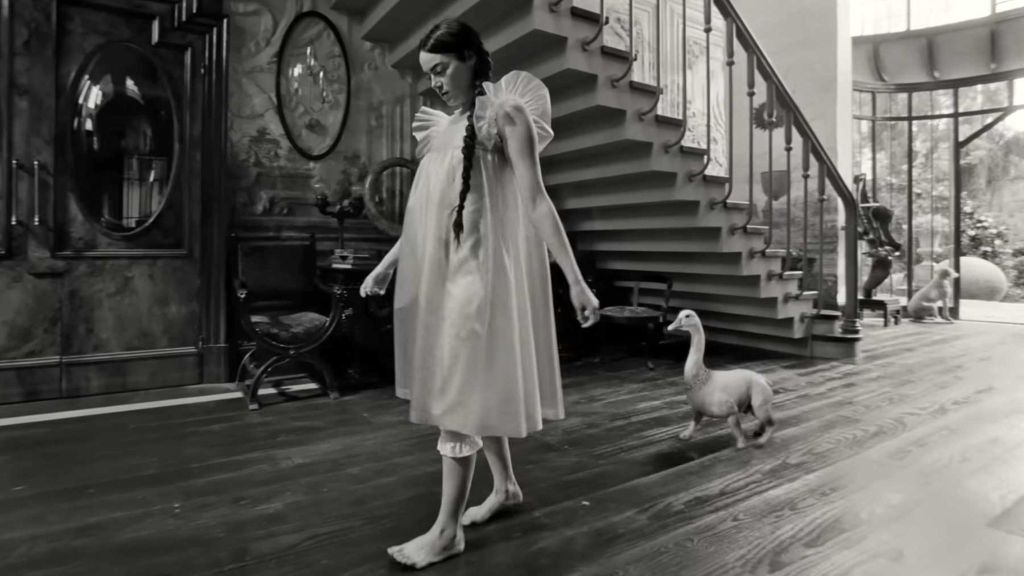
This is also reinforced in McNamara’s script and especially his use of humour, which, while amusing and at times surprising, is also remarkably repetitive – and this is where I admittedly bring baggage to Poor Things that may not be a factor for most of the film’s audience. Like many, I liked McNamara’s artistic collaboration with Lanthimos in The Favourite a lot, but his writerly preoccupations and tricks began to feel limited when I watched the series The Great, an alternate historical satire retelling the rise to power of the Russian empress Catherine the Great. The series, which like Poor Things sports a fantastic cast, is certainly fun – but over the three seasons it received before Hulu cancelled it in late 2023, McNamara (who wrote or co-wrote many of the episode scripts) repeats himself over and over, in particular in how The Great depicts sex. In the series, Catherine (Elle Fanning) has little sexual agency at first, but over time she finds ways of addressing her own sexual needs and using her power at court to meet these needs, while her husband Emperor Peter (Nicholas Hoult) is a boorish, although at times surprisingly astute, manchild. Peter is driven by his id and entirely disinterested in morality or social expectations, while Catherine strives to free herself from the constraints put on her by the court, for being a woman. Much of the conflict between the two is expressed in sex as well: who is having it, with whom, how it is talked about – and much of the humour stems from the childlike way in which sexual matters are negotiated, stripping the conversation of the veils and euphemisms of polite society. Catherine starts off as innocent, even naive, and inexperienced, while Peter is as omnivorous in sexual matters as he is uninhibited by social mores, yet both talk about sex reminiscent of Bella, who refers to sexual intercourse as “furious jumping”. Much like Peter, she starts off as pure id, a creature of instinctual wants and needs, and she has no qualms to be vocal about these needs – and the humour largely stems from how all the talk of sex is both crass and innocent at the same time, making the audience rethink the extent to which they themselves view sexuality through a lens of conventional morality.
In Poor Things as in The Great, the joke finally wears thin – more so for me perhaps, having watched most of The Great and seen variations on the same joke being played over and over. This is not the only weapon in McNamara’s satirical arsenal, but seeing how preoccupied Poor Things is with sex and how central it is to Bella’s emancipation, it means a lot of the film consists of variations of the same: Bella voices her thoughts about sex and her own desire, or about her sexual partners or other people’s sexual lives, in ways that underline her almost feral nature, her ignorance of conventional morality, and the language in which people tend to talk about sex. And while Bella herself grows as a character, the film’s use of sex largely remains the same, with McNamara being especially fond of his coinage of “furious jumping”. (It comes as a relief, and prompts one of the film’s biggest laughs, when the film makes a joke that isn’t about sex at all: Bella, finding herself annoyed by a wailing infant, gets up in mid-conversation, announcing to the room in a matter-of-fact voice that “I must go punch that baby.”)
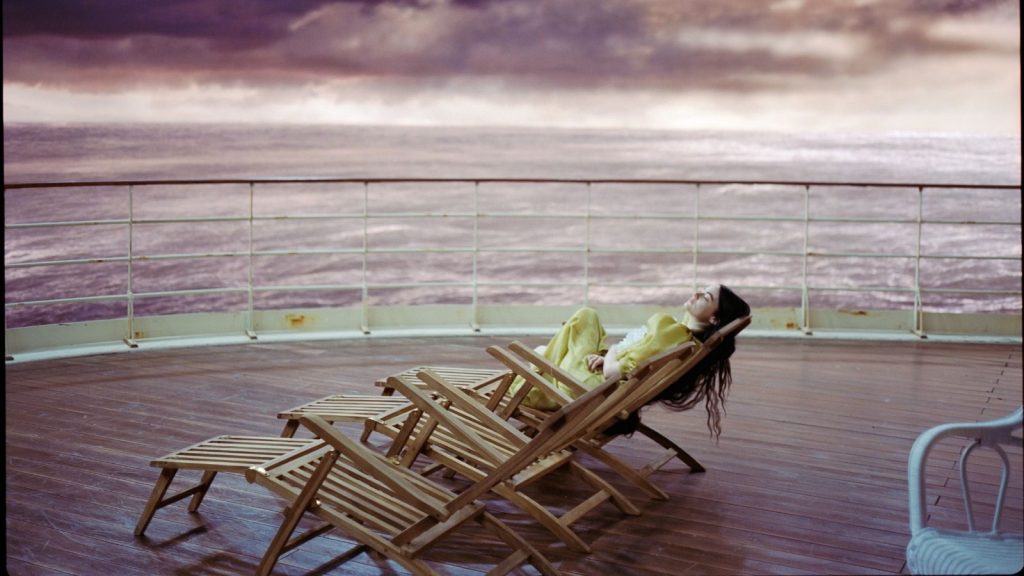
While watching The Great and growing tired of the repetitive quality of the series’ satire, I suspected that the problem was this: McNamara, undoubtedly a talented writer, needs a director with a strong voice of their own to temper his limitations. The Favourite suggested as much: there were clearly parallels between it and The Great (both deal with very similar worlds and characters), but Lanthimos’ 2018 film feels so much richer and stranger – and more uncomfortable, more willing to embrace ambiguities. Whether it was due to Lanthimos, McNamara’s script, or a combination of these two creative minds, The Favourite expresses an ambiguity on many levels that is missing from The Great. I expected the kind of ambiguity and unease from Poor Things, but while there undoubtedly are many things to enjoy about the film – the strange delights of the film’s aesthetics, the wonderful performances across the impressive cast, the joy of Bella’s liberation – I also found it surprisingly repetitive in how it handles its themes, especially through humour. More so than Lanthimos’ earlier films, Poor Things ends up feeling like a collection of scenes that often are relatively narrow variations on the same theme. Compared to the more uncomfortable The Favourite, Poor Things makes a much clearer point, and it drives this point home repeatedly: sex is funny, sexual mores even more so, and the sexual hangups of people (mainly men) most of all, and the best way to deal with a society bent on dominating women is to throw both the joy and the inherent ridiculousness of sex in its face.
Again: I don’t have any problems with what Poor Things seems to be saying – but, frankly, I think it could have said these things more effectively if it was shorter than the 142-minute running time… or if it, like Lanthimos’ earlier films, was interested in presenting us with a more nuanced, more ambiguous version of its tale. I’ve found references in reviews and online discussions of the film suggesting that the original novel Poor Things by Alasdair Gray fits this description more than the film, not least by having Bella’s story told by Archibald McCandles, the man who becomes her husband (called Max in the film and played by Ramy Youssef), and Bella then calling out McCandles for his male-centric, simplified take on female empowerment. In the film, Bella’s liberation that begins with her sexuality and ends with her complete agency is a remarkably easy, linear process, with little in the way of complications. It seems that an oppressive social system is overcome with remarkable ease by means of sex. Perhaps, by dropping the conceit that we’re hearing Bella’s story as told by someone else, the comparably feel-good version made by Lanthimos and McNamara has ended up closer to McCandles’ – that is, a man’s – version of the narrative.
 A Damn Fine Cup of Culture
Excellent review! I’m definitely looking forward to watching this one soon. I’ve always believed Yorgos Lanthimos is a filmmaker with peculiar style that isn’t meant for everyone. You either admire his movies or hate them. That being said I adore Emma Stone. Loved her Oscar-winning turn in “La La Land”. Here’s why:
Great review once again. I recently had a chance to see this movie finally and I absolutely loved it. A brilliant adaptation of the beloved book. Here’s why I loved it: