Welcome to Six Damn Fine Degrees. These instalments will be inspired by the idea of six degrees of separation in the loosest sense. The only rule: it connects – in some way – to the previous instalment. So come join us on our weekly foray into interconnectedness!
When I was young, in distant, far-off days when television in the UK was limited to just four channels, you could sometimes find yourself idly watching the box when a genuine oddity would come up. Nothing you would actually have ever thought about watching, but it was on and, before you knew it, BANG, you were hooked.
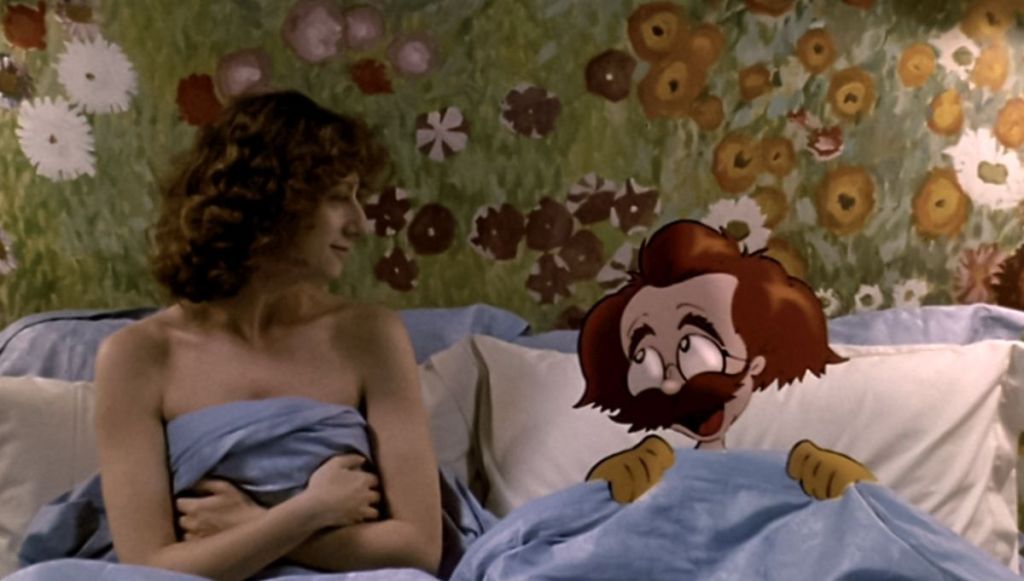
For my generation, it’s very easy for us to fall back into a conversation about the fabulous odd film you’d seen one night many years ago, stuck on BBC2 or Channel 4, where they thought nobody would watch it. One of my fondest experiences of this was stumbling upon a late night screening of Volere Volare: a 1991 Italian film that combines cartoon animation and live action, to tell a rather sweet romance and a genuinely affecting fable about what’s actually important when it comes to intimacy.
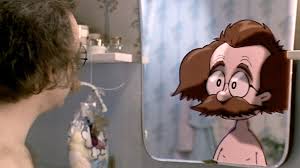
The basic set-up of the film is this: Maurizio (played by writer/director Maurizio Nichetti) dubs new sound effects onto old cartoons. He’s an introvert who hides away in his recording studio – unlike his gregarious brother, who works in the next room and who dubs soft porn films. There’s a lighthearted element of bawdy farce in the way their lives (and jobs) interact but it’s not the heart of the film.

That occurs when the introvert Maurizio meets Martina, played by Angela Finnocchiaro in a film-stealing performance. She also has an unusual escort job, although of a very different type to that of Kim Basinger’s Lynn Bracken discussed last week in Julie’s excellent column revisiting L.A. Confidential. In Volere Volare, Martina calls herself a “social worker”and goes around town indulging the harmless (and curiously asexual) fantasies of fee-paying men. All these sequences are remarkably and endearingly odd, interspersed throughout the film for comic effect.
Of course, this being a romantic comedy, the moment they meet they clearly take a shine to each other. But he’s an introvert. And she doesn’t know who he is. All the usual romcom problems. Oh, and also he’s beginning to turn into a cartoon. Can he overcome this and the two of them have a happy ending? I don’t want to spoil anything precisely, but this is a feelgood romance film, so I’ll let you guess.
The whole thing plays out like a perfectly pitched fable. Its comedy is broad and crucially warm-hearted. Indeed, if there is one thing that defines this comedy, and which really made it stand out when I discovered late one night on British telly, is how non-judgemental it is. On the surface, the comedy seems directly out of a Carry On film or a corny ’70s sex farce. But there’s something so much sweeter at play here. This isn’t sex comedy in terms of elderly men doing double takes at the sight of a bra, or jack-the-lad types winking at the camera because they’re just about to disappear off screen with a lady; it’s just people muddling through with their own peculiarities and flaws.
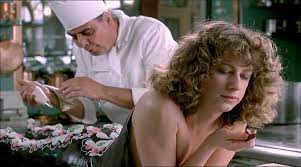
And it also illustrates how alongside these indulgence, life goes on. Kinks exist alongside the day-to-day concerns of just getting by. Concerns that even affect those who make a living from those kinks or porn. It’s just all so normalising.
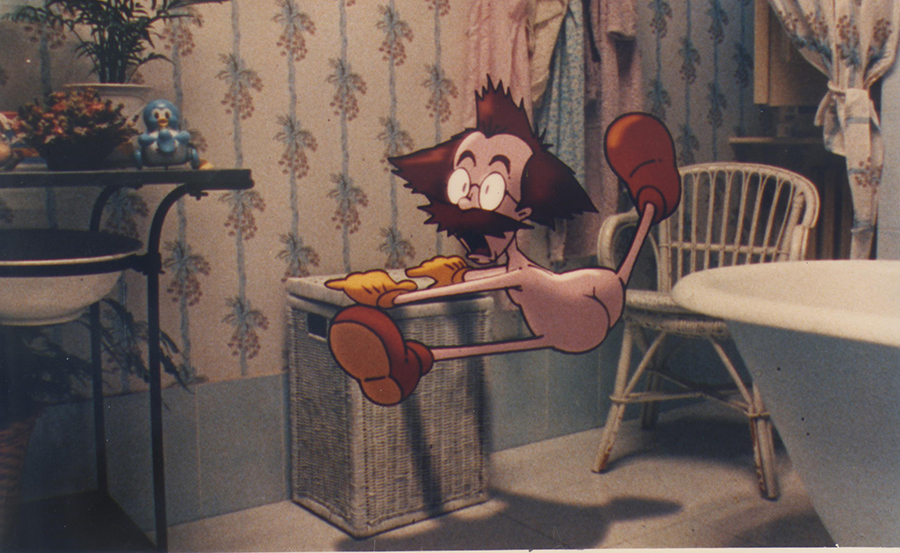
On top of that there’s considerable joy in the film in how it mixes the animation in with the live action. It clearly didn’t have the biggest budget, but it still finds time to inventively come up with scenes and sequences where cartoon characters interact with the real world. The fact that you can often work out how they did it just adds to the fun.
After all this, it’s a real shame that this film seems to have fallen off the radar. It’s impossible to buy commercially, except as an out-of-print Italian DVD that doesn’t have English subtitles. It never gets shown on UK TV anymore, nor is it available via the usual streaming channels. After many years of searching, I managed to acquire it via (ahem) other means. Before rewatching it, I was anxious. Would it have aged well? And would it live up to the version I remembered enjoying so much as a teenager.
Thankfully it did. I was pleasantly surprised by how entertaining the whole story is, and how clear and deliberate its non-judgmental attitudes are. I wasn’t rose-tinting this onto the film when I remembered it – it’s clearly the whole point of the story. Which makes its ongoing absence from conversations about nineties cinematic comedies all the more mystifying. I genuinely hope that one day it might be resurrected from limbo, re-released, and find a whole new audience for its gentle, but important, message.
 A Damn Fine Cup of Culture
3 thoughts on “Six Damn Fine Degrees #218: Maurizio Nichetti’s Volere Volare”