Welcome to Six Damn Fine Degrees. These instalments will be inspired by the idea of six degrees of separation in the loosest sense. The only rule: it connects – in some way – to the previous instalment. So come join us on our weekly foray into interconnectedness!
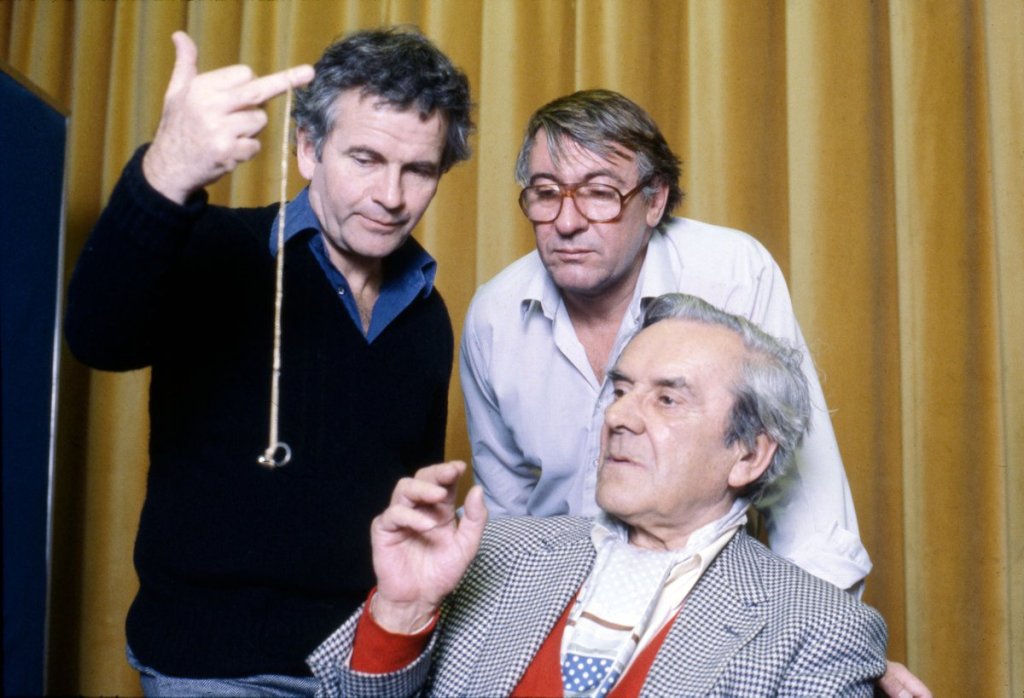
I have nothing against the Peter Jackson The Lord Of The Rings films. They’re fine. Not damning with faint praise fine. Actually fine. Brilliantly constructed blockbusters that deliver on pretty much every front. But one thing they are not is a dramatised realisation of my Middle Earth. Because another adaptation got there first, and filled up my headspace with performances and music that will forever be entwined with my love for this story.
BBC Radio adapted the trilogy in the ’70s, telling the whole story in 26 half-hour episodes, then re-edited into 13 hour long episodes. My mother recorded them off the radio, in part to listen to and help her learn English, which meant as a child cassettes with episodes of this adaptation used to be everywhere in our house. Sam wrote last week of the abiding memories from watching adaptations of a classic, and similarly I have fond childhood recollections of being curled up with a small tape player pressed against my ear as brilliant voices took me on an adventure in Middle Earth.
The upshot of which is that is is the radio cast that define the voices of all these characters. Viggo Mortensen is great in the films, but he’s just no Robert Stephens. Possibly the most high-profile casting at the time, Stephens was one of the most highly regarded theatre talents of his generation, as well as occasional movie star (he played the lead a few years earlier in Billy Wilder’s big budget Hollywood take on The Private Life of Sherlock Holmes). The genius of the casting is that Stephens has a voice that perfectly captures the concept of a man who has lived a long life in the wilderness but still has a powerful, dynamic energy to fight on. This chimes nicely with the books, as the character of Aragorn is meant to be 87 years old when he enters the tale, but also belongs to a people capable of living longer – and, crucially, staying youthful longer – than most men.
Alongside him Douglas Livingstone’s take on Gimli presents a warm and wise dwarf, the sort of character who you would desperately want to be friends with if you were questing together. Which is perfect for capturing the subplot where Legolas and Gimli become unlikely best friends. I still find the movie’s comedic and two-dimensional take on the son of Glóin to be its only real major misstep. It soothes my annoyance at the comedy film character to return to the radio version and spellbinding moments such as when Livingstone’s noble yet humble Gimli asks Galadriel for a lock of her hair.


Peter Woodthorpe’s Gollum is a masterclass of voice acting, and an obvious influence on Andy Serkis in the films. This isn’t surprising: when cast members signed on for the movies Jackson’s team would give them copies of the BBC version to give them a quicker idea of the story than reading the books. Which, to take the world of influences and connections back even further, links the epic trilogy with Ralph Bakshi’s much derided animated Lord Of The Rings from 1978. It was Woodthorpe’s performance in that film that got him the BBC Radio gig. In fact, its hard to find an adaptation after Bakshi cast Woodthorpe where he isn’t a clear influence on the performance of Gollum. Even the German radio 1991 adaptation Der Herr der Ringe has a very Woodthorpian Gollum.
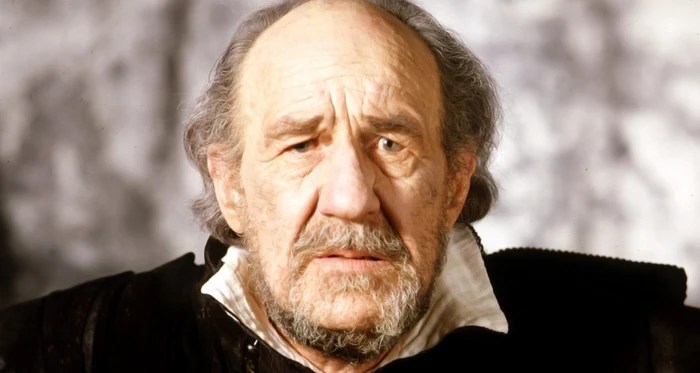
But the voice that still has me utterly spellbound – the voice that evokes the magic of Middle Earth, and the joy of discovering getting lost in my first audioplay – belongs to Michael Hordern. He is wise, playful, stern, kind and so definitively a real-life wizard that there has never been another Gandalf to me. It also makes me smile to read that, despite how wonderful I find the performance, the actor never really understood what the story was about, or cared that much to find out. After recording Gandalf’s fall in Moria fighting the Balrog, he was to sidle up to the producers and ask why, having been promised a role lasting the whole drama, he was now being written out. He was quietly reassured that the wizard does come back.
And yet, despite this ambivalence to what was actually going on in the story overall, Hordern is able to deliver a commanding performance. The actor not only has a rich and warm voice, but decades of talent to know exactly how to wield it as the scenario demands. And the character of Gandalf requires a performer that can convince in so many different registers. Hordern’s Gandalf seems genuinely delighted to be in the company of hobbits, while also possessing the authority to face down the Lord of the Nazgûl. It doesn’t seem at all surprising that he might spend a quiet Sunday drinking ale in the Prancing Pony in Bree, then a week later be at the grandest table in the land advising Kings. Hordern really is that good, leaving an indelible mark on my understanding of the character.
Another aspect of listening to these tapes endlessly from an early age is that I’ve spent many years since suddenly pointing at the telly the moment actors from the radio play appear. When the hugely successful Inspector Morse started, I was far less engaged by the murder plots than I was by the fact that Barliman Butterbur was in it as Chief Inspector Strange. Buying the VHS tape of Doctor Who classic “The Robots Of Death” finally meant I got to see what Legolas actor David Collings looked like to go with his deliciously striking voice, while the ubiquitous appearances of Peter Vaughan on British TV in the ’80s and ’90s meant you were never far away from a Denethor.


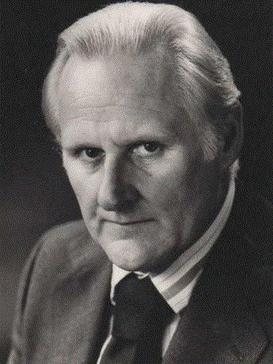
The sheer power of voice recognition cuts both ways, though. Such was the fame of the actor John Le Mesurier when I was young that his instantly recognisable voice meant that Bilbo became a visual version of the actor in my head. Even when I now re-read the books, it’s his face that I imagine for Baggins Senior. This feels appropriate: the more I read about Le Mesurier in real life, the more I feel he would have lived very comfortably in the Shire.

Such a high level of recognition does not always work in a radio adaptations favour, though. When the great Elven Lord Celeborn appears to the Fellowship in Lothlorien, young me instantly recognised the voice as Simon Cadell, then starring in the hugely popular sitcom Hi-Di-Hi. This has meant that the Celeborn in my head remains somewhat influenced by the comedy character Jeffrey Fairbrother, which I’ll admit is probably not what Tolkien had in mind. Thankfully Ruth Madoc wasn’t cast as Galadriel alongside him, as the sitcom associations would have been overwhelming. That said, in Tolkien’s original work, Celeborn’s other Elvish name is said to be Teleporno which seems all to perfect for an innuendo-laden British farce the type of which Cadell was always absolutely brilliant in.

But you can’t really talk about this radio play without talking about the central performances of the two main hobbits: Frodo and Sam. Ian Holm plays Frodo brilliantly, and Peter Jackson has even acknowledged that their casting of him as Bilbo in the cinematic trilogy is a nod to just how fantastic he is here. He captures the character’s journey from young and content, through brave and adventuring to finally broken and world-weary. It’s astonishing stuff.
Set against that is Sam, Frodo’s brave and worth friend. It’s another great performance, with the end credits informing me it was by an actor named William Nighy. It was many, many years before I realised that this was actually the very famous actor Bill Nighy, early in his career and using a different stage name. Not my finest hour when it comes to voice recognition.


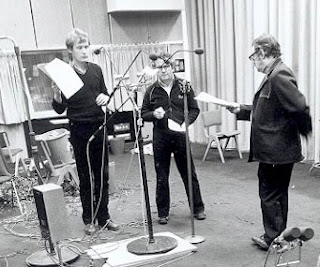
In my opinion, The Lord of the Rings is radio drama at its finest when the story focuses on these two hobbits, accompanied by Gollum, making their way towards Mount Doom. It’s three characters, locked in a dynamic relationship as they travel together. All three actors are incredible in these moments; its easy to forget they were just three guys in a room with microphones, the shifting relationships veering from friendship, trust, betrayal, pain and sympathy perfectly captured.
As befits the epic trilogy that the BBC Radio adaptation was based on, I’m aiming to do three of these Damn Fine posts exploring different aspects of just how good I think it is. But I just had to start with this fine radio cast, whose voices first peopled the Middle Earth in my imagination – an experience I will be forever grateful for.
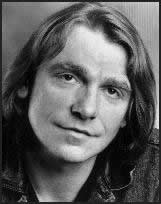
There is one very important voice in the adaptation that I haven’t mentioned so far. Mainly because it isn’t actually character in the books. It’s the voice that belongs to Gerard Murphy who was cast as the Narrator for this epic tale. His dramatically rich but surprisingly youthful voice helps drive the story along where radio might struggle. But then that leads on to the issue of how they went about adapting the trilogy for this audio medium. And that is another story for another day and there’ll be a few more twists along the Six Degrees road before we’ll get there…
 A Damn Fine Cup of Culture
3 thoughts on “Six Damn Fine Degrees #226: The BBC Radio Lord Of The Rings Part One: The Fellowship Of The Cast”