Welcome to Six Damn Fine Degrees. These instalments will be inspired by the idea of six degrees of separation in the loosest sense. The only rule: it connects – in some way – to the previous instalment. So come join us on our weekly foray into interconnectedness!
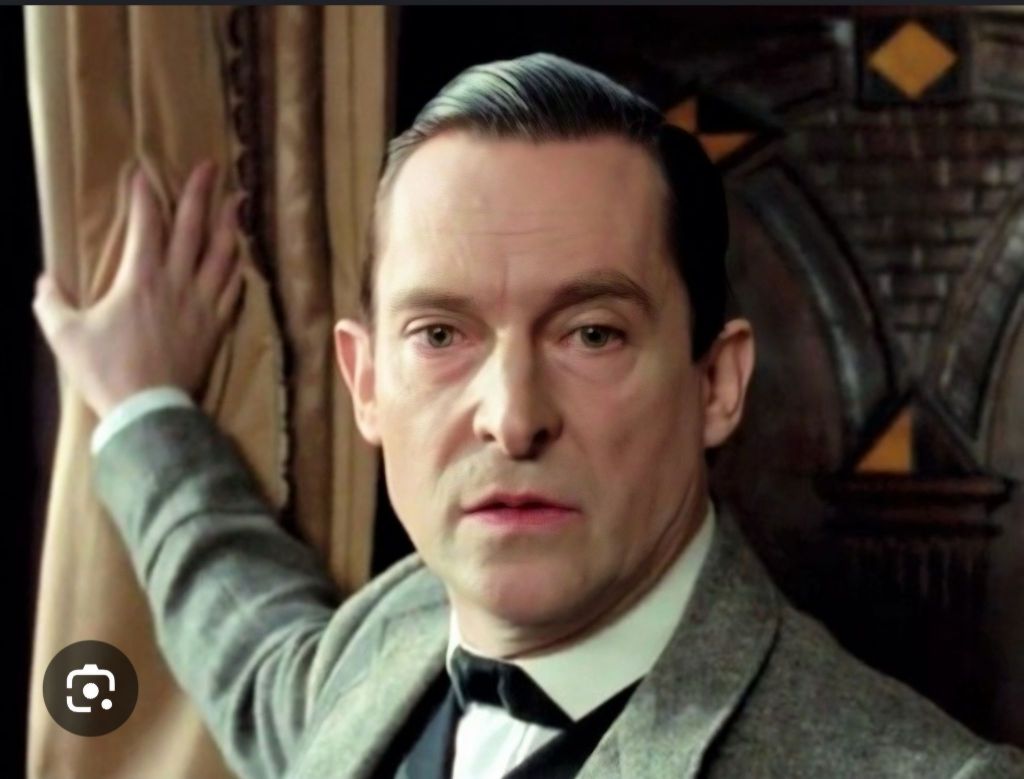
Things start on a note of surprise, for something is already afoot.
There’s no music. Just the sound of strained whispering as an out-of-sorts Mrs Hudson tries to alert her tenants to the arrival of an unscheduled and insistent visitor. She’s being hushed by John Watson, concerned that his febrile companion’s sleep should continue undisturbed. For a moment day and night, light and dark compete with one another as the door threatens both to open and to close.
Watson takes the visitor’s card from her hand – he is Dr. Thorneycroft Huxtable, MA, PHD, etc, Principal of The Priory School – and shuts the door. In the darkened interior Sherlock Holmes lies asleep as if in his coffin. Watson slips the card into Holmes’s breast pocket. But the damage has been done: something from outside has entered 221b. His fingers are awake: they extract the card and his eyes flash open to read it.

Suddenly like a thunderclap we have a second beginning. To Watson’s astonishment their visitor bursts unannounced into the reception room. Such is his torment that before he can say a word he collapses, falling unconscious to the floor. In sympathy the camera slips out of focus: the light behind his now horizontal profile becomes incandescent fire. It eats into his face like acid.
Now, inside the world of Huxtable’s fevered preoccupations, we get music. Spooky Theremin shifts seamlessly into English renaissance polyphony with its distinctive high treble, like some gem from the Eton Choirbook. We see boy choristers in an ancient school chapel, with Huxtable, gowned and mortarboarded, presiding. The camera finally comes to rest on one singer. Remember him: his fate is central to the story about to unfold. “Libera me… Libera me…,” the choir intones: words from the Latin Requiem Mass. These too are at the heart of what is to come.
We are used to seeing Holmes at a low ebb. Starved of intellectual challenge he becomes peevish and depressed; susceptible to chemical fixes that substitute for the intense and peculiar stimulus that he needs to become fully himself. His food is society’s disorder, its dark unfathomable mysteries; its blood is his lifeblood. The flamboyance of Brett’s characterisation, with its fiercely camp and expressionist aspects enables a shift from a depressive or bipolar understanding of Holmes’s complex personality into the symbolic and surreal. Here he is Vampire, ready to feed on the diseased society outside: cadaverous, steely eyed, voracious. He is elemental. There has never been a Holmes whose subconscious motivations have been so little below the surface.
Still corpse-pale, but now in full imperious stride, Holmes is intent on the now recovered Huxtable as if homing in on his prey. On the wall behind him hangs an engraving of a waterfall: the symbol of his own death and resurrection, the trial by water that proved him unkillable.
So he can afford the hauteur, the barely concealed disdain for the needy, doltish humanity who trail to his door – and who of course include the police. They need what he can offer, he needs what they are desperate to give. He is not an unkind person, but in this mode everything else is secondary to the pursuit: anything beyond the scrupulous but chilly courtesy he extends towards his stressed and despairing would-be clients. Dr Watson is there for sympathetic interventions when they are required.
And after this – the story.
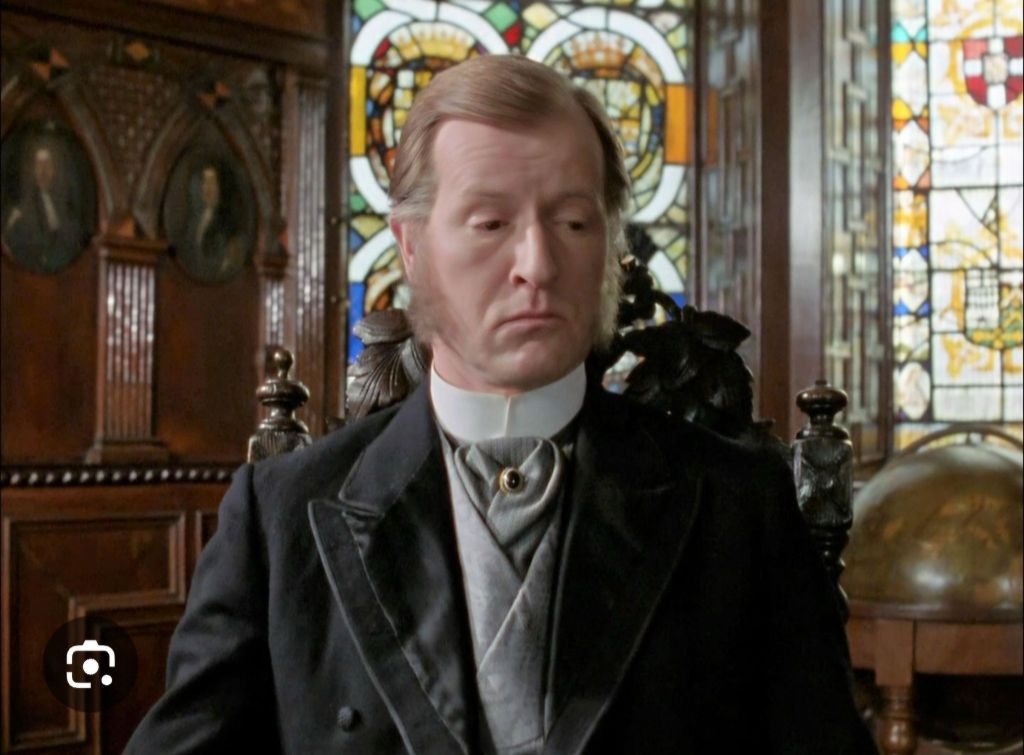
In what follows Alan Howard is superb as Lord Holdernesse, the epitome of understated aristocratic aloofness. Christopher Benjamin delivers a disarmingly eccentric Huxtable. The lovely choral pastiche is by Patrick Gower, whose music graces the whole series with its resourcefulness and intelligence – from a mischievous Tristan und Isolde reference in the score for A Scandal in Bohemia (“for Holmes she was always THE woman”) onwards.
And this episode, the 15th in the Granada Television series of adaptations starring Jeremy Brett, was directed in 1986 by John Madden, who went on to make Shakespeare in Love, Captain Corelli’s Mandolin and, more recently, the Best Exotic Marigold Hotel movies and Operation Mincemeat, starring Colin Firth. I get the impression that his career has had its highs and lows, but this superbly crafted early item, by some way the best in the Jeremy Brett sequence up to this point, must surely number among the former. Would it be stretching things too far to detect a pre-echo of the wonderful coda to Shakespeare in Love in the perfectly placed final moment, delicately probing the future, of The Priory School?
 A Damn Fine Cup of Culture
One of my favourite episodes of the series. I love this opening and the music.