Welcome to Six Damn Fine Degrees. These instalments will be inspired by the idea of six degrees of separation in the loosest sense. The only rule: it connects – in some way – to the previous instalment. So come join us on our weekly foray into interconnectedness!

University reading lists as the one described in Matt’s latest post (and dare I mention I was one of his students to be on the receiving end of that particular list) can be a double-edged sword: There is a certain mechanical quality about ticking off titles one wouldn’t necessarily have chosen for personal reading, for sure. Yet gently forced exposure to such literature – if pre-selected well – can produce unexpected pleasures and open up new worlds and avenues for further reading. Starting out my English studies in the early 2000s as a slightly disoriented reader in the wide world of literature, the English department list (when diligently dealt with) certainly kept me busy, and struggling, for a while.
At the time, apart from the grand Gothic tales of Mary Shelley, Bram Stoker and Edgar Allan Poe plus Wilde’s Picture of Dorian Gray (read mostly as a tale of horror and missing out on most of its other layers), I was still a bit of a 19th-century sceptic. The magnitude of Dickens frustrated me deeply, and I didn’t really allow enough time to dwell in his worlds of early industrial gloom. Wuthering Heights by Emily Brontë had been my mom’s favourite book in her youth, but I struggled with its seemingly convoluted narrative and heavy romanticism. Even Jane Austen seemed just like stringing along fleeting cotton candy webs of matchmaking, tea parties and social constraints. In short, there had not yet been that period’s Opus Magnum to sweep me off my unconvinced feet.
Along came Charlotte Brontë’s Jane Eyre, even though it took me a few more years to really come round to it, by which point I had already become an English teacher at a local grammar school. Again, against my own personal choice, the novel was strongly suggested by my group of students who had chosen English as their focus subject. At first, I doubted myself: Wouldn’t it be too long, too difficult and too gloomy for my 16-year-olds? Would my scepticism not stand in the way of their appreciation? Finally I gave in to their commendable enthusiasm, and we started on an unknown reading journey, with every student in charge of a particular part of the book to provide guidance and discussion points in addition to mine.

The result was simply astonishing: Not only did I cherish every moment spent reading and preparing Brontë’s novel for class, but my students also proved they possessed admirable tenacity by discussing and analysing the book for an entire semester. My diary entries from the time (which indeed makes me sound like 19th century character..) are testimony to my rapture when reading Jane Eyre. What stood out was the immediate and powerful passion for freedom on display. The novel begins with Jane at the mercy of her aunt, Mrs. Reed, who regularly locks her into the ‘Red Room’, but Jane forcefully fights back, leading to an early favourite moment when she tells Mrs. Reed:
“How dare I, Mrs. Reed? How dare I? Because it is the TRUTH. You think I have no feelings, and that I can do without one bit of love or kindness; but I cannot live so: and you have no pity. I shall remember how you thrust me back–roughly and violently thrust me back–into the red-room, and locked me up there, to my dying day; though I was in agony; though I cried out, while suffocating with distress, ‘Have mercy! Have mercy, Aunt Reed!’ And that punishment you made me suffer because your wicked boy struck me–knocked me down for nothing. I will tell anybody who asks me questions, this exact tale. People think you a good woman, but you are bad, hard- hearted. YOU are deceitful!”
After being sent to Lowood School and suffering from both headmaster Brocklehurst and the death of her best friend Helen, Jane applies to become a governess Thornfield Hall, whose broodingly dark and fascinating owner Mr Rochester becomes Jane’s employer. When Jane saves him from a fire seemingly caused by a servant girl, she is shocked to find out her feelings of love are mutual:
“I tell you I must go!” I retorted, roused to something like passion. “Do you think I can stay to become nothing to you? Do you think I am an automaton?—a machine without feelings? and can bear to have my morsel of bread snatched from my lips, and my drop of living water dashed from my cup? Do you think, because I am poor, obscure, plain, and little, I am soulless and heartless? You think wrong!—I have as much soul as you,—and full as much heart! And if God had gifted me with some beauty and much wealth, I should have made it as hard for you to leave me, as it is now for me to leave you. I am not talking to you now through the medium of custom, conventionalities, nor even of mortal flesh;—it is my spirit that addresses your spirit; just as if both had passed through the grave, and we stood at God’s feet, equal,—as we are!”
“As we are!” repeated Mr. Rochester—“so,” he added, enclosing me in his arms. Gathering me to his breast, pressing his lips on my lips: “so, Jane!”

Of course, Jane and Rochester’s wedding is dramatically thwarted by the revelation of his still existing marriage, upon which Jane makes her desperate escape and is about to venture on a missionary trip with her newly-found cousin, who also proposes to marry her. It’s only due to a dream about Rochester that she decides to return to Thornfield – and finds it burnt down, and a secret yet to revealed behind this…
And there was the silence of death about it: the solitude of a lonesome wild. No wonder that letters addressed to people here had never received an answer: as well despatch epistles to a vault in a church aisle. The grim blackness of the stones told by what fate the Hall had fallen—by conflagration: but how kindled? What story belonged to this disaster? What loss, besides mortar and marble and wood-work had followed upon it? Had life been wrecked as well as property? If so, whose? Dreadful question: there was no one here to answer it—not even dumb sign, mute token.
Revealing the rest of Jane Eyre would greatly take away from each future skeptic trying their hand at Brontë’s masterpiece. Through the eyes of my students and my own, I found it to be rivetingly expressive, darkly evocative and powerfully moving. Jane’s predicaments experienced through her own struggles to free herself, her increasingly magnetic pull to Rochester and his tormented presence and the twisted path this takes her on in order to find out where she truly belongs felt wholly mesmerizing and at the same time genuinely felt. Until today, even if I haven’t properly reread it since, it still remains one of my fondest reader’s journey, which I would never have embarked on without some gentle force from the outside.
So here’s to the mild coercion of schools and universities of knowing what might good for us, or at least exposing us to stories, characters, themes and styles that might seem frustrating or cumbersome but also lead us to understanding better why certain books mattered so much and why they have for such a long time.
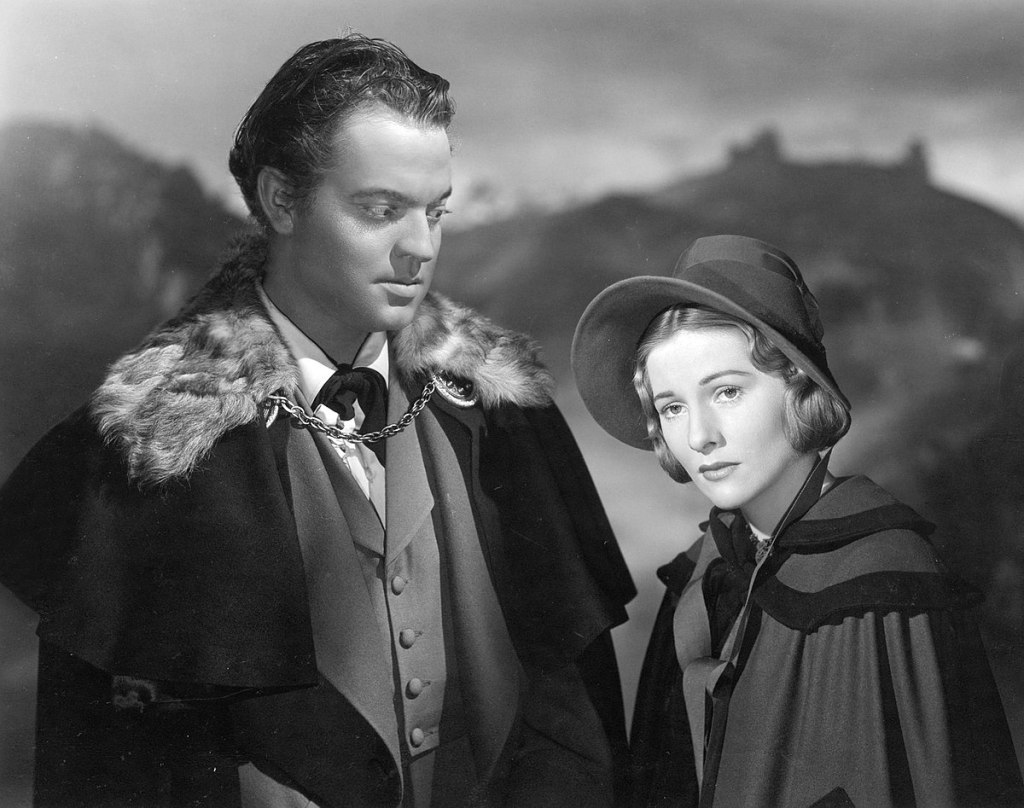
Just consider Charlotte Brontë’s first publication of Jane Eyre in 1847 under a male pseudonym and what has happened to it in the meantime: made into over 20 films (the 1943 Robert Stevenson version starring Orson Welles, Joan Fontaine featuring one of my favourite Bernard Herrmann scores), countless radio and television versions, adapted for the stage and reworked into sequels, prequels and narratives told from other characters’ perspectives, the world has never come back up for Eyre since.
 A Damn Fine Cup of Culture