Welcome to Six Damn Fine Degrees. These instalments will be inspired by the idea of six degrees of separation in the loosest sense. The only rule: it connects – in some way – to the previous instalment. So come join us on our weekly foray into interconnectedness!
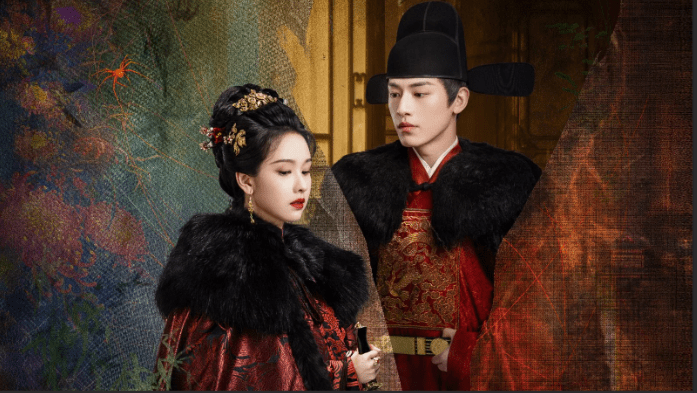
The Glory is a Chinese historical drama series from 2025 (not to be mistaken with the K-Drama school revenge story of the same name) whose descriptions are so innocuous they are completely misleading. For instance, MyDramaList explains: “Abandoned as a child, Zhuang Han Yan grows up in the southern countryside before returning to her family in the capital. She catches the eye of Fu Yun Xi, a deputy minister with a mysterious illness, who sees her as an ideal wife. As they navigate their relationship, they fall in love, and Han Yan reconnects with her mother while finding warmth and belonging with the Fu family.”
I mean, OKAY. This is not technically wrong. But it completely misses the point in that The Glory is a revenge drama – specifically, the revenge of an adult daughter on her father. (And I am very sorry to pick this as my degree of connection with Alan’s musings who told such a great story of his own father taking him to see Gandhi!).
Han Yan arrives at her family’s mansion in rags and bloodied feet, and she is originally a blank slate. She says she is here to rejoin her family and in particular misses having a mother – her mother’s protection. As a baby, Han Yan was exiled to the countryside to live with a family friend because she was thought to be a cursed child, a “barefoot ghost” whose birth caused her own grandfather’s death. But her foster parents treated her horrendously and now have mysteriously been slain by bandits. (There are early signs that bandits are not, in fact, the ones who killed the foster parents.) Han Yan is back, with her own agenda, and her family is very ambivalent about that.
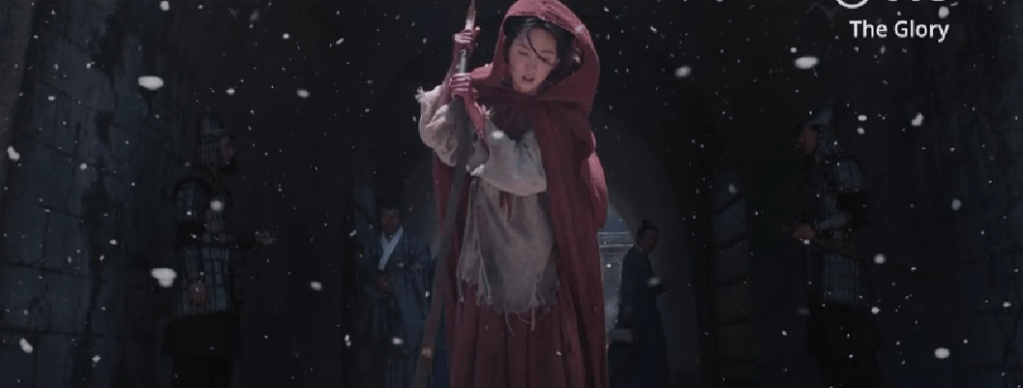
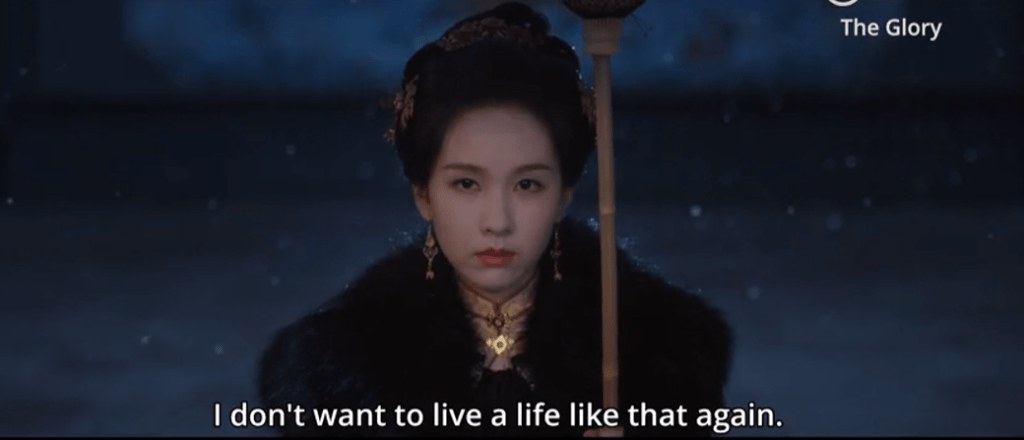
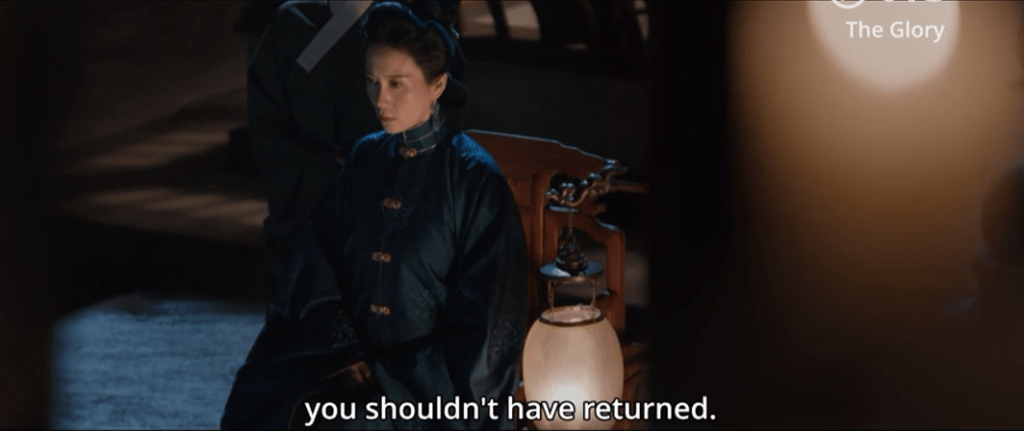
It soon becomes clear that things are not right. Her mother, in her wheelchair, rules the inner courtyard with a poisonous fury and resentment. She refuses to even see her daughter. Her dad seems a nice enough people pleaser who maneuvers his family around his dragon of a wife. Her half-brother and half-sister want to push her out. (Shout out to He Hong Shan who seems committed to playing pouty, spoilt concubine’s daughters and did just as fabulous a job here as she did in The Story of Ming Lan.) Only her father’s concubine, Zhou Ru Yin, seems kind enough to take on the newcomer and give her some pointers. But Ru Yin, too, has a dark agenda.
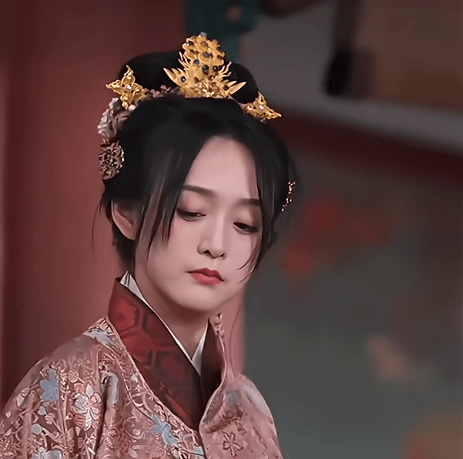
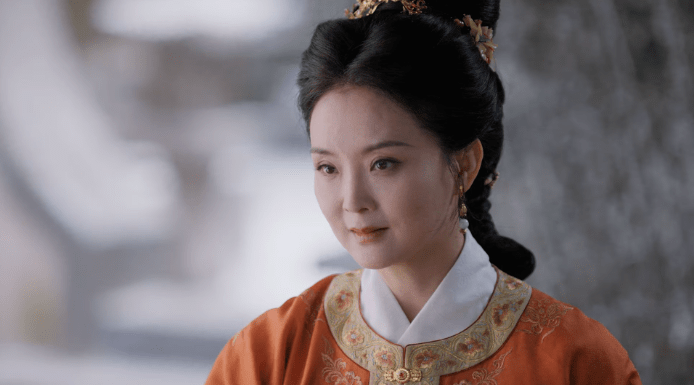
For a Chinese drama, The Glory is fairly short with only 30 episodes. Criminal machinations are revealed, conspiracies unleashed, long lost secrets uncovered, murders committed. And Han Yang reunites with her embittered mother, no matter how much her mother tries to keep her safe by pushing her away.
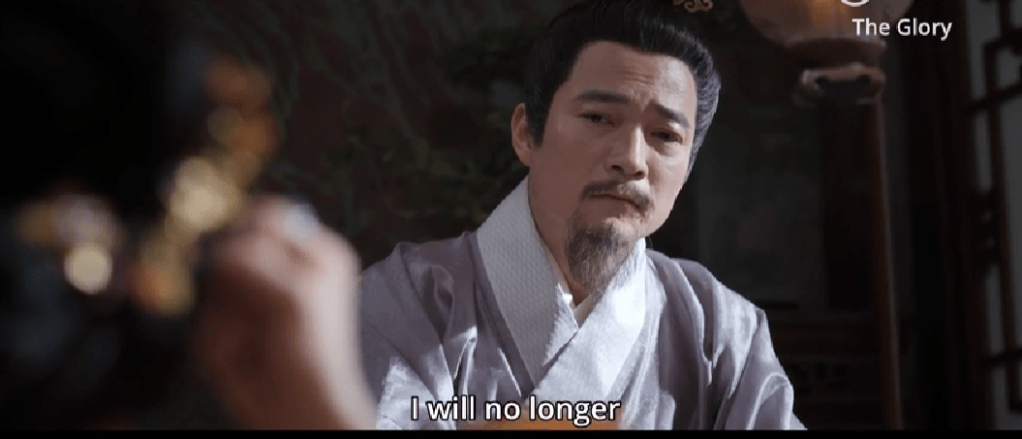
At the heart of the Zhuang family drama stands the father. A man who, it turns out, has always used the women in his life as his fall guys. He’s very sad about having to do this, of course. He was very sad when he let his infant daughter take the blame for a death he has caused. He sighs when he frames his concubine for a murder. He shakes his head as he signs off on fraudulent deals with his daughter’s name. He marries off his other daughter to a known abuser to save himself. When she runs back to him, sobbing, he sobs right back at her. Yu En Tai plays Zhuang Shi Yang masterfully – alternating between evil mastermind, cowardly egotist and kindly pushover. Certainly, he believes his own story of a man without a choice, driven by a cruel fate to hurt those who depend on him.
Here I should go into a concept that I personally find hard to grasp, and that is the idea of filial piety in C-Drama. This goes much further than simple obedience, that children, even adult children, owe their parents according to Confucian thinking. A description that stuck with me was, “It means never letting your parents worry.” Filial piety means making sure of your aging parents’ comfort so that they never have to ask for anything. It means doing well at school and progressing towards a career that will let you live in prosperity. It means acting in a way that honours your parents and brings them joy.
The other side of the coin is, of course, the parents’ responsibility towards their children. “Loving your children means preparing for their future,” says a character in a different drama. It doesn’t mean spoil them, or tell them how much you love them, or let them live the life they want. It means guiding them and making sure that they have the best shot at a successful future that you can give them – even if it makes both you and them miserable in the present. I should add that in my impression Chinese families, more so than Western ones, consider multiple generations. As a child, you have a duty to move your family further along the path of success. As a parent, it is your duty to enable your children to do this. If not, your own parents in their ancestral shrine will heap shame on you.
It seems to me that social mores according to which, historically, a parent could discipline a grown child by beating it bloody, while the same child would be socially ostracized for striking back, present countless opportunities for systemic abuse.
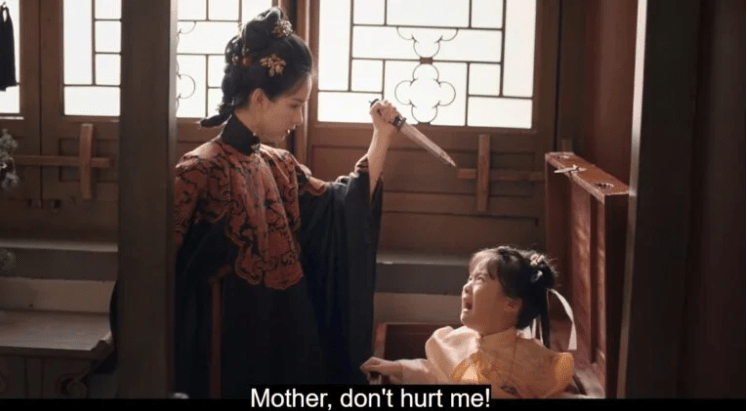
We see a prime example of the fail state of such a system in The Glory. In its own overwrought way, the series explores when it is okay for a daughter’s duty to stop. When the owing stops. Han Yan, in the early episodes, goes out of her way to prove her filial piety. In fact, she goes as far as to dig up a corpse in the forest and drag it, on foot, to the execution grounds of the capital city, in order to prove her father’s innocence. This causes quite a stir in the capital and she briefly becomes a superstar of filial piety.
In the later episodes, she turns this considerable toughness and brains to revenge. Han Yan is not meant to be likeable. I found her dour and offputting. She’s willing to lie, steal, and do anything including arson and murder to achieve her aims. But on several occasions, we see that there is one thing she won’t do: anything that will make the life of some other girl, someone else’s daughter, harder, than it already is. She will never pass on the generational trauma, she sends it right back.
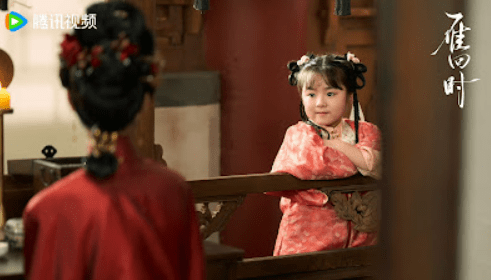
In the epic final revenge scene, as he sits in front of a feast that he suspects her of having poisoned, Han Yan’s father appeals to her. He tells her that she, too, will kill, to save her family. “Actually, we two are the same. We just want a warm and harmonious home.” She shoots right back: “What do you think makes a home? A table full of delicious food in front of you, but you won’t take a single bite. You have no trust in family. How could someone like you have a home? You don’t know what love is, so naturally, you don’t know what home is. It’s like we’re carrying a snowball down a hill. When you can’t bear the weight, you let it roll bigger and bigger, until it crashes onto my back. But I won’t let it go. I’ll carry it until I walk off the cliff. I can sever all the harm and pain passed down from previous generations and I’ll never let the children suffer that harm again. But you can’t do that. You only bring more harm and pain. It’s fine that you won’t admit it. I won’t waste anymore words on you.”
The Glory is not fun, exactly. I can’t wholeheartedly recommend it because for my taste it lacks a sense of humour. But it does a very lovely thing in that it centres on the relationship between daughters and their mothers, and of course their fathers. It shows dysfunctions and lies and a daughter who chooses to look them straight in the eye. It gives an answer, of sorts, and it does so in a very cathartic way.
 A Damn Fine Cup of Culture