Welcome to Six Damn Fine Degrees. These instalments will be inspired by the idea of six degrees of separation in the loosest sense. The only rule: it connects – in some way – to the previous instalment. So come join us on our weekly foray into interconnectedness!
Sam’s post on Hitchcock’s odd movie out, Mr. and Mrs. Smith, reminded me not only of the delights of watching a sniping couple, but also of that very specific joy that blooms when you consume something completely different and it rocks.
If you’ve read my posts, you’ll know I like watching Chinese drama. But I also like reading, I like languages, I love words. And now I’ve discovered the joys of reading the novels behind the shows. A lot of these don’t get published in English, they’re just available in more or less good fan translations on the internet. And that’s part of the appeal. A good fan translation is fantastic at giving you original idioms, comments on obscure things mentioned, and a feel for what the Chinese original might be like.
Chinese is a fresh, fun language that packs a lot of punch. Sometimes a single phrase might take paragraphs to decode the context, if you feel it’s necessary. But also, it mostly isn’t, if all you want is to enjoy a good story.
So, in this post I will be talking about two series and the books they are based on: The Untamed (2019) and Sleuth of the Ming Dynasty (2020)

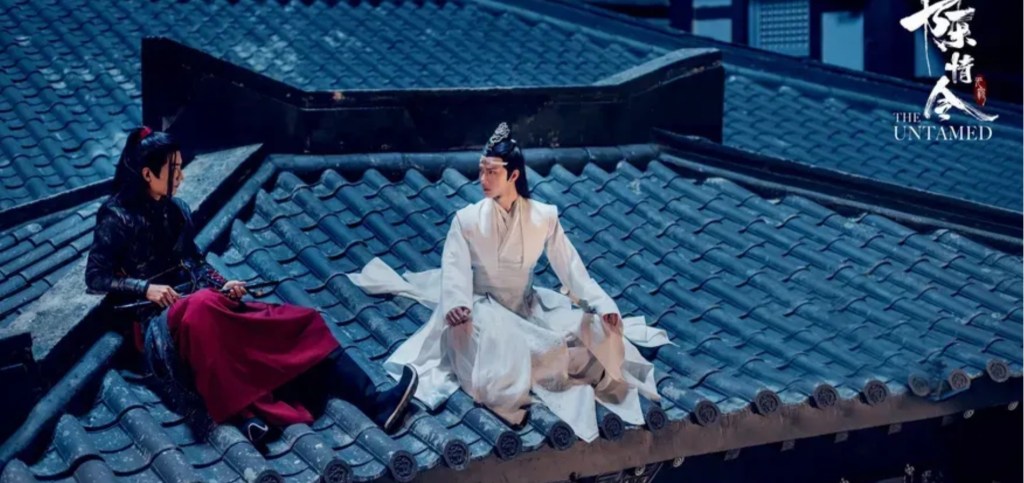
If you have ever shown any interest in Chinese fantasy drama, you’ve probably heard of The Untamed (2019). In fact, it became so popular with white women that Rebecca F. Kuang mentions it in her scathing novel Yellowface not once but twice, to highlight what a basic white girl the character is. “I retweet hot takes about bubble tea, MSG, BTS, and some drama series called The Untamed,” she writes, and “Xiao Chen thinks I wrote The Last Front because I am ‘one of the many white women, like those who write queer fan fiction of The Untamed, who not only have an unexamined fetish for feminine-looking Asian men, but who think Chinese history is something to cherry-pick from in search of intriguing and shiny nuggets, like nice Ming vases to set in the corner.'”
The Untamed is a Xianxia fantasy drama about two soulmates in the world of cultivation (Xianxia is a genre that deals with magic wielding clans and improving your magic powers), one of them who has seemingly turned into an evil necromancer and the other one who is a classic paladin. After Wei Wu Xian gets vanquished, he wakes up again as a vengeful spirit possessing the body of a village lunatic. He reunites with Lan Wang Ji and we find out what happened. It’s a lot, and it’s a classic for good reason.

One of the reasons it’s so good is the bestseller webnovel it is based on, The Grandmaster of Demonic Cultivation (2015). Author Mo Xiang Tong Xiu is a popular BL/danmei author who also wrote Heaven’s Official Blessing and The Scum Villain’s Self-Serving System.
There is a gorgeous, illustrated English version of Grandmaster published officially in 2021 by Seven Seas. There are also several good, if less polished, fan translations that you can Google – I personally am partial to this one by olashile.
It was a surprise to read because the book is a lot more whimsical than the series. Wei Wu Xian in the book is a pesky, somewhat hyperactive and, above all, indomitably positive character. He’s been through a lot, but he’s got one hell of a forward drive. He doesn’t dwell, he moves, he pranks, he laughs at you. He’s the only one who can get under silent, grumpy Lan Wang Ji’s skin.
I also enjoyed the book a lot more than the series because it deals with the here and now: Wei Wu Xian, Lan Wang Ji and a conspiracy concerning a murderous demonic arm that wreaks havoc all over the country. (Yes, just the arm. It’s not played for laughs, but it’s hilarious just the same.) As the plot moves on, you get glimpses into the past and, eventually, you figure things out. The series, by contrast, spends episodes and episodes on unravelling the past, with the present used as the framework. Since the past ends with Wei Wu Xian reviled and dying, and since I’m a sensitive soul who wants a happy end, this is not what I’m there for!

The second novel I want to recommend is The Fourteenth Year of Chenghua (2015) by Meng Xi Shi, here in a translation by ChiChi’s Dives. This is the novel at the heart of the smart and hugely popular series Sleuth of the Ming Dynasty (2020). Sleuth is a fun, historical whodunnit, featuring magistrate Tang Fan, his, um, bestest friend, the soldier Sui Zhou, and a conniving palace eunuch, who solve crimes together. Seriously, it’s great, you should watch it!
Meng Xi Shi is another popular danmei author. Her works include Thousand Autumns and Peerless. It’s mostly due to her that Sleuth is so damn good. If you’re sensing a pattern, you’re right. In fact, if you find yourself overwhelmed by how much Chinese Drama is out there, pick one that is based on a novel. Most C-Drama runs on for 40-60 episodes and tends to literally lose the plot around the halfway point. The ones based on actual written fiction are more tightly plotted.
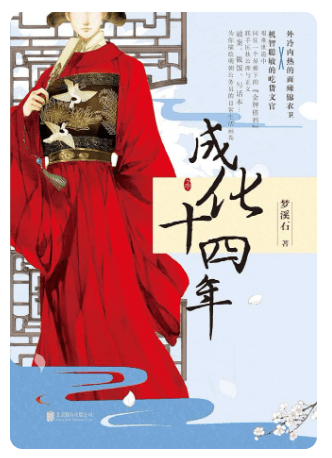
The novel is a little different from the series in that it focuses more strongly on Tang Fan. If you like Macchiavellian schemes, its fun to see the wily way he not only solves crimes but also maneuvers his way around political dangers and quietly moves up the career ladder. It’s also wonderful how much of the book focusses on Tang Fan, who is an utter foodie, eating amazing food. Don’t read while hungry! Anyway, series and book diverge. If you liked his character in the series and want more of him, this is perfect.
Anyway, those are my recommendations. If you end up reading one of them, yessss, let me know what you think!
 A Damn Fine Cup of Culture