Welcome to Six Damn Fine Degrees. These instalments will be inspired by the idea of six degrees of separation in the loosest sense. The only rule: it connects – in some way – to the previous instalment. So come join us on our weekly foray into interconnectedness!
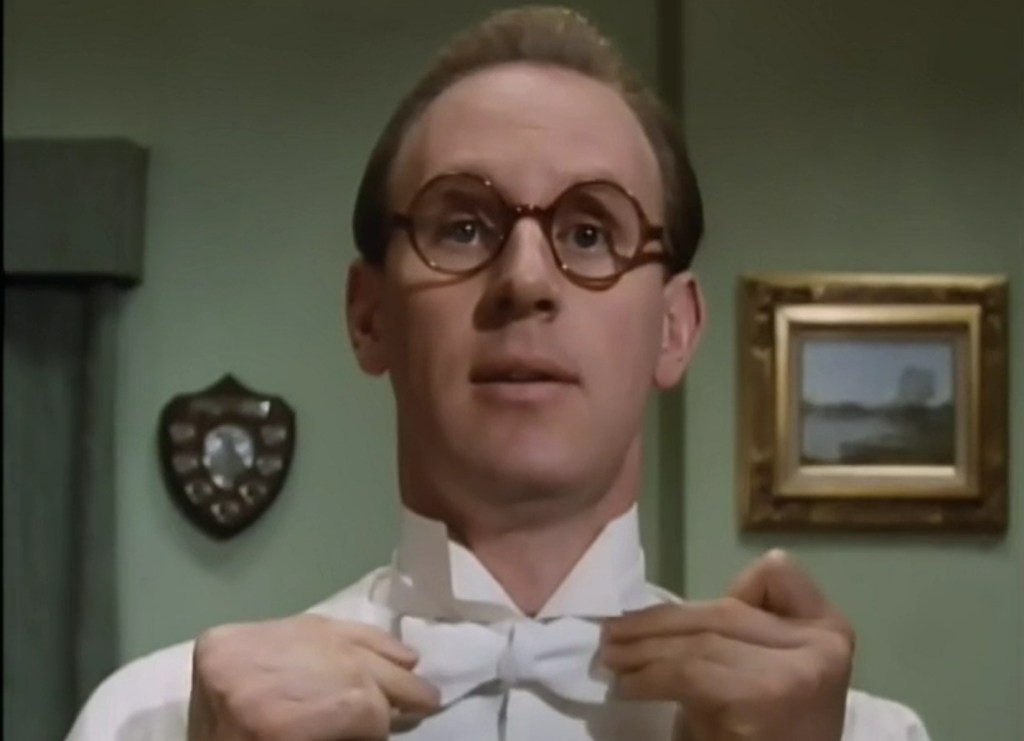
With the revival of “cozy” murder mysteries (Rian Johnson’s Wake up Dead Man is just out), and though there have been many, many Christie adaptations both old and new, other classic mysteries by such Queens of Crime as Allingham and Sayers seem to have been passed over, even though they’re eminently adaptable – the rather charming and leisurely, but overlooked, 1989/90 BBC adaptation of Margery Allingham’s mystery novels being a case in point. Campion stars Peter Davison who, if you don’t know him from All Creatures Great and Small (1978), you will certainly recognise as being the 5th Doctor (as well as featuring prominently in the 1985 Christie adaptation A Pocketful of Rye, with the marvellous Hickson as Marple). Less known than the ubiquitous Monsieur Hercule Poirot, Campion is described by Allingham as being so bland as to be nearly invisible, with a mysterious background and, despite all appearances to the contrary, sharp as a tack. The series introduces him as follows:
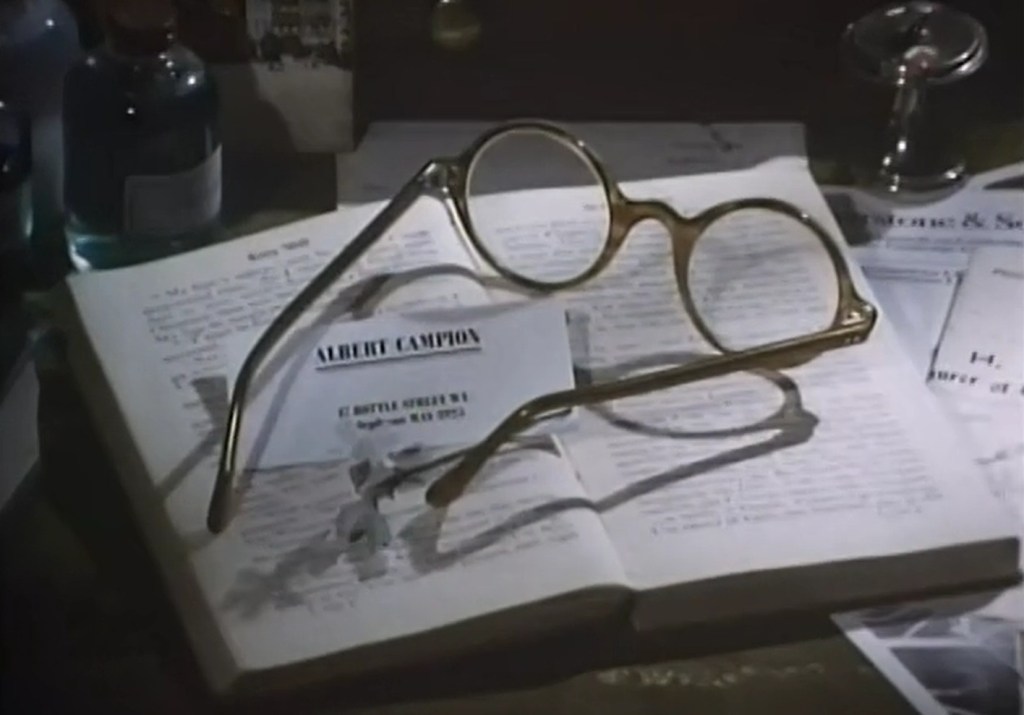
“Albert Campion – born May the 20th, 1900. Name known to be a pseudonym. Education: privileged. Embarked on adventurous career, 1929. Justice neatly executed, nothing sordid, deserving cases preferred. Police no object. Business address: 17 Bottle Street, Piccadilly, London W1. Specialist in fairy stories.”
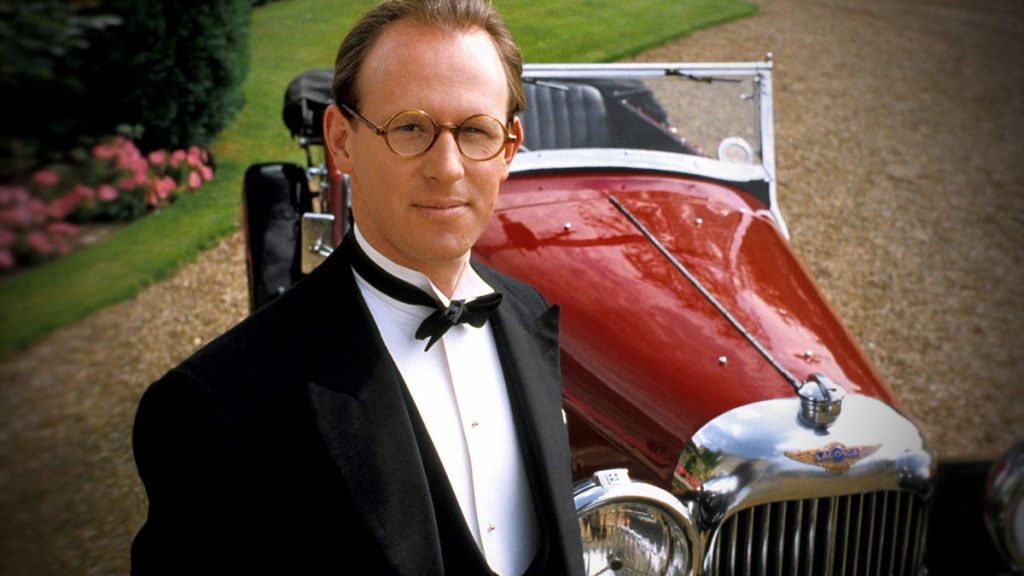
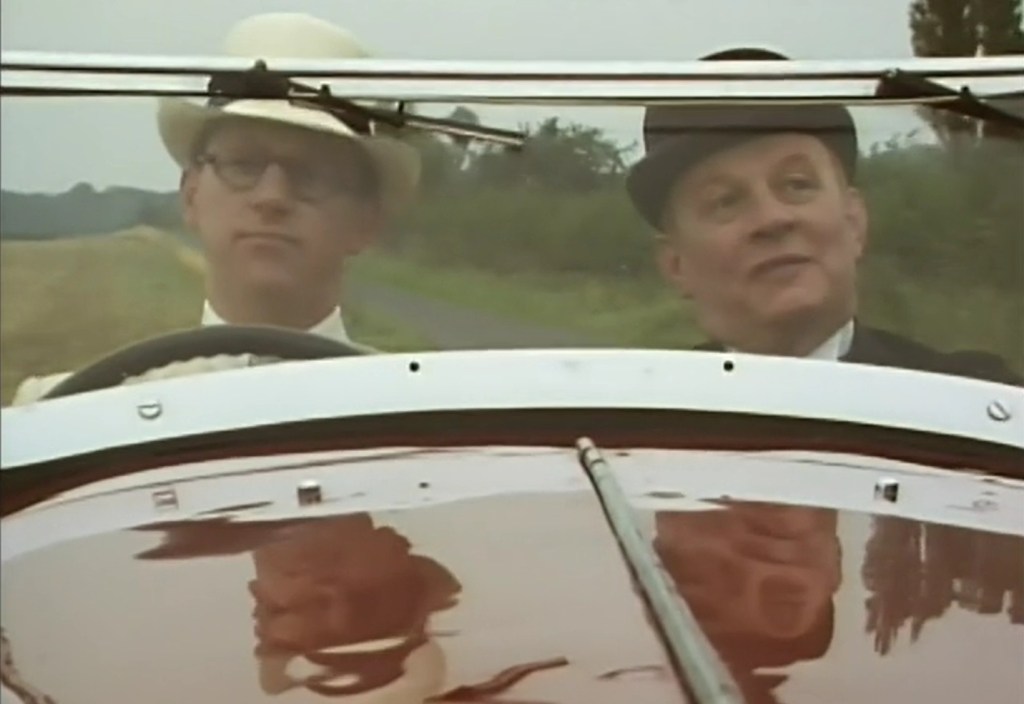
Not only is the series beautifully produced, it also features a classic ’34 Lagonda Tourer that, apparently, the BBC bought solely for the purpose of the series. It also features stunning vistas of the British countryside. Davison plays Campion with a light touch, and in a bit of truly inspired casting, his constant companion Lugg (brilliantly portrayed by Brian Glover) makes for the perfect pairing for a classic detective series. The fact that everyone involved seems to have a great deal of fun helps to give it its sparkle.
Margery Allingham’s novels are rather more intricate than Christie’s, she seems to have more of an interest in the minutiae of not just the narrative, but also the characters and writing style. Police at the Funeral, for example, has a highly gothic atmosphere, as does Look to the Lady, whereas The Case of the Late Pig is more driven by a (perhaps overly) involved plot. In the span of time in which the novels were written, the characters are allowed to age, and what were initially supporting characters are sometimes granted multiple (and prominent) appearances. This is not so much in evidence in the series, despite its fidelity to the books. Still, the series handles the source material with a great deal of care and obvious affection.
In the novels, Campion first makes an appearance in the 1921 novel Crime at Black Dudley. The television series starts with an adaptation of the 1931 novel Look to the Lady and adapts many of the books up to 1937. Plots range from the stabbing of a young man at the anniversary of an artist’s death (Death of a Ghost), to the disappearance of a disagreeable old uncle from a highly eccentric Victorian household (Police at the Funeral), or the uncovering of family secrets in an old family publishing firm (Flowers for the Judge). The support in the series is predictably solid, with plum parts for all involved, not in the least because Allingham’s characters are so deliciously quirky.
These (earlier) Allingham stories are set firmly in the interwar period between the first World War and the second. The privileged Campion reflects a certain fascination with class contrasts (and as such reflects back such characters as Sayers’ Peter Wimsey) but also concerns of economic upheaval and the looming threats from abroad. Unlike the Wimsey series, the First World War does not echo quite so prominently, and the Second World War was only just beginning to cast its shadow ahead.
Davison says, in the TV interview, Peter Davison Remembers… Campion: “Campion was good enough to do more.” While I agree about the series’ quality, the novels published after the war depict an evolution of character and a world in which the earlier whimsy is absent and Campion more and more becomes a subsidiary character. The novels run all the way through to 1968 when the last novel Cargo of Eagles was published two years after Allingham’s death in ’66. As BBC’s Campion is meant as an adaptation of what’s become known as the “Golden Age” of detective fiction, it’s the interbellum years that the series is most interested in, and as such those are the novels that were adapted. And, perhaps, this is the very reason why the series, although inevitably rather old-fashioned, has stood the test of time. By sticking to this particular period, it can pretend to be blithely unbothered both by what came before, and after. Rather like Davison’s Campion himself.
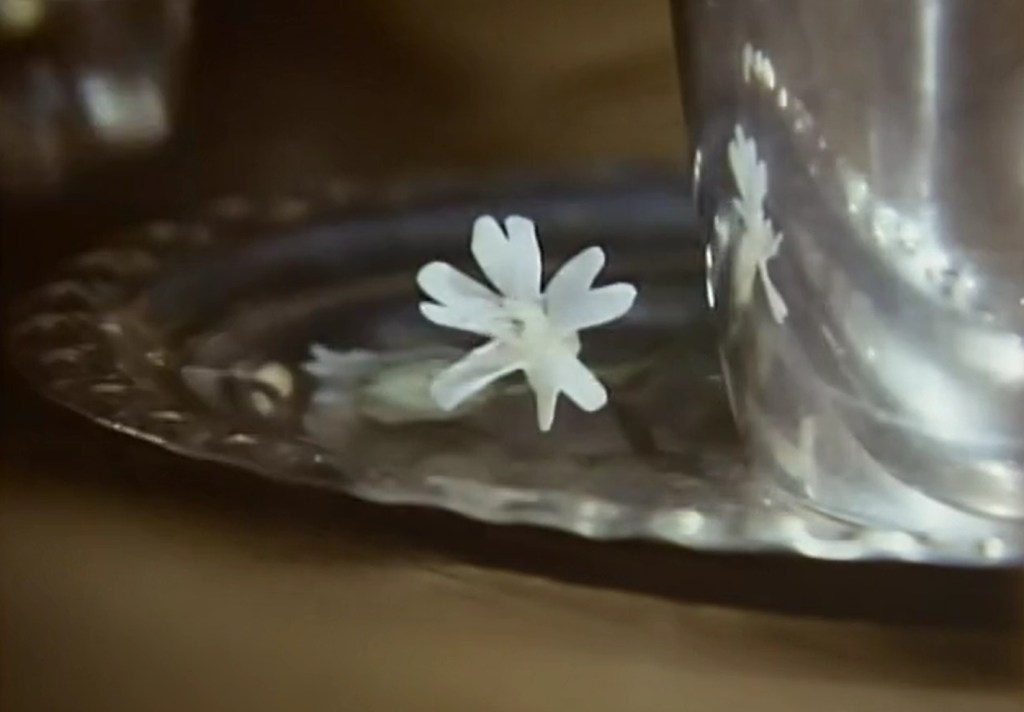
All images and screen captures © BBC, from the series Campion.
 A Damn Fine Cup of Culture
One of my mother’s favourite shows, this, and one I enjoyed, too. The production oozed quality and Davison was an excellent casting choice, nicely capturing the tension between the foppishness of the Campion persona and the mysterious past of the character lurking behind it. Glover makes a great foil not only because he’s another fine actor, but also due to the class issues you mention. My head canon is that Lugg’s employer was once rather closer to his man in terms of social strata.