Welcome to Six Damn Fine Degrees. These instalments will be inspired by the idea of six degrees of separation in the loosest sense. The only rule: it connects – in some way – to the previous instalment. So come join us on our weekly foray into interconnectedness!
As a teenager, I read a lot of genre fiction – but, perhaps more importantly, I read a lot of bad genre fiction. Not only: I loved the likes of Lord of the Rings or the iconic novels of Arthur C. Clarke (mind you, his prose wasn’t always brilliant and his characters often paper-thin, but the ideas were fascinating), but I’d read whatever I could find at the library that had spaceships and aliens, or dungeons and dragons. I think that, even at the time, I was aware that much of what I read in the realms of fantasy and sci-fi was generic and derivative at best, pulp designed to be mass-produced and sold to kids like me who wanted their reading matter to transport them to other worlds. But, hey, those books did transport me to other worlds, even if those worlds seemed a lot like Middle-Earth or a galaxy far, far away, just with the serial numbers scratched off.
But the appeal of this kind of genre fare didn’t last. There were only so many Dungeons & Dragons-branded novels I could read before I got tired of the tropes and clichés, and the escapism of space operas diminished when the space they explored felt all too familiar. Especially when it came to fantasy, it seemed that I only came across the like-Tolkien-but-bad variety, and with sci-fi it didn’t help that German-speaking Switzerland in the 1980s and early 1990s simply didn’t have much of a tradition of speculative fiction, neither writing nor appreciating it, so what sci-fi fare our local library had wasn’t Asimov, Clarke and Heinlein, let alone Frank Herbert, Ursula K. Le Guin or Philip K. Dick, but rather badly translated pulp.
Eventually I gravitated away from genre fiction – which I always felt was something of a loss. I knew that there was such a thing as well-written, intelligent sci-fi and fantasy, I just didn’t know where to find it. Remember: this was before the internet was as widespread, so it was much less easy for me to find good reading matter in these genres. We had a local English-language book shop with a well-stocked genre corner, but I was largely left to going by covers and blurbs. I did find the occasional interesting genre novel, but I rarely went to that corner – which, over the years, expanded, as even Switzerland realised that sci-fi and fantasy isn’t something to be ashamed of (and, yes, it was something that you could make money with, which Switzerland has always responded to well).
It is largely because of this that I still remember coming across China Miéville – and realising that sci-fi and fantasy could be fresh and weird – and political. I started with his short story collection Looking for Jake and soon graduated to the massive doorstopper of a novel that is Perdido Street Station. For a while, I devoured everything I could find by Miéville, though perhaps that wasn’t the best idea, because it also meant that after I fell for his writing, I also fell out of love when I realised that, for all his strengths, Miéville had some pretty serious flaws as a writer. For one thing, what felt fresh and weird at first did soon become a bit gimmicky: Miéville is a clever writer and creator of worlds, but at times it feels like he is rather in love with the Miéville brand and especially with his neologisms, so that the books took on an overly self-referential quality. Moreover, while Miéville certainly knows how to start a novel with a bang, pulling you in and keeping you reading for the first half or so, too many of his novels don’t so much end as they fizzle out. After reading a few of his books, I came away feeling that he was much better at premises and beginnings than at endings (something that he’s certainly not alone with, in particular in genre fiction – and yes, I’m looking at you, Stephen King).
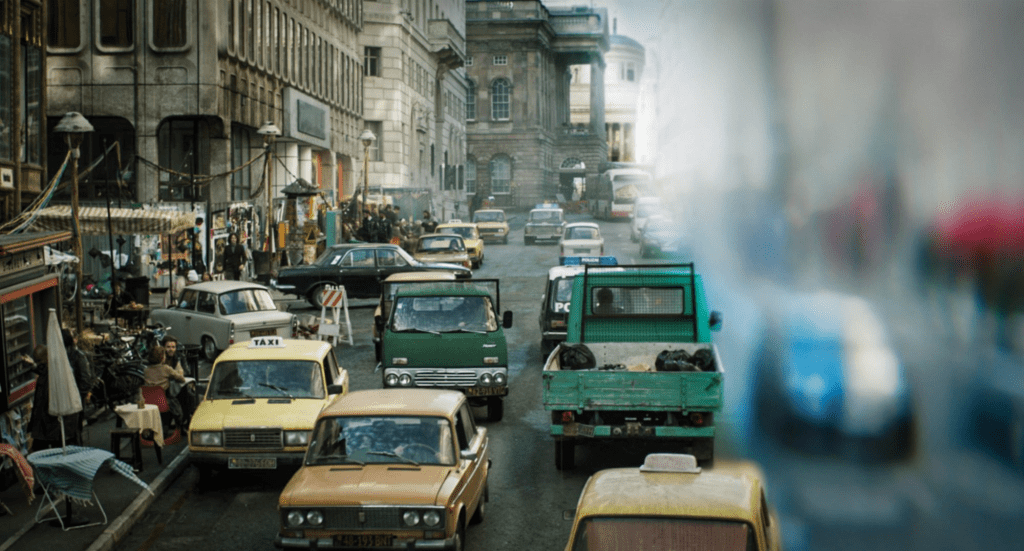
But then: some of Miéville’s premises are so damn good that it finally doesn’t matter so much if he doesn’t quite know how to end the stories in a satisfying way. And perhaps the foremost example of this is his The City & The City, a moody, weird police procedural set on a murder in a divided city. But don’t imagine this divided city to consist of two halves neatly dissected by, say, a wall. No: Besźel and Ul Qoma, the titular cities, occupy the same geographical space. The split between them isn’t geographical: it’s… psychological? Cognitive? Or something much stranger altogether? The citizens of Besźel and Ul Qoma will themselves into ignoring the other city – and they are ‘helped’ in this by the secret police called Breach – which, incidentally, is also the term for when someone breaks the fundamental law of the two cities. If you are a citizen of Besźel, you ignore all that is Ul Qoma, and vice versa: you unsee the person right next to you, the building in front of you, the events taking place a metre or two away, because they are in the other city that you’ve been conditioned, from birth, to unsee. This act of unseeing is helped by the style of clothing, architecture, even body language, as the aesthetics of Ul Qoma and those of Besźel (and even the alphabets they use) are different, but citizens of either city learn to make this an unconscious, automatic action – because if you commit a breach, that is, you perceive the parallel city that you’re required by law to ignore, the secret force called Breach can take you away and punish you. Children too young to know better are forgiven for minor breaches; tourists that visit Besźel and/or Ul Qoma but fail to uphold this central rule are removed from either city and banned from ever returning.
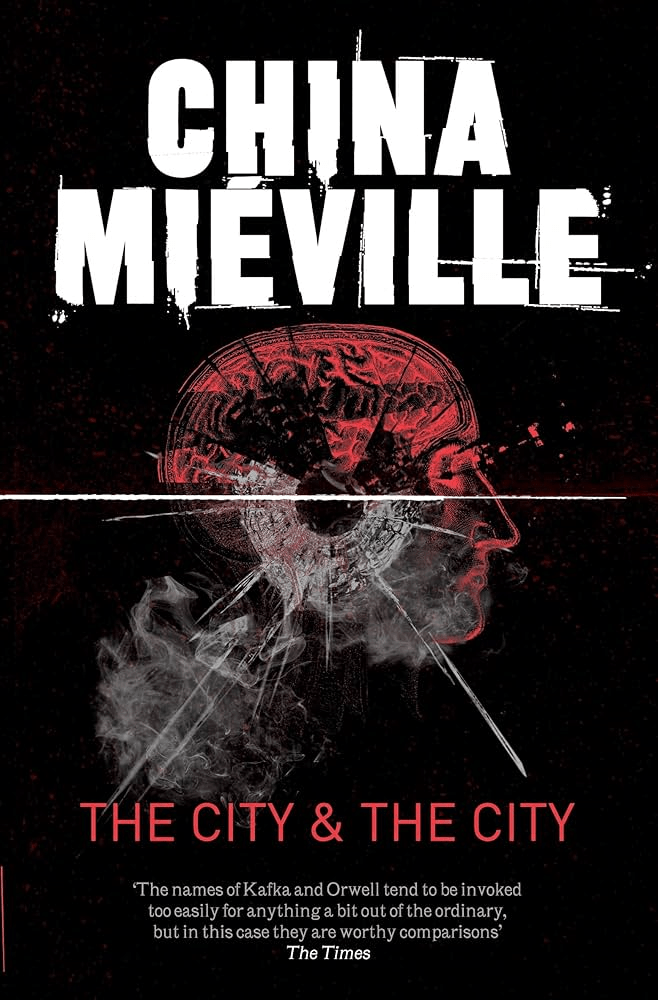
This premise is still what I remember best about The City & the City. It makes my head hurt in its strangeness: Miéville could have made it easier to comprehend by giving it a fantastic or sci-fi spin, some device or metaphysical doohickey, some talk about different frequencies and vibrations, that enforces the separation of Besźel and Ul Qoma. But it is exactly the lack of such a genre-typical explanation that makes the premise so potent. The split happens not on the outside, it is not enforced by objects: it is a mental one. And while this doesn’t make it easier to comprehend, it does make it easier to understand what Miéville’s story is about. Besźel and Ul Qoma are not separated by geography, they are separated by mentality and social conditioning. It is our (bipartite) brain and its ability to compartmentalise that makes the creation of Ul Qoma and Besźel possible. Miéville takes something we do on a daily basis and extends it into the realm of speculative fiction – but are two overlapping cities that their citizens learn to perceive and ignore selectively really all that much stranger than the many, many things we’ve trained ourselves to not see? The people that, because they are not like us, we are less aware of, even if they’re just a few steps away? We’ve been conditioned, and we reinforce this regularly, to see selectively: in the end, perhaps the way this is formalised and made law in Miéville’s world is even easier to pull off than the messier compartmentalisation we effect more or less constantly.
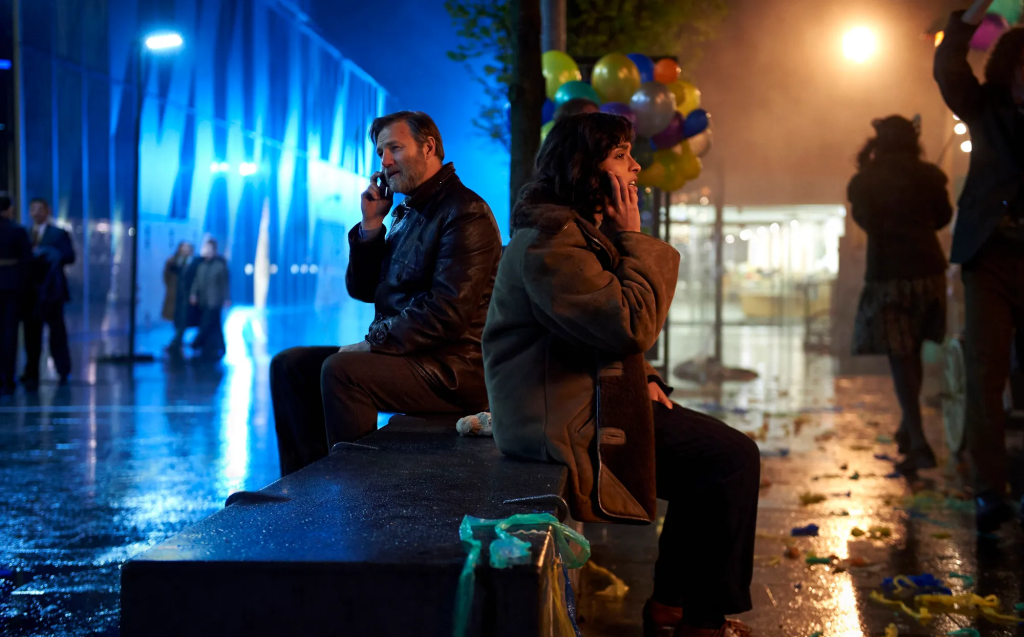
P.S.: In 2018, there was a TV adaptation of The City & The City (from which I’ve taken most of the images for this post). It wasn’t bad, and it used some neat visual tricks to depict the separation into the two cities – but, in the end, this again externalises the split that, in Miéville’s novel, happens in people’s minds and that is all the more insidious for it. Also, the TV series highlighted a central truth about the novel: its noirish plot, while certainly not bad, isn’t what is memorable. When I watched the series, I didn’t remember where the storyline would go, and relatively shortly after having watched it, I again didn’t remember the plot or the ending. It’s the premise I keep coming back to, which may still be Miéville’s most ingenious invention. It’s worth reading The City & The City just for this already.
 A Damn Fine Cup of Culture