Welcome to Six Damn Fine Degrees. These instalments will be inspired by the idea of six degrees of separation in the loosest sense. The only rule: it connects – in some way – to the previous instalment. So come join us on our weekly foray into interconnectedness!

Like Alan, I read a lot of histories. Well. Narrative histories. Unlike Alan, who seems to have a theme and some actual focus to his reading, I’m an inveterate magpie and will flit from medieval England (Helen Castor’s books The Eagle and the Hart and She Wolves, are particular favourites), to a biography of J. Edgar Hoover (G-Man, Beverly Gage won a Pulitzer for that one), to the magnificent Höhenrausch by Harald Jähner (evoking, unforgettably, the interbellum in Germany), and many more. No obligation for me to go through a formal curriculum and do things like put in the actual, systematic, scholarly work. There are fantastic, conscientious writers who have done it all for me, and whose books I will happily, and gratefully, devour.
My favorite kind of narrative history understands, and makes explicit, that history could have gone differently, and sometimes did go differently than the usual stories tell us. History, as we’re sometimes taught it in school, is presented as a chronological sequence of events that ends with the present. This is how we came to be here. This is why we are what we are. Not that we’re taught actual determinism, that would be wholly misguided. But an idea creeps in – one dangerously close to what historian Christopher Clark dubs ‘presentism’, to remake the past to meet the needs of the present – that this is how it had to be, for us to be as we are now. As if progress were inevitable, and so is our particular era. As if history rolls downhill like a big stone wheel carving its inexorable path towards the future.

And as all history is, by definition, told in hindsight, there are, of course, vested interests in telling it a certain way. The Wars of the Roses (1455 – 1487), for example, were not, in fact, called the Wars of the Roses at the time. And they didn’t go as the Tudors would like you to think. Namely in one predetermined direction: towards their reign. Rather a tidy bit of framing, that. “One of the earliest recorded uses of the phrase ‘The Wars of the Roses’ came from the pen of the 19th century British writer, and royal tutor, Lady Maria Callcott”, popular historian Dan Jones explains, in his highly entertaining book The Hollow Crown. “Her children’s book ‘Little Arthur’s History of England’”, he points out, “was first published in 1835.”* So although the concept of a red and white rose, respectively symbolizing the houses of Lancaster and York, went back all the way to the 15th century, the evocative and very famous moniker is not even recorded, in this particular phrasing, before the 19th century.
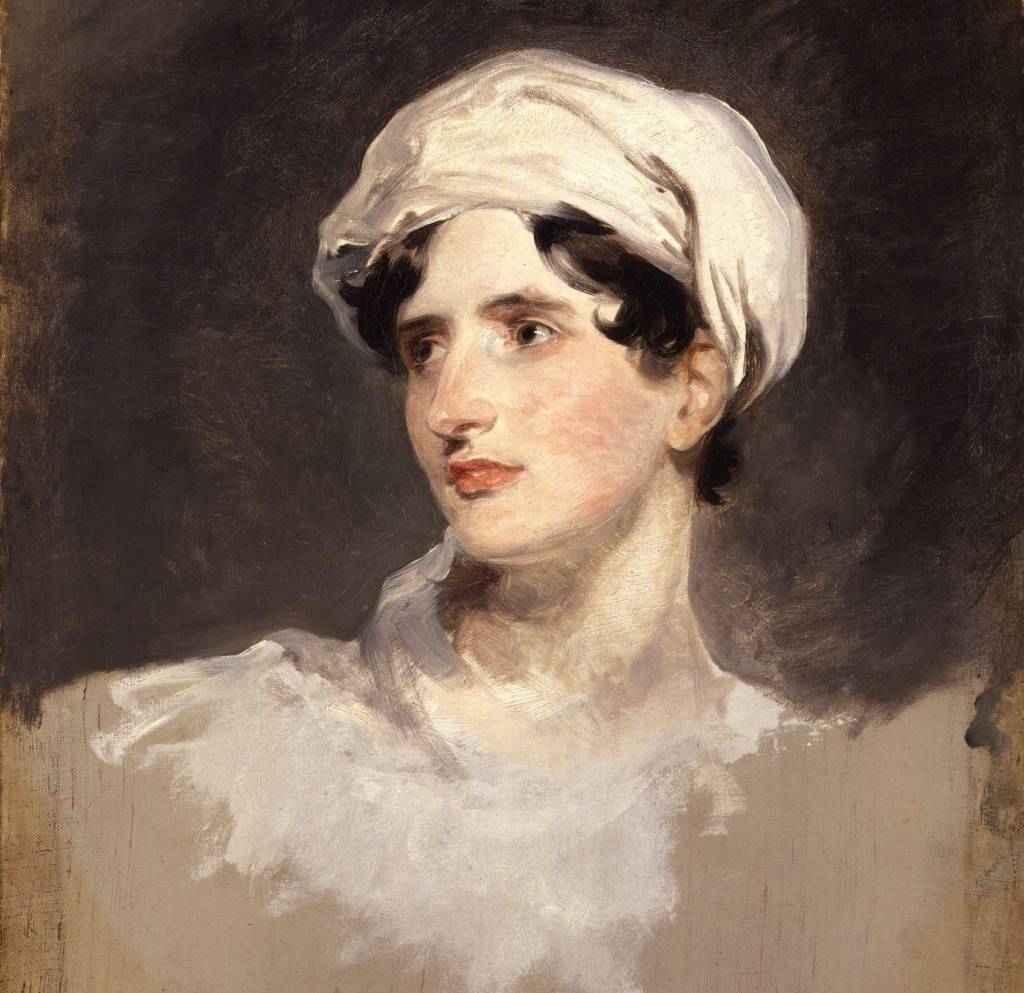
And even when we think about our modern history: our instinct, as a storytelling species, is to tell a coherent narrative. This led to that; then escalated to such, which culminated in consequence so-and-so, and hey presto: causality. But that’s just how we make sense of it, it’s not necessarily how it happened. We (or rather diligent historians) look at sources and perspectives and, hopefully, some actual stone-cold evidence, and create a narrative out of what we (or rather they) find. And most of these sources and perspectives are not wholly representative of people, or a people, or even an era.
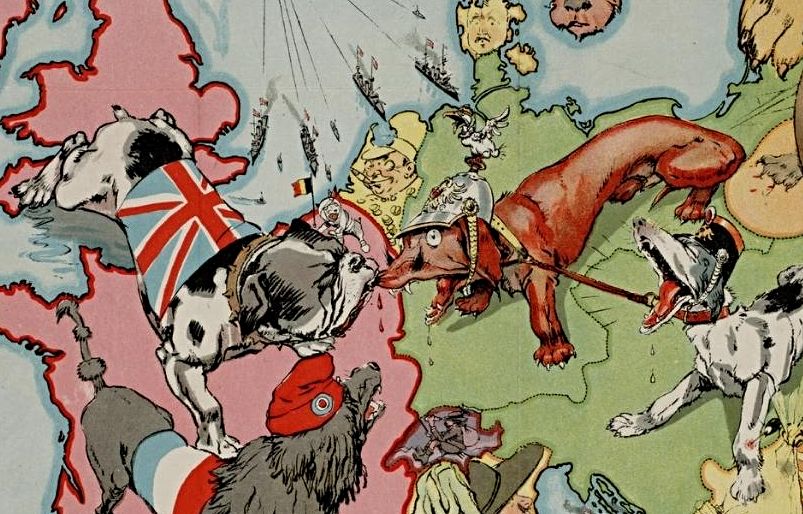
In his introduction to his meaty and thought-provoking book The Sleepwalkers: How Europe Went to War in 1914, historian Christopher Clark warns us of “treacherous currents in the ocean of sources” about the history of WWI’s beginning. The compendium Die Grosse Politik (1922), Clark continues, comprised of 15.889 (!) documents, “was not prepared with purely scholarly objectives in mind. It was hoped that the disclosure of the pre-war record, would suffice to refute the war-guilt thesis, enshrined in the terms of the Versailles treatise”. In Vienna, he adds, “the Österreich-Ungarns Aussenpolitik, pointed out in 1926 the aim was to produce an authoritative source edition before some international body -the League of Nations perhaps?- forced the Austrian government into publication under less auspicious circumstances.” Soviet documentary publications sought to prove the autocratic Tsar was wholly responsible, partly to avoid the financial consequences of having to repay French loans. So it goes, too, with the aims of British or French archival documentation, and so on and so forth.
In other words: everyone is shifting blame. It’s not so much that history was written by the victors: it is that history was written with an agenda. “Munitions”, Clark quotes historian Bernhard Schwertfeger from 1929, “in a world war of documents”.**
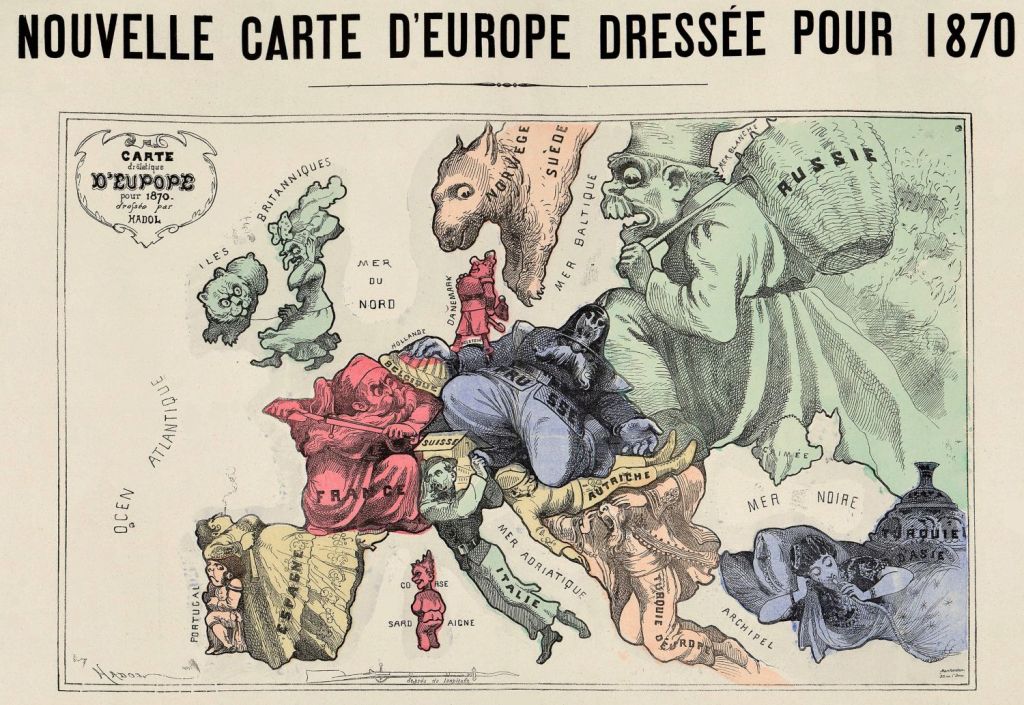
To compound the confusion, our own perspectives also change. Clark states that, in the ’60s to ’80s, the events of ‘Europe’s last summer’ acquired the elements of an Edwardian costume drama. In my view, you can observe this reflex even earlier. Take some famous older, ‘historical’ or even propagandistic, films: the costumes and uniforms, a vanished world that never really existed anywhere but in fantasy. A nostalgia, highly coloured by the horrors that would emerge later.
The assassination in Sarajevo itself, perpetrated June the 28th, 1914 was – it could very well be argued – nothing less than a rank terrorist attack, perpetrated by a bunch of death-glorifying extremists, an attack that in some ways feels shockingly current. It was this event, or so we’re usually told, that lit the powder keg of causal pressures that were already building. Forces that would lead to a full-on industrial-grade world war. But that presumes an inevitability that is very much up for debate. Clark argues, that the people and events up to, and following, ‘Europe’s last summer’ “carries in them the seeds of other, perhaps less terrible futures.” And whether you agree with him or not, it is, at least, the more sympathetic view to take.
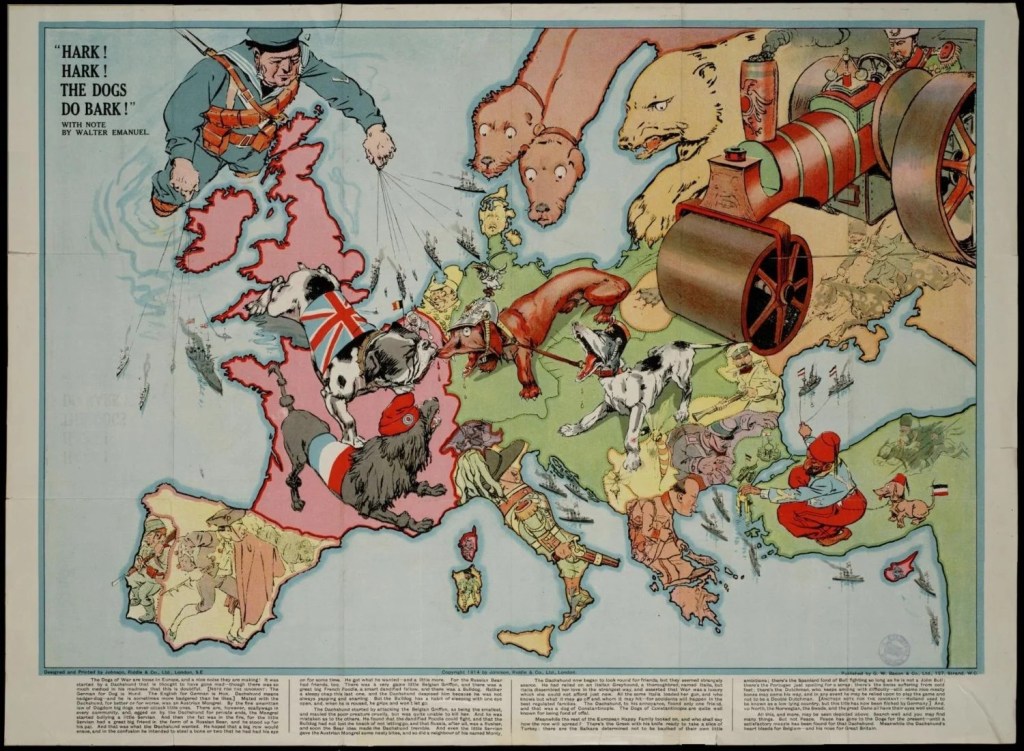
If it is true that history is there to teach us, and why shouldn’t it be? It is also perhaps too tempting to scour for parallels in the rubble of a bygone age. A better perspective is, perhaps, that we, and our present day, are equally the result of a great many contingencies, random acts of violence, well-meaning failures, drunken accidents, sex scandals, a fair bit of pig-headedness and a ton of truly incomprehensible myopia. A past teeming with incident, people and agency: a real world. One which great writers, at their most entertaining, are capable of evincing.

*Dan Jones, The Hollow Crown: The Wars of the Roses and the Rise of the Tudors, (Faber & Faber, 2014).
Audiobook: (Audible Studios, 2018), read by Dan Jones.
**Christopher Clark, The Sleepwalkers: How Europe Went to War in 1914, (Harper Perrennial, 2012), Introduction. Audiobook: (Harper, 2020), read by Derek Perkins.
***Historical cartoons are reproduced here from Historiek.net, a Dutch independent online history magazine.
 A Damn Fine Cup of Culture